Artwork
Beatrice Goelet
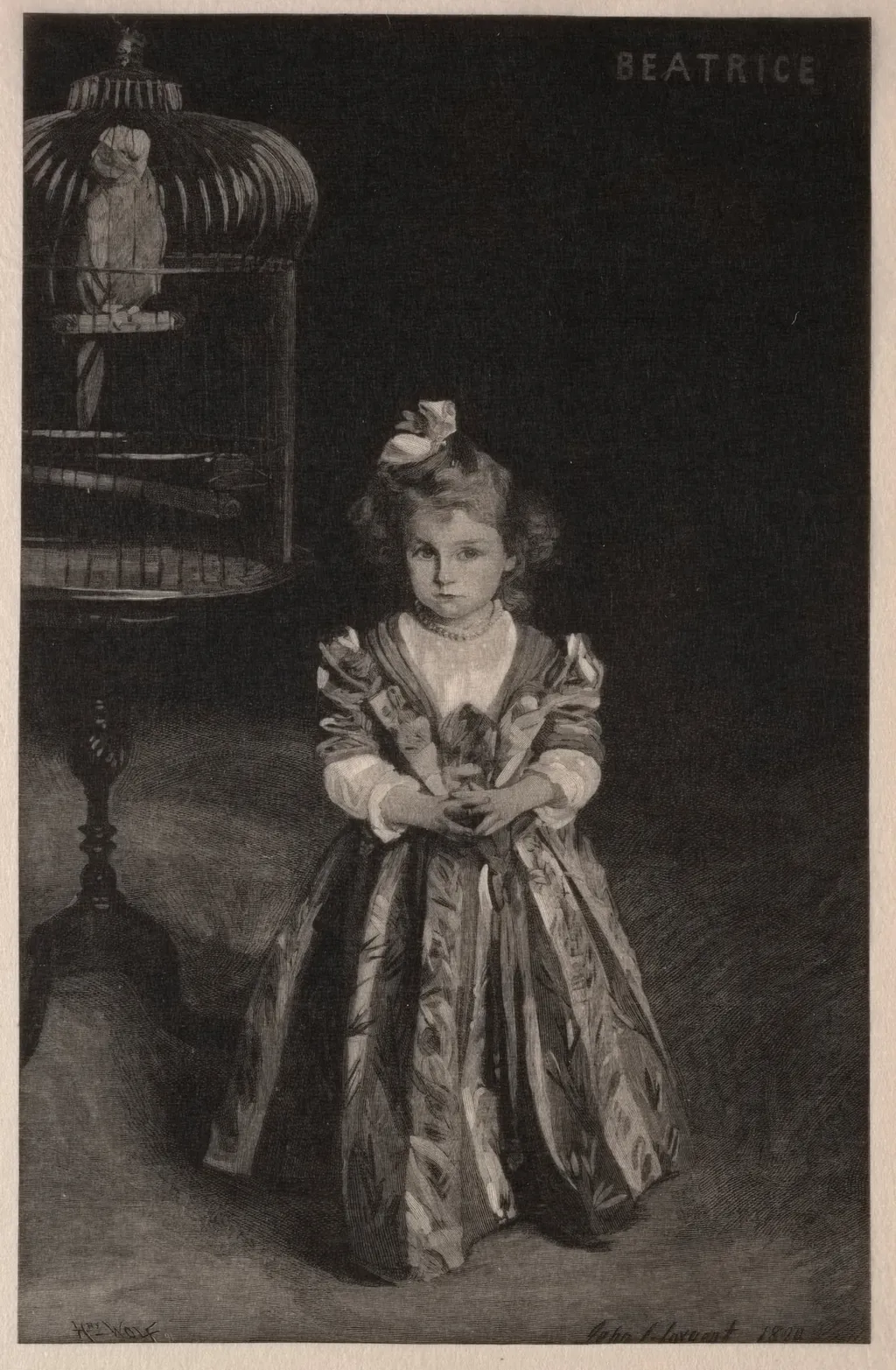
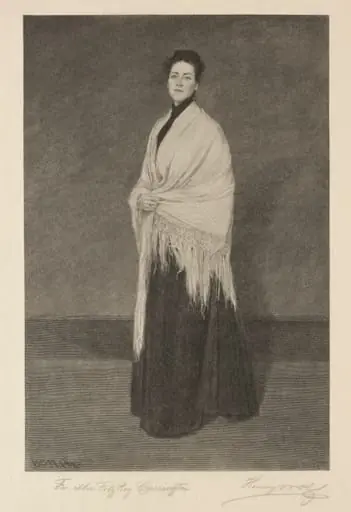
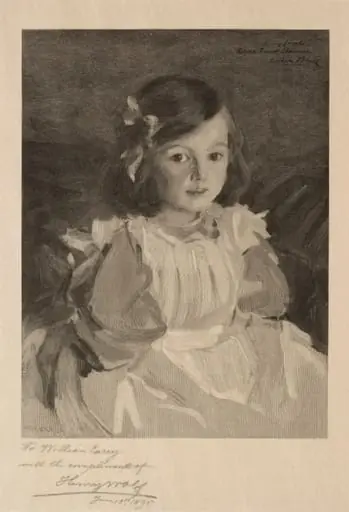
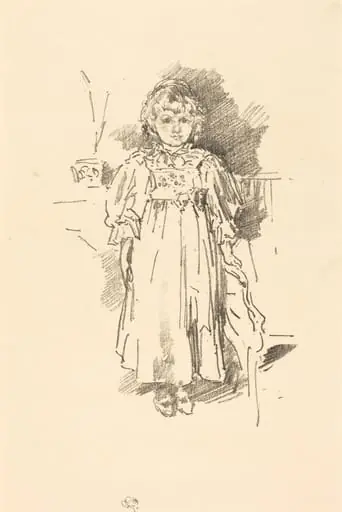
Beatrice Goelet is a print by the Impressionist artist Henry Wolf. It dates from 1891 and is held in the collection of the Cleveland Museum of Art.
About this work
Overview
This work exemplifies his technical precision and his role in shaping American illustrated periodicals during the late 19th century.
Created in 1891 by Henry Wolf, a French-born engraver active in New York since 1871, this print is a portrait of Beatrice Goelet, daughter of a prominent New York family. Wolf specialized in translating painted portraits into detailed wood engravings for publication. This work exemplifies his technical precision and his role in shaping American illustrated periodicals during the late 19th century. The piece resides in The Cleveland Museum of Art’s collection.
Subject & Meaning
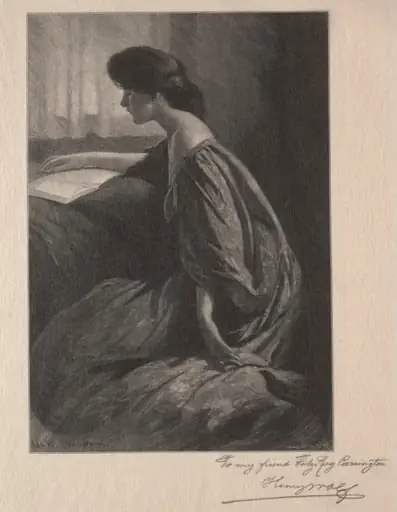
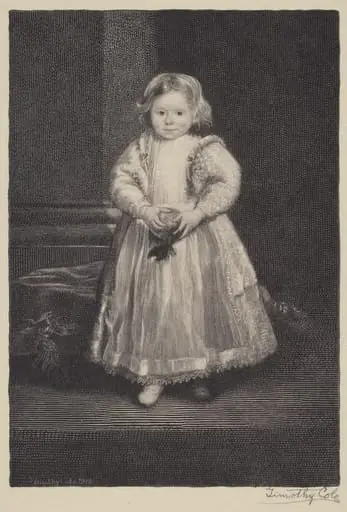
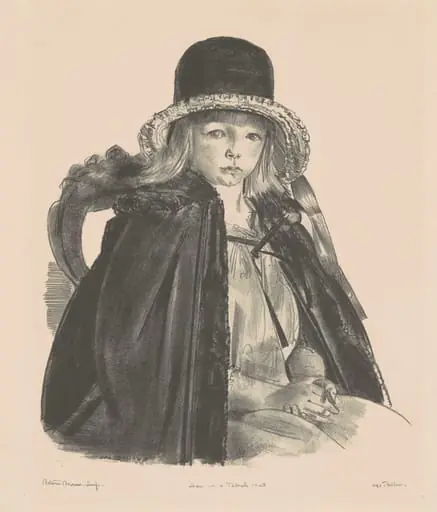
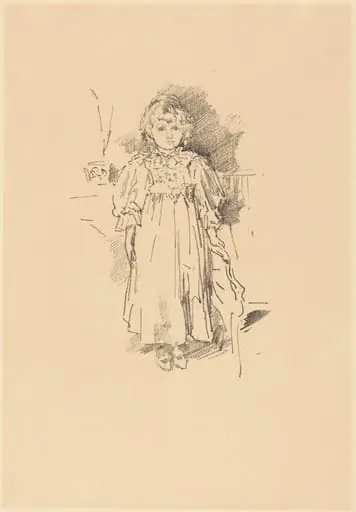
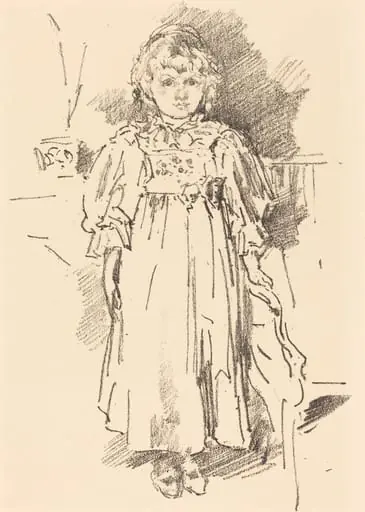
Beatrice Goelet, a young girl from a wealthy New York family, is portrayed with quiet composure. Her stillness and formal attire suggest social standing and upbringing within elite circles. The inclusion of her name in the upper corner reinforces her identity, while the absence of overt symbolism invites focus on her presence rather than narrative. The image reflects the era’s interest in documenting personal dignity within aristocratic domestic life.
Technique & Style
Wolf employed wood engraving to achieve fine linear detail and tonal contrast. He used chiaroscuro to isolate the subject’s face and upper body, drawing attention through stark illumination against a deep, indistinct background. The ruffled dress and intricate chair are rendered with meticulous hatching, while the shadowed corner and distant lamp suggest spatial depth without literal detail. The technique prioritizes clarity and emotional restraint over ornamentation.
History & Provenance
The print was produced during Wolf’s most active period in the United States, when he contributed illustrations to leading magazines. It likely originated as a reproduction for a periodical, later acquired as a standalone work. The Cleveland Museum of Art acquired it as part of its broader collection of American graphic arts, recognizing Wolf’s influence in elevating printmaking as a serious medium for portraiture.
Context
In the 1890s, wood engraving was a dominant medium for reproducing portraits in print media, bridging fine art and mass circulation. Wolf’s work aligned with a cultural moment that valued refined domestic imagery, particularly of women and children from affluent families. His translations of paintings by Sargent and Manet reflect transatlantic artistic exchanges, while his focus on private figures like Goelet reveals the era’s fascination with social identity through visual representation.
Legacy
Wolf’s prints, including this one, helped establish wood engraving as a legitimate form of portraiture in American art. Though overshadowed by painting in historical narratives, his technical rigor influenced later generations of illustrators and printmakers. The survival of this work in a major museum collection affirms its significance as a document of both artistic craft and Gilded Age social culture.
Artist & collection
Artist
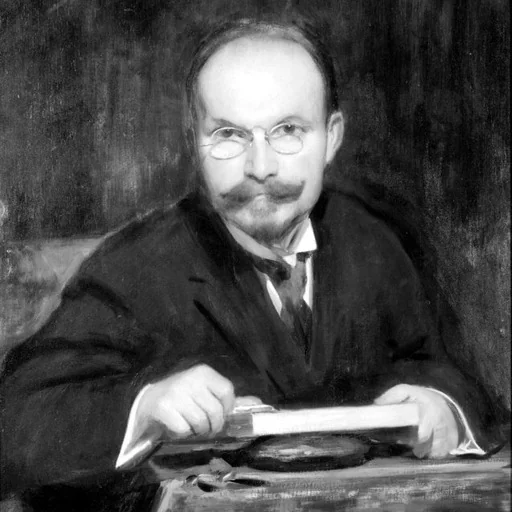
Henry Wolf (1852–1916) was a French-born wood engraver who lived and worked in the United States during his most influential work period and until his death.