Artwork
Untitled
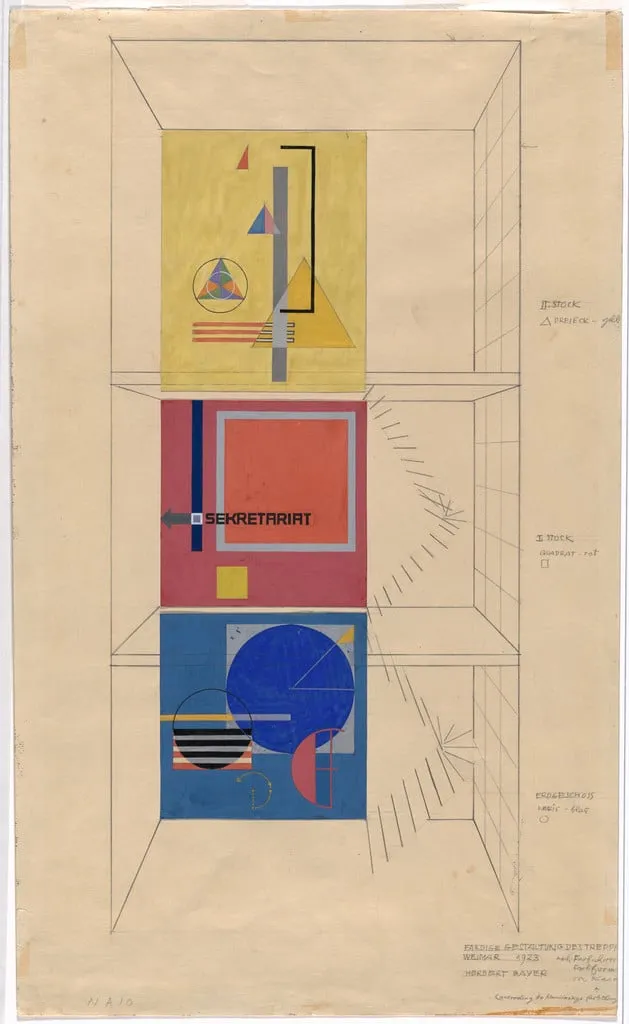
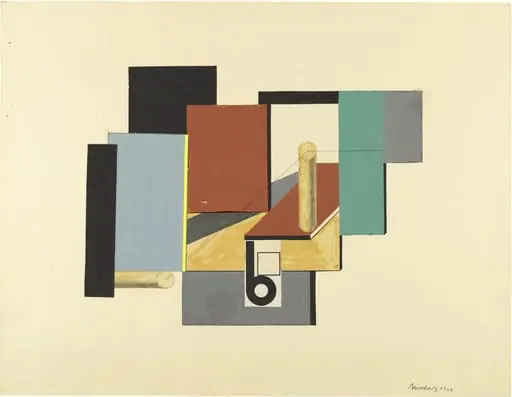
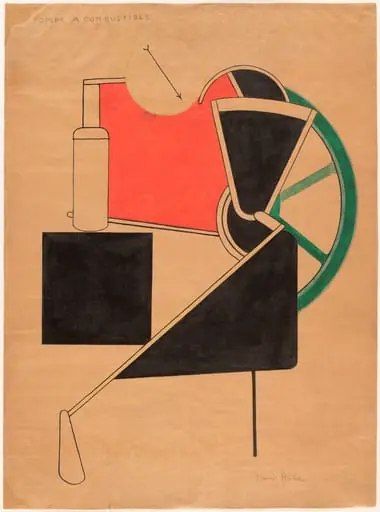
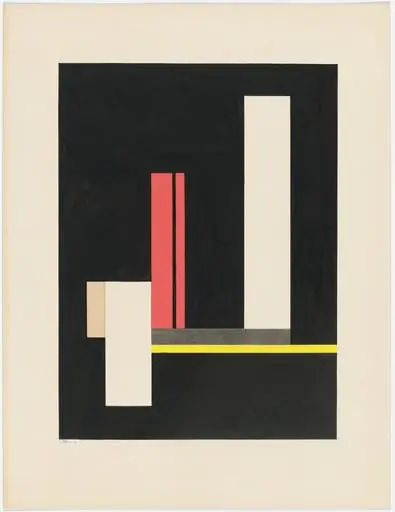
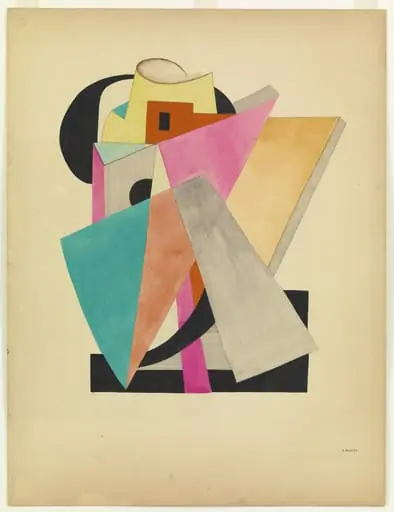
Untitled is a gouache drawing by Herbert Bayer. It dates from 1923 and is held in the collection of the Museum of Modern Art.
About this work
Overview
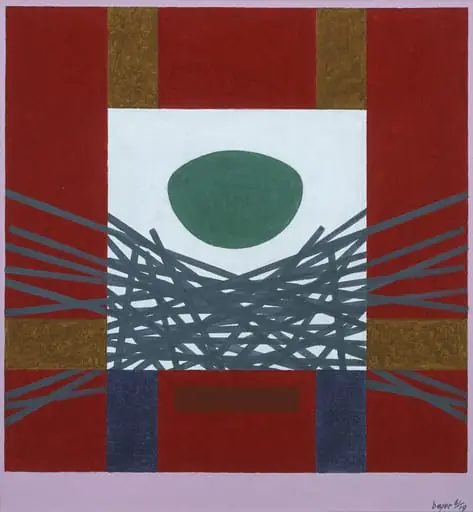
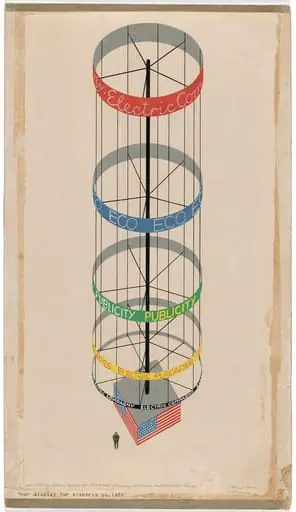
It presents a layered architectural composition resembling a floor plan, with distinct horizontal zones defined by flat color fields.
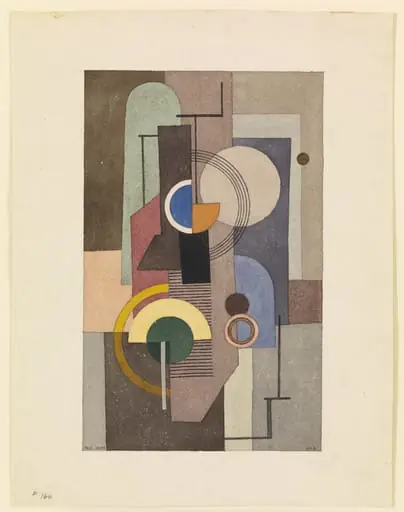
Created in 1923, this work by Herbert Bayer is a mixed-media drawing composed of gouache, ink, and pencil on cut-and-pasted paper. It presents a layered architectural composition resembling a floor plan, with distinct horizontal zones defined by flat color fields. The use of paper collage and precise linear elements reflects Bayer’s engagement with constructivist principles and typographic experimentation during his time at the Bauhaus.
Subject & Meaning
The composition suggests a schematic office structure, with the German word 'SEKRETARIAT' prominently placed on the central red section. This term, meaning 'secretary’s office,' implies a bureaucratic or administrative function. The geometric forms and color coding may symbolize functional zoning within institutional spaces, reflecting Bauhaus interests in rational design and the integration of language into visual structure.
Technique & Style
Bayer employed gouache for its opaque, matte quality, layered over pencil and ink lines to define sharp-edged shapes. Cut-and-pasted paper fragments create clean borders between color zones, enhancing the plan-like clarity. The palette—yellow, red, blue, and black-and-white stripes—reduces form to essential elements, aligning with Bauhaus ideals of abstraction and functional aesthetics over decorative detail.
History & Provenance
The work was produced during Bayer’s formative years at the Bauhaus in Weimar, where he explored graphic design and spatial theory. It entered the collection of The Museum of Modern Art in the mid-20th century as part of its early commitment to documenting avant-garde European design. Its preservation reflects its significance in the transition from traditional drawing to modernist visual language.
Context
Created in 1923, the piece emerged alongside Bauhaus efforts to unify art, craft, and industrial design. Bayer, influenced by De Stijl and Russian Constructivism, sought to eliminate ornamentation in favor of clarity and function. This drawing aligns with contemporaneous experiments in typographic layout and architectural modeling, positioning the artist at the intersection of graphic and spatial innovation.
Legacy
The work exemplifies Bayer’s contribution to the visual language of modernism, particularly in how text and geometry merge to convey institutional logic. Its influence can be traced in later graphic design and architectural diagrams that prioritize clarity over representation. As a study in abstraction and function, it remains a key reference in understanding Bauhaus pedagogy and its impact on 20th-century design.
Artist & collection