Artwork
The Constable of the Night's Ramble
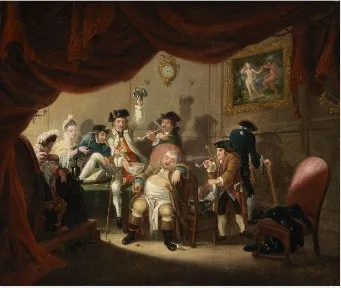
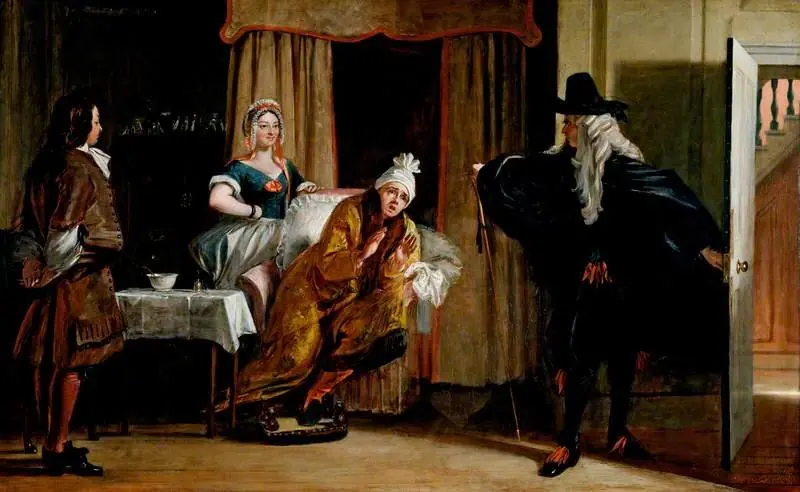
The Constable of the Night's Ramble is an oil painting by Herbert Pugh. It dates from 1771 and is held in the collection of the National Gallery of Ireland.
About this work
Overview
Painted around 1771 by Herbert Pugh, this oil work captures a nocturnal gathering of men in an interior setting.
Painted around 1771 by Herbert Pugh, this oil work captures a nocturnal gathering of men in an interior setting. It resides in the National Gallery of Ireland and reflects the social customs of late 18th-century Britain. The scene unfolds under low light, emphasizing quiet intimacy over grandeur. Figures are arranged informally, suggesting a moment of unscripted interaction rather than a formal portrait.
Subject & Meaning
The painting portrays a group of men, likely civic or military figures, engaged in conversation after hours. One holds a lantern, another gestures emphatically, while others observe or lean passively against walls. The presence of a clock and a framed picture on the wall hints at time and authority, grounding the scene in daily life. The mood suggests camaraderie among peers, not revelry—perhaps a watchman’s break or a council’s informal meeting.
Technique & Style
Pugh employs chiaroscuro to define space and mood, using deep shadows to isolate figures against dim walls. Light pools around the lantern and faces, drawing attention to expressions and gestures. Brushwork is restrained, favoring texture over detail—coats, hats, and wood surfaces are rendered with subtle tonal shifts. The composition avoids symmetry, enhancing the spontaneity of the moment and reinforcing the painting’s observational realism.
History & Provenance
The painting entered the National Gallery of Ireland’s collection in the 19th century, though its earlier ownership remains undocumented. It was likely commissioned by a local patron familiar with Pugh’s genre scenes. No records of public exhibition prior to its acquisition exist, suggesting it remained in private hands until institutional acquisition. Its survival reflects its modest but enduring appeal within Irish collections.
Context
In the 1770s, British art increasingly turned to scenes of everyday life, moving away from aristocratic grandeur. Pugh’s work aligns with this trend, capturing ordinary men in unidealized settings. The tricorn hats and long coats reflect contemporary dress, while the lantern and clock signal the era’s reliance on timekeeping and manual illumination. Such scenes offered viewers a familiar, grounded reflection of urban or civic life.
Legacy
Though not widely known outside Ireland, the painting contributes to a broader understanding of 18th-century British genre painting beyond the works of Hogarth or Reynolds. It preserves a quiet, unheroic moment of male social interaction, valued for its authenticity rather than drama. Its continued display in a national collection affirms its role as a quiet witness to the rhythms of daily life in its time.
Artist & collection

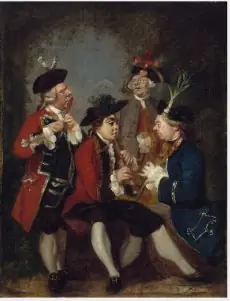 Caricature of Sir Thomas Kennedy, James Caulfield, Viscount Charlemont, the Hon. John Ward and Richard Phelps
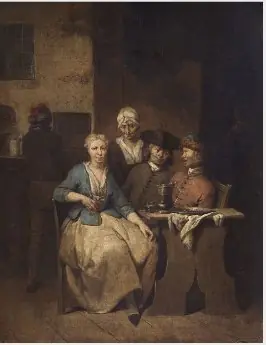 Interior with Five Figures
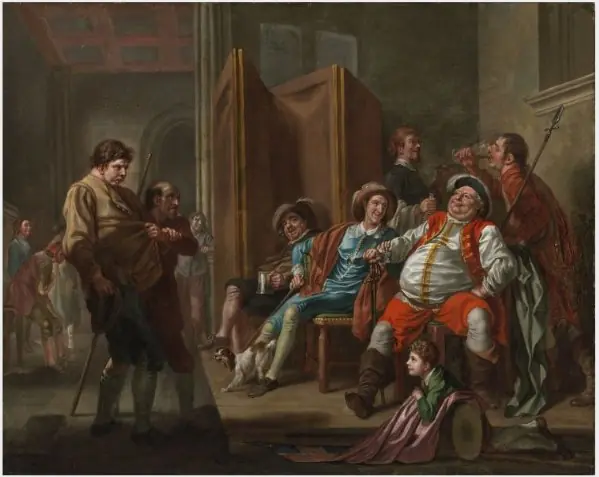 Falstaff Recruits from Shakespeare's 'Henry IV', Part II, Act III
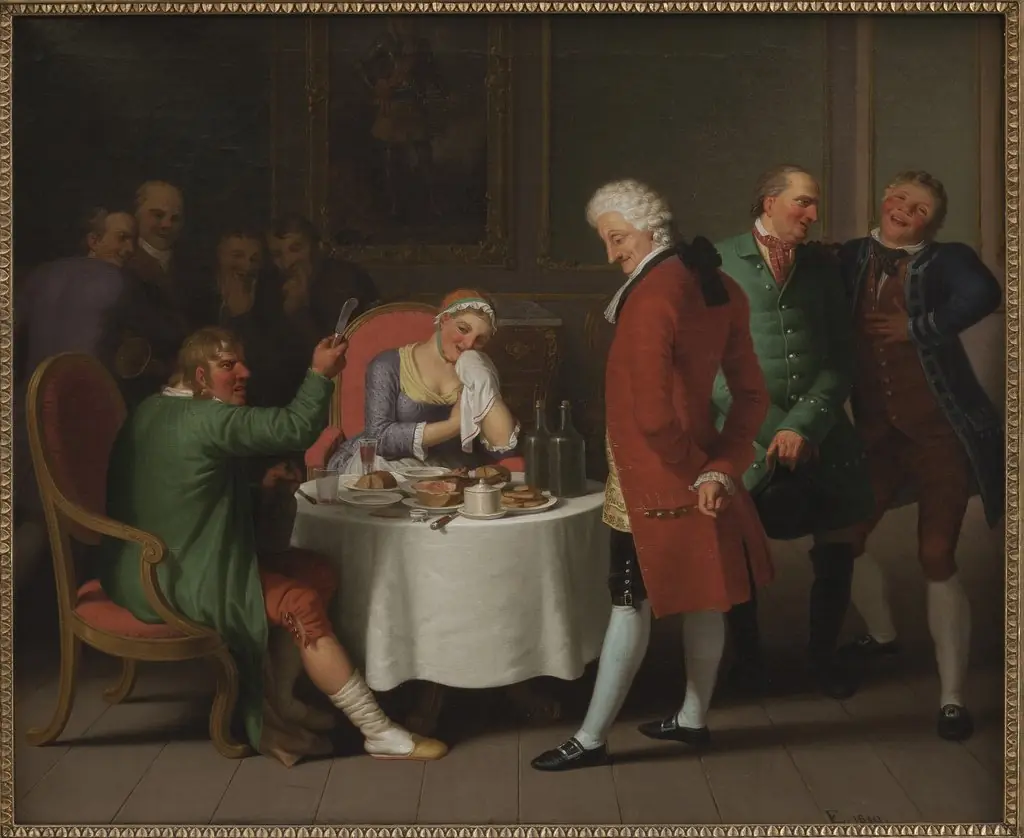 Motiv fra Ludvig Holbergs "Jeppe på Bjerget", III akt, 3. scene
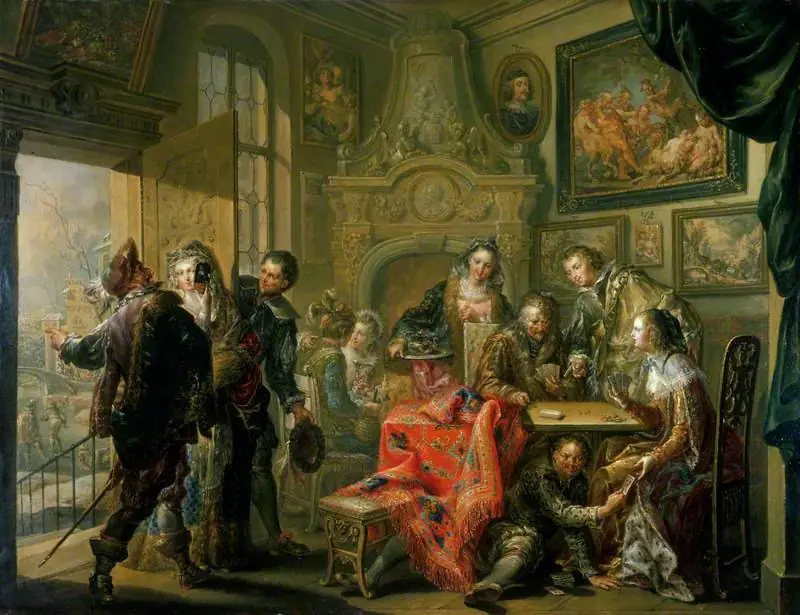 Winter
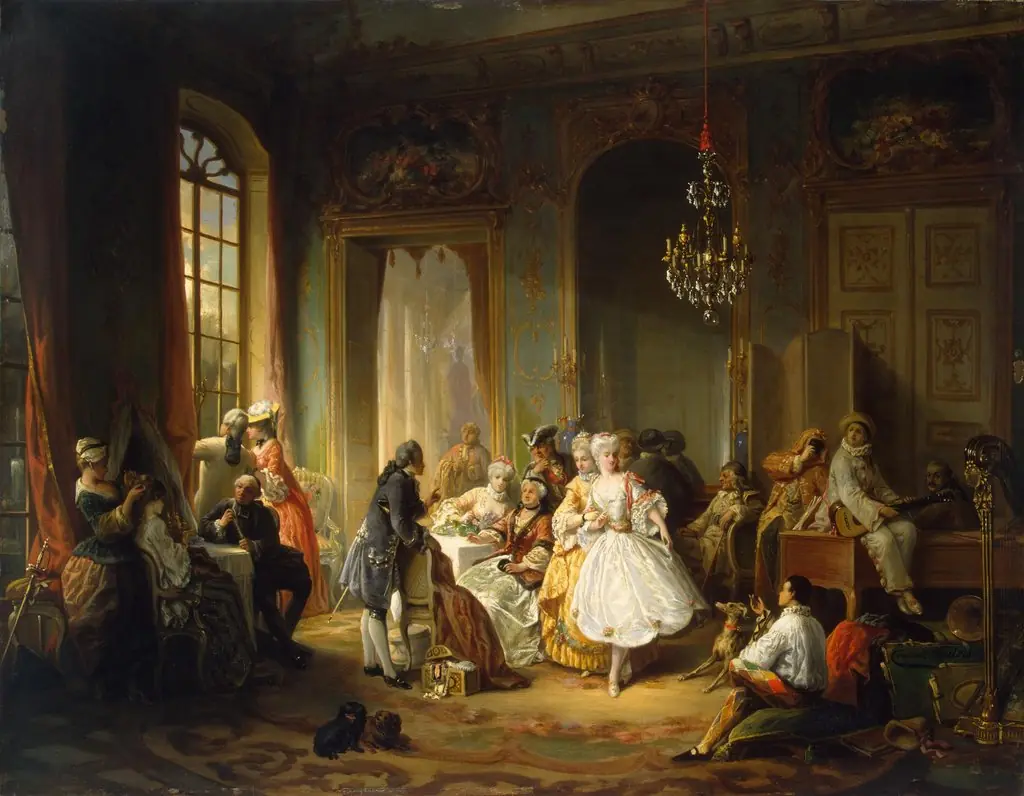 Actors Before a Performance
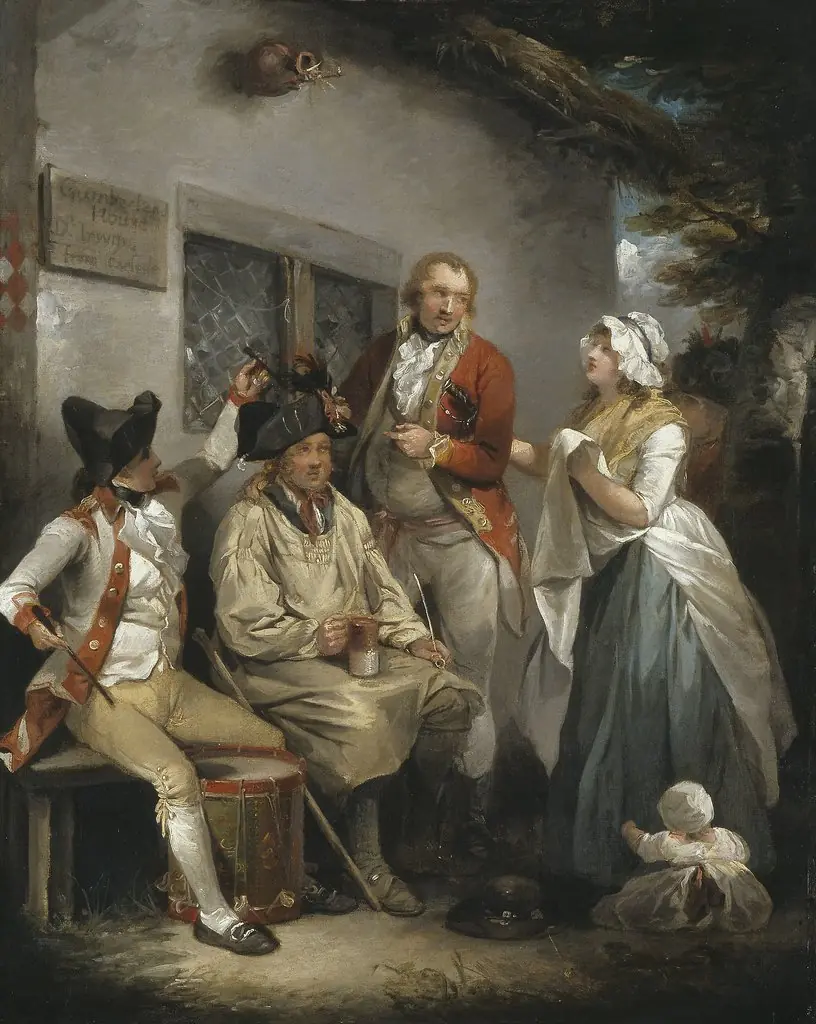 Trepanning a Recruit
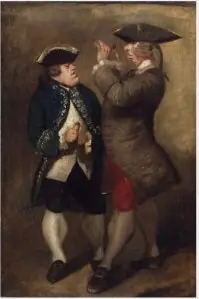 Caricature of Sir William Lowther and Joseph Leeson, later Ist Earl of Milltown
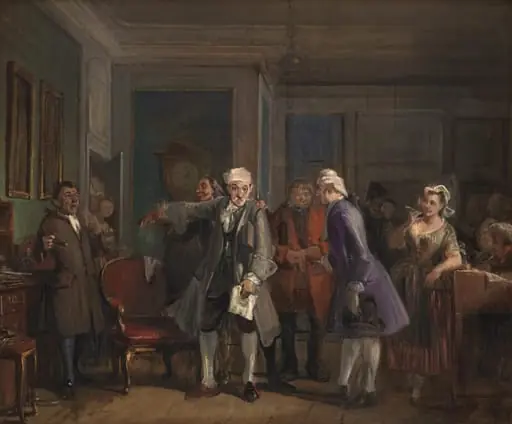 Fra Ludvig Holbergs "Den Stundesløse", I akt, 6. scene
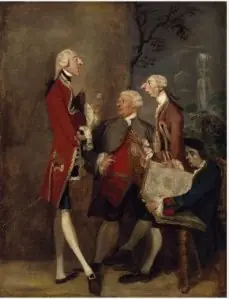 Caricature of Thomas Brudenell, Baron Bruce, the Hon. John Ward, Joseph Leeson, later 2nd Earl of Milltown, and Joseph Henry of Shafford
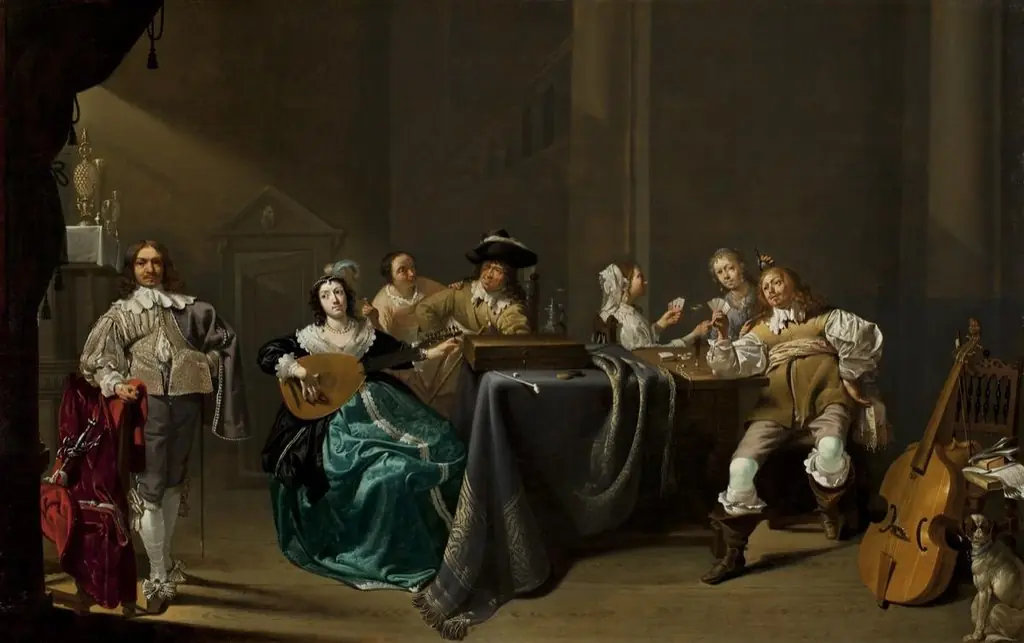 Card Players and Merrymakers
 Le Malade Imaginaire