Artwork
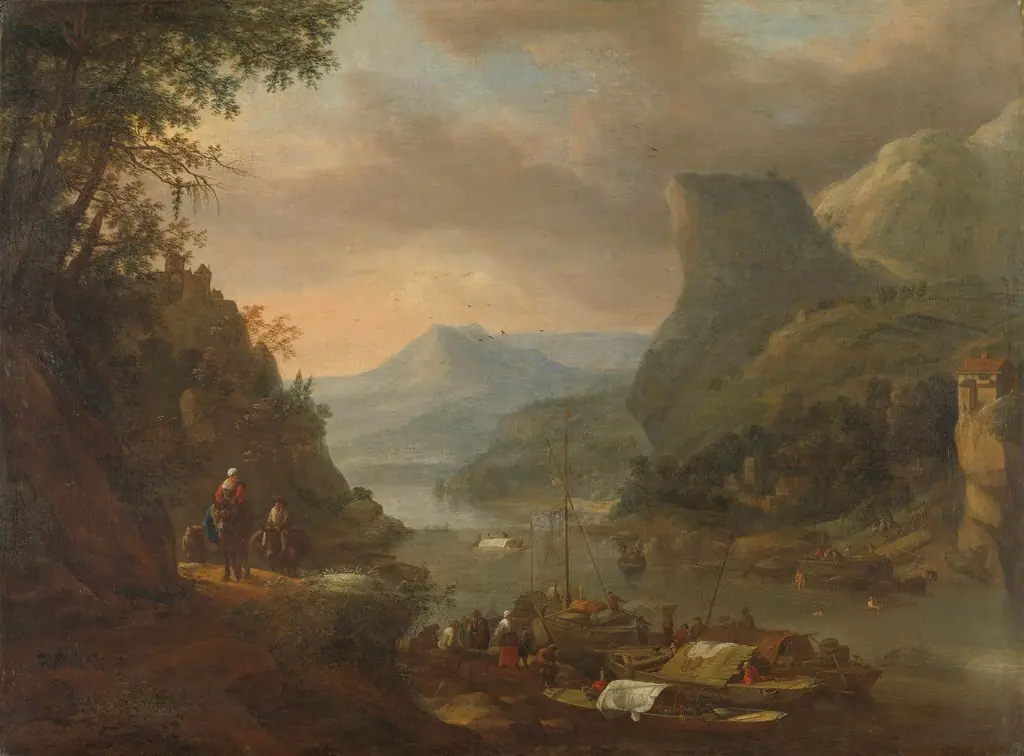
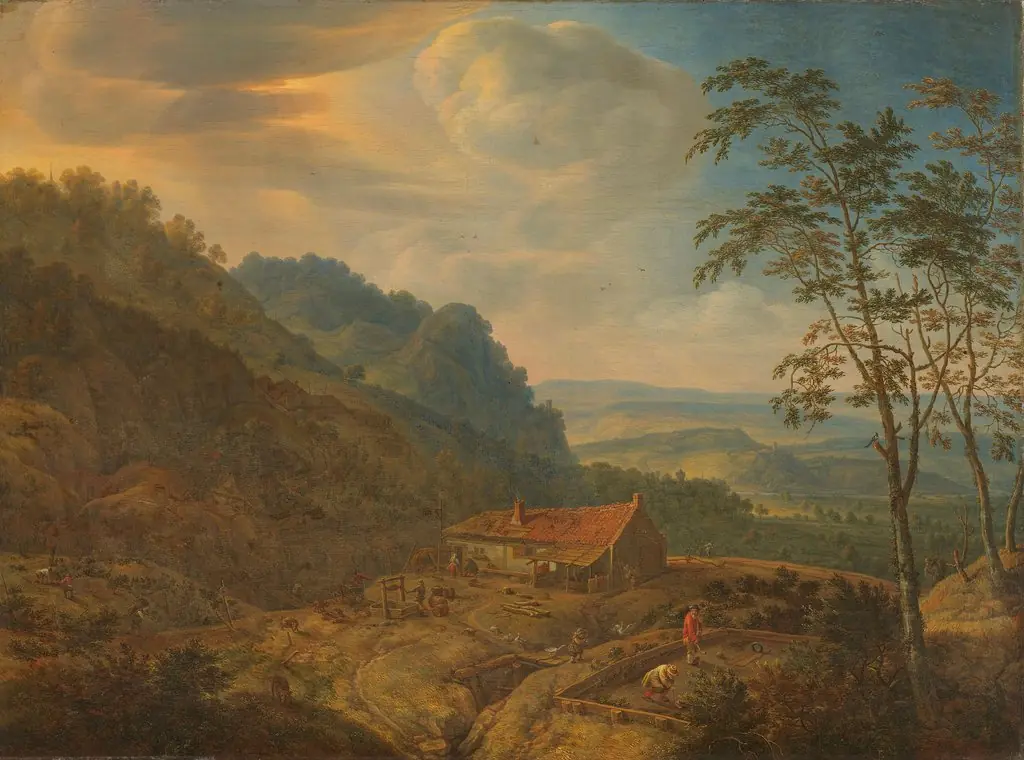
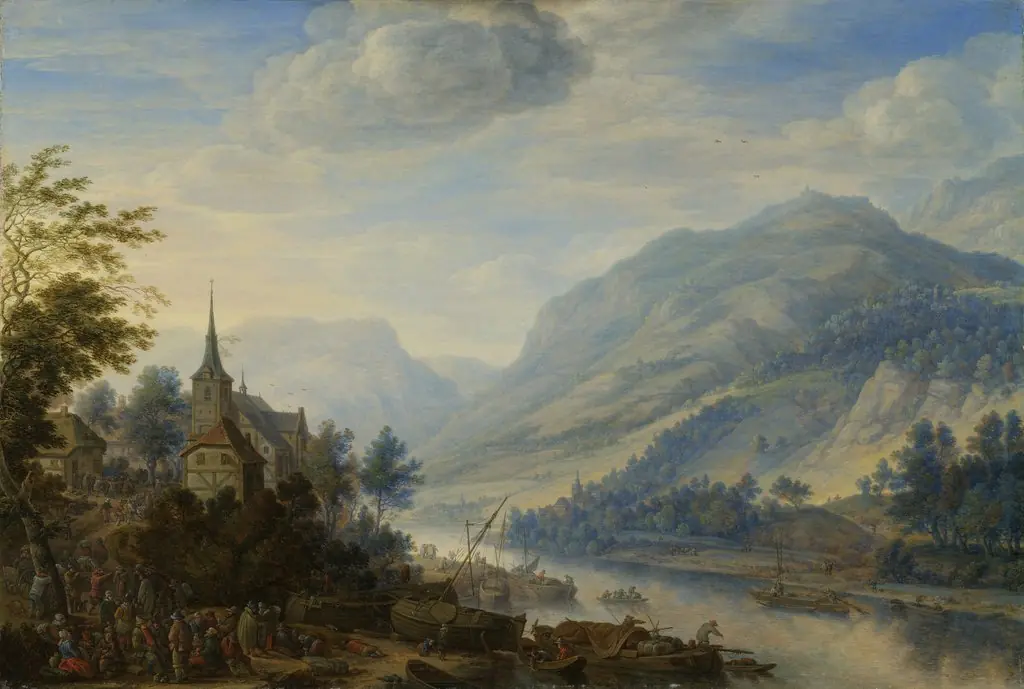
Mountainous landscape near Boppard aan de Rijn
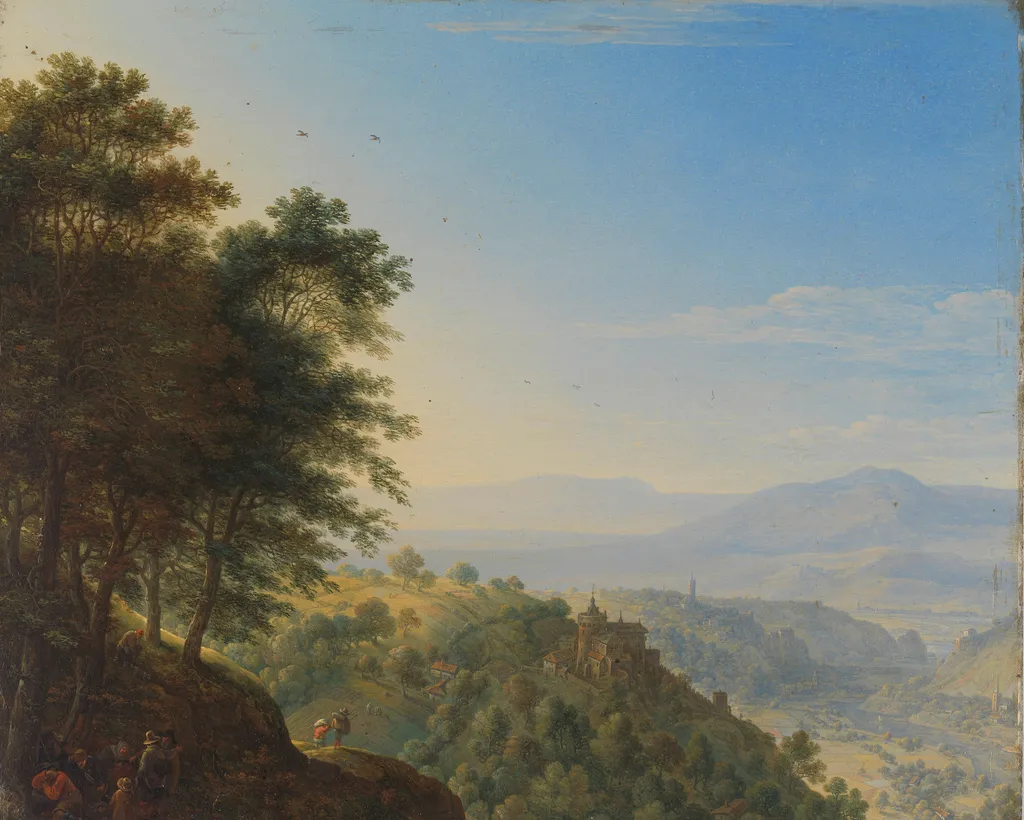
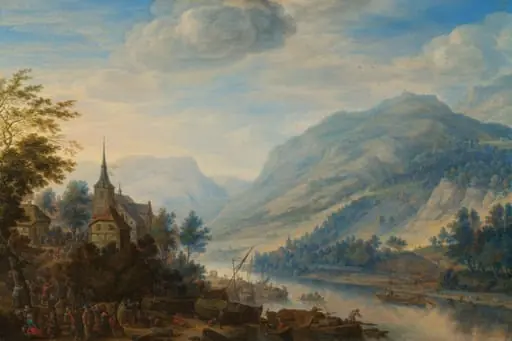
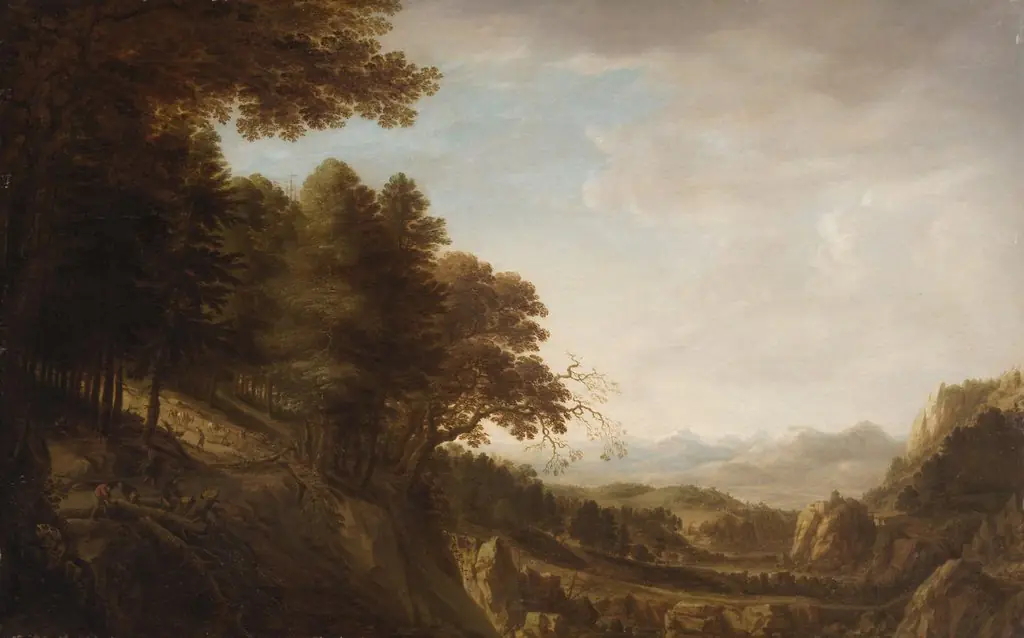
Mountainous landscape near Boppard aan de Rijn is an oil painting by the Dutch Golden Age artist Herman Saftleven. It dates from 1660 and is held in the collection of the Rijksmuseum.
About this work
Overview
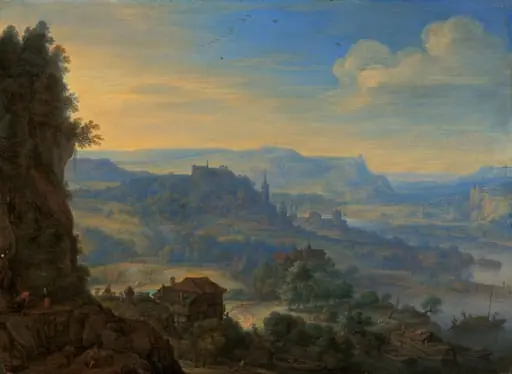
Created in 1660 by Dutch artist Herman Saftleven, this copper painting depicts a tranquil rural vista near Boppard on the Rhine. The work is part of the Rijksmuseum’s collection and presents a broad, gently undulating landscape that extends toward distant mountains.
Subject & Meaning
The scene features rolling hills crowned by a modest castle, a meandering river, and a sky of clear blue punctuated by a few clouds. Figures strolling along a path provide a human scale, emphasizing the expansive nature of the countryside.
Technique & Style
Saftleven employed a muted palette and fine brushwork to render the interplay of light and shadow across trees, trunks, and hills, creating a convincing sense of depth. The use of copper as a support allows for delicate detailing, particularly in the rendering of foliage and distant terrain.
History & Provenance
The painting has been in the Rijksmuseum’s holdings since its acquisition, though earlier ownership records are limited. Its attribution to Saftleven is based on stylistic analysis and the artist’s known focus on landscape subjects during the mid‑17th century.
Context
Saftleven worked during the Dutch Golden Age, a period when landscape painting flourished. His choice of a Rhine locale reflects contemporary interest in depicting foreign scenery, catering to patrons who prized picturesque views of distant lands.
Own this work as a print
Artist & collection