Artwork
Wine Harvest at the Rhine
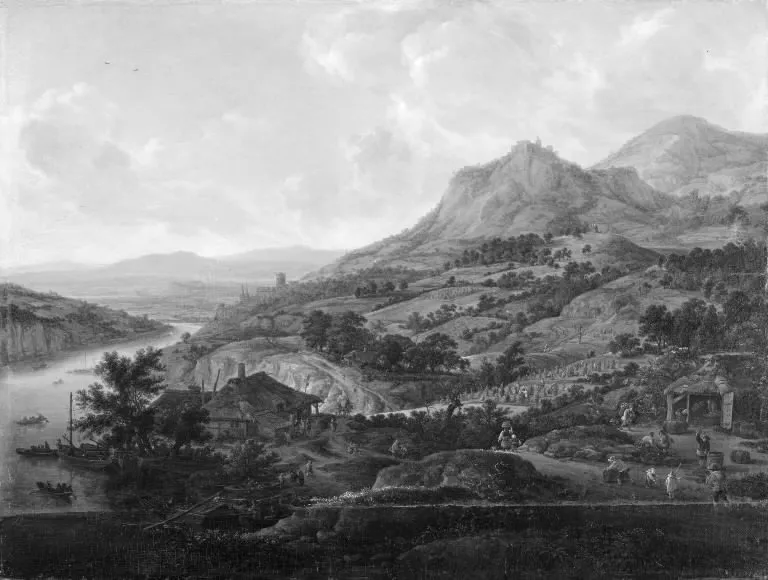
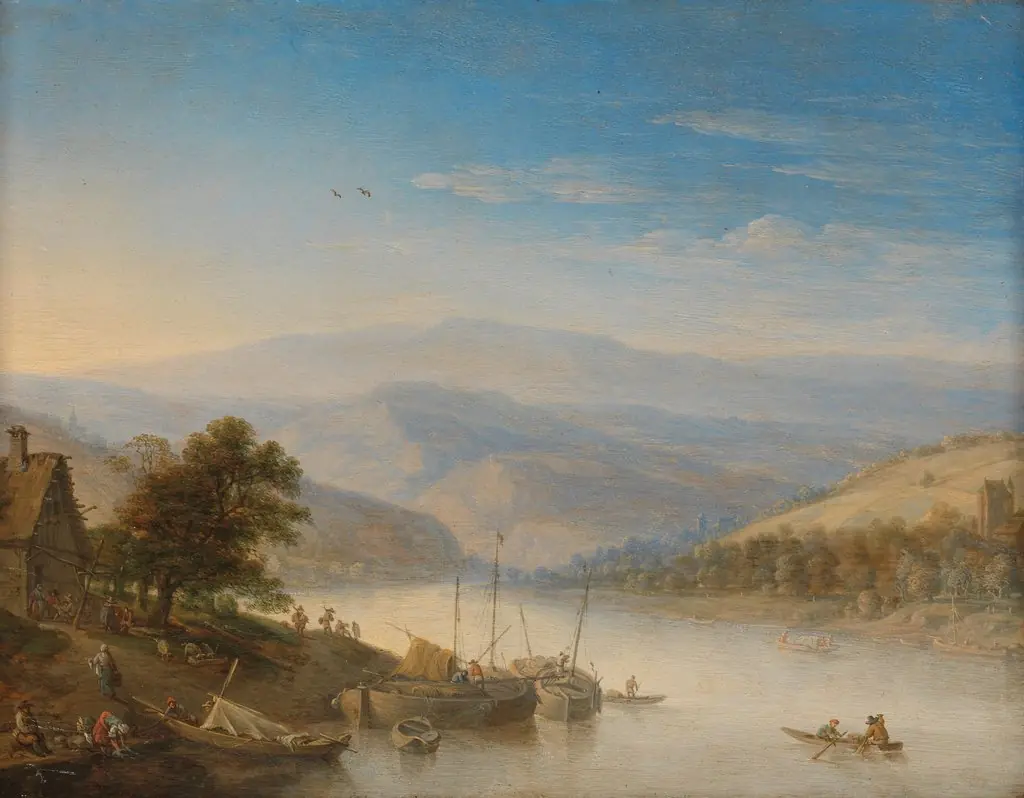
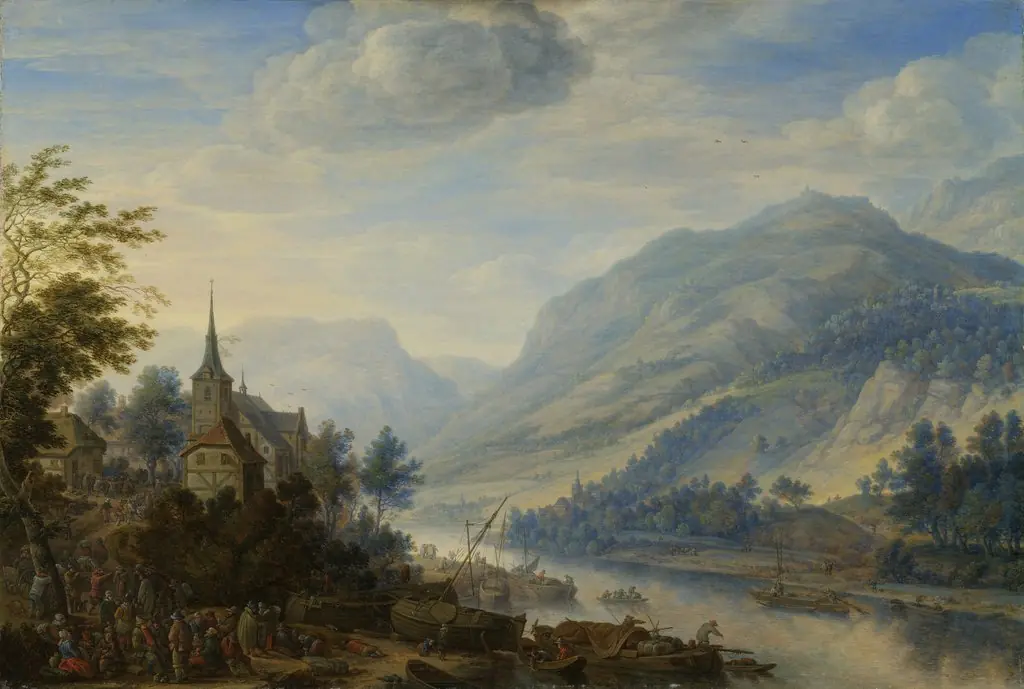
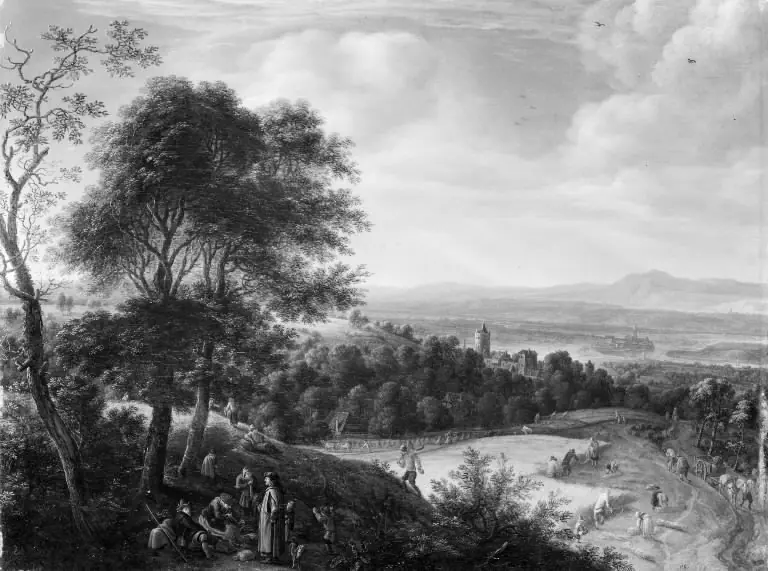
Wine Harvest at the Rhine is an unspecified painting by the Dutch Golden Age artist Herman Saftleven. It dates from 1659 and is held in the collection of the Statens Museum for Kunst.
About this work
Overview
Its composition balances natural elements with human labor, reflecting a calm, observed moment rather than a dramatic event.
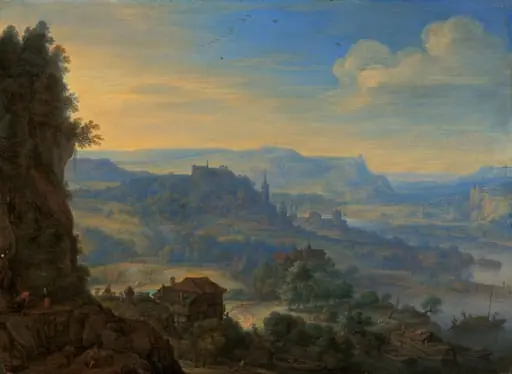
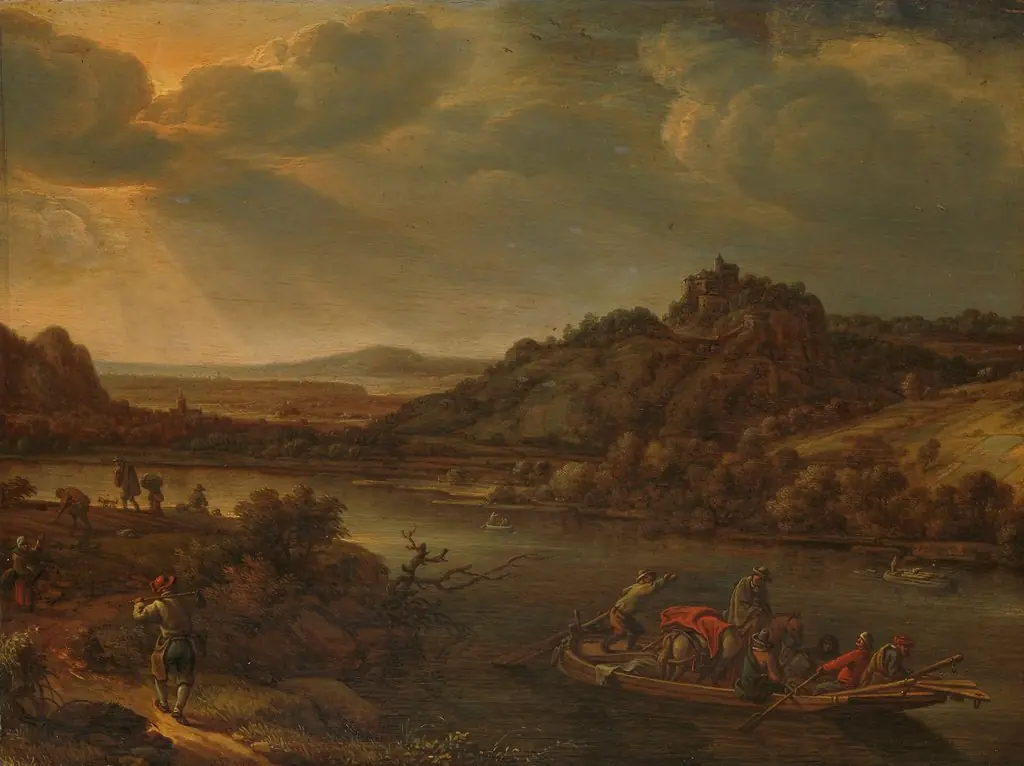
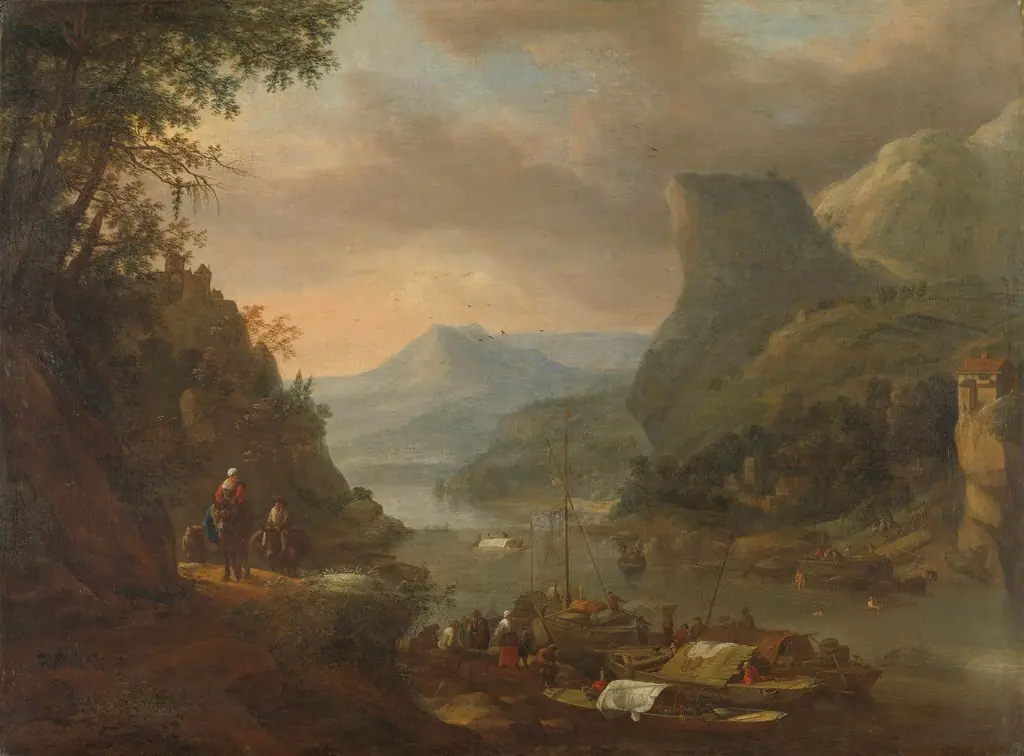
Painted in 1659 by Herman Saftleven, this landscape captures the seasonal rhythm of rural life along the Rhine. The scene unfolds with quiet activity, centered on grape harvesting, set against a broad river and rolling terrain. Its composition balances natural elements with human labor, reflecting a calm, observed moment rather than a dramatic event. The work resides in the Statens Museum for Kunst in Copenhagen.
Subject & Meaning
The painting portrays the annual wine harvest, a practical and communal task tied to the agricultural calendar. Figures are shown gathering grapes, tending to livestock, and moving along paths, suggesting daily routines rather than ceremonial celebration. The inclusion of distant buildings and scattered workers implies a settled, working landscape, where human activity is woven into the land without dominating it.
Technique & Style
Saftleven employs soft, diffused light to model forms and suggest atmospheric depth. Brushwork is restrained, favoring subtle tonal transitions over sharp detail. The horizon is low, allowing the sky to occupy much of the upper space, enhancing the sense of openness. Colors remain muted, with greens and earth tones dominating, reinforcing the painting’s quiet, observational tone.
History & Provenance
Created in 1659, the painting entered the collection of the Statens Museum for Kunst in Denmark, where it remains today. While little is documented about its early ownership, its presence in a major Nordic institution suggests it was acquired during the 19th or early 20th century as part of broader interest in Dutch and Flemish landscape traditions.
Context
In mid-17th century the Netherlands and Rhineland, landscape painting flourished as a genre independent of religious or mythological themes. Saftleven, trained in Utrecht, contributed to this trend by depicting everyday rural life with attention to local topography and seasonal labor. His work aligns with contemporaries who valued observation over idealization.
Legacy
Though not widely known outside specialist circles, Saftleven’s landscapes offer a quiet counterpoint to the more dramatic scenes of his peers. This painting exemplifies a restrained, documentary approach to rural life that influenced later generations of Northern European landscape painters. Its endurance in a major museum collection attests to its historical and aesthetic value.
Artist & collection