Artwork
A portrait of the Vigor Family: Jane Vigor, Joseph Vigor, Ann Vigor, William Vigor and probably John Penn
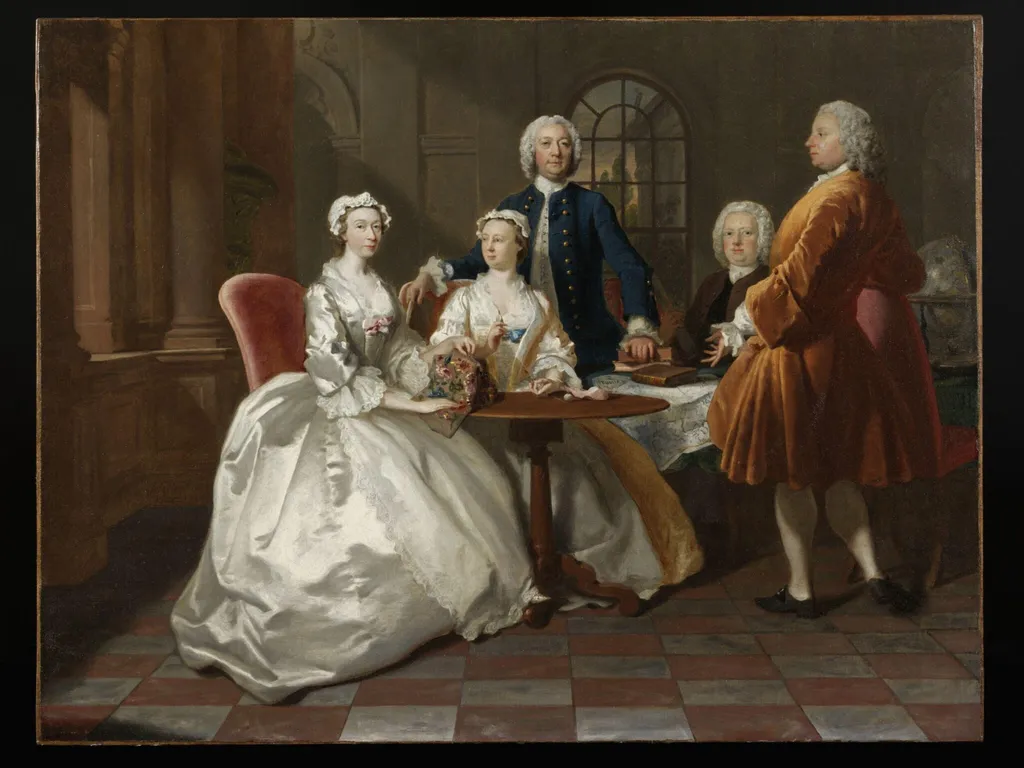
A portrait of the Vigor Family: Jane Vigor, Joseph Vigor, Ann Vigor, William Vigor and probably John Penn is an oil painting by the Baroque artist Joseph Highmore. It dates from 1744 and is held in the collection of the Victoria and Albert Museum.
About this work
Overview
The scene captures everyday moments—embroidery, thread-knotting, and scholarly objects—without formal posing.
This oil painting depicts five members of the Vigor family in a domestic interior, arranged in a relaxed, conversational grouping characteristic of 18th-century British conversation pieces. The scene captures everyday moments—embroidery, thread-knotting, and scholarly objects—without formal posing. The composition emphasizes intimacy and shared environment, reflecting the family’s social standing and domestic life through subtle visual cues rather than grandeur.
Subject & Meaning
Jane Vigor, seated at left, holds a piece of embroidery, symbolizing her skill and cultural refinement, though no tools are present, suggesting the work is displayed rather than in progress. The woman beside her, likely her sister-in-law Ann, knots silk thread with a shuttle and carries a small bag fastened to her wrist. The three men—Joseph Vigor and two sons—stand or sit nearby, their presence anchored by objects tied to global trade: a map of Russia, a globe, and books, hinting at mercantile connections and intellectual pursuits.
Technique & Style
Executed in oil, the painting employs soft modeling and naturalistic lighting to convey quiet realism. Figures are arranged in a loose, asymmetrical group, avoiding rigid formality. Details like the texture of fabric, the sheen of silk thread, and the grain of wooden furniture are rendered with precision. The artist avoids theatricality, favoring understated gestures and muted tones that reinforce the scene’s domestic authenticity and psychological subtlety.
History & Provenance
The painting is attributed to Joseph Highmore, a leading practitioner of the conversation piece genre in mid-18th-century England. While the identities of the male figures remain partially uncertain, Jane Vigor is well documented, and the map’s reference to Russia aligns with her husband’s commercial activities there. The work likely dates to the 1740s, reflecting the family’s status as mercantile elites connected to transnational trade networks and domestic cultural ideals.
Context
Conversation pieces emerged as a distinct genre among the British middle and upper classes, merging portraiture with narrative. They reflected values of familial harmony, domestic virtue, and intellectual curiosity. The inclusion of global references—Russia, navigation, books—signals the family’s participation in imperial commerce and Enlightenment ideals. Such paintings were not merely records but assertions of identity, blending personal achievement with broader cultural aspirations.
Legacy
This work exemplifies how domestic portraiture in 18th-century Britain conveyed social meaning through everyday objects and gestures. Its preservation offers insight into the lives of merchant families, particularly the roles of women in managing domestic crafts and the symbolic use of material culture. As a representative of Highmore’s oeuvre, it contributes to understanding the evolution of intimate portraiture before the rise of Romantic individualism.
Own this work as a print
Artist & collection

Artist
Joseph Highmore (13 June 1692 – 3 March 1780) was an English painter of portraits, conversation pieces and history subjects, illustrator and writer.

 John Thomlinson and His Family
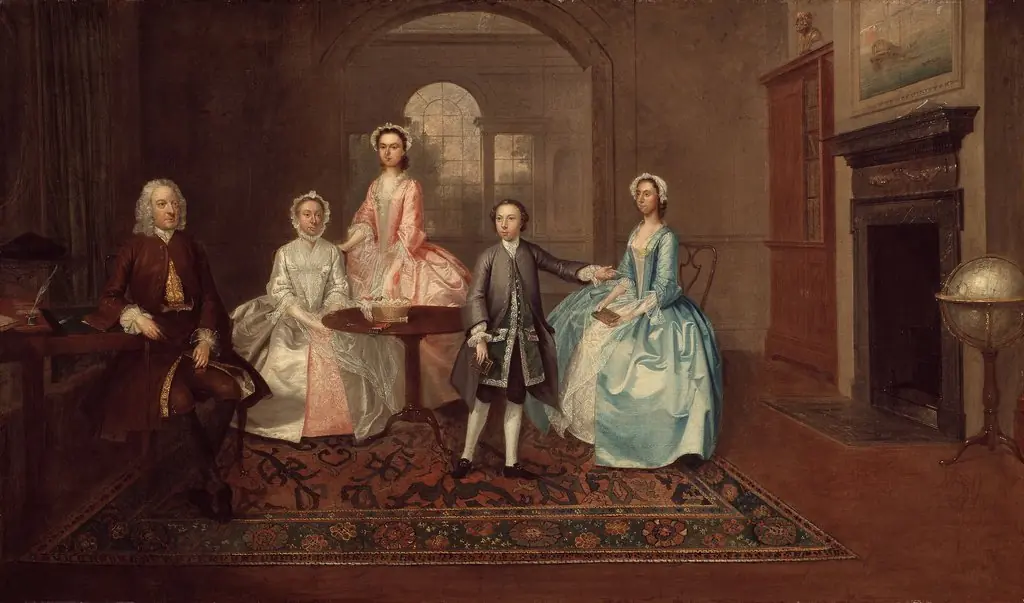 John Thomlinson and His Family
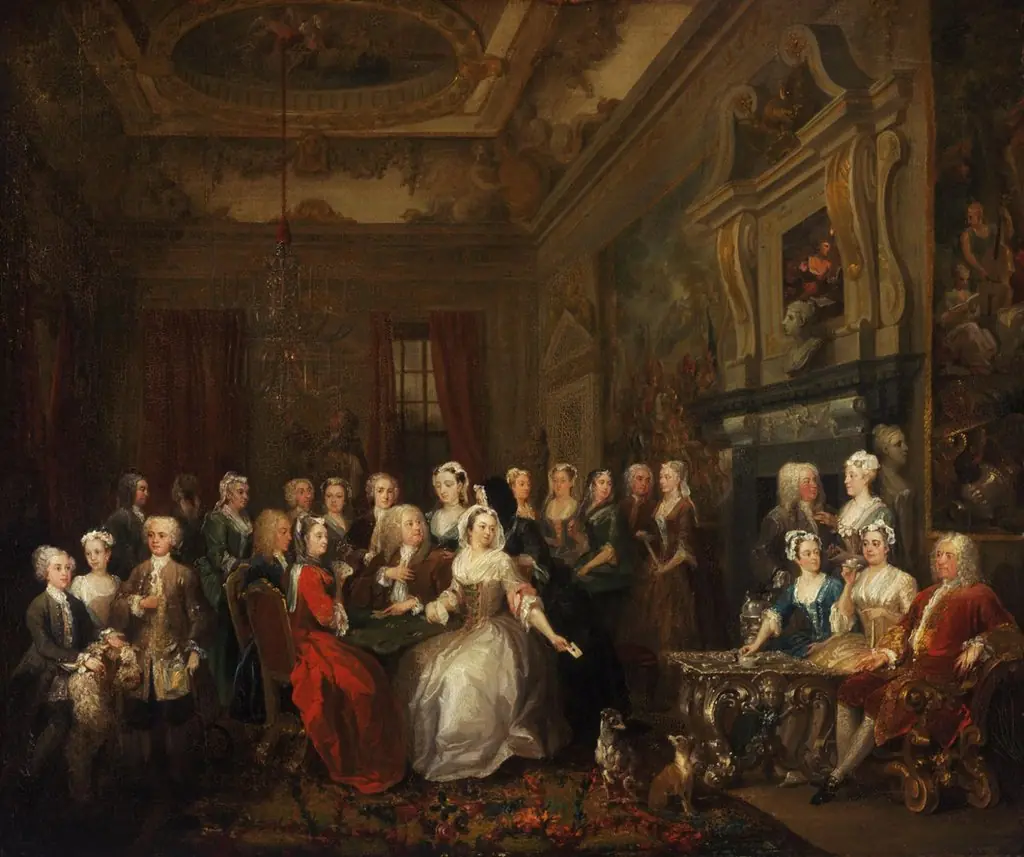 Assembly at Wanstead House
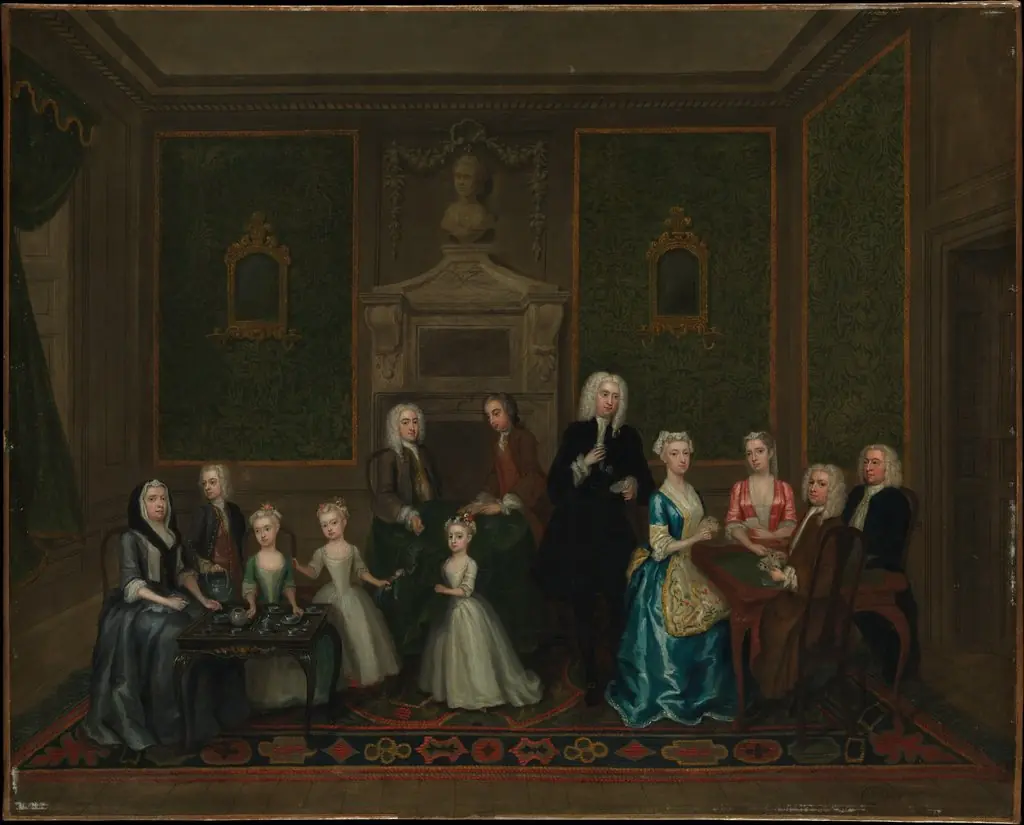 The Strong Family
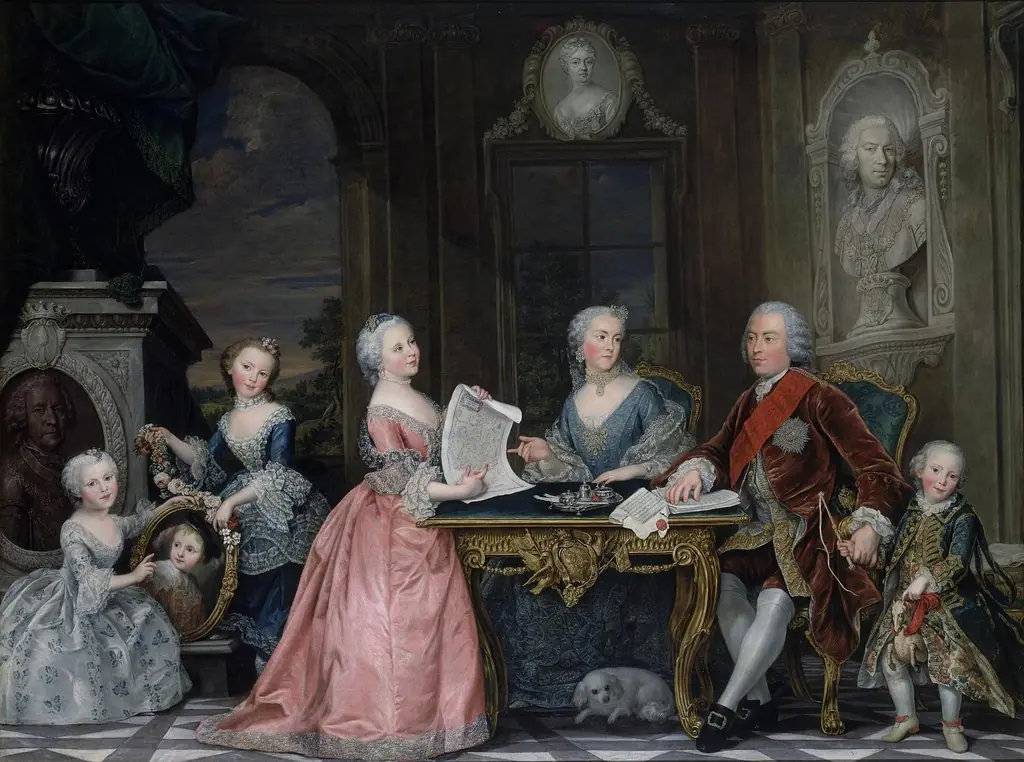 Portrait of Ambassador P.G. Chernyshev with Family
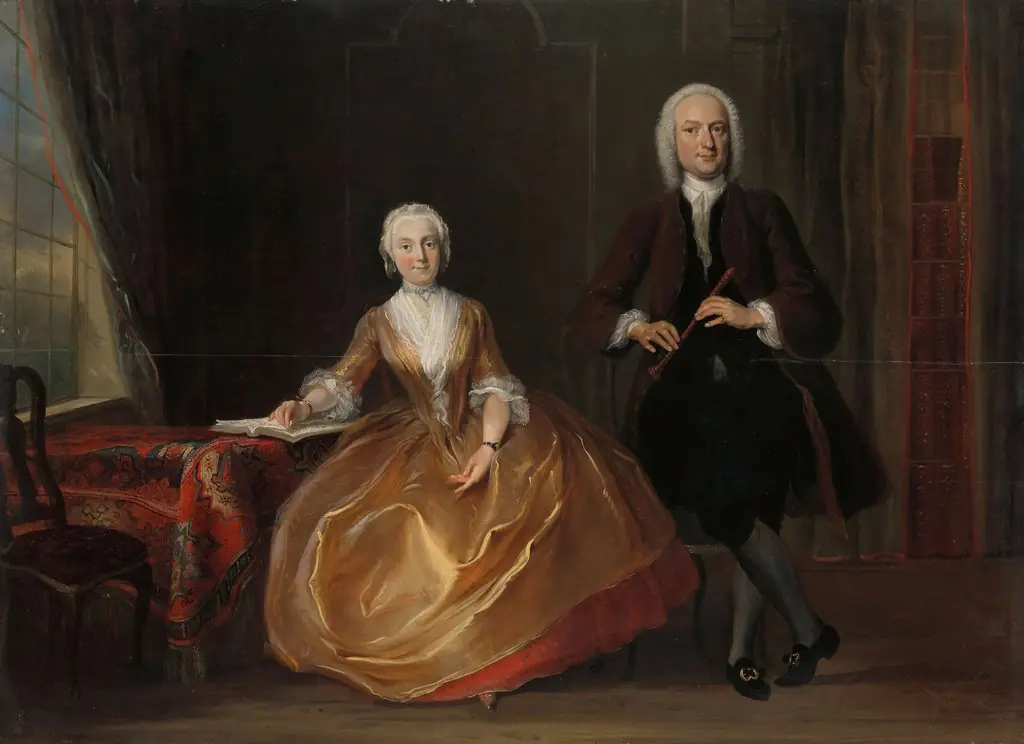 A Couple Making Music
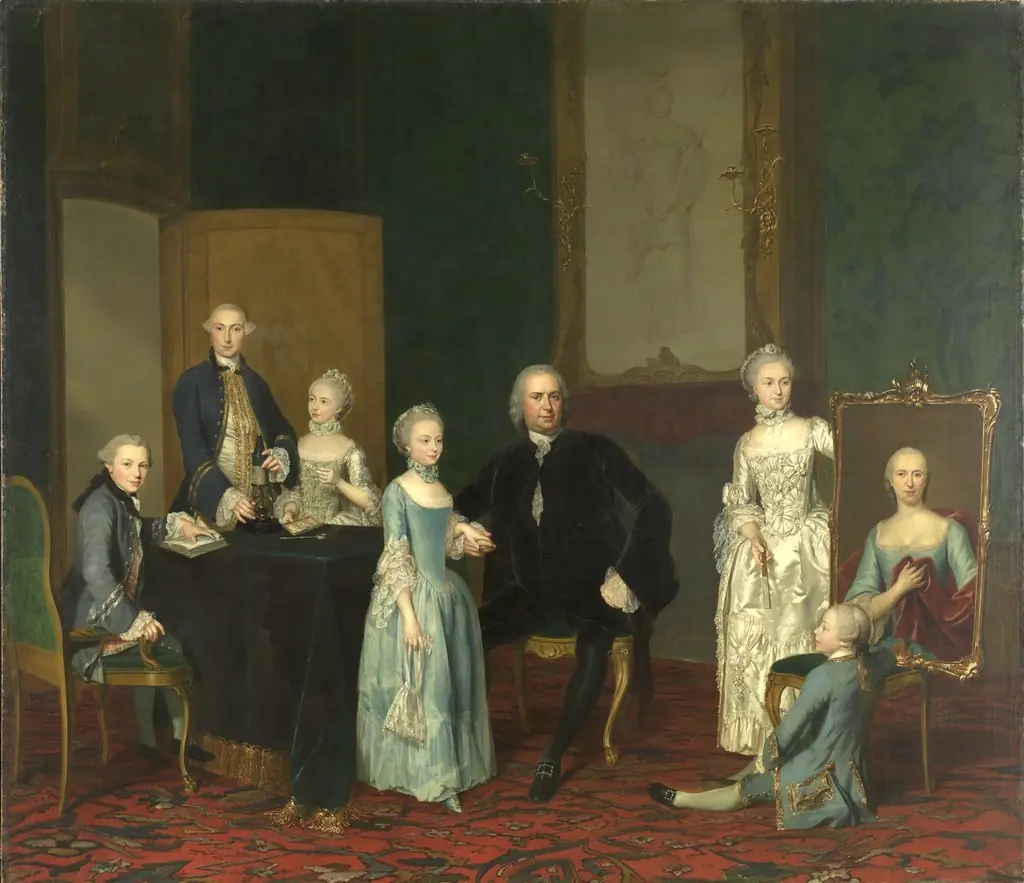 Portrait of Pieter Cornelis Hasselaer (1720–1797) and his Children
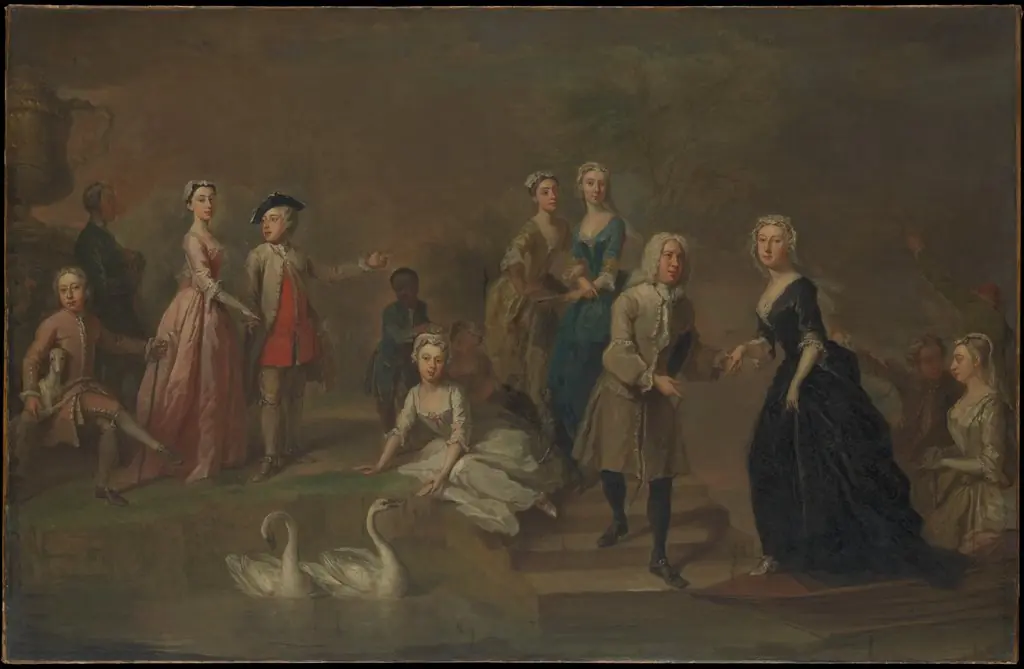 Uvedale Tomkyns Price (1685–1764) and Members of His Family
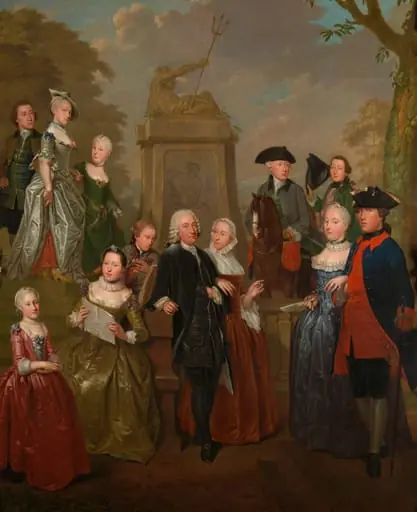 Portrait of Theodorus Bisdom van Vliet and his Family
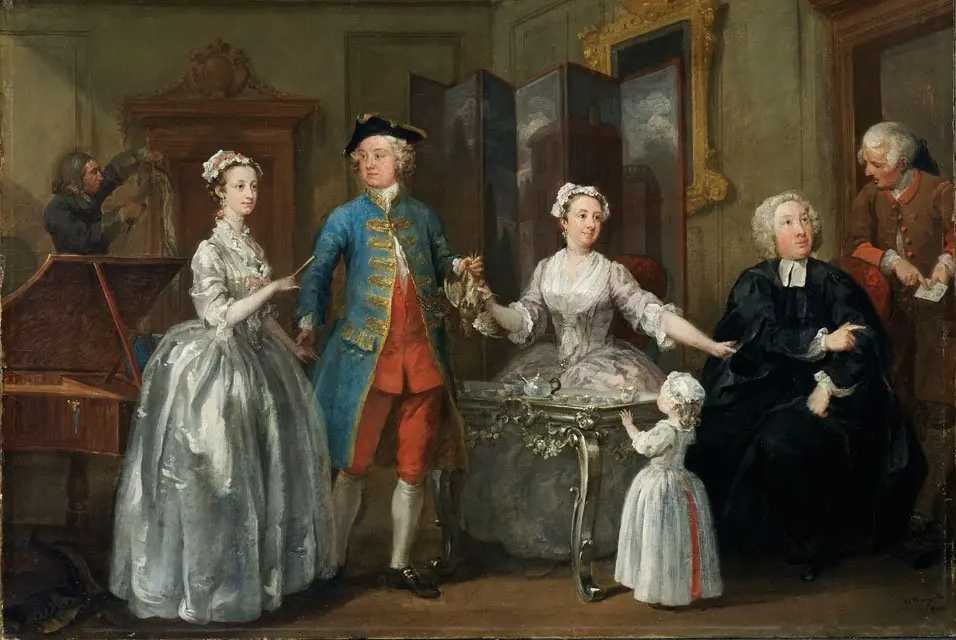 The Western Family
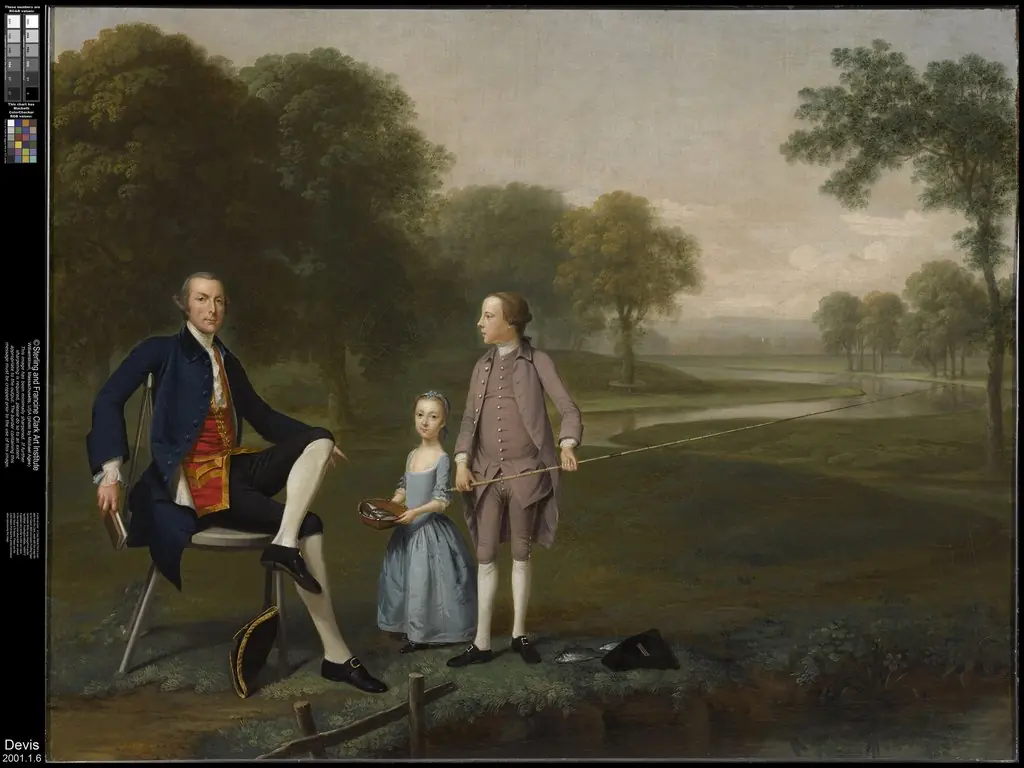 Richard Moreton, Esq. of Tackley with His Nephew and Niece John and Susanna Weyland
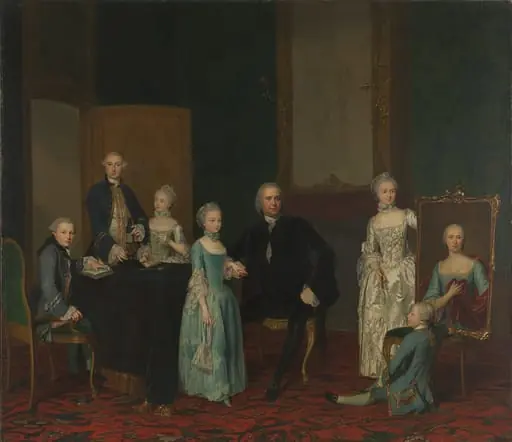 Portrait of Pieter Cornelis Hasselaer, Adviser to the Dutch East India Company and Burgomaster of Amsterdam, with his Family