Artwork
Untitled
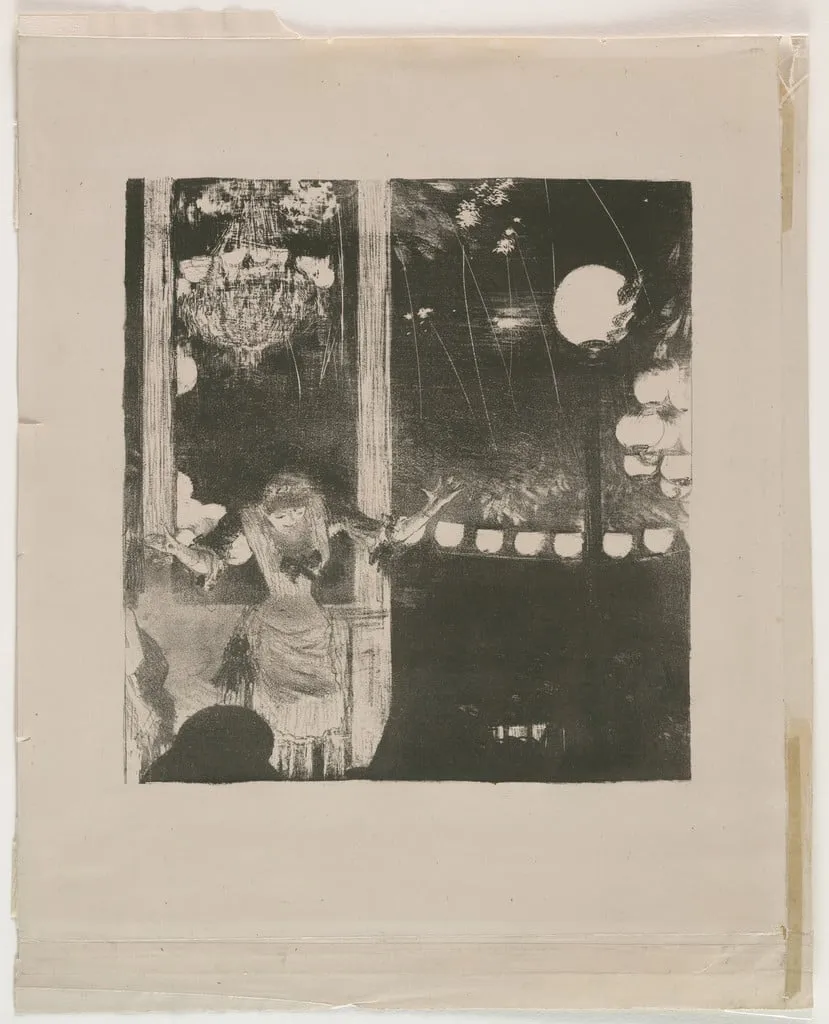
Untitled is an ink print by the Impressionist artist Edgar Degas. It dates from 1877 and is held in the collection of the Museum of Modern Art.
About this work
Overview
The work is unsigned and untitled, consistent with his practice of treating prints as studies or private explorations rather than finished public pieces.
Created circa 1877, this lithograph on paper is one of Edgar Degas’s lesser-known print works. Though often linked to Impressionism, Degas identified more closely with realism. This piece emerged during a phase when he actively experimented with printmaking, expanding his visual language beyond painting and sculpture. The work is unsigned and untitled, consistent with his practice of treating prints as studies or private explorations rather than finished public pieces.
Subject & Meaning
The image portrays a solitary woman standing before an open window, arms extended, dressed in a long garment with her hair drawn back. Her gaze is directed outward, suggesting introspection or quiet observation. The absence of narrative detail invites interpretation: she may be pausing after dance practice, awaiting someone, or simply absorbing the outside world. The stillness of her posture contrasts with the implied motion beyond the frame, a recurring tension in Degas’s depictions of private moments.
Technique & Style
Degas employed lithography to achieve subtle tonal gradations, using ink and stone to render light and shadow with precision. The dark interior contrasts sharply with the faintly suggested foliage beyond the window, achieved through delicate, sparse lines. The woman’s form is defined with firm contours, while the background remains ambiguous, emphasizing her isolation. The medium’s capacity for soft gradations suited his interest in atmospheric effects and the interplay of interior and exterior spaces.
History & Provenance
The lithograph was likely produced in Degas’s private studio during a period of intense print experimentation, around the same time he was creating his famous dancer series. It was not exhibited publicly during his lifetime and entered collections only posthumously. Its lack of signature and title suggests it was made for personal or artistic purposes rather than commercial distribution, reflecting Degas’s selective approach to sharing his graphic work.
Context
In the late 1870s, Degas was deepening his engagement with printmaking, influenced by Japanese woodcuts and contemporary French lithographic innovations. He often turned to domestic and backstage scenes—dancers, bathers, women at rest—as subjects, rejecting grand historical themes. This lithograph aligns with his broader focus on unposed, intimate moments, capturing the quiet rhythms of everyday life with psychological nuance rather than theatricality.
Legacy
Though not widely reproduced or exhibited in his lifetime, this work contributes to the understanding of Degas’s graphic output as a parallel to his paintings. It reveals his sustained interest in solitude, light, and the boundaries between public and private space. Later scholars have recognized such prints as essential to his artistic evolution, demonstrating how printmaking allowed him to refine composition and mood with economy and restraint.
Artist & collection
Artist
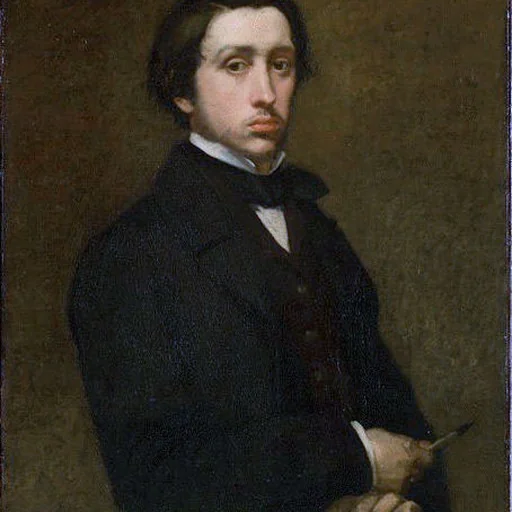
Born Hilaire-Germain-Edgar De Gas on 19 July 1834 in Paris, Edgar Degas came from an affluent banking family with aristocratic roots and spent his childhood among the cultivated circles of the French capital.

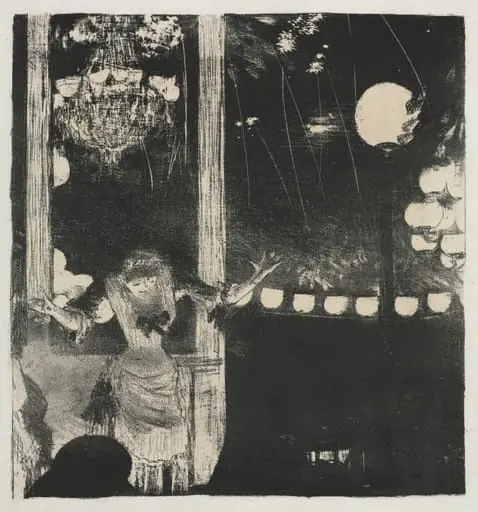 Mlle Bécat at the Café des Ambassadeurs
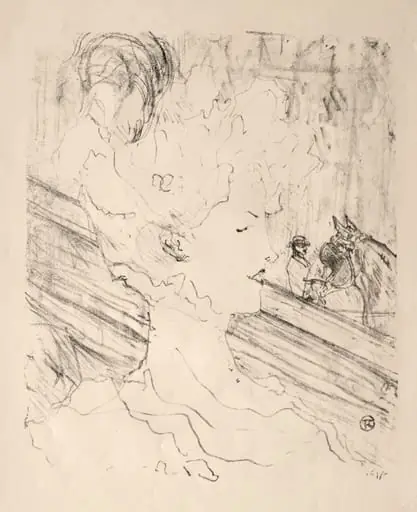 Emilienne d'Alençon
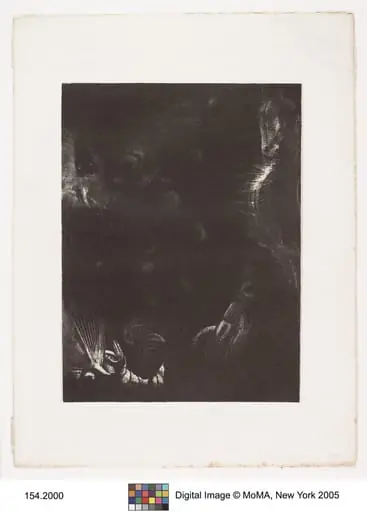 Untitled
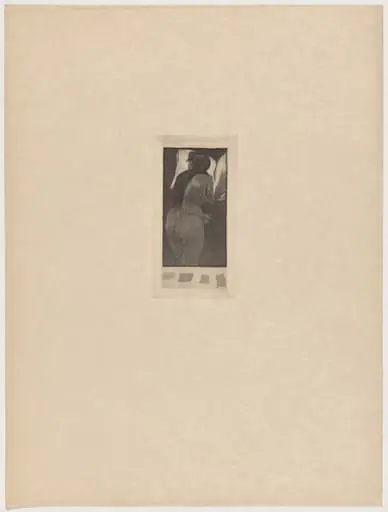 Départ pour le sabbat (Departure for the Sabbath)
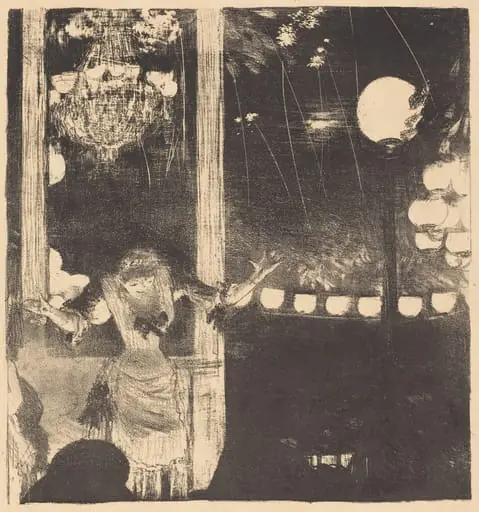 Mademoiselle Bécat at the Cafe des Ambassadeurs (Aux Ambassadeurs: Mlle Bécat)
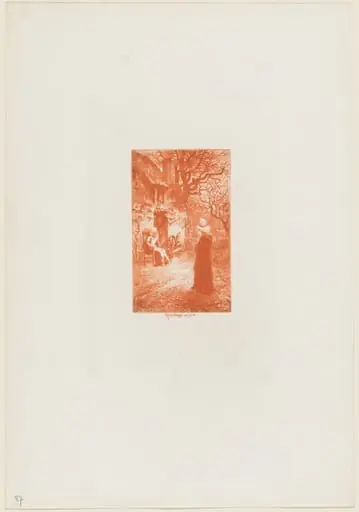 Elle venait lentement...
 Paysage (Landscape)
 En Hollande (La petite liseuse)
 Tristan and Isolde, Act II: Signal in the Night
 Untitled