Artwork
The Needles, Isle of Wight
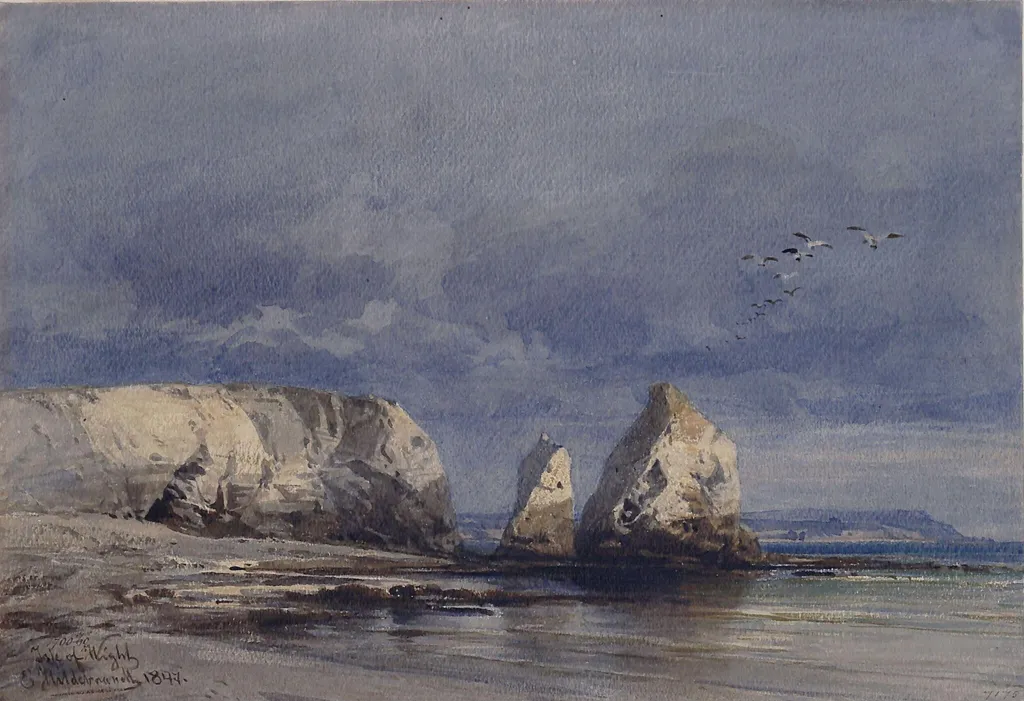
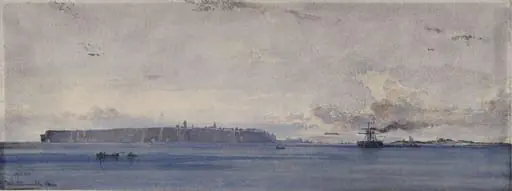
The Needles, Isle of Wight is a watercolor work on paper by the German Romanticist artist Eduard Hildebrandt. It dates from 1847 and is held in the collection of the Victoria and Albert Museum.
About this work
Overview
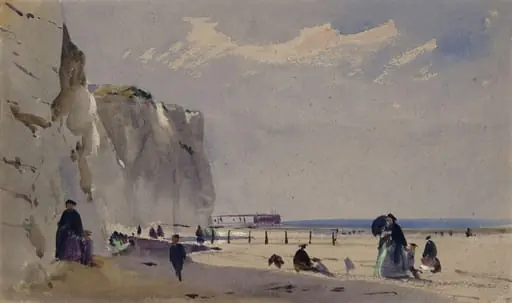
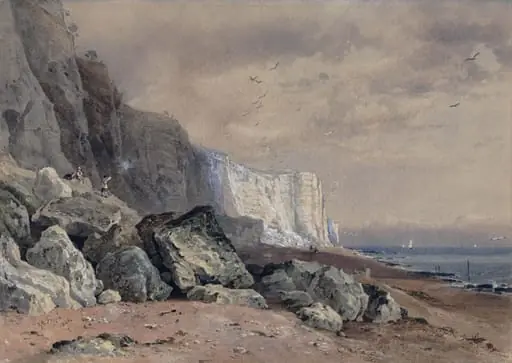
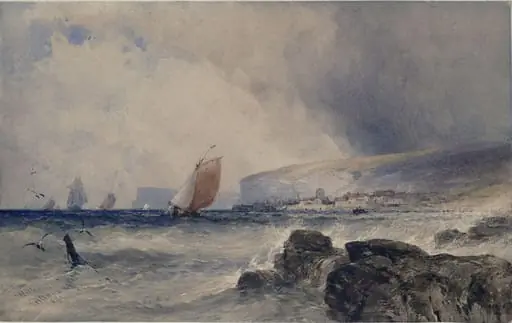
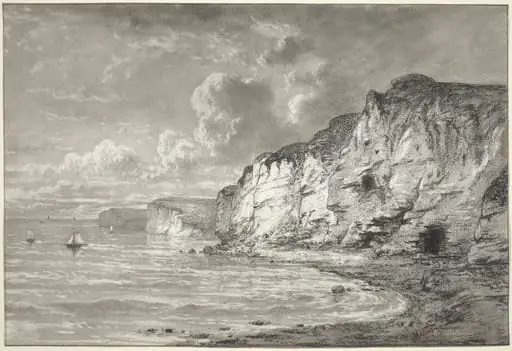
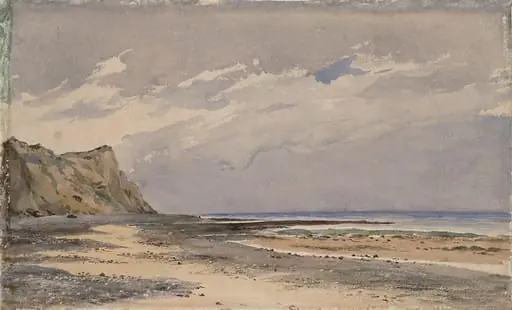
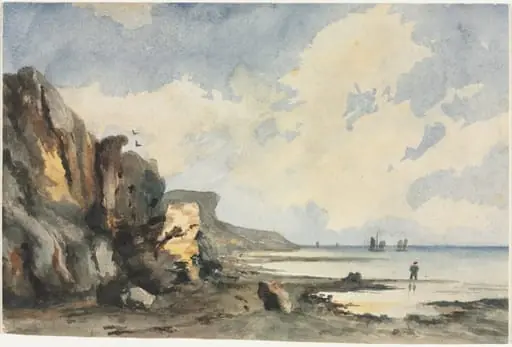
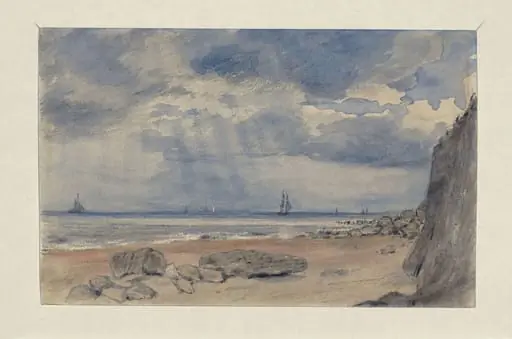
Painted in 1847, this watercolour by Eduard Hildebrandt captures the rugged coastline of The Needles on the Isle of Wight.
Painted in 1847, this watercolour by Eduard Hildebrandt captures the rugged coastline of The Needles on the Isle of Wight. Executed in transparent washes, the work conveys a sense of atmospheric tension between land and sea. The artist’s signature appears on the piece, confirming its origin and date. The composition focuses on the verticality of the chalk formations against a turbulent ocean and overcast sky.
Subject & Meaning
The Needles—three towering sea stacks—are rendered as enduring, almost elemental forms rising from the churning water. Their jagged silhouette contrasts with the fleeting movement of birds and clouds, suggesting nature’s permanence against transience. The scene evokes a quiet awe, aligning with Romantic ideals that viewed wild landscapes as sites of sublime power and spiritual resonance.
Technique & Style
Hildebrandt employed delicate watercolour layers to suggest texture without heavy definition. Soft washes model the cliffs’ uneven surfaces, while sparing use of white paper creates highlights where light strikes the rock. The sea is suggested through fluid, irregular strokes, and the sky remains muted, enhancing the drama of the foreground. The technique prioritizes mood over precision, favoring atmospheric effect.
History & Provenance
Created during Hildebrandt’s travels along the British coast, the work reflects his interest in maritime landscapes. It was likely produced as a personal study or sketch, later preserved as a finished piece. No documented exhibition history exists prior to the 20th century, but its survival suggests private ownership and continued appreciation for its quiet intensity.
Context
In mid-19th-century Europe, artists increasingly turned to natural scenery as subjects worthy of serious attention. Hildebrandt’s work aligns with broader trends in German and British Romanticism, where unspoiled nature was seen as a counterpoint to industrialization. The Isle of Wight, accessible yet remote, attracted artists seeking dramatic coastal forms untouched by urban development.
Legacy
Though not widely exhibited, the painting contributes to a body of work that documented Britain’s coastal geology through a Romantic lens. Hildebrandt’s restrained watercolour approach influenced later topographical artists who valued subtlety over spectacle. The piece remains a quiet example of how nature’s grandeur could be conveyed through understated technique.
Own this work as a print
Artist & collection