Artwork
Gateway to Kitchen Court, Eastbury Park, Nr.Blandford
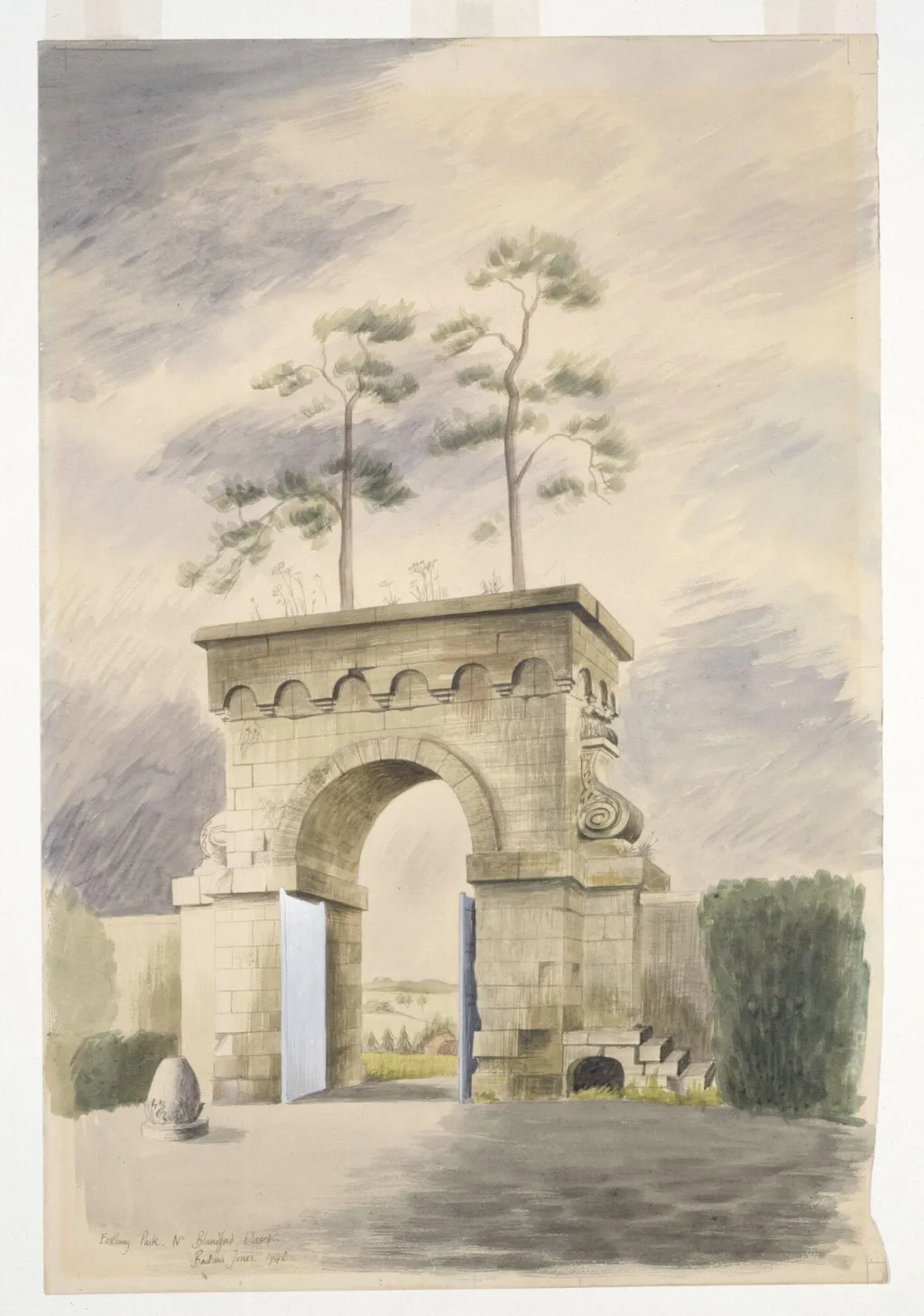
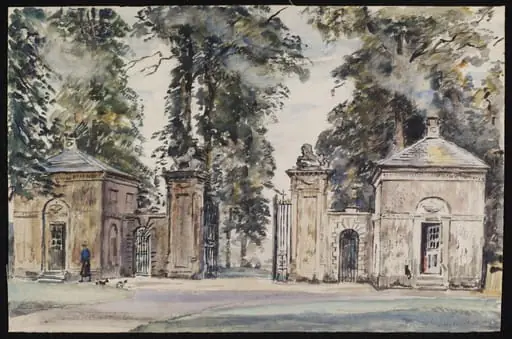
Gateway to Kitchen Court, Eastbury Park, Nr.Blandford is a watercolor work on paper by Hind. It dates from 1942 and is held in the collection of the Victoria and Albert Museum.
About this work
Overview
The work is one of over 1,500 pieces compiled under the scheme, which sought to preserve a visual record of England’s rural and architectural heritage.
Created in 1942, this watercolour by John Hind captures a stone archway at Eastbury Park near Blandford. It was produced as part of the 'Recording Britain' initiative, a wartime project that enlisted artists to document landscapes and structures at risk from conflict and modernization. The work is one of over 1,500 pieces compiled under the scheme, which sought to preserve a visual record of England’s rural and architectural heritage.
Subject & Meaning
The subject is a modest stone archway, once part of a country estate’s approach, framed by two pine trees and set beneath a soft, overcast sky. A small stone feature in the foreground and scattered vegetation suggest a quiet, neglected corner of the grounds. The scene conveys stillness and quiet decay, reflecting the project’s aim to record places perceived as fading from public view amid wartime disruption and social change.
Technique & Style
Hind employed transparent watercolour washes to suggest subtle shifts in light and texture, with delicate linework defining the arch’s stonework and foliage. The palette is muted, dominated by greys, ochres, and greens, enhancing the sense of calm. His approach is observational rather than dramatic, focusing on quiet detail—carved ornamentation, the play of shadow on stone, and the irregularity of natural growth around the structure.
History & Provenance
The painting was commissioned by the Pilgrim Trust under the direction of Sir Kenneth Clark as part of the 'Recording Britain' project, which ran from 1940 to 1943. It was one of 97 artists’ contributions documenting England’s threatened vernacular landscapes. The work entered the Victoria and Albert Museum’s collection through the scheme and remains part of its permanent holdings, preserved as a historical record rather than a decorative object.
Context
During the Second World War, fears of cultural loss prompted efforts to document Britain’s architectural and rural heritage before it could be altered by bombing, neglect, or development. 'Recording Britain' responded to this anxiety, focusing on country houses, gateways, and rural scenes—elements seen as emblematic of a disappearing way of life. Hind’s archway, though unremarkable in scale, became a quiet testament to this mission.
Legacy
The 'Recording Britain' collection endures as a significant archive of mid-20th-century English topography. Hind’s watercolour contributes to this record not through grandeur, but through its attentive rendering of ordinary, overlooked structures. Today, it serves as both an artistic document and a historical marker, offering insight into how wartime Britain chose to remember its quieter landscapes.
Artist & collection
Artist
Hind painted quiet English doorways and churchyards in watercolour during the 1930s and 40s.

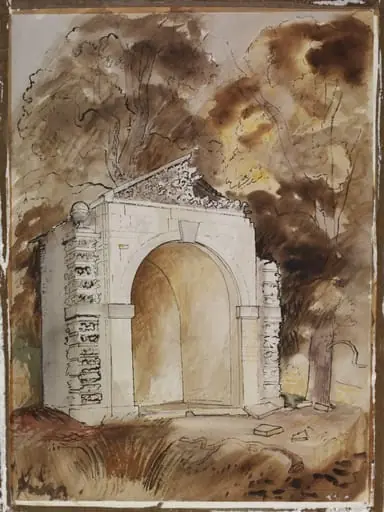 The Duck House in the Park of Buckland House near Faringdon
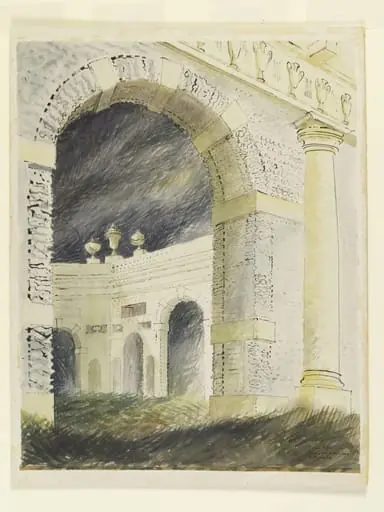 Dashwood Mausoleum, West Wycombe
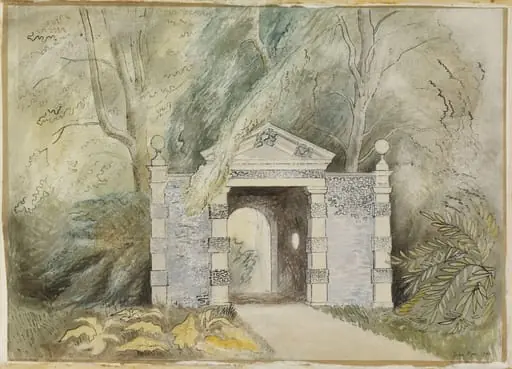 The river approach, Fawley Court
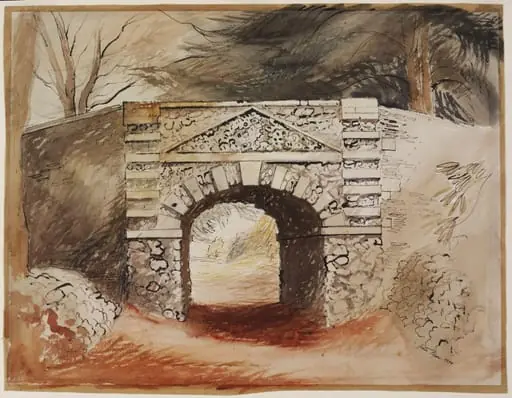 The Tunnel in the grounds of Buckland House, near Faringdon
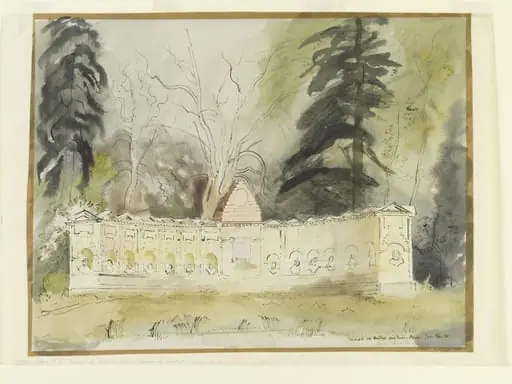 The Temple of British Worthies, Stowe, Gloucestershire
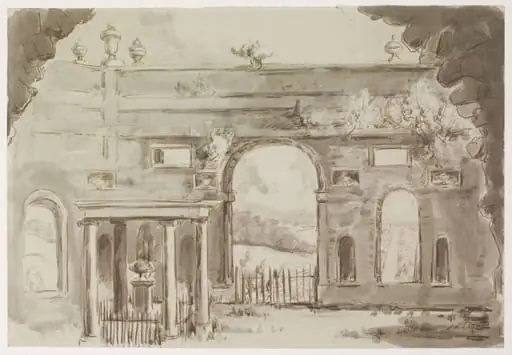 Dashwood Mausoleum West Wycombe, with road to High Wycombe
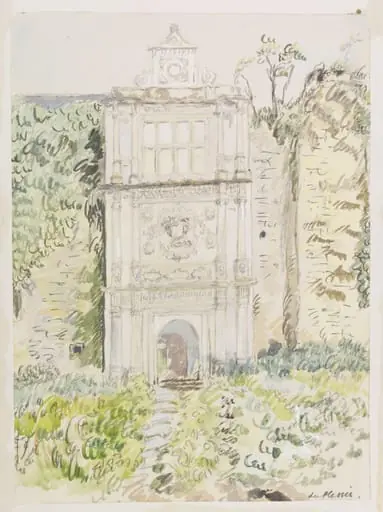 Gateway, Beaupre, Glamorganshire
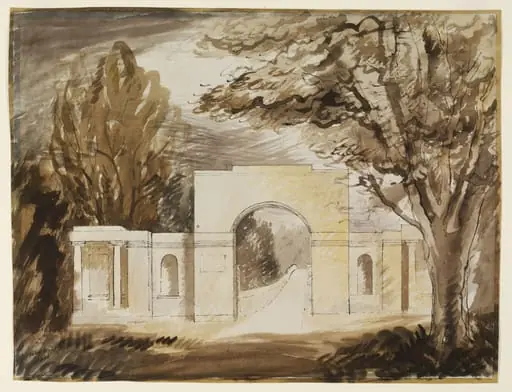 Entrance screen, Tyringham
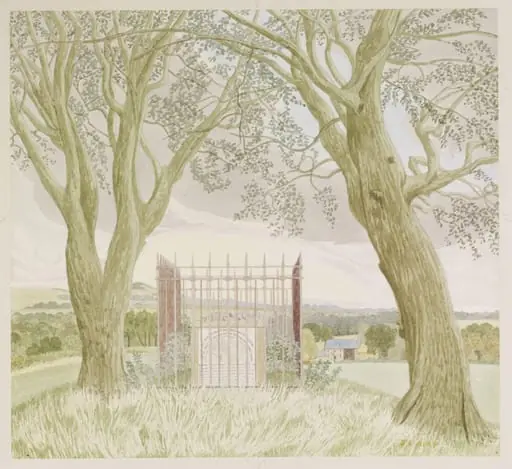 The Miller's Tomb, Highdown Hill near Goring-by-the-Sea
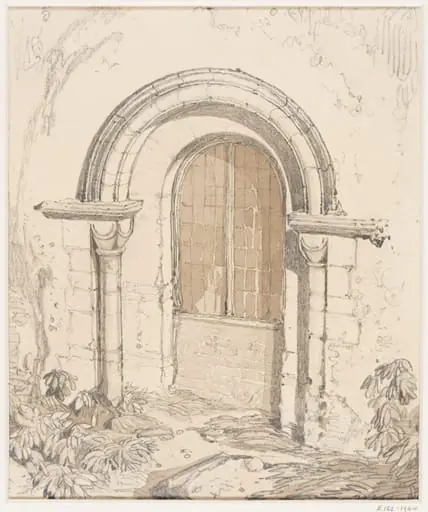 Norman doorway of St. Mary's Church, Thetford, Suffolk
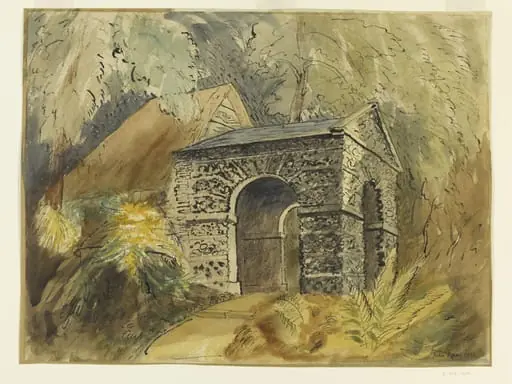 The Ice Store in the grounds of Buckland House near Faringdon
 Entrance to Ramsbury Manor