Artwork
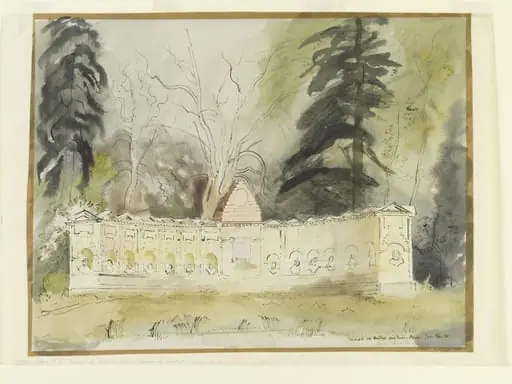
Dashwood Mausoleum, West Wycombe
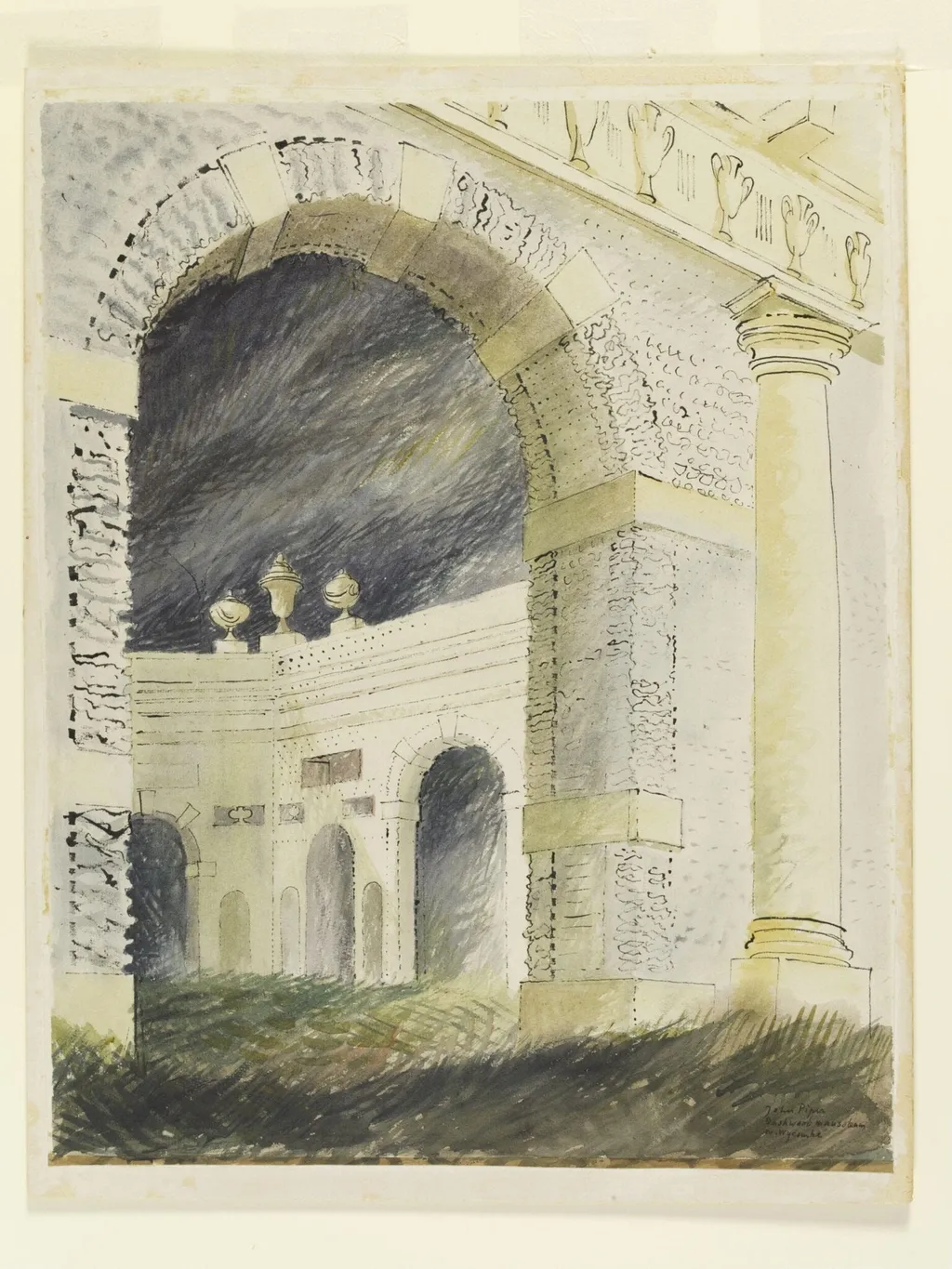
Dashwood Mausoleum, West Wycombe is a watercolor work on paper by Piper. It dates from 1940 and is held in the collection of the Victoria and Albert Museum.
About this work
Overview
John Piper created this watercolour in 1940 as part of the Recording Britain project, a wartime effort to document the nation’s architectural heritage.
John Piper created this watercolour in 1940 as part of the Recording Britain project, a wartime effort to document the nation’s architectural heritage. Commissioned by the Pilgrim Trust and overseen by Sir Kenneth Clark, the initiative enlisted artists to capture sites deemed culturally significant amid fears of loss during conflict. This work records the Dashwood Mausoleum at West Wycombe Park, one of over 1,500 pieces produced by nearly 100 artists between 1940 and 1943.
Subject & Meaning
The mausoleum, a neoclassical structure built in the 18th century for the Dashwood family, stands as a quiet monument to mortality and legacy. Piper emphasizes its decay—cracked stonework, faded ornamentation, and a shadowed interior—evoking the passage of time. The three lanterns suspended within the dome suggest ritual or remembrance, while the dim, transitional light reinforces a mood of stillness and solitude, reflecting broader wartime anxieties about cultural erosion.
Technique & Style
Piper employed loose, expressive watercolour washes to convey texture and atmosphere rather than precise detail. The walls are rendered with uneven strokes, highlighting weathering and erosion; the dome appears as a deep, absorbing void against lighter, granular surfaces. Brushwork is deliberate but unpolished, rejecting idealized forms in favor of raw, tactile presence. The interplay of light and shadow is achieved through subtle tonal shifts, not defined outlines, enhancing the sense of quiet decay.
History & Provenance
The painting was completed during Piper’s participation in the Recording Britain project, which prioritized sites vulnerable to wartime damage or neglect. After its creation, it entered the collection of the Victoria and Albert Museum, where it remains part of the project’s archival holdings. Its preservation reflects the initiative’s goal of safeguarding visual records of Britain’s architectural character during a period of uncertainty and transformation.
Context
The Recording Britain project emerged as a cultural response to the threat of war, aiming to preserve a visual record of landscapes and buildings considered emblematic of English identity. While focused on England, its scope was limited in Wales and excluded Northern Ireland entirely. Artists like Piper were tasked not with idealization but with honest documentation, capturing places that embodied history, even in ruin, as a form of quiet resistance to cultural loss.
Legacy
Piper’s watercolour contributes to a broader archive that reshaped how Britain viewed its architectural past during crisis. The Recording Britain collection remains a vital resource for historians and conservators, offering insight into pre-war conditions of heritage sites. This work, in particular, exemplifies how artistic observation could transform neglect into a form of testimony, preserving the dignity of decay without sentimentality.
Artist & collection
Artist
A 1940s British artist known for delicate watercolours of country houses, churches, and riverside views, Piper captured quiet corners of England in soft washes and fine lines.

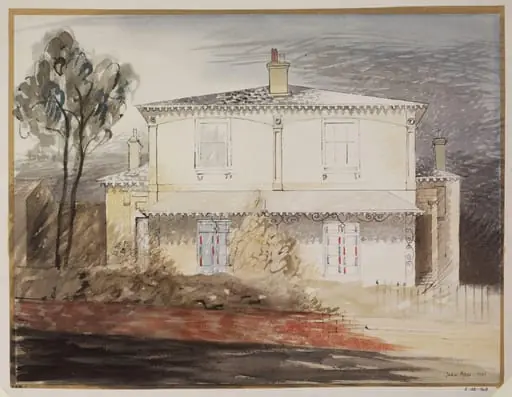 A House, Maidenhead
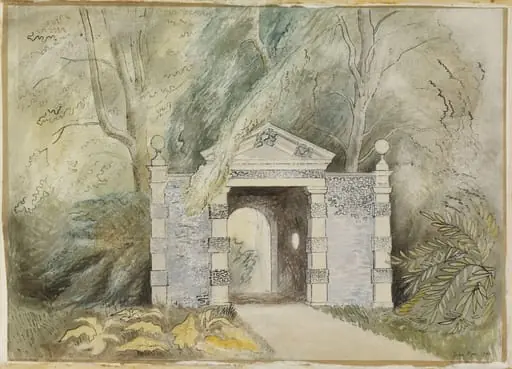 The river approach, Fawley Court
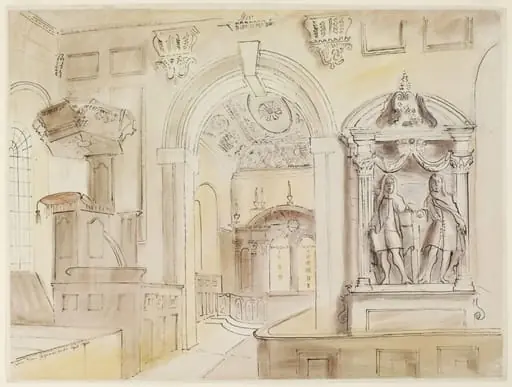 Interior of St. Peter's Church, Gayhurst
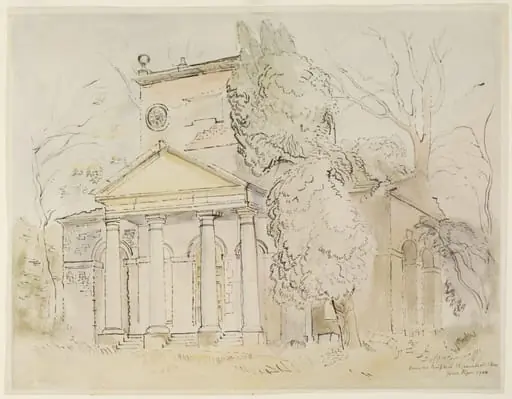 The Ruined Temple of Friendship in the Grounds at Stowe
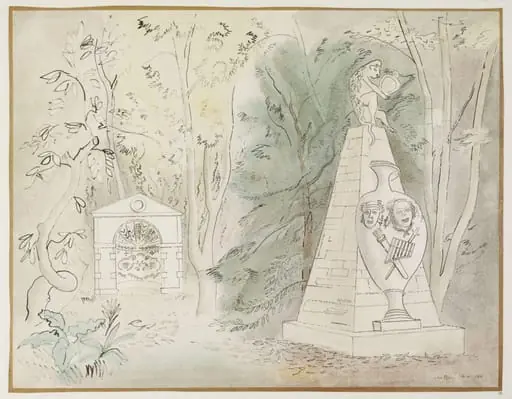 Congreve Monument (designed by Wm. Kent) and Shell Grotto, Stowe
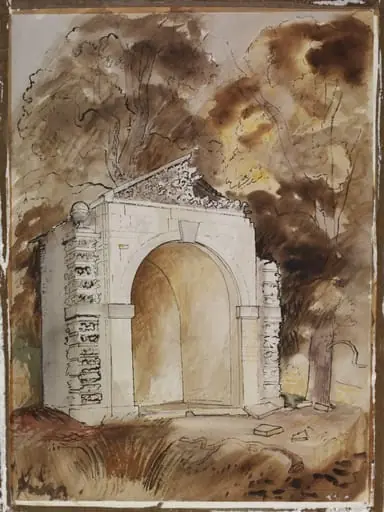 The Duck House in the Park of Buckland House near Faringdon
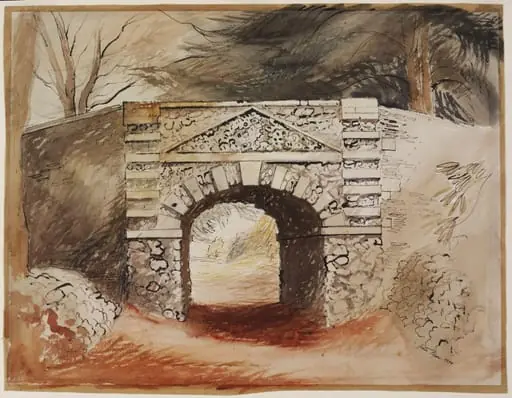 The Tunnel in the grounds of Buckland House, near Faringdon
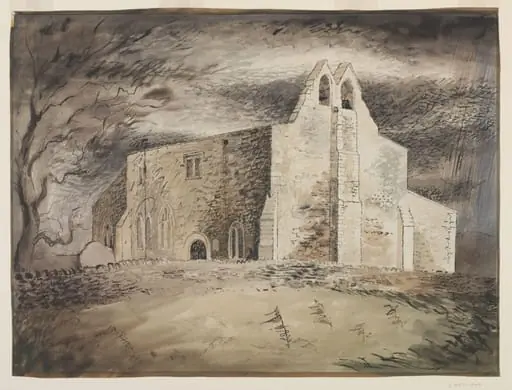 Exterior of the Church of St. Denis, Faxton