Artwork
Still Life with Statuary and Drapery
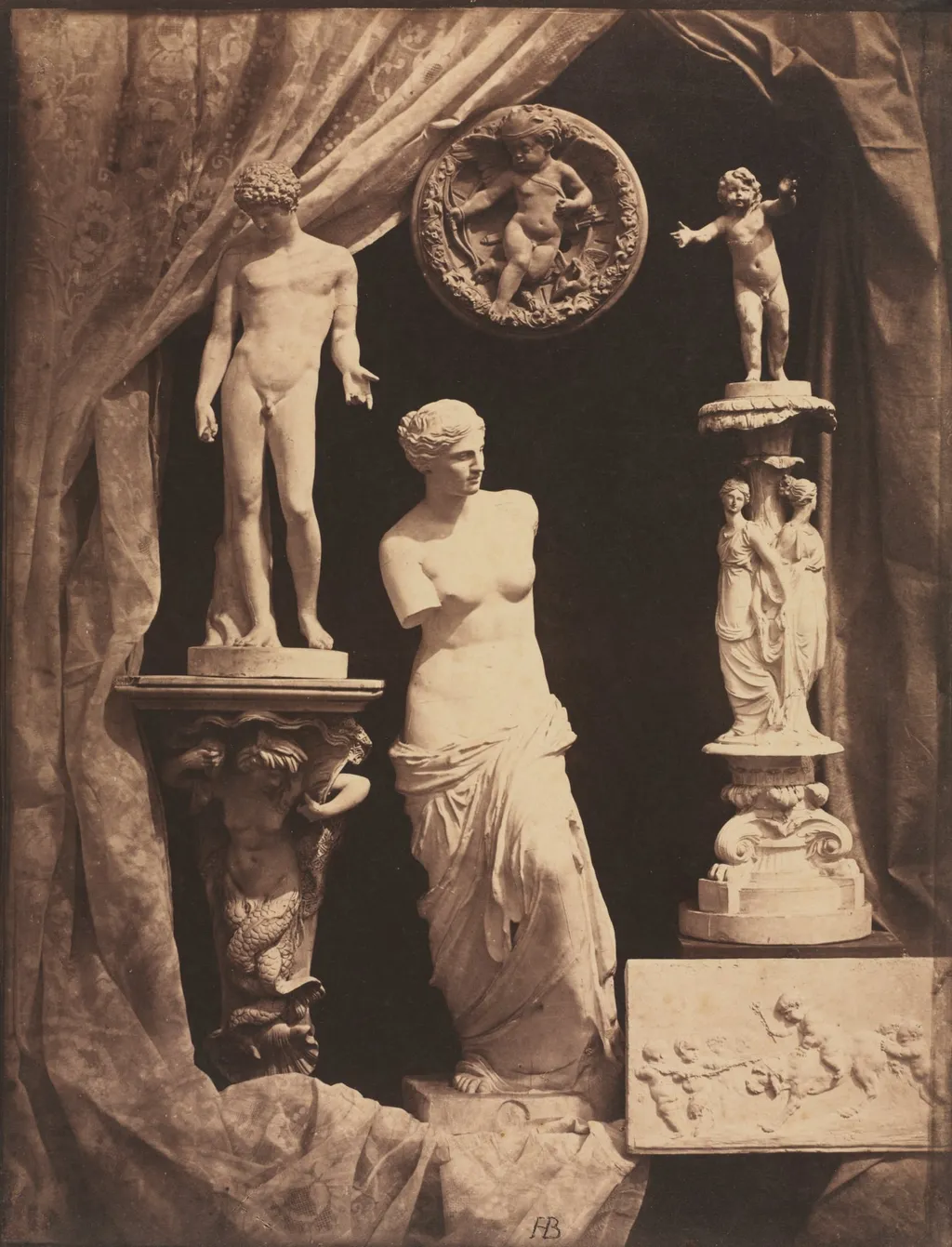
Still Life with Statuary and Drapery is a photography by the Romanticist artist Hippolyte Bayard. It dates from 1850 and is held in the collection of the Cleveland Museum of Art.
About this work
This painting shows plaster casts of ancient statues and drapery.
The scene is lit by natural light, making the figures stand out.
The artist used contrast to emphasize the three-dimensionality of the statues.
The Cleveland Museum of Art has this painting, which is a great example of art from the 19th century.
You can learn more about this style by looking at the technique of chiaroscuro.
Overview
Executed using a direct paper positive process, it reflects Bayard’s early experimentation with photographic techniques following the invention of the medium.
This photograph, created by Hippolyte Bayard around 1840, presents a carefully arranged still life of plaster casts and draped fabric. Executed using a direct paper positive process, it reflects Bayard’s early experimentation with photographic techniques following the invention of the medium. Unlike many of his peers, he focused on classical sculpture rather than portraiture or landscape, revealing a personal engagement with antiquity through the new medium of photography.
Subject & Meaning
The composition centers on Greco-Roman plaster casts, arranged to evoke the quiet dignity of classical art. The inclusion of flowing draperies suggests a theatrical staging, framing the figures as if in a studio set. Bayard’s choice of subjects reflects a scholarly fascination with antiquity, not as mere decoration but as a means to explore form, light, and permanence—qualities he sought to capture through photography’s unique ability to preserve transient moments.
Technique & Style
Bayard employed natural light to heighten the sculptural presence of the casts, using sharp contrasts between the white plaster and a dark background to accentuate volume and depth. The wet collodion negative process, still in its infancy, demanded precision; the resulting print reveals fine detail in the drapery folds and facial features. His approach avoids theatricality, favoring clarity and restraint, aligning with early photographic ideals of truth and observation.
History & Provenance
This print originates from one of Bayard’s rare direct positive experiments begun in 1839, shortly after the announcement of Daguerre’s process. Though initially overlooked, Bayard’s work gained recognition in Parisian photographic circles by the 1850s. The photograph resides in the Cleveland Museum of Art, where it stands as a testament to his technical innovation and his role as a pioneer who pursued photography as a medium for artistic inquiry rather than commercial utility.
Context
In the late 1830s and 1840s, photography was largely seen as a scientific tool or a means of documentation. Bayard’s focus on classical sculpture placed him at the intersection of antiquarian interest and emerging visual technology. His work predates the widespread adoption of albumen prints and reflects a moment when photographers were still defining the aesthetic possibilities of the medium beyond mere replication.
Legacy
Bayard’s still life with statuary remains a significant early example of photography as a medium for artistic expression. His deliberate use of light, composition, and subject matter influenced later photographers who sought to elevate the medium beyond documentation. Though his innovations were not immediately celebrated, his work is now recognized as foundational in establishing photography’s capacity for contemplative, formal study.
Artist & collection

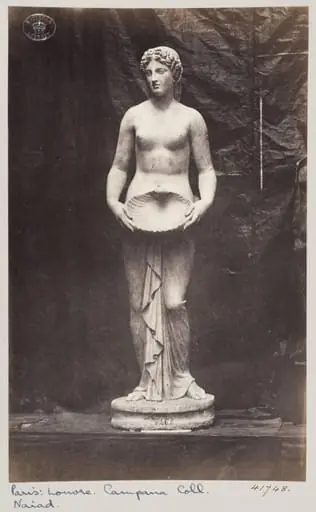 Marble statue of a Naïade
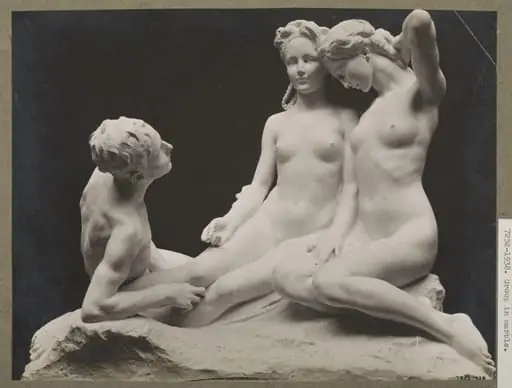 Untitled
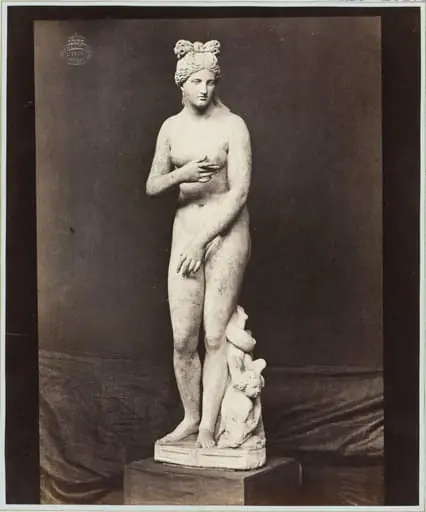 Marble Statue of Venus de Medici
 Untitled
 Untitled
 Untitled
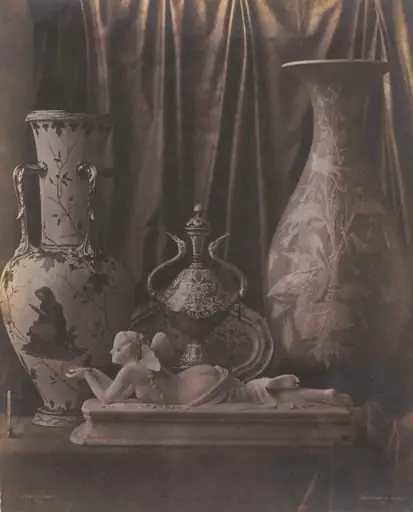 Still Life with Porcelain
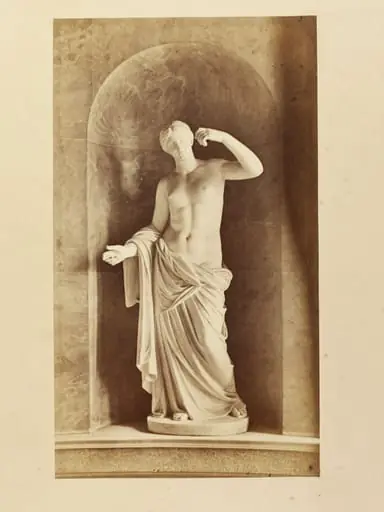 Untitled
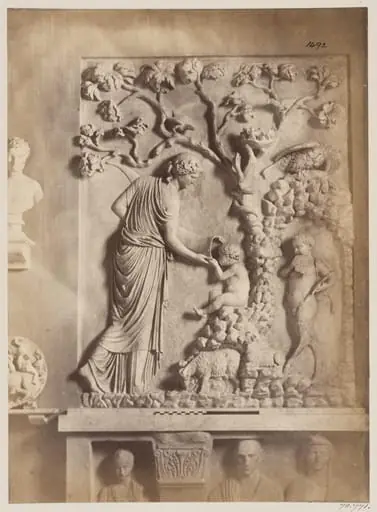 Sculpture - The infancy of Bacchus of the first century in the Lateran Museum, a Nymph gives him drink
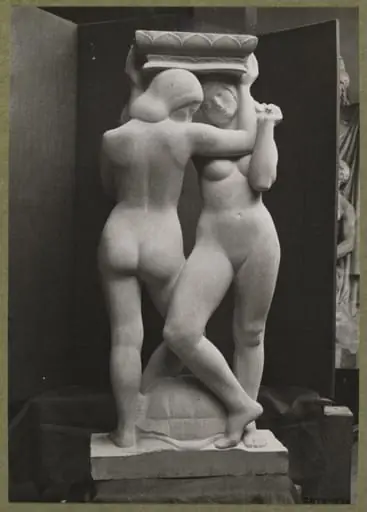 Untitled
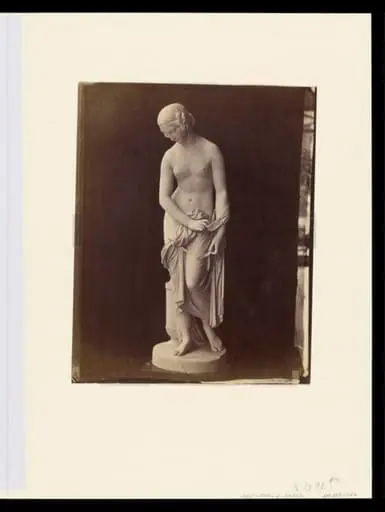 Statue, The Great Exhibition
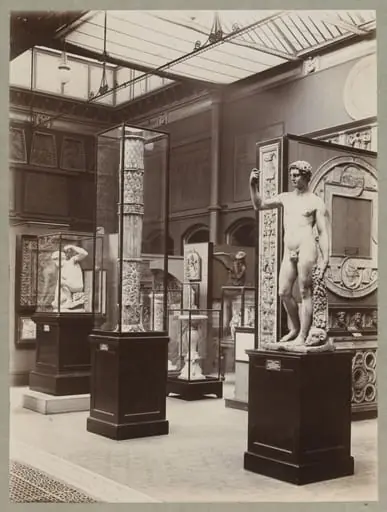 South Kensington Museum, Interior of North Court showing marble statues including statue of Jason and Narcissus