Artwork
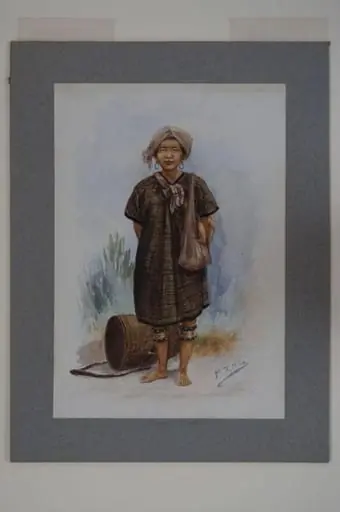
A kayah woman
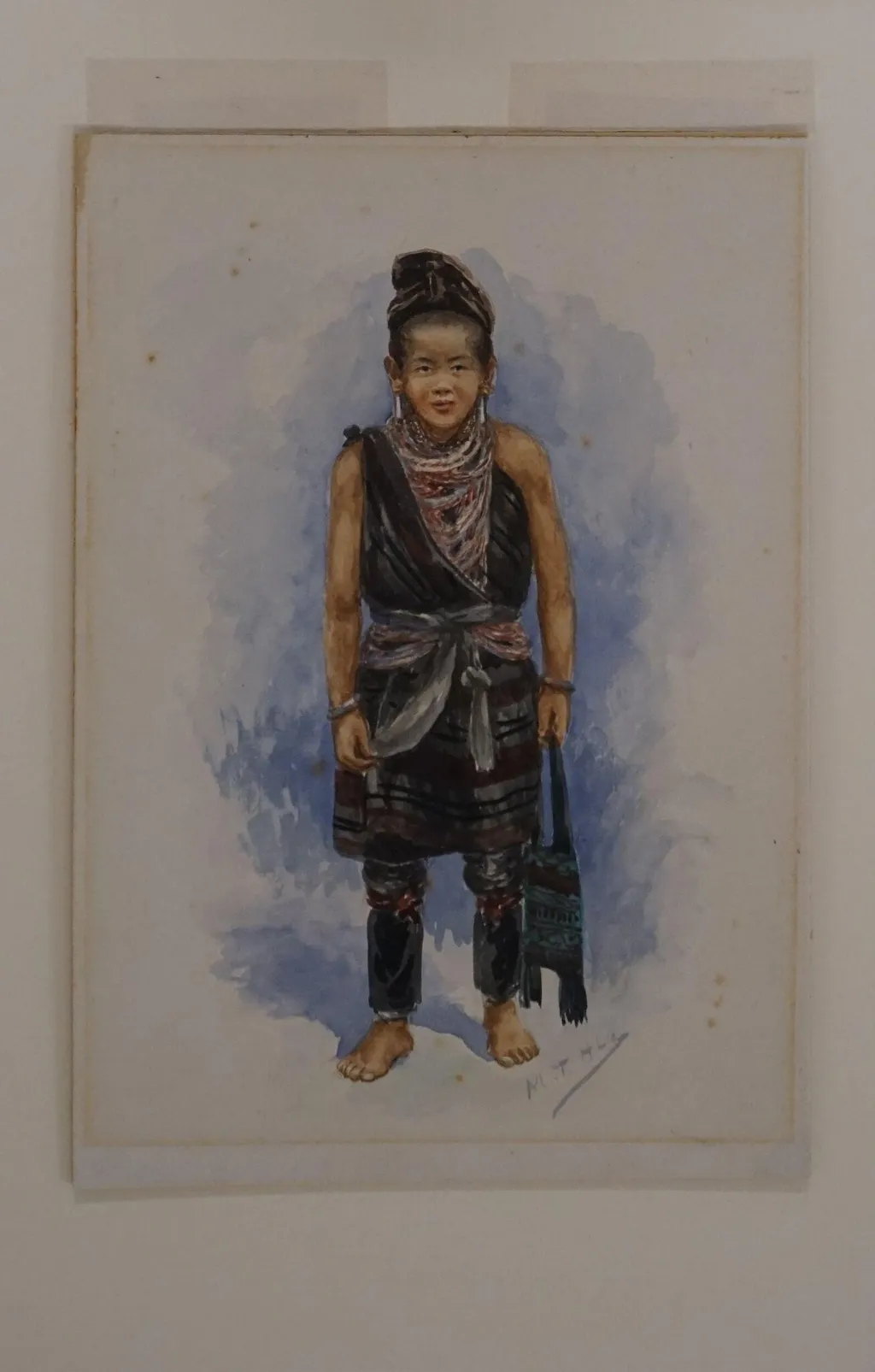
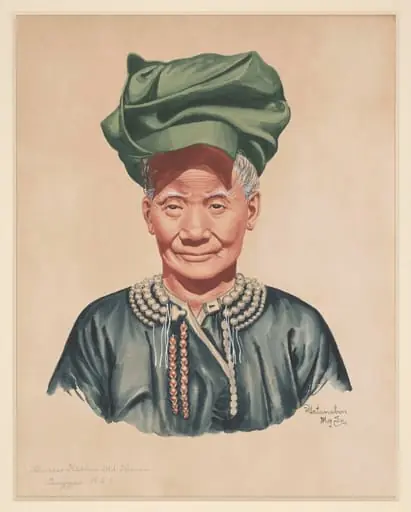
A kayah woman is a watercolor work on paper by the Impressionist artist Maung Tin Hla. It dates from 1903 and is held in the collection of the Victoria and Albert Museum. This watercolour depicts a woman from Kayah State, rendered with quiet precision.
About this work
Overview
The composition centers her figure against a soft, washed-blue background that recedes gently, ensuring attention remains on her attire and presence.
This watercolour depicts a woman from Kayah State, rendered with quiet precision. She stands barefoot, upright, hands relaxed at her sides, holding a small bag. The composition centers her figure against a soft, washed-blue background that recedes gently, ensuring attention remains on her attire and presence. The medium’s transparency allows subtle layering, enhancing the texture of fabric and adornment without overt detail.
Subject & Meaning
The figure represents a Kayah woman, her clothing and jewelry reflecting regional identity and personal adornment traditions. The striped woven cloth, fringed sash, bead ropes, and silver earrings are not merely decorative but signify cultural belonging and social markers. The diagonal head wrap and bare feet suggest a grounded, everyday presence rather than ceremonial performance, emphasizing lived experience over idealized representation.
Technique & Style
The artist employs watercolour with restrained brushwork, using diluted washes for the background and more defined strokes for textiles and accessories. Details like bead patterns and fabric folds are suggested rather than over-rendered, preserving a sense of immediacy. The palette is muted except for the red-and-white neck scarf, which draws the eye without dominating. The technique favors clarity and observation over embellishment.
History & Provenance
The work likely originates from colonial-era ethnographic documentation, possibly created by a British or European artist in the early 20th century. Such images were often collected for anthropological study or institutional archives. Its presence in the Victoria and Albert Museum suggests it was acquired as part of a broader effort to record material culture from Burma’s ethnic communities during that period.
Context
Kayah State’s communities maintained distinct dress codes tied to lineage and status. Women’s attire, including layered wraps, beadwork, and silver ornaments, conveyed both aesthetic preference and social affiliation. This painting aligns with a broader trend of visual ethnography in British colonial territories, where clothing was documented as a proxy for cultural classification, often detached from the subjects’ own narratives.
Legacy
The painting contributes to a historical archive of Southeast Asian material culture, offering visual evidence of Kayah dress before widespread modernization. While its origins lie in colonial observation, it now serves as a reference for cultural preservation and community memory. Its quiet realism invites contemporary viewers to reconsider how identity was recorded—and whose perspectives were prioritized in such documentation.
Artist & collection
Artist
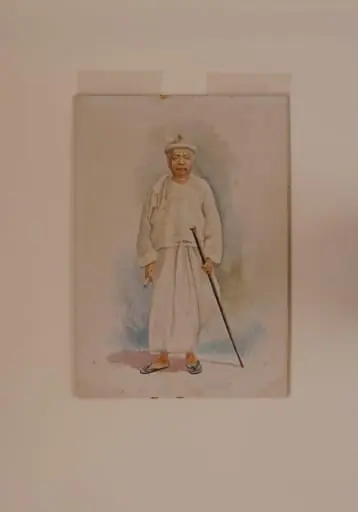
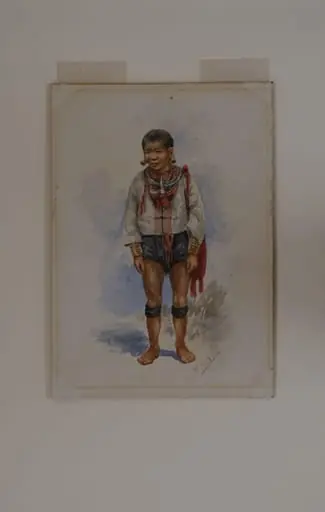
These watercolors from the early 1900s capture people from Myanmar’s Kayah, Taung Yo, and Zaw-Yein communities.