Artwork
Lacul Grundl
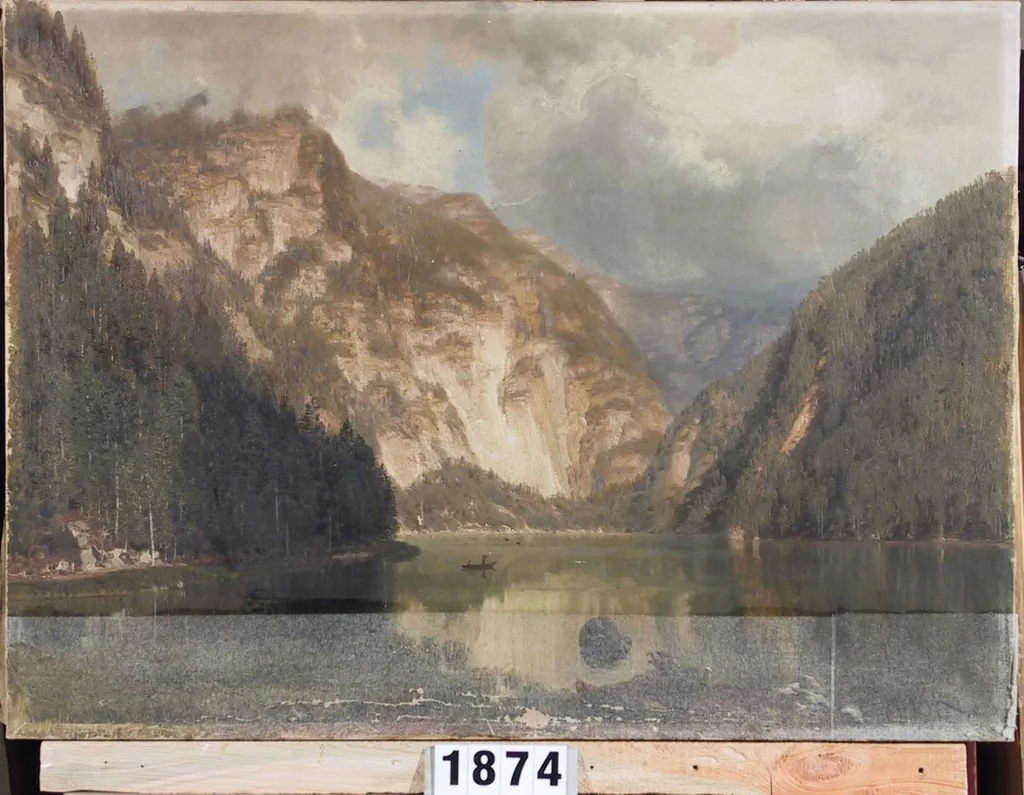
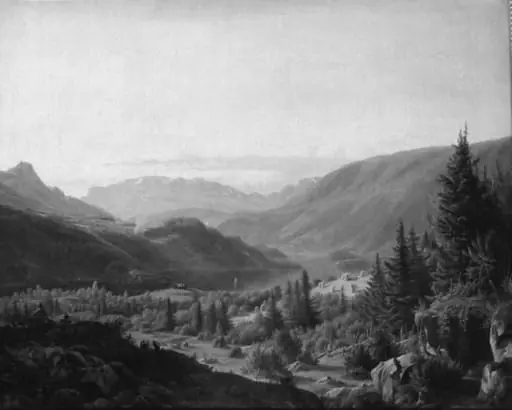
Lacul Grundl is a print by Anton Hlávacek. It is held in the collection of the Brukenthal National Museum. This landscape painting captures a quiet alpine lake nestled among wooded hills and distant peaks.
About this work
Overview
The work is part of the Museum of Ethnography’s collection, suggesting a cultural or regional focus beyond pure aesthetics.
This landscape painting captures a quiet alpine lake nestled among wooded hills and distant peaks. Rendered in subdued tones, the composition emphasizes stillness through reflective water and minimal human presence. A subtle interplay of light and shadow enhances spatial depth, distinguishing it from purely decorative naturalism. The work is part of the Museum of Ethnography’s collection, suggesting a cultural or regional focus beyond pure aesthetics.
Subject & Meaning
The scene presents a tranquil, uninhabited waterscape with faint traces of human activity—two small boats drifting on the lake’s surface. These elements suggest quiet labor or contemplative travel, not tourism or spectacle. The absence of figures reinforces a mood of solitude, aligning the image with ideals of natural harmony rather than narrative drama or symbolic allegory.
Technique & Style
The artist employs chiaroscuro to model forms with restrained contrast, avoiding theatrical intensity. Light falls gently across the water and mountain slopes, defining volume without harsh edges. Colors remain muted—soft grays, greens, and blues—enhancing the atmosphere of calm. Brushwork is subdued, favoring atmospheric blending over detail, reinforcing the painting’s meditative tone.
History & Provenance
The painting resides in the Museum of Ethnography, indicating its acquisition likely relates to regional cultural documentation rather than fine art canon. Its origin is not documented here, but its subject matter suggests a Central or Eastern European alpine locale. The museum context implies it may have been collected as an ethnographic record of landscape and local life.
Context
Created during a period when landscape painting increasingly served anthropological or national identity purposes, this work reflects a shift from romanticized nature to observed, quiet realism. Its inclusion in an ethnographic collection signals interest in how environment shaped daily existence, positioning the lake not as scenery but as a lived space within a specific cultural geography.
Legacy
Though not widely exhibited outside its institutional home, the painting contributes to a broader archive of regional landscapes studied for their cultural resonance. Its restrained technique and lack of embellishment mark it as part of a quieter, observational tradition in 19th- to early 20th-century European art, valued for its authenticity over spectacle.
Artist & collection

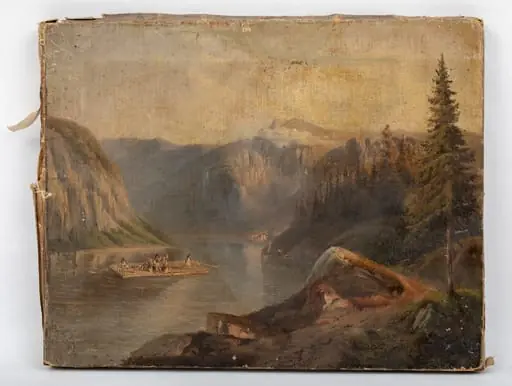 Plute pe Bistrița
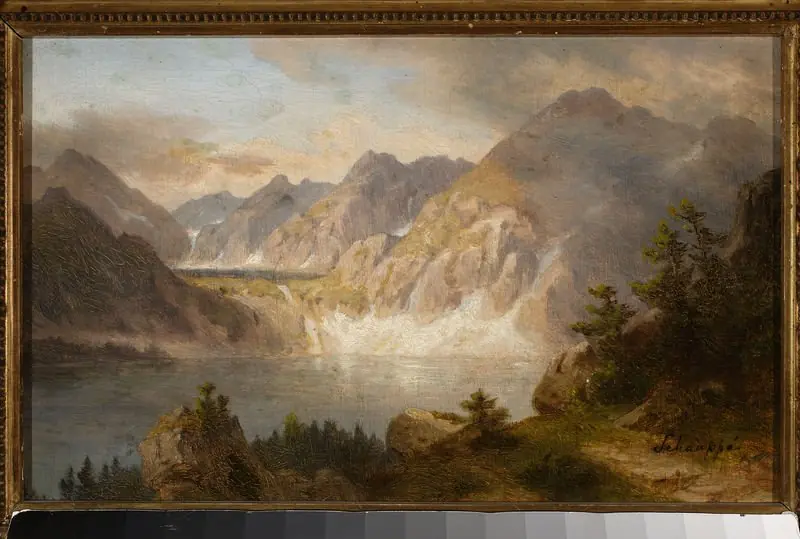 Morskie Oko Lake
 Mont Blanc
 Northern Mountain Landscape with Waterfall
 Lake in the mountains
 Chain of Mont Blanc
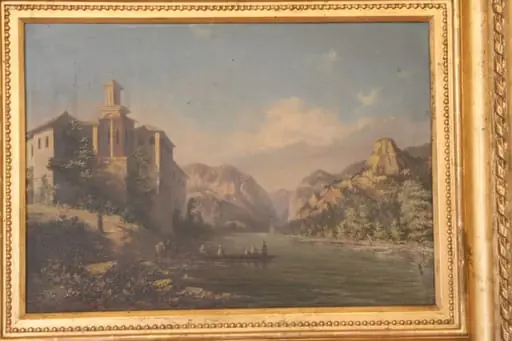 Valea Oltului (Oltul la Cozia)
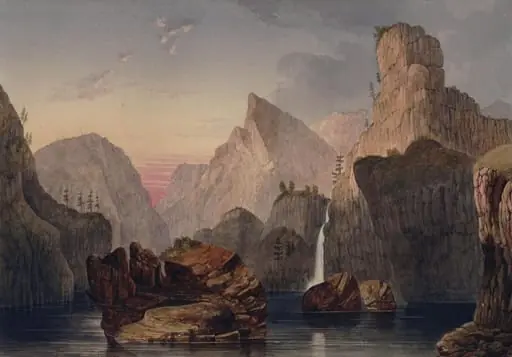 The Black Irkout, Oriental Siberia
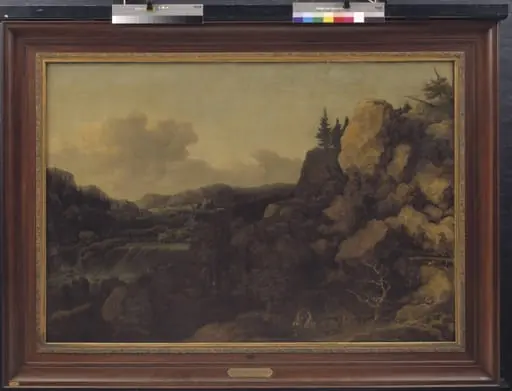 Mountain Landscape with a Couple of Horsemen in the Foreground
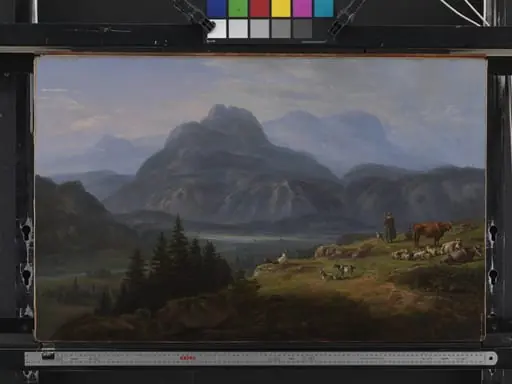 The Etsch Valley near Roveredo
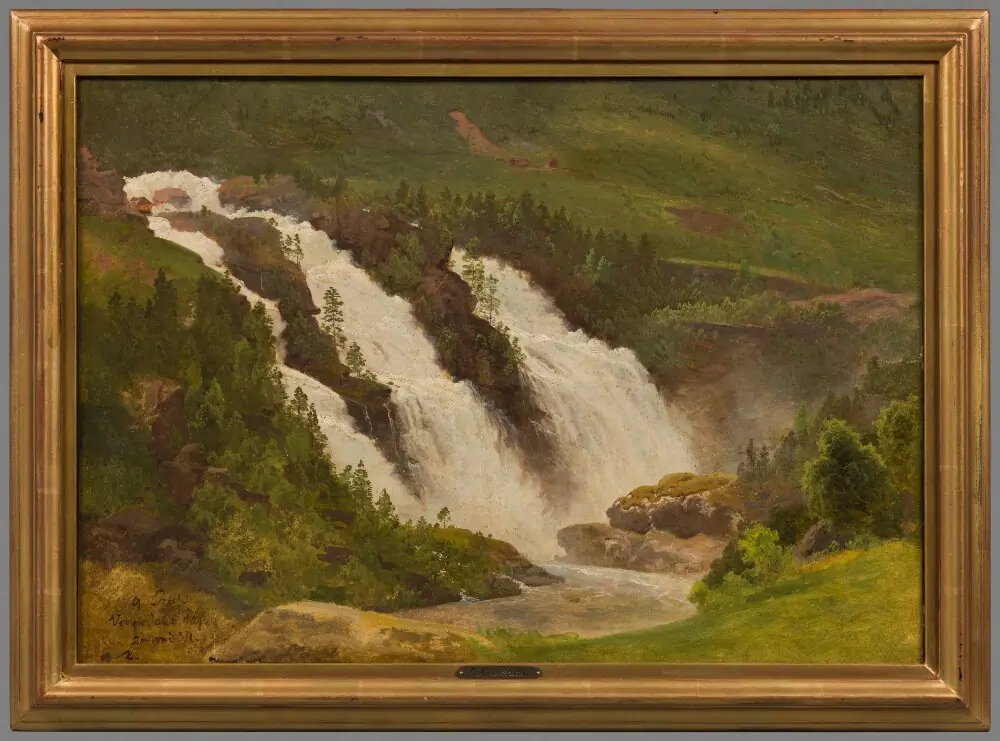 The Verma Waterfalls. Study
 Parti i Valders i Norge. Aften