Artwork
Plate 18: Heron and Stork
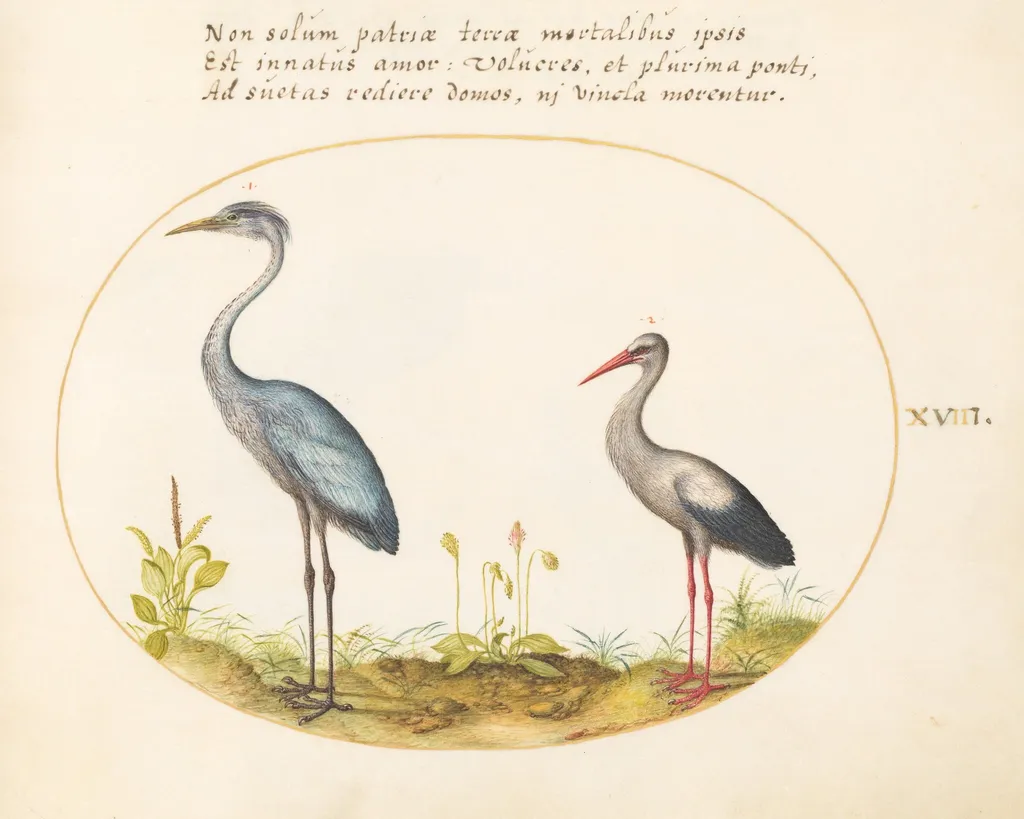
Plate 18: Heron and Stork is a gouache drawing by the Renaissance artist Joris Hoefnagel. It dates from 1594 and is held in the collection of the National Gallery of Art.
About this work
Overview
Plate 18: Heron and Stork is a watercolor and gold paint drawing on parchment, created by Flemish artist Joris Hoefnagel around 1594. This work exemplifies his role in late 16th-century naturalistic and topographical drawing.
Subject & Meaning
The piece depicts a heron and a stork standing side by side in a simple, detailed landscape with surrounding flora. The composition, adorned with a gold circle, reflects both scientific observation and decorative intent, characteristic of the era's illustrative traditions.
Technique & Style
Hoefnagel employed watercolor and gold paint on parchment, techniques reminiscent of manuscript illumination. The meticulous rendering of the birds and their environment showcases his skill in naturalistic drawing, a precursor to independent floral still-life painting in northern Europe.
History & Provenance
As one of the last prominent manuscript illuminators, Hoefnagel's work bridges traditional illumination and emerging natural history illustration. The Latin text accompanying the piece aligns with contemporary scholarly and decorative conventions.
Context
Plate 18: Heron and Stork sits within a broader tradition of scientific and decorative illustration of the late 16th century, contributing to the development of more detailed and realistic representations of flora and fauna.
Legacy
This drawing, with its detailed studies of animals, influenced the rise of independent floral still-life painting in northern Europe, leaving a mark on the transition from illuminated manuscripts to more modern forms of artistic expression.
Artist & collection

Artist
Joris Hoefnagel or Georg Hoefnagel (1542 – 24 July 1601) was a Flemish painter, printmaker, miniaturist, draftsman and merchant.

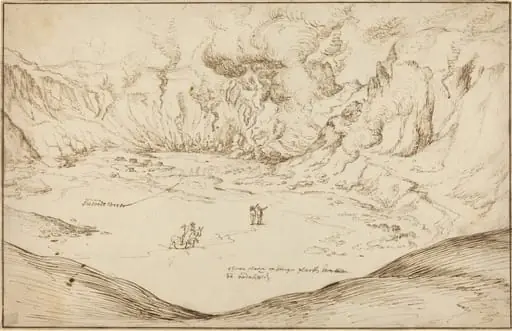 Forum Vulcani: The Hot Springs at Pozzuoli
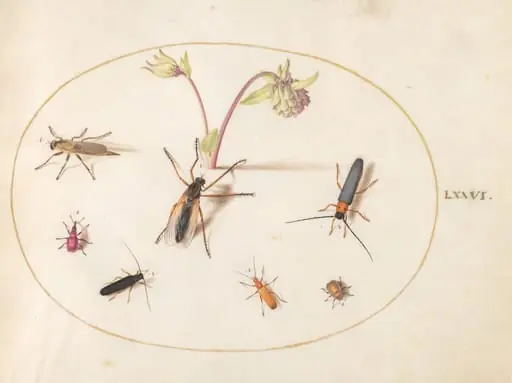 Plate 76: Insects with a Pink and Cream Columbine
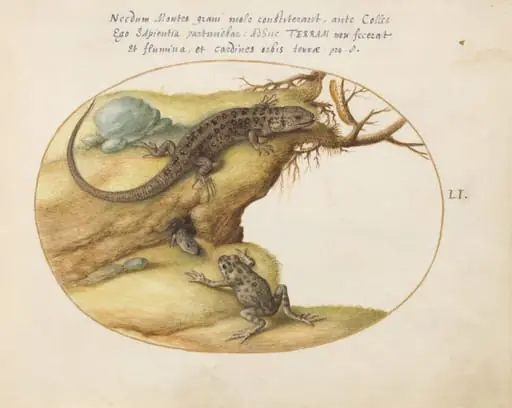 Plate 51: Two Sand Lizards, a Common Parsley Frog(?), and a Caterpillar
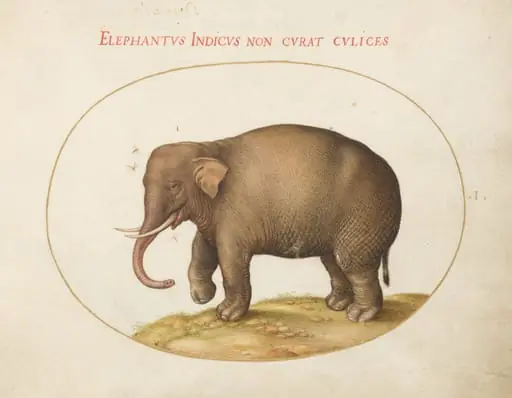 Plate 1: Elephant with Insects
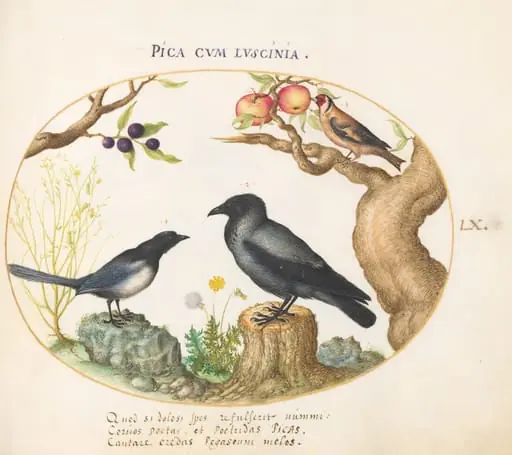 Plate 60: Magpie, Crow, and Goldfinch
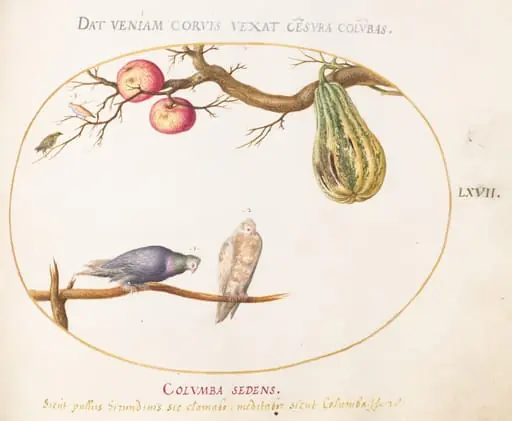 Plate 67: Two Doves beneath a Gourd and Apples
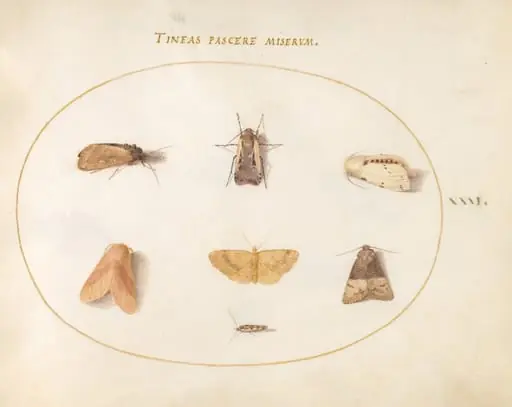 Plate 31: Seven Moths
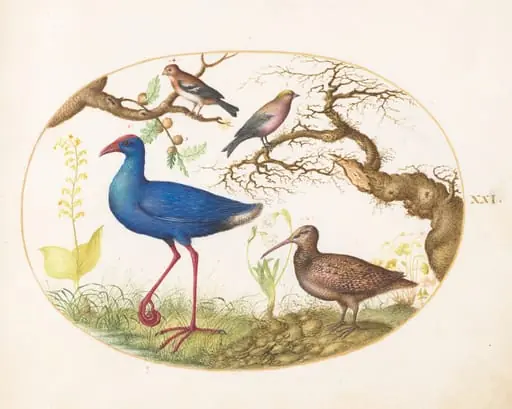 Plate 21: Swamp Hen and Woodcock with a Streaked Rosefinch, a Finch, and Oak Galls
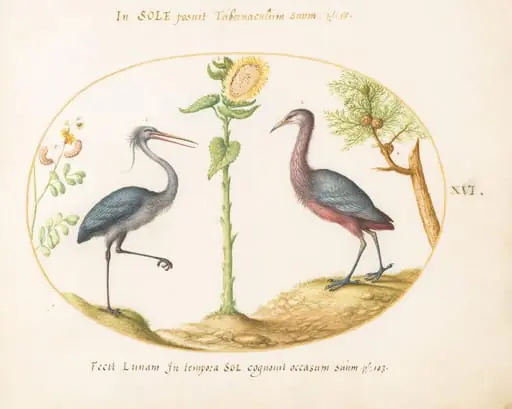 Plate 16: Gray Heron and Purple Heron(?) with a Sunflower
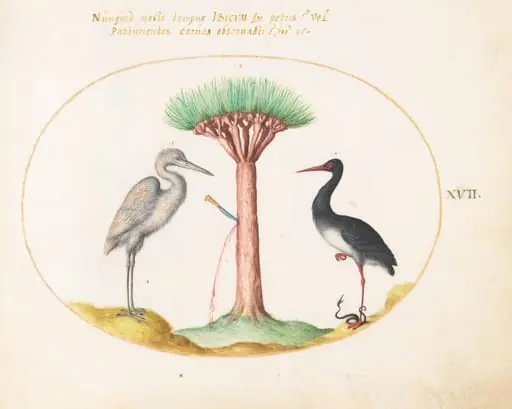 Plate 17: White Heron(?) and Black Stork Killing a Snake with a Dragon's Blood Tree
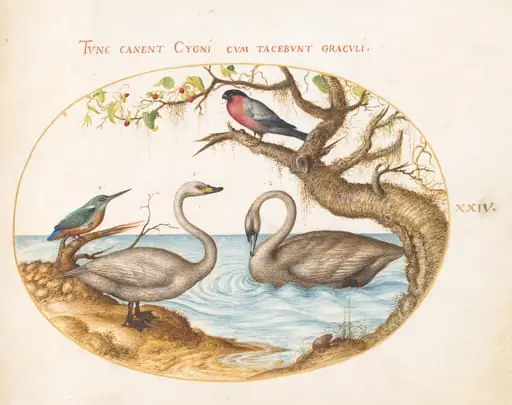 Plate 24: Two Swans, a Kingfisher, and a Bullfinch
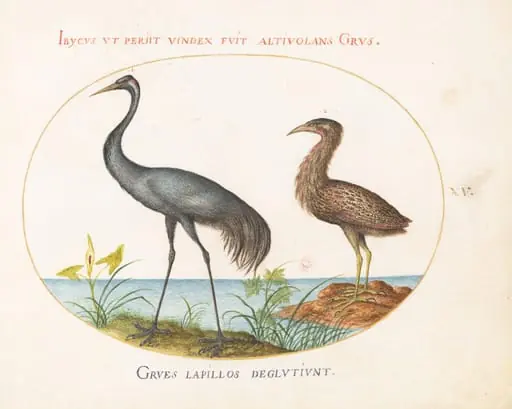 Plate 15: Common Crane and Bittern(?)
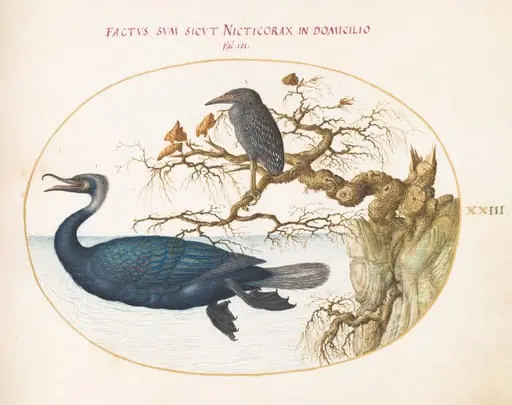 Plate 23: A Brandt's Cormorant with a Juvenile Crowned Night Heron
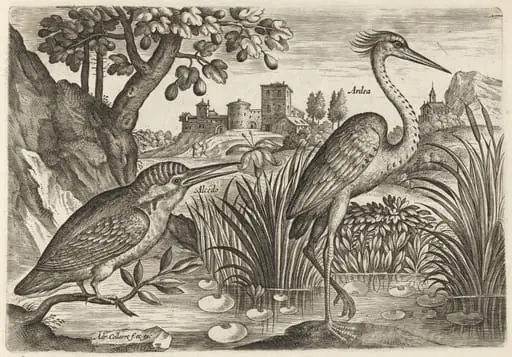 Kingfisher and Grey Heron
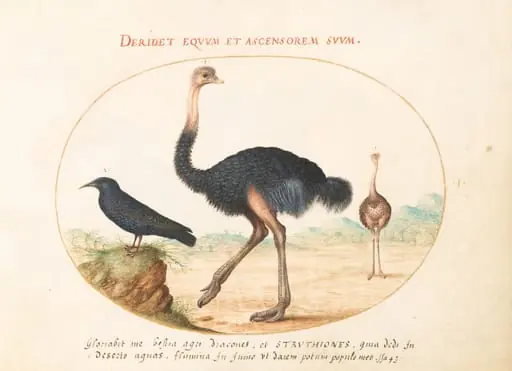 Plate 1: Two Ostriches and a Starling
 Plate 64: Two Partridges, a Wren, and Other Birds
 Plate 27: A Common Scoter, a Eurasian Coot, and a Rosefinch(?)