Artwork
Plate 31: Duck, Merganser, and Three Goldfinches
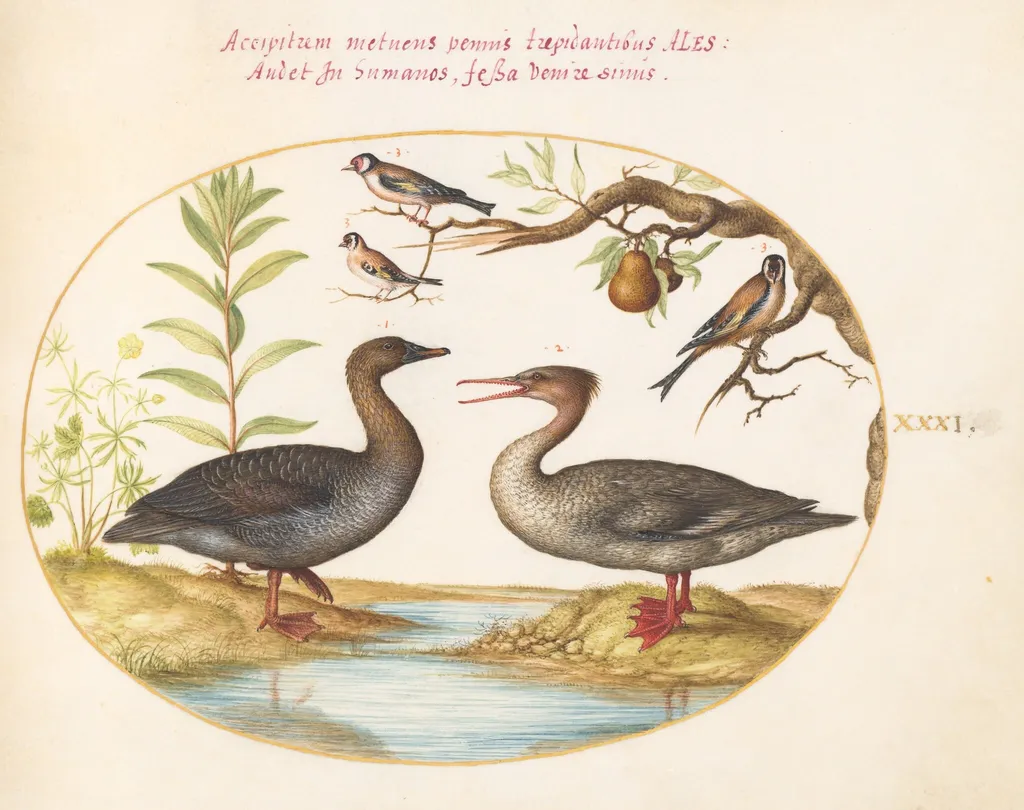
Plate 31: Duck, Merganser, and Three Goldfinches is a gouache drawing by the Renaissance artist Joris Hoefnagel. It dates from 1594 and is held in the collection of the National Gallery of Art.
About this work
Overview
Created around 1594 by Joris Hoefnagel, this work is a watercolor and gold paint drawing on parchment, part of a larger manuscript tradition.
Created around 1594 by Joris Hoefnagel, this work is a watercolor and gold paint drawing on parchment, part of a larger manuscript tradition. It belongs to a series of natural history illustrations that merge precise observation with ornamental detail. Hoefnagel, active in the late 16th century, was among the final practitioners of manuscript illumination, bridging medieval techniques with emerging scientific imagery.
Subject & Meaning
The plate depicts a duck, a merganser, and three goldfinches, rendered with careful attention to anatomical accuracy. These birds, likely chosen for their vivid plumage and regional presence, are arranged in a balanced composition that suggests both study and aesthetic harmony. The inclusion of gold paint elevates the subjects beyond mere documentation, hinting at their symbolic value in natural philosophy and courtly collecting.
Technique & Style
Hoefnagel employed fine watercolor washes to capture feather textures and subtle color gradations, while gold paint was used selectively to highlight edges and contours. The parchment surface allowed for delicate layering and fine linework, characteristic of manuscript illumination. His style blends the meticulousness of medieval miniatures with the observational rigor of Renaissance naturalism, avoiding idealization in favor of lifelike detail.
History & Provenance
The work was produced during Hoefnagel’s time in the service of Holy Roman Emperor Rudolf II, whose court in Prague was a center for natural philosophy and artistic patronage. It likely formed part of a larger, unfinished manuscript on natural history, now dispersed. The piece survived through private collections and eventually entered institutional holdings, preserving its original format and materials.
Context
In late 16th-century Europe, interest in natural specimens surged alongside the rise of cabinets of curiosities and early scientific classification. Hoefnagel’s illustrations responded to this trend, offering visual records that appealed to both scholars and collectors. His work stood at the intersection of art and science, where aesthetic refinement served the purpose of documentation rather than mere decoration.
Legacy
Hoefnagel’s detailed bird studies influenced later generations of natural history illustrators and still-life painters in the Low Countries. His integration of precise observation with decorative elements helped shape the visual language of botanical and zoological art. Though manuscript illumination declined, his approach endured in printed natural histories and the emerging field of scientific illustration.
Artist & collection

Artist
Joris Hoefnagel or Georg Hoefnagel (1542 – 24 July 1601) was a Flemish painter, printmaker, miniaturist, draftsman and merchant.

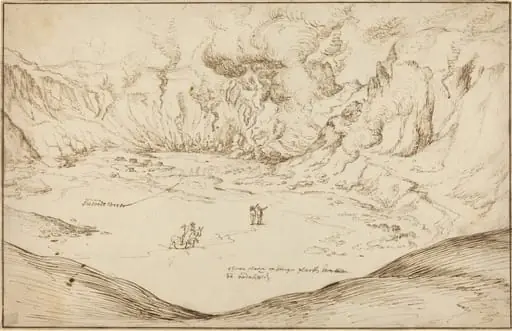 Forum Vulcani: The Hot Springs at Pozzuoli
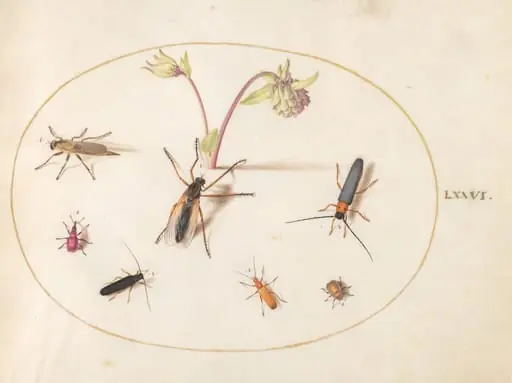 Plate 76: Insects with a Pink and Cream Columbine
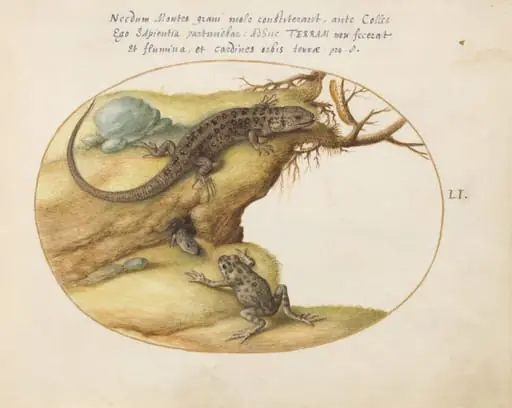 Plate 51: Two Sand Lizards, a Common Parsley Frog(?), and a Caterpillar
 Plate 1: Elephant with Insects
 Plate 60: Magpie, Crow, and Goldfinch
 Plate 67: Two Doves beneath a Gourd and Apples
 Plate 31: Seven Moths
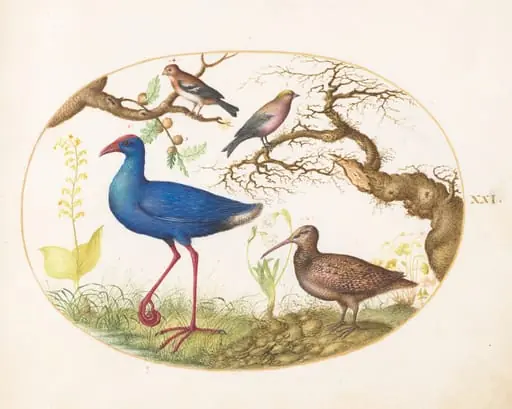 Plate 21: Swamp Hen and Woodcock with a Streaked Rosefinch, a Finch, and Oak Galls
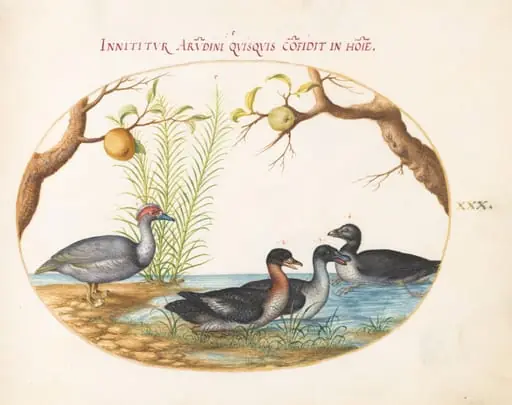 Plate 30: A Muscovy(?) Duck, a Four-Legged Duck, and Two Other Birds
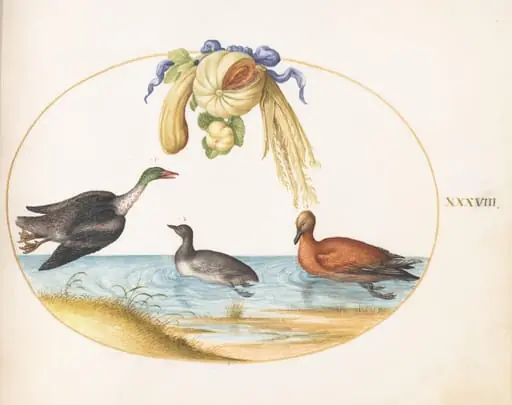 Plate 38: Merganser with Two Other Waterfowl and a Garland of Melons and Gourds
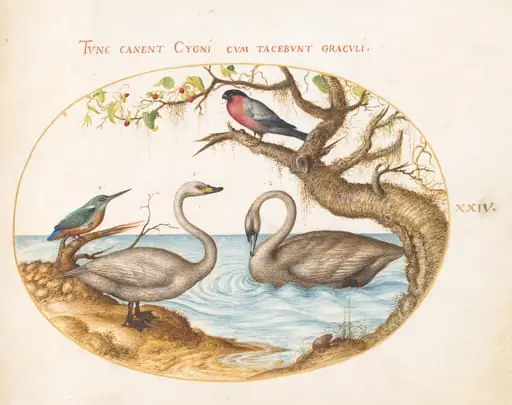 Plate 24: Two Swans, a Kingfisher, and a Bullfinch
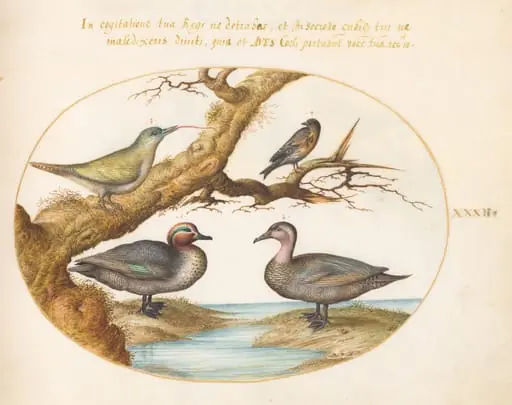 Plate 32: A Green-Winged Teal, a Juvenile Green Woodpecker, and Two Other Birds
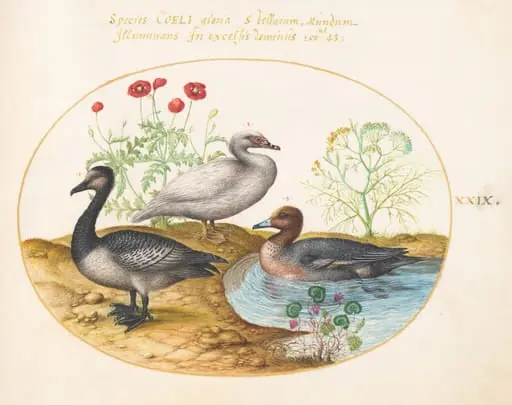 Plate 29: Geese with Poppies and a Cyclamen
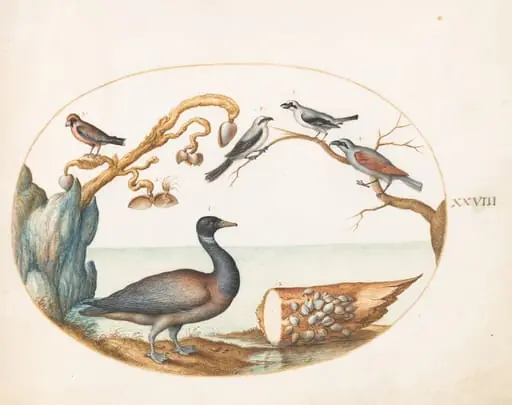 Plate 28: Barnacle Goose with Shrikes and Other Birds
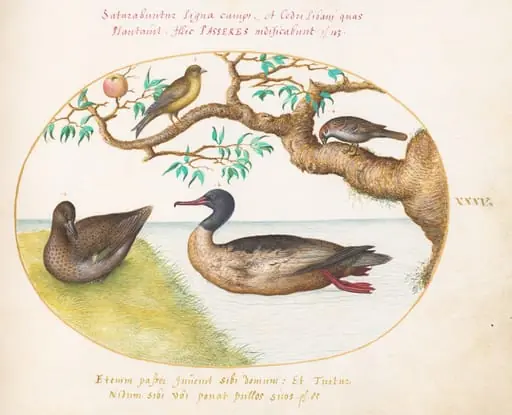 Plate 35: Female Green-Winged Teal, Red-Breasted Merganser(?), Sparrow, and a Greenfinch(?)
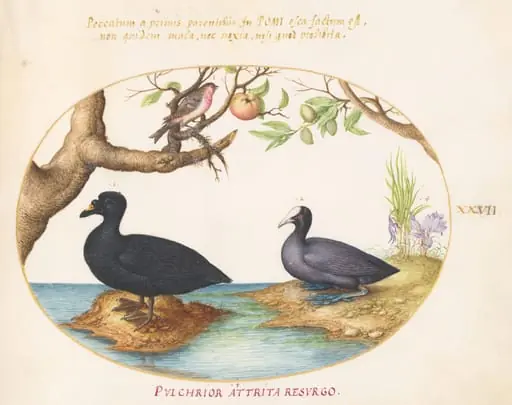 Plate 27: A Common Scoter, a Eurasian Coot, and a Rosefinch(?)
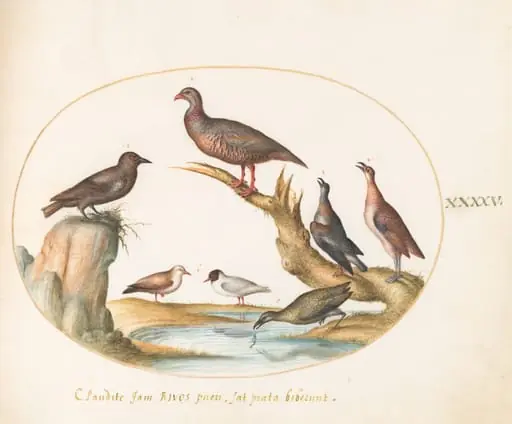 Plate 45: Spotted Nutcracker and Shore Birds
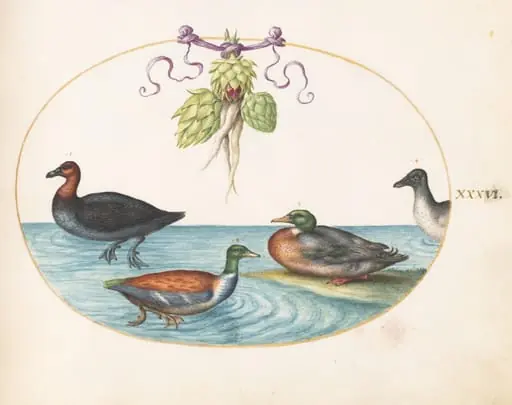 Plate 36: Red-Breasted Merganser, Shoveler, and Mallard, and Duck with Artichokes
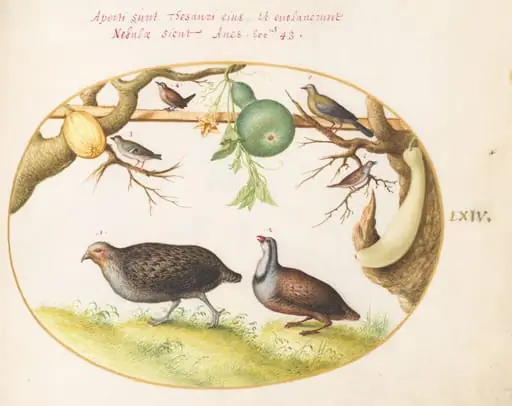 Plate 64: Two Partridges, a Wren, and Other Birds