Artwork
Plate 48: Wood Grouse, Rail, and Curlew with Hazelnuts and Figs
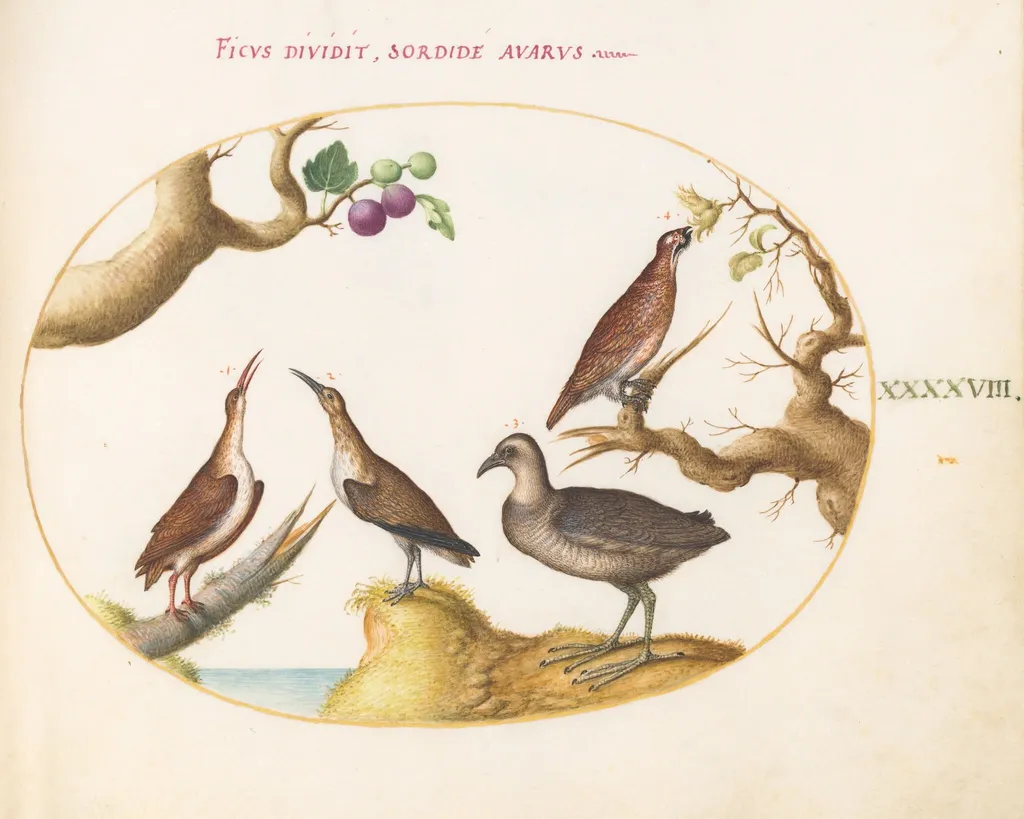
Plate 48: Wood Grouse, Rail, and Curlew with Hazelnuts and Figs is a gouache drawing by the Renaissance artist Joris Hoefnagel. It dates from 1594 and is held in the collection of the National Gallery of Art.
About this work
Overview
Above the birds, a branch bears figs and hazelnuts, rendered in delicate gold and muted tones, giving the composition a luminous, jewel‑like quality.
Created circa 1594, this miniature drawing by Joris Hoefnagel combines watercolor and gold pigment on parchment. It depicts a small landscape populated by a wood grouse, a rail, and a curlew, each rendered with meticulous attention to plumage and posture. Above the birds, a branch bears figs and hazelnuts, rendered in delicate gold and muted tones, giving the composition a luminous, jewel‑like quality.
Subject & Meaning
The work presents three distinct bird species—an alpine grouse, a wetland rail, and a curlew—arranged around a gentle rise, suggesting a harmonious natural tableau. The inclusion of figs and hazelnuts, rendered in gold, may allude to abundance and the interconnectedness of fauna and flora, reflecting the period’s interest in cataloguing nature’s diversity.
Technique & Style
Hoefnagel employed fine watercolor washes layered with translucent glazes, allowing subtle color shifts within feathers and foliage. Gold paint is applied in thin, precise strokes to highlight the fruit and nuts, creating a reflective surface that contrasts with the matte background. The overall effect balances scientific exactness with a decorative, almost ornamental sensibility typical of late‑Renaissance manuscript illumination.
History & Provenance
The drawing originates from Hoefnagel’s prolific output of natural‑history illustrations produced for aristocratic patrons and collectors in the Low Countries. Though its early ownership records are sparse, the piece survived as part of a manuscript compilation and entered a public collection in the 20th century, where it has been studied for its role in the development of European scientific illustration.
Context
In the late 16th century, Flemish artists increasingly merged observation with artistic representation, responding to growing curiosity about the natural world. Hoefnagel’s work sits at the intersection of scientific inquiry and decorative art, contributing to the emergence of detailed bird studies that would influence later naturalists such as Maria Sibylla Merian.
Artist & collection

Artist
Joris Hoefnagel or Georg Hoefnagel (1542 – 24 July 1601) was a Flemish painter, printmaker, miniaturist, draftsman and merchant.

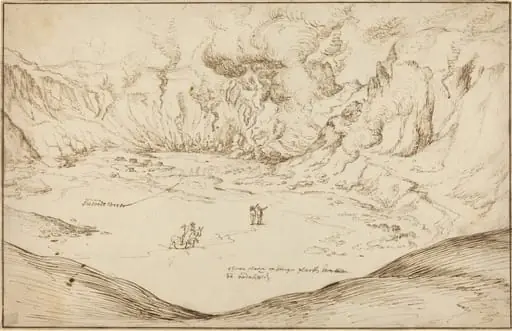 Forum Vulcani: The Hot Springs at Pozzuoli
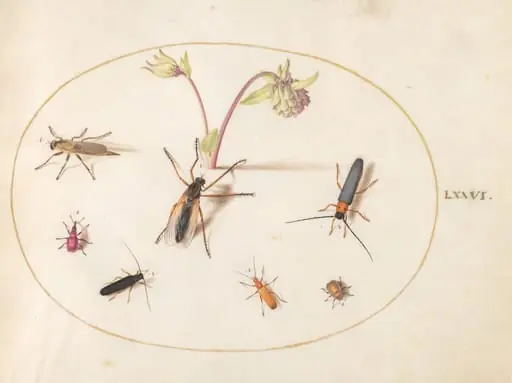 Plate 76: Insects with a Pink and Cream Columbine
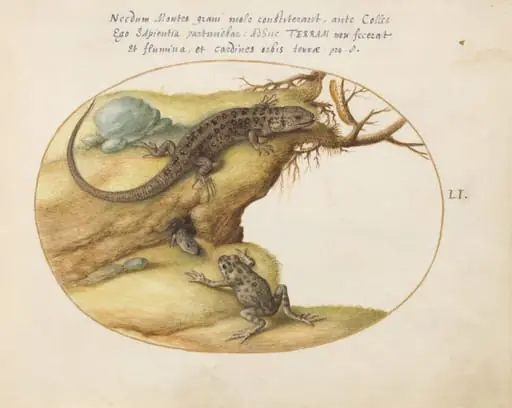 Plate 51: Two Sand Lizards, a Common Parsley Frog(?), and a Caterpillar
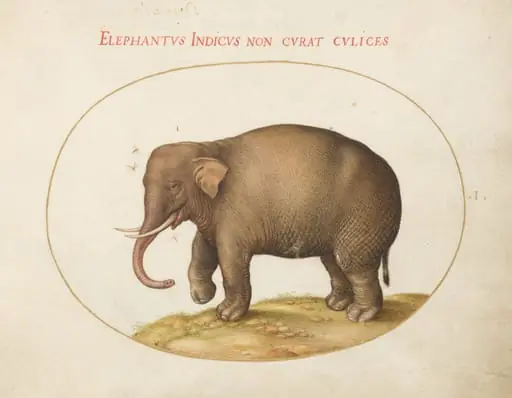 Plate 1: Elephant with Insects
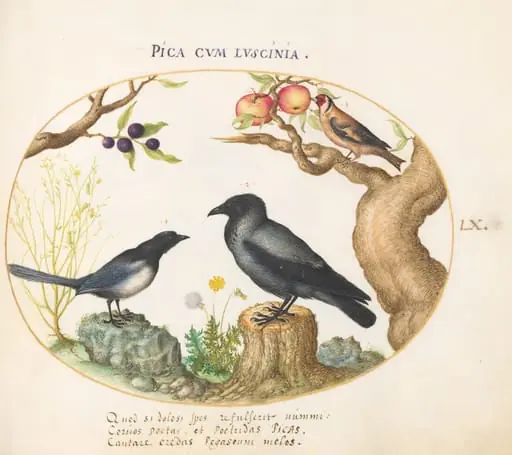 Plate 60: Magpie, Crow, and Goldfinch
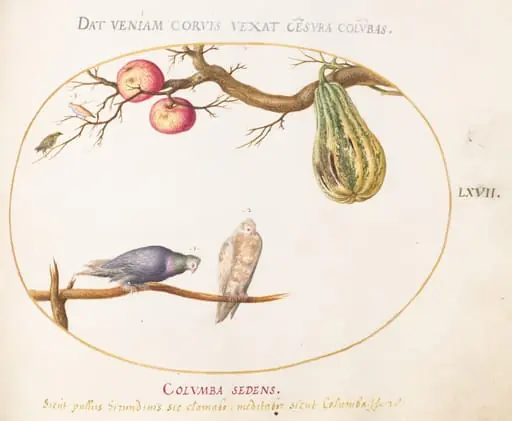 Plate 67: Two Doves beneath a Gourd and Apples
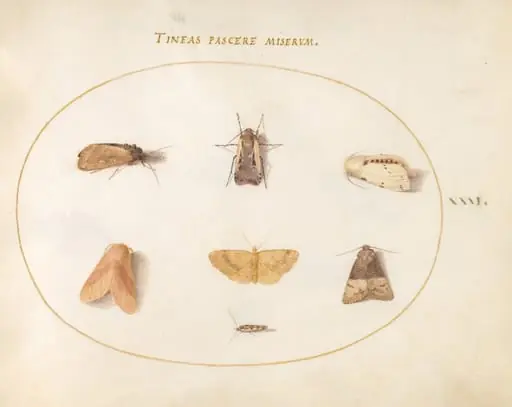 Plate 31: Seven Moths
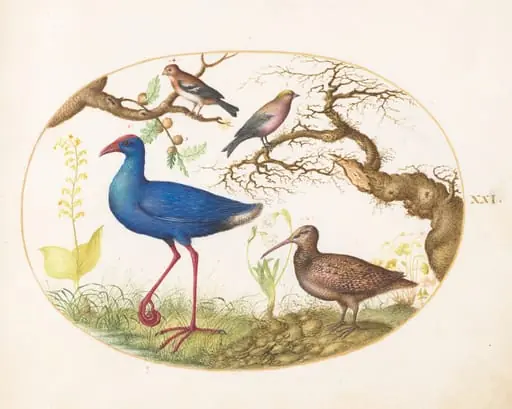 Plate 21: Swamp Hen and Woodcock with a Streaked Rosefinch, a Finch, and Oak Galls
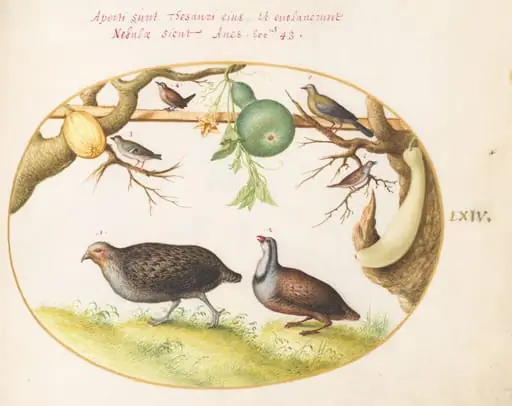 Plate 64: Two Partridges, a Wren, and Other Birds
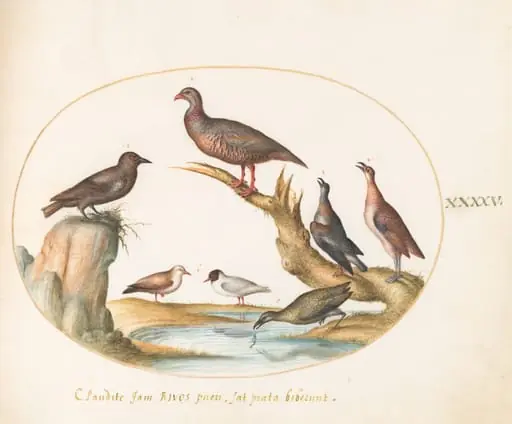 Plate 45: Spotted Nutcracker and Shore Birds
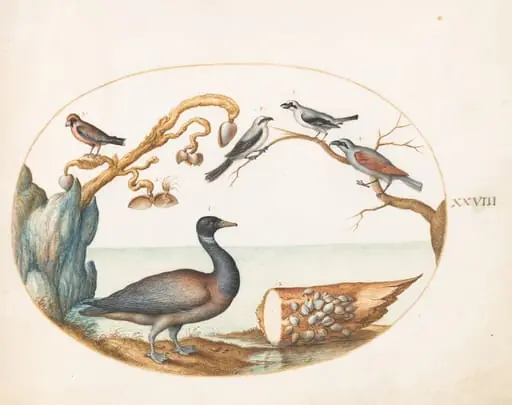 Plate 28: Barnacle Goose with Shrikes and Other Birds
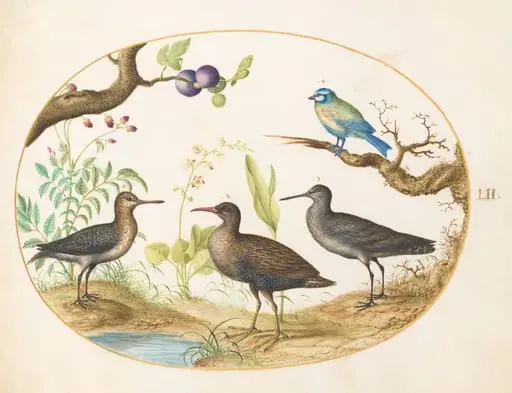 Plate 52: Blue Tit with Three Wading Birds and a Fig Tree
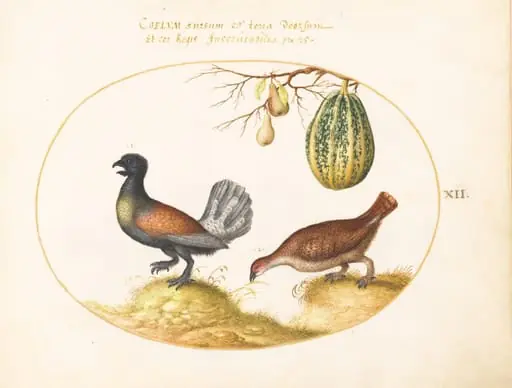 Plate 12: Pair of Wood Grouse with a Melon and Pears
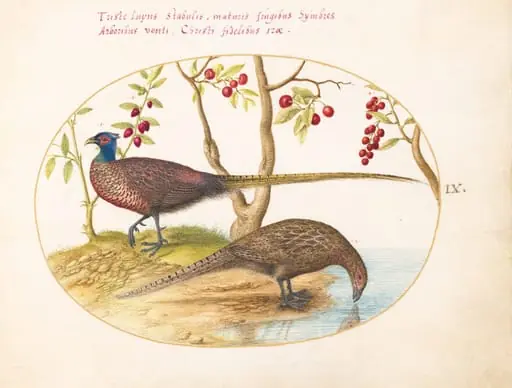 Plate 9: Two Pheasants with Fruiting Plants
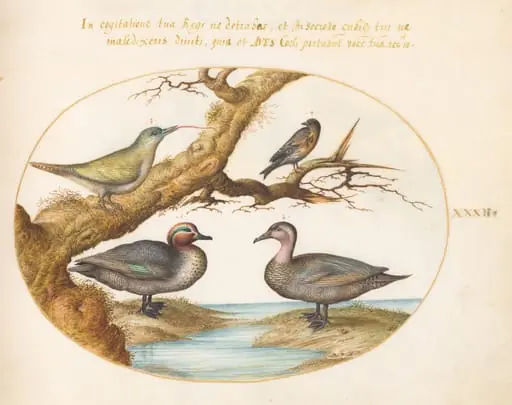 Plate 32: A Green-Winged Teal, a Juvenile Green Woodpecker, and Two Other Birds
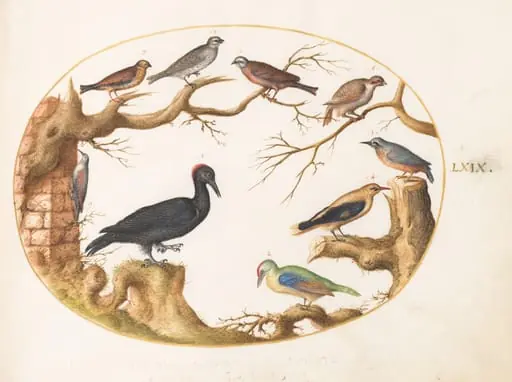 Plate 69: Black Woodpecker, European Green Woodpecker, Nuthatch, and Other Birds
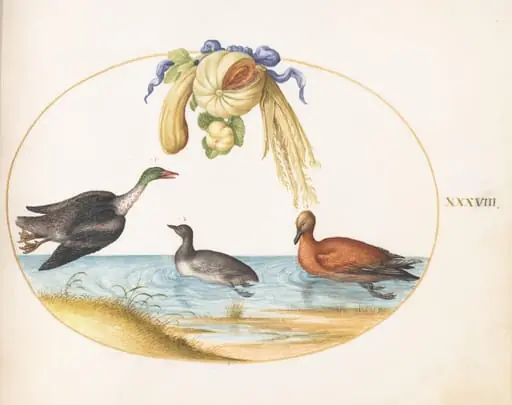 Plate 38: Merganser with Two Other Waterfowl and a Garland of Melons and Gourds
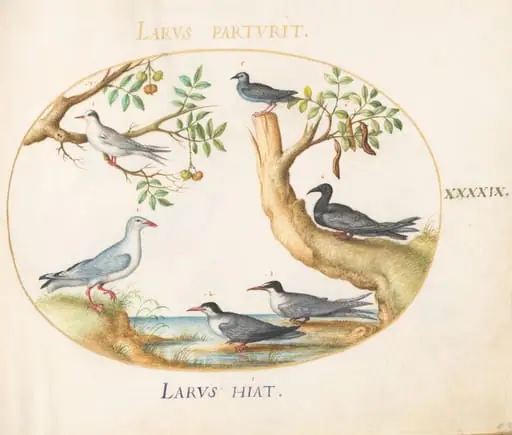 Plate 49: Gulls with a Carob Tree and a Pistachio Tree(?)