Artwork
Cruelty in Perfection
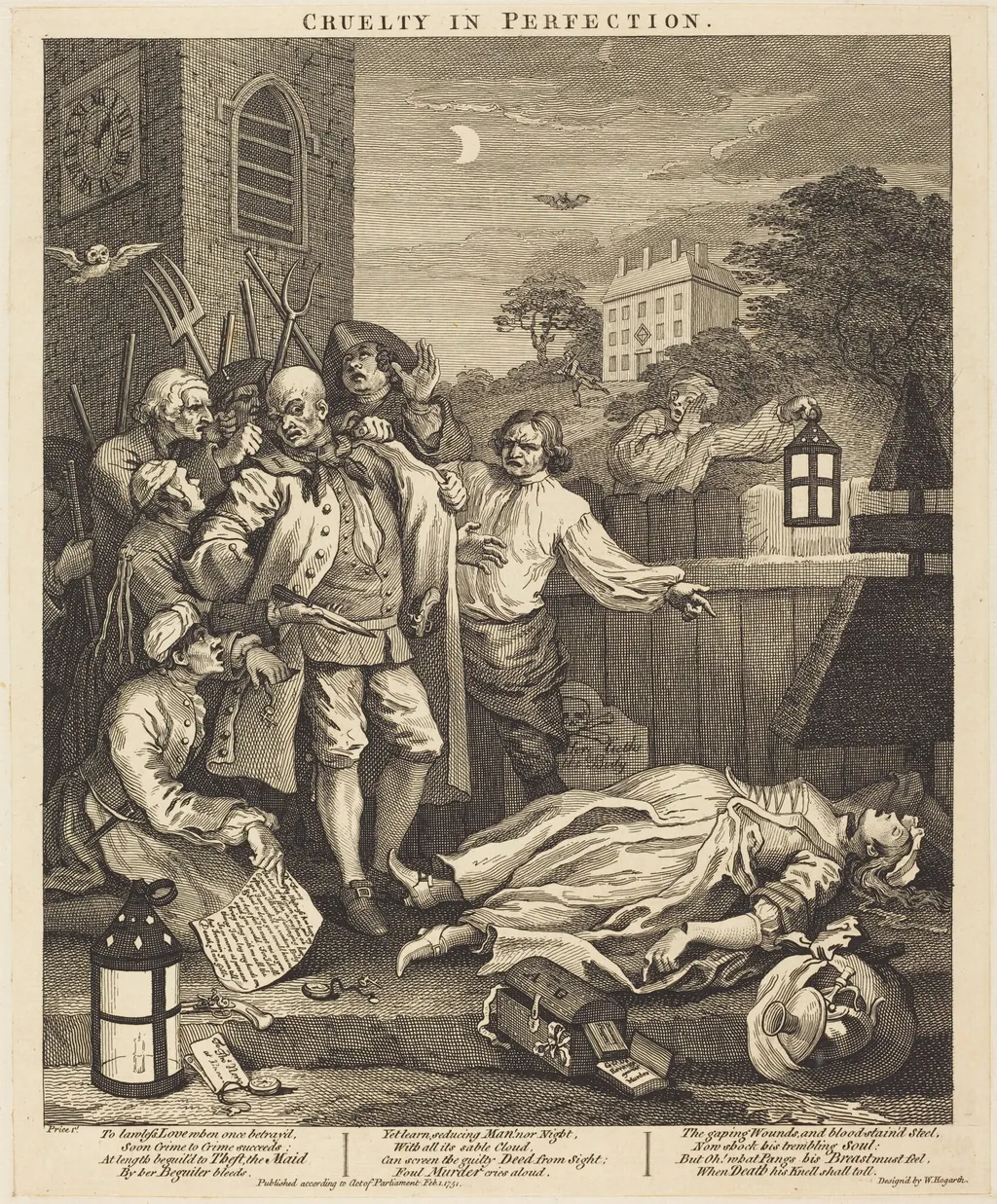
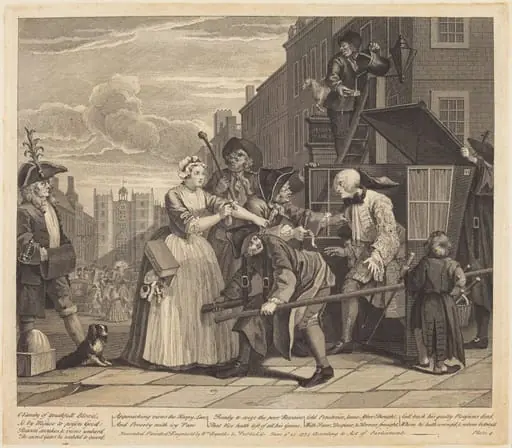
Cruelty in Perfection is an ink print by the Romanticist artist William Hogarth. It dates from 1751 and is held in the collection of the National Gallery of Art.
About this work
Overview
It belongs to the later phase of his career, when he focused on individual satirical images rather than narrative series.
Created in 1751, *Cruelty in Perfection* is a standalone print by William Hogarth, executed in etching and engraving. It belongs to the later phase of his career, when he focused on individual satirical images rather than narrative series. The work exemplifies his commitment to using printmaking as a tool for social commentary, reaching audiences beyond elite patrons through accessible, widely distributed imagery.
Subject & Meaning
The scene portrays a group of men gathered around a prone woman under a dim night sky, suggesting a violent or abusive act. Their postures and tools—a lantern, a club—convey aggression and disorder. Scattered objects like a broken jug and crumpled paper imply sudden disruption. Hogarth uses this moment to condemn moral decay and unchecked brutality, particularly among those who claim social standing, framing cruelty as routine rather than exceptional.
Technique & Style
Hogarth employed fine lines of etching and engraving to render texture and movement with precision. The contrast between the dark, shadowed figures and the pale moonlight enhances the scene’s tension. Details such as fabric folds, facial expressions, and the arrangement of debris are rendered with controlled urgency, reflecting his training as an engraver and his ability to convey narrative through intricate draftsmanship.
History & Provenance
The print was produced during a period when Hogarth actively published his own works to retain control over distribution and meaning. Unlike earlier series, *Cruelty in Perfection* was not part of a larger narrative but intended as a self-contained moral warning. It circulated among middle-class buyers who valued its sharp critique of urban life, reinforcing Hogarth’s reputation as a public moralist through print.
Context
In mid-18th-century London, public disorder and violence were frequent subjects of debate. Hogarth’s image responds to growing anxieties about lawlessness and the erosion of social norms. His work aligns with contemporary calls for moral reform, using visual immediacy to provoke reflection on the consequences of indifference and aggression in everyday life.
Legacy
Though less widely known than his narrative series, *Cruelty in Perfection* exemplifies Hogarth’s enduring influence on satirical printmaking. Its unflinching depiction of violence without sensationalism set a precedent for later artists addressing social injustice. The print remains a testament to his belief that art could serve as both record and rebuke, shaping public perception through visual clarity and moral conviction.
Artist & collection
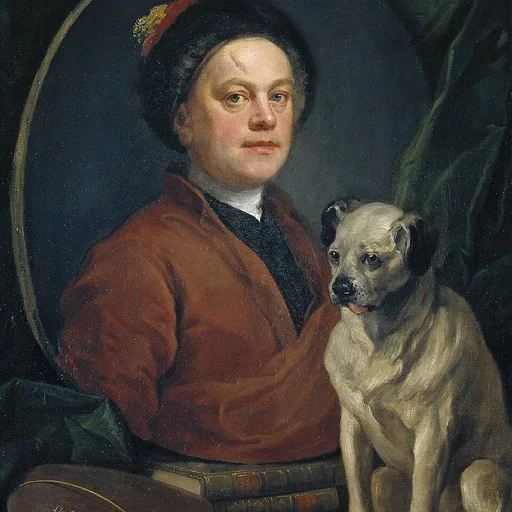
Artist
William Hogarth (; 10 November 1697 – 26 October 1764) was an English painter, engraver, satirist, cartoonist and writer.