Artwork
A Rake's Progress: pl.4
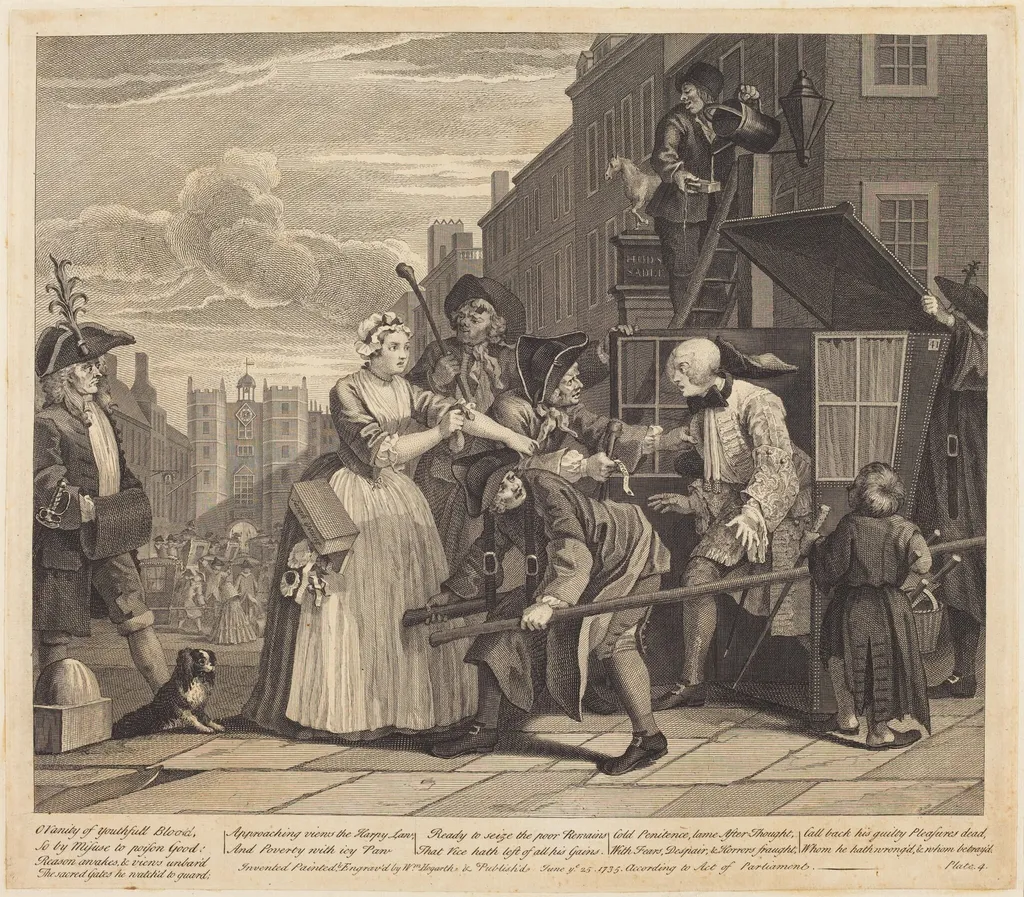
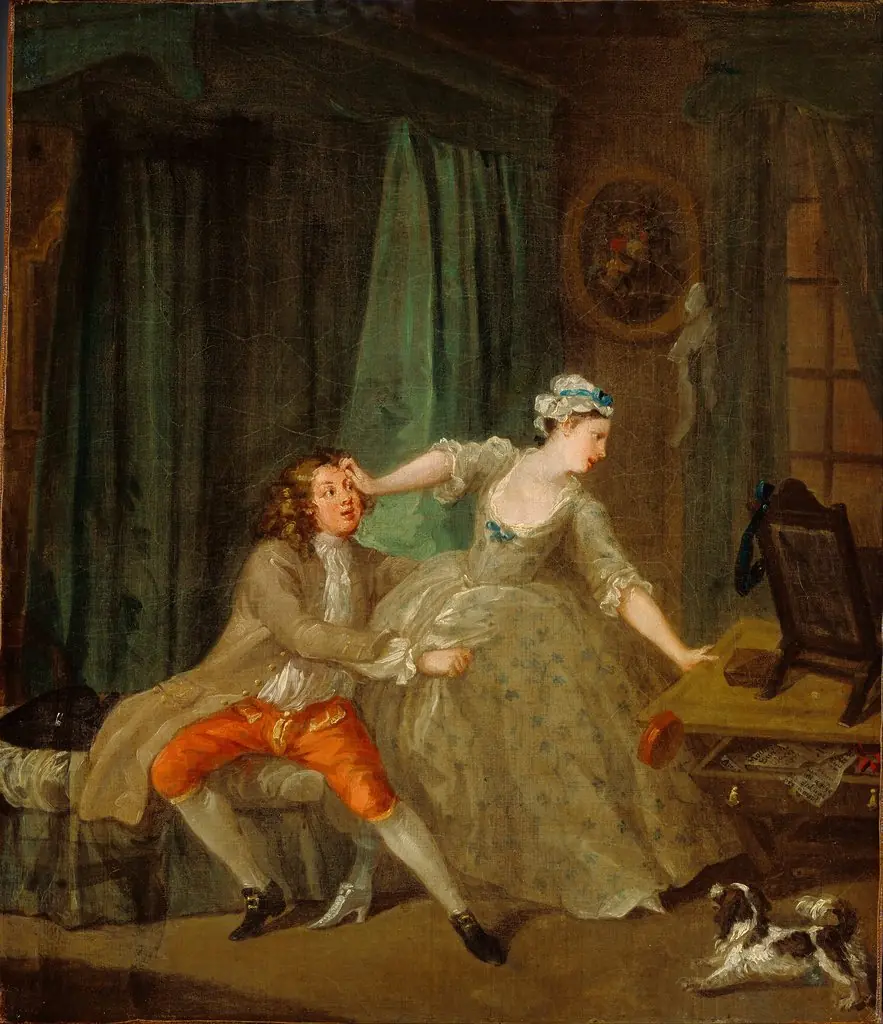
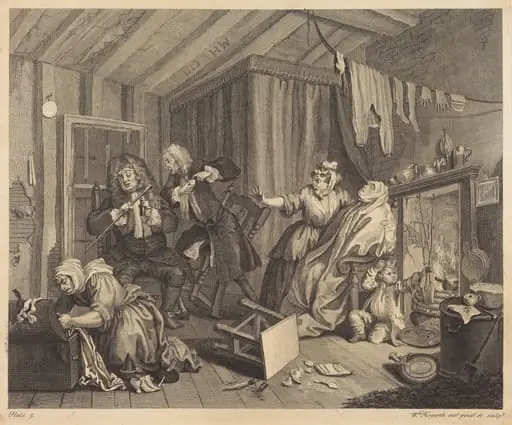
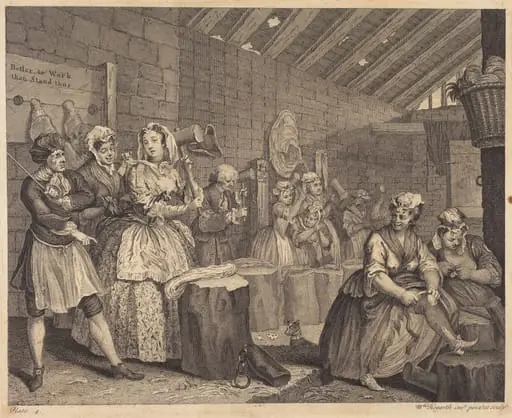
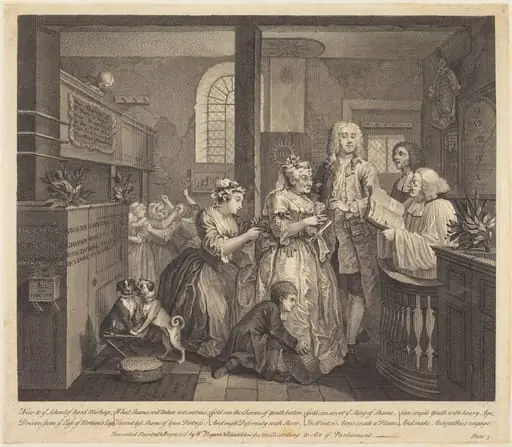
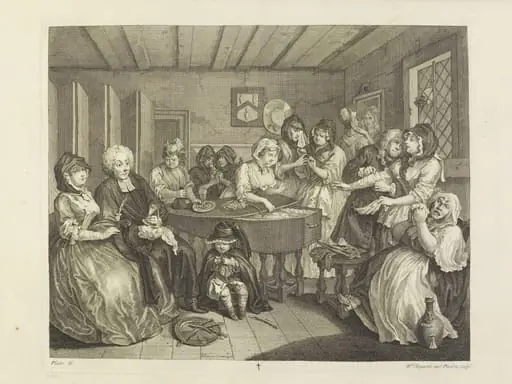
A Rake's Progress: pl.4 is an ink print by the Baroque artist William Hogarth. It dates from 1735 and is held in the collection of the National Gallery of Art. Pl.
About this work
Overview
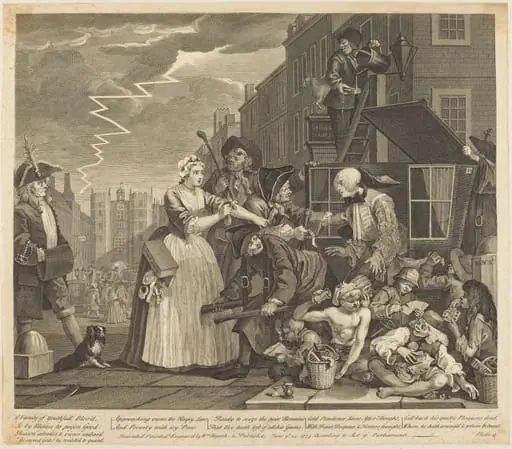
The scene captures the consequences of the protagonist’s reckless descent into vice, shifting from private misfortune to public humiliation.
Pl. 4 of William Hogarth’s *A Rake’s Progress* is the fourth in a sequence of eight prints published in 1735. Created through etching and engraving, it depicts a public spectacle of disorder in a London street. The scene captures the consequences of the protagonist’s reckless descent into vice, shifting from private misfortune to public humiliation. Hogarth’s work functions as a moral chronicle, using visual narrative to trace the unraveling of a man’s life.
Subject & Meaning
The central figure, bound to a post, is surrounded by a mob engaged in violent chaos, suggesting a punishment for debt or moral transgression. A woman in fine attire observes with dismay, contrasting with the ragged crowd, while a man in a wig gestures toward the scene as if directing attention. Above, a figure leans from a window holding a cat and lantern—possibly symbolizing voyeurism or the indifferent gaze of authority. The image critiques societal cruelty and the loss of personal dignity.
Technique & Style
Hogarth combined etching and engraving to achieve fine detail and dynamic contrast. The dense composition is filled with expressive figures, each rendered with exaggerated gestures and clothing that signal social status or moral decay. His use of line conveys movement and tension, while the layered background—buildings, church steeple, distant observers—creates depth without distraction. The style merges realistic observation with caricature, enhancing narrative clarity and emotional impact.
History & Provenance
The full series was published in 1735 after Hogarth secured copyright protection under the Engraving Copyright Act, a landmark move for artists’ rights. The prints were sold as sets, widely distributed, and quickly gained attention for their social commentary. Original impressions were collected by private patrons and institutions, establishing Hogarth’s reputation beyond painting. The series remains among the earliest examples of serialized visual storytelling in British art.
Context
In early 18th-century London, rising urbanization and financial speculation created new social tensions. Hogarth’s series responded to public anxieties about debt, class mobility, and moral corruption. The depiction of a public beating reflects contemporary practices like the pillory, while the church steeple in the background underscores the failure of institutional morality. His work spoke to a literate middle class seeking art that reflected their world, not just aristocratic ideals.
Legacy
Hogarth’s sequential format and moral realism influenced later narrative art, political cartoons, and illustrated journalism. His integration of social critique into visual form paved the way for artists like Daumier and later satirical illustrators. The *Rake’s Progress* series became a model for using print media to reach broad audiences with layered commentary. Its emphasis on consequence over spectacle reshaped how art could engage with public ethics.
Artist & collection
Artist
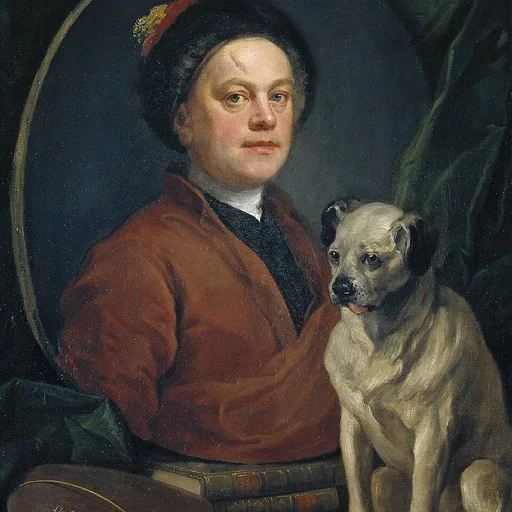
William Hogarth (; 10 November 1697 – 26 October 1764) was an English painter, engraver, satirist, cartoonist and writer.