Artwork
Nieuwjaar (New Year)
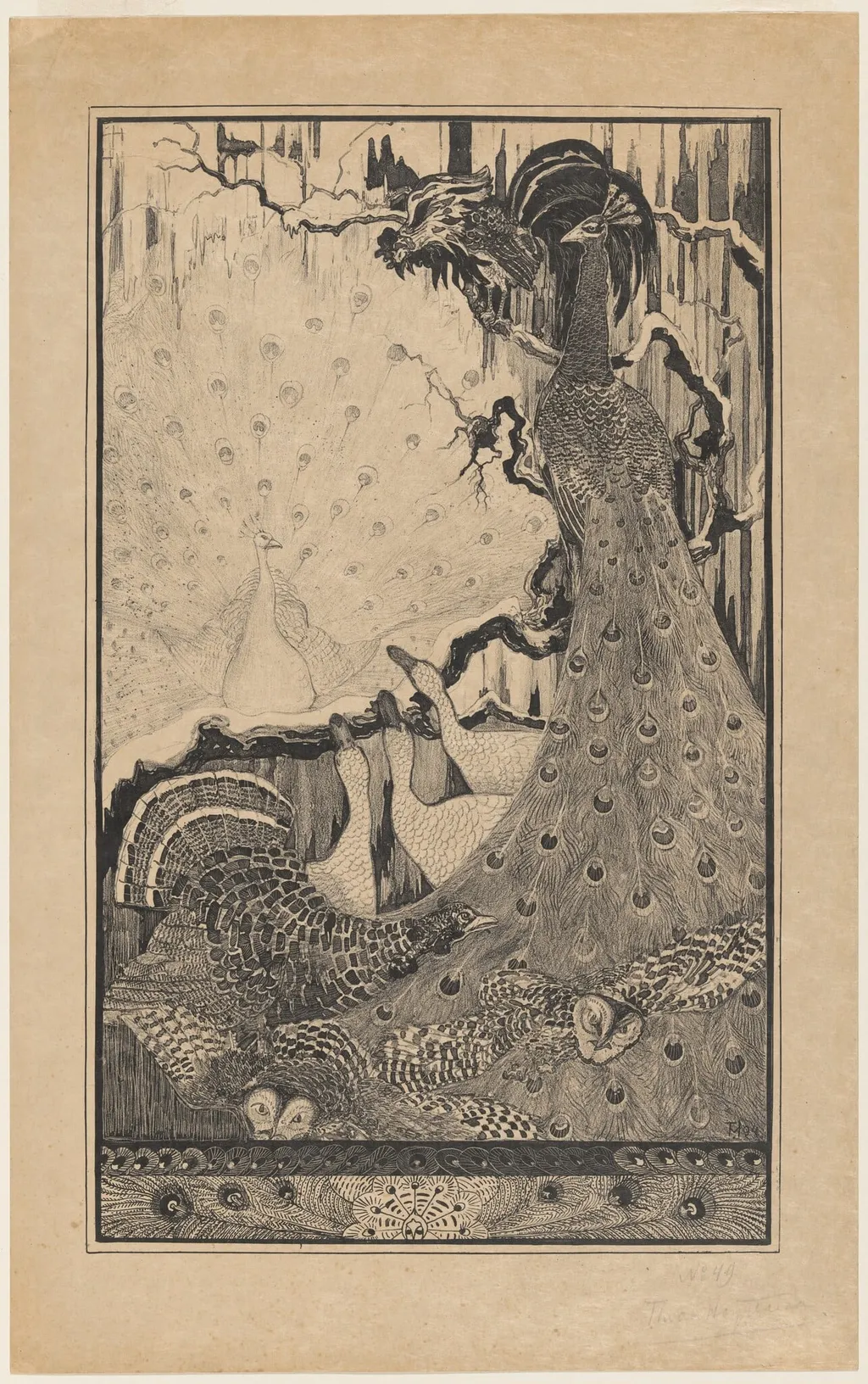
Nieuwjaar (New Year) is an ink print by the Impressionist artist Theodoor van Hoijtema. It dates from 1894 and is held in the collection of the National Gallery of Art.
About this work
Overview
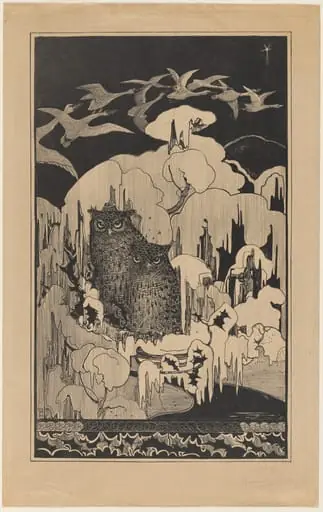
The work depicts a peacock with fully fanned tail feathers standing on a rugged stone surface, surrounded by domestic and wild birds lying nearby.
Nieuwjaar (New Year), created in 1894 by Theodoor van Hoijtema, is a black ink lithograph printed on buff-colored wove paper. The work depicts a peacock with fully fanned tail feathers standing on a rugged stone surface, surrounded by domestic and wild birds lying nearby. The composition centers on the avian figures against a backdrop of cliffs and sparse vegetation, suggesting a quiet, untamed natural setting.
Subject & Meaning
The scene captures a moment of stillness among birds, possibly referencing the quietude of the New Year’s transition. The peacock, a symbol often associated with vanity or renewal, contrasts with the grounded geese and turkey, which appear lifeless or resting. The absence of human figures emphasizes nature’s autonomy, inviting contemplation on cycles of life, observation, and seasonal change.
Technique & Style
Van Hoijtema employed lithography to achieve fine tonal gradations in black ink, emphasizing texture through delicate line work and stippling. The rendering of feathers, rock surfaces, and foliage reflects a close observation of natural forms, blending the precision of realism with the atmospheric looseness characteristic of late 19th-century printmaking. The limited palette enhances the focus on form and contrast.
History & Provenance
The lithograph was produced in 1894 and entered the collection of the National Gallery of Art in Washington, D.C., where it remains today. While little is documented about its early ownership, its inclusion in the gallery’s print department suggests recognition of its technical skill and thematic resonance within the context of European animal studies of the period.
Context
Created during a time when European artists increasingly turned to nature and everyday scenes, van Hoijtema’s work aligns with broader trends in printmaking that valued direct observation over idealization. Though not formally part of Impressionism, the piece shares its sensitivity to light and natural detail, reflecting a shift toward authentic representation in Dutch visual culture of the 1890s.
Legacy
Nieuwjaar endures as a quiet example of late 19th-century animal portraiture in print. It reflects van Hoijtema’s commitment to capturing the dignity of wildlife without sentimentality. While not widely reproduced, the work contributes to the understanding of how European printmakers engaged with nature during a period of rapid industrialization and changing attitudes toward the natural world.
Artist & collection