Artwork
Venise sauvée (Venice Preserved)
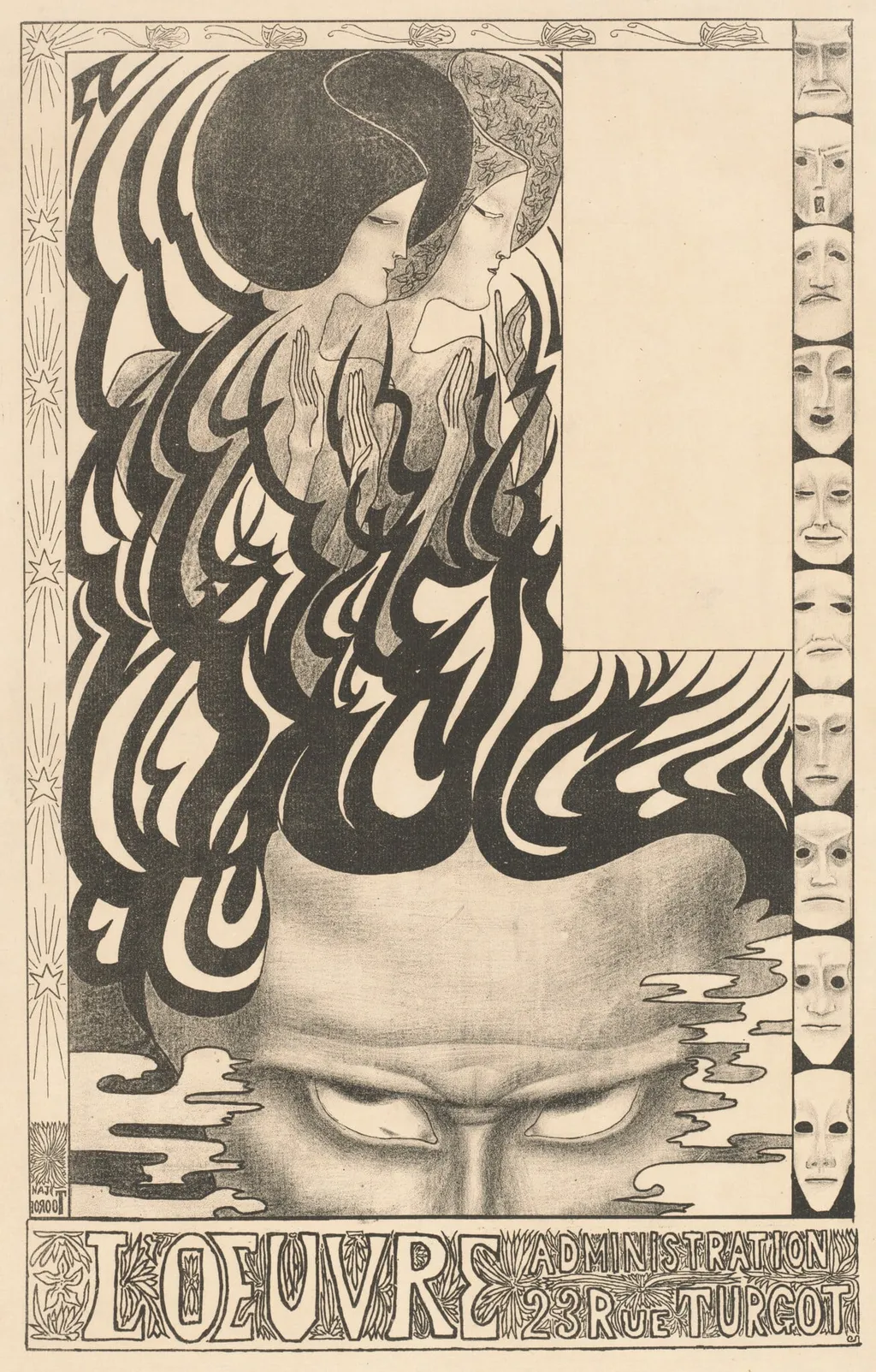
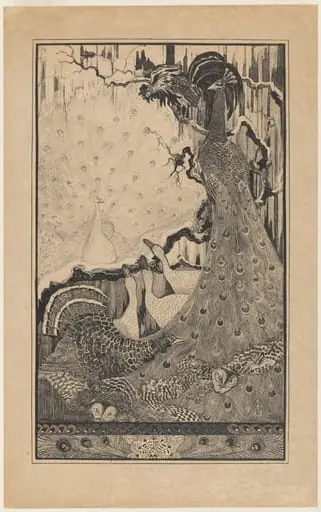
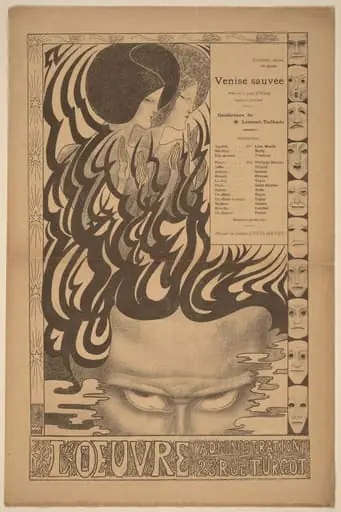
Venise sauvée (Venice Preserved) is an ink print by the Impressionist artist Jan Toorop. It dates from 1895 and is held in the collection of the National Gallery of Art. Created in 1895, *Venise sauvée* is a black-and-white lithograph on laid paper, produced as a proof before the addition of lettering.
About this work
Overview
The work stands apart from his earlier Impressionist tendencies, embracing instead a stylized, linear language that emphasizes rhythm and mood over naturalism.
Created in 1895, *Venise sauvée* is a black-and-white lithograph on laid paper, produced as a proof before the addition of lettering. Jan Toorop, a Dutch artist known for his stylistic fluidity, executed this print during a phase of intense engagement with Symbolist aesthetics. The work stands apart from his earlier Impressionist tendencies, embracing instead a stylized, linear language that emphasizes rhythm and mood over naturalism.
Subject & Meaning
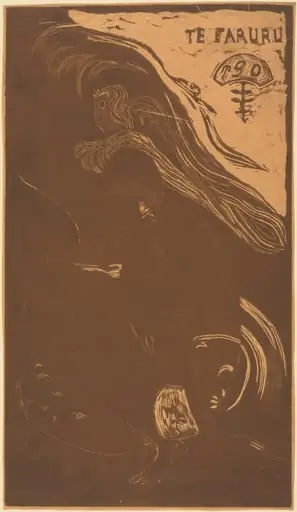
The image portrays a pale, elongated female figure suspended in water, her arms raised as if cradling or invoking something unseen. Surrounding her, undulating lines suggest both aquatic movement and flowing hair, blurring the boundary between body and environment. The four blank, stacked faces on the right evoke silent witnesses or spiritual presences. The title alludes to Venice’s mythical preservation, possibly symbolizing a soul or city saved through ethereal means.
Technique & Style
Toorop employed lithography to achieve sharp, expressive contours and dense tonal contrasts. The composition relies on rhythmic, flowing lines that echo Art Nouveau’s organic forms, while the absence of color heightens the eerie, dreamlike atmosphere. The figure’s elongated proportions and the abstract treatment of water reflect Symbolist interests in inner states over external reality. The print’s stark monochrome palette enhances its meditative, otherworldly tone.
History & Provenance
This lithograph was made as an early proof, prior to the addition of inscriptions, suggesting it was intended for private circulation or artist review. Toorop produced several such proofs during his Symbolist period, often experimenting with printmaking as a means to explore psychological and spiritual themes. Its survival as a proof before letters indicates it was likely retained by the artist or a close associate, rather than distributed widely.
Context
In the mid-1890s, Toorop was immersed in European Symbolist circles, influenced by writers like Mallarmé and artists such as Khnopff. His work during this time moved away from Dutch realism toward mystical, allegorical subjects. *Venise sauvée* aligns with broader fin-de-siècle preoccupations with water as a symbol of the unconscious, femininity, and transcendence, reflecting a shared aesthetic across Belgium, France, and the Netherlands.
Legacy
Though not among Toorop’s most widely exhibited works, *Venise sauvée* exemplifies his capacity to synthesize Symbolist themes with graphic precision. It contributes to the understanding of printmaking as a vehicle for psychological expression in late 19th-century Europe. The piece remains a quiet but significant marker of his transition from Impressionism toward a more introspective, stylized visual language.
Artist & collection

Artist
Johannes Theodorus "Jan" Toorop was a Dutch painter who worked in various styles, including Symbolism, Art Nouveau, and Pointillism. His early work was influenced by the Amsterdam Impressionism movement.