Artwork
Schematic Drawing of Buyid Silk (1962.264)
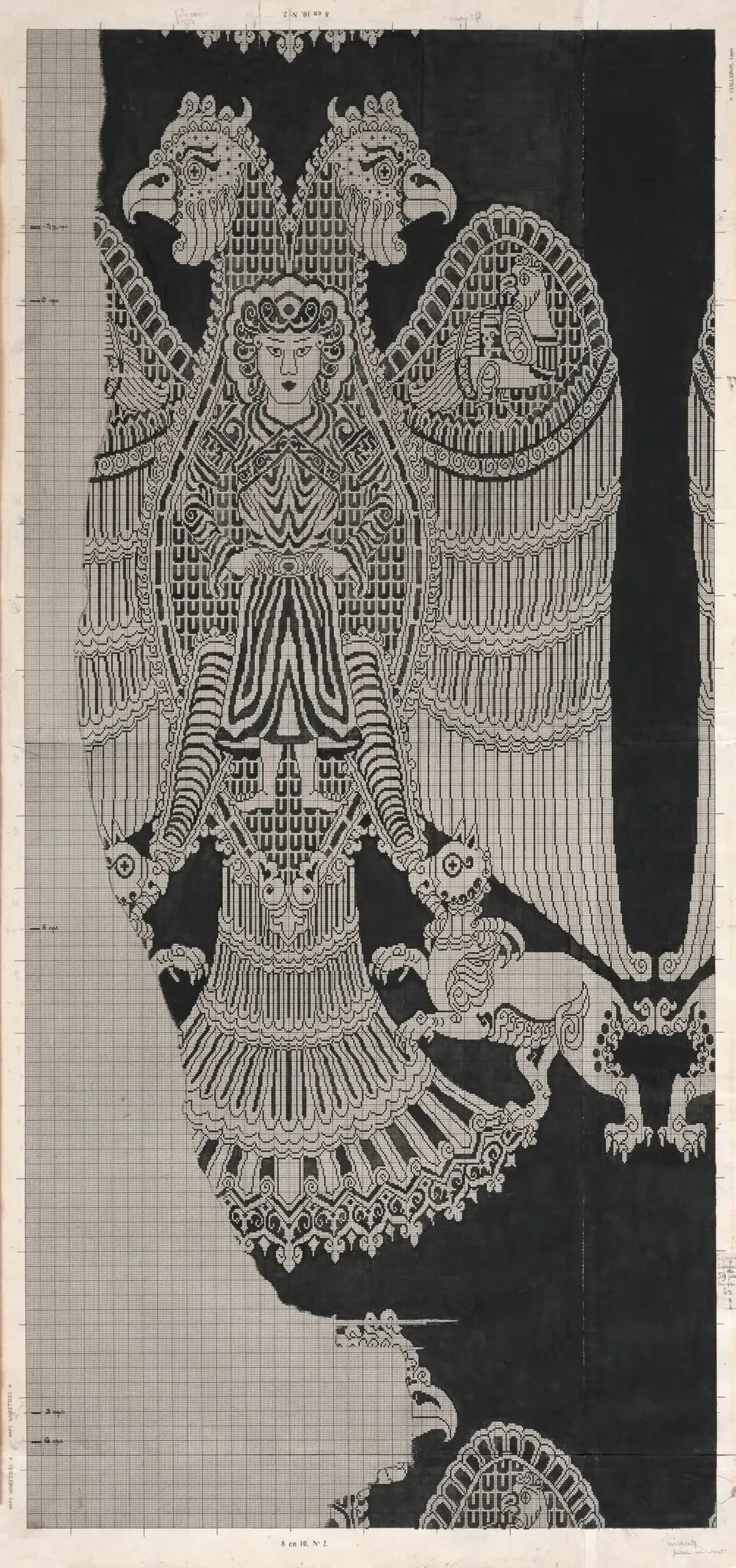
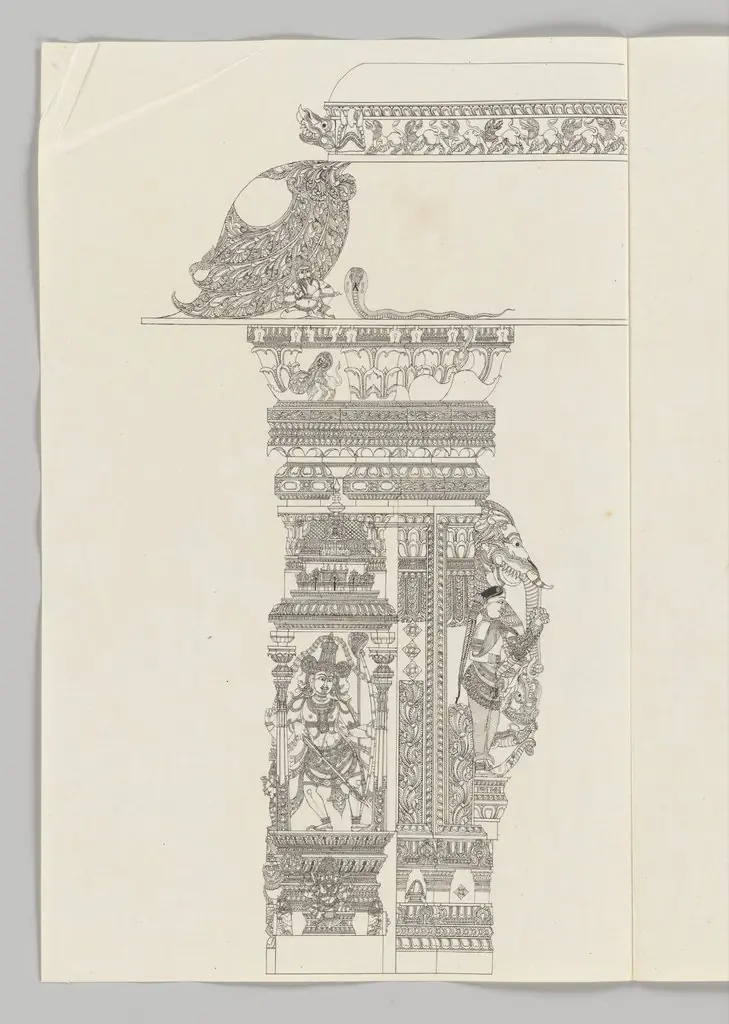
Schematic Drawing of Buyid Silk (1962.264) is a drawing by Félix Guichert. It dates from 1904 and is held in the collection of the Cleveland Museum of Art. The work titled Schematic Drawing of Buyid Silk (1962.
About this work
Overview
The work titled Schematic Drawing of Buyid Silk (1962.264) is a pen-and-ink drawing executed around 1904 by French artist Félix Guichert. It is part of the collection of the Cleveland Museum of Art, where it is catalogued under the accession number 1962.264.
Subject & Meaning
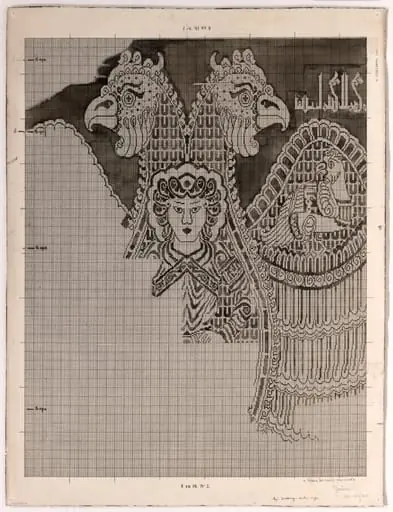
A diminutive creature with a curled tail rests at the base, suggesting a narrative or symbolic element within the original fabric pattern.
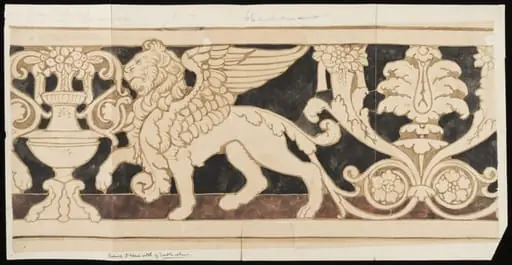
The drawing records a stylised design for a historic silk textile associated with the Buyid dynasty. Central to the composition is a tall, elaborately dressed figure bearing two prominent bird heads on its shoulders, crowned, and clothed in a flowing robe adorned with swirling motifs. A diminutive creature with a curled tail rests at the base, suggesting a narrative or symbolic element within the original fabric pattern.
Technique & Style
Guichert employed fine, intersecting lines and delicate shading to convey the texture of woven material. The contrast between the dark background and the intricate linear detailing creates a sense of depth, while the ornamental patterns are rendered with precise, repetitive strokes that mimic the repetitive nature of textile design.
History & Provenance
Created in the early twentieth century, the drawing was later acquired by the Cleveland Museum of Art, entering its holdings in 1962. It has remained in the museum’s collection, serving as a reference for scholars studying Islamic textile motifs and the visual culture of the Buyid period.
Context
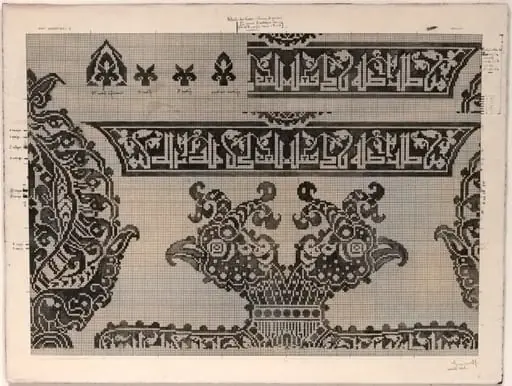
The Buyid dynasty, which ruled parts of Iran and Iraq during the 10th and 11th centuries, is known for luxurious silk production. Guichert’s schematic captures the aesthetic vocabulary of that era—bird-headed figures, elaborate crowns, and intricate vegetal motifs—providing insight into the decorative language employed by medieval Persian weavers.
Artist & collection