Artwork
Kyröskoski
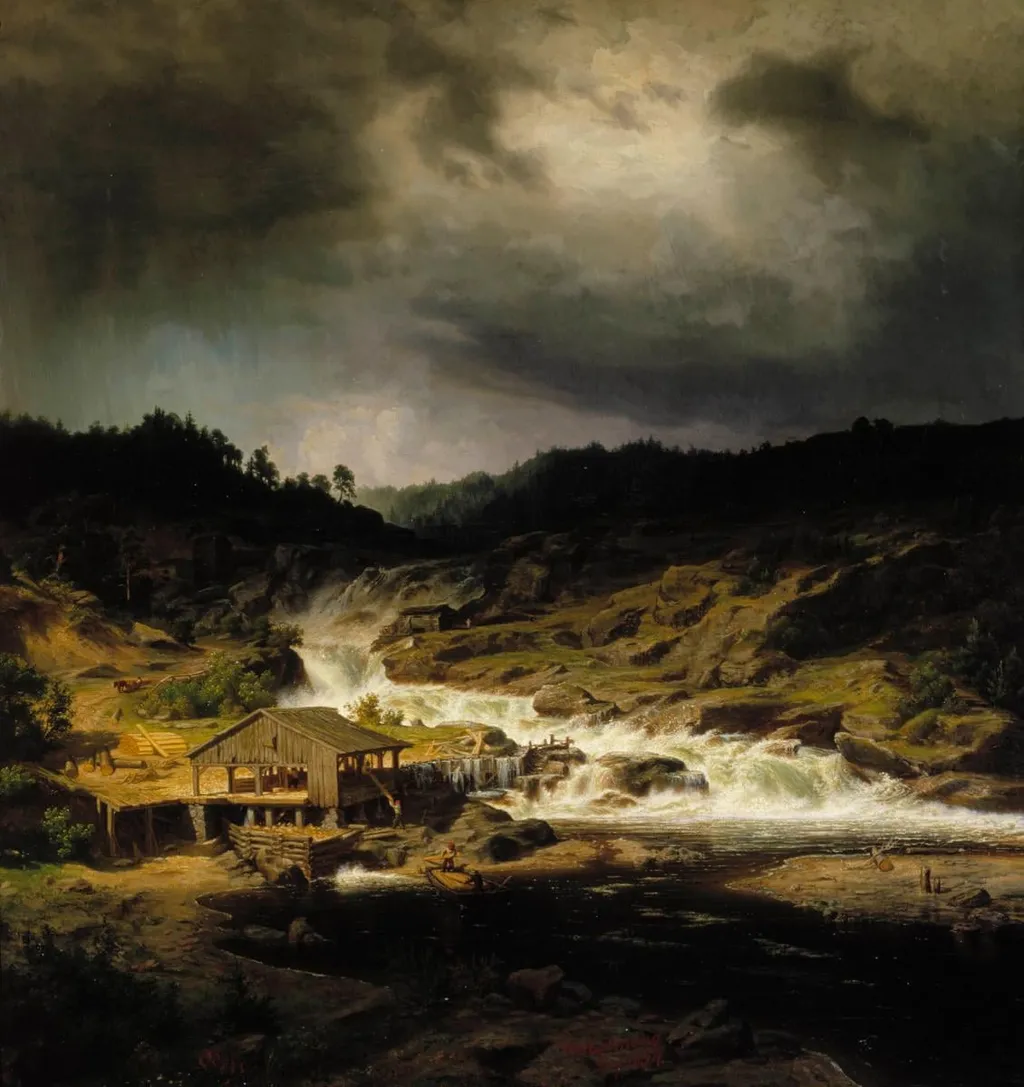
Kyröskoski is an unspecified painting by Werner Holmberg. It dates from 1855 and is held in the collection of the Finnish National Gallery.
About this work
Overview
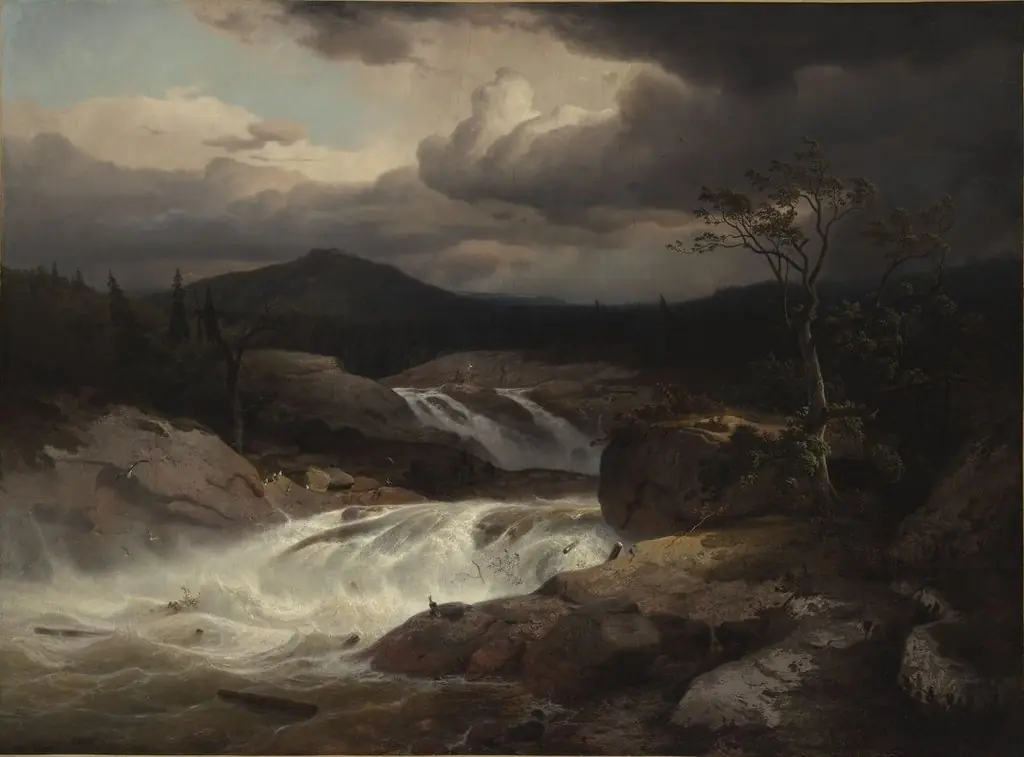
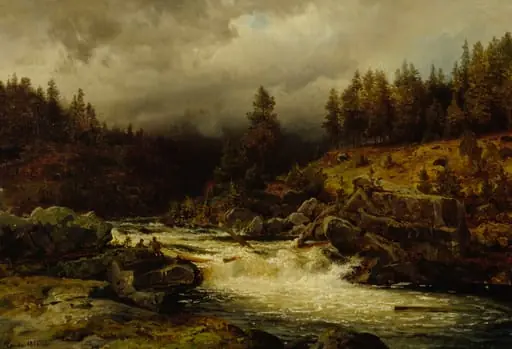
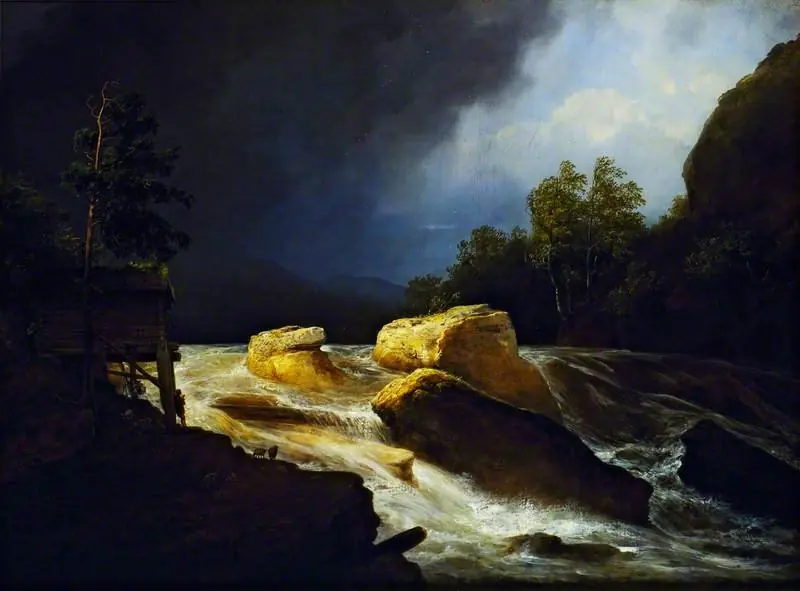
The composition centers on a powerful waterfall surging through a narrow gorge, flanked by dense forest and a modest wooden structure on the left bank.
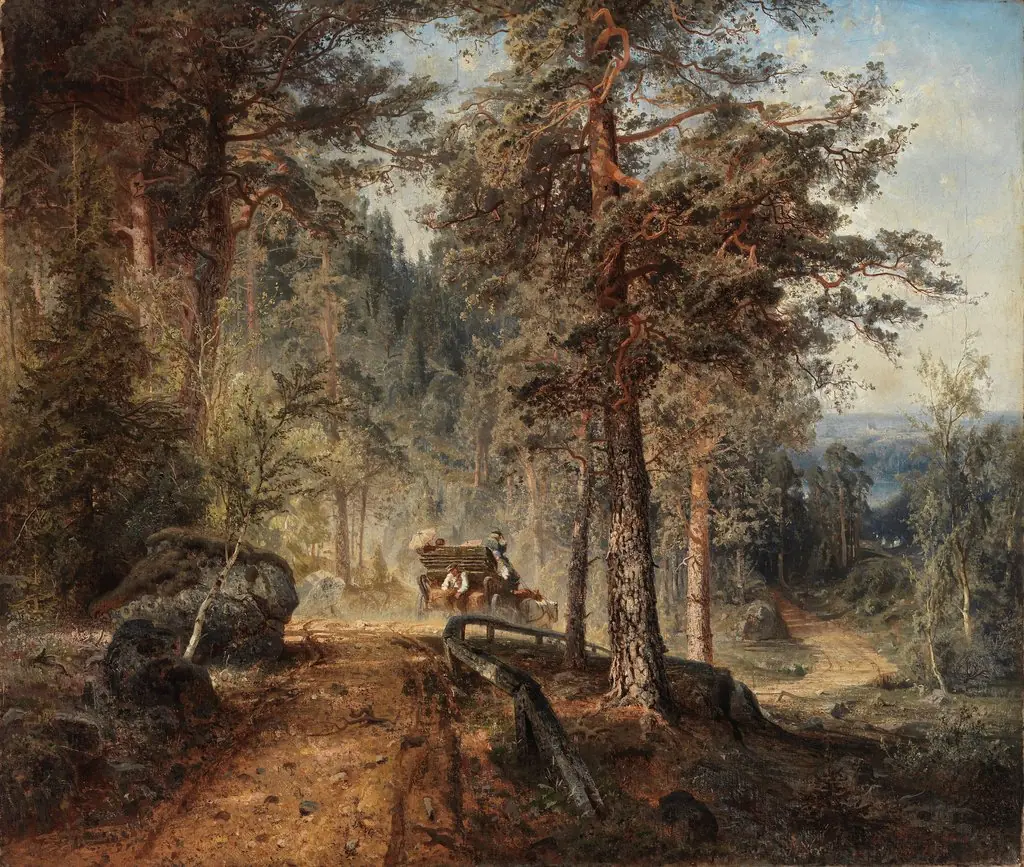
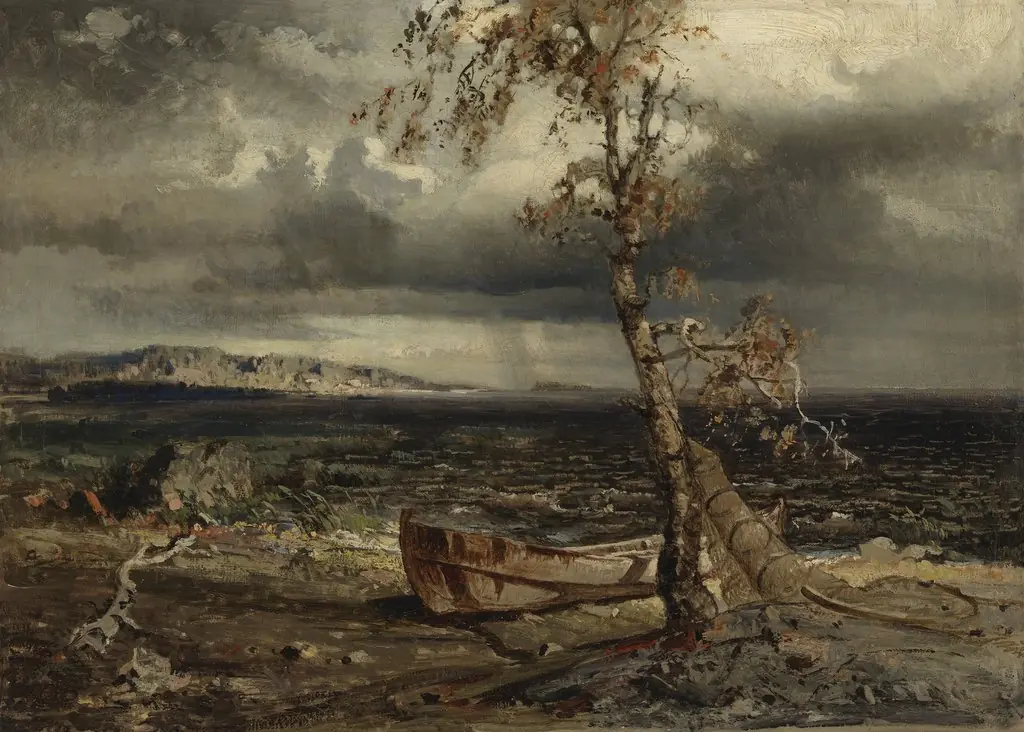
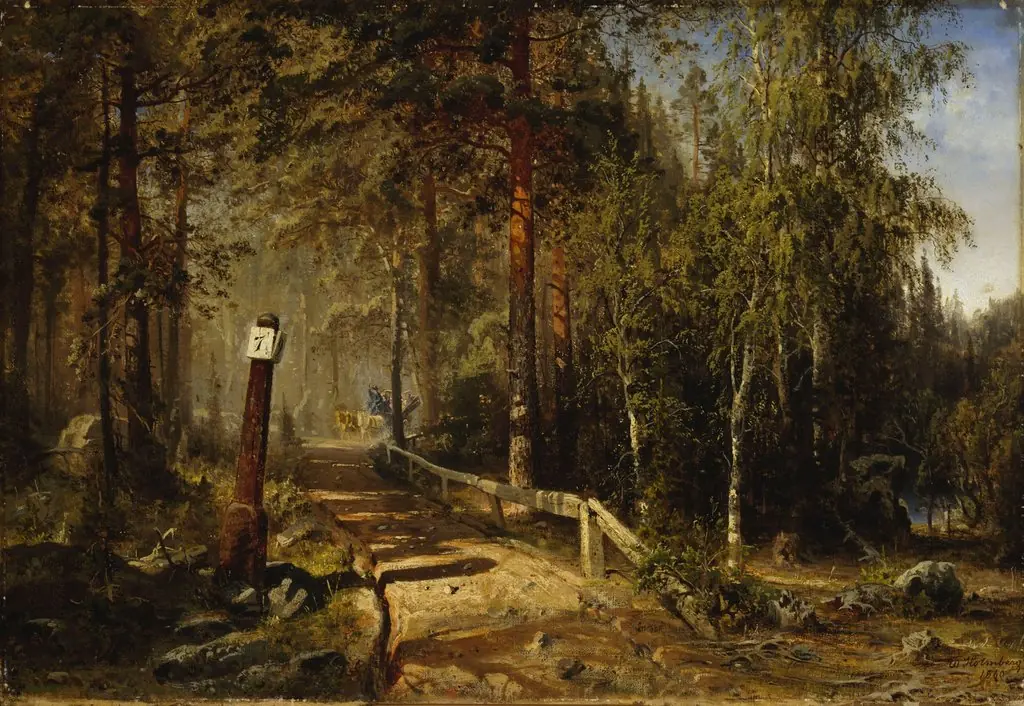
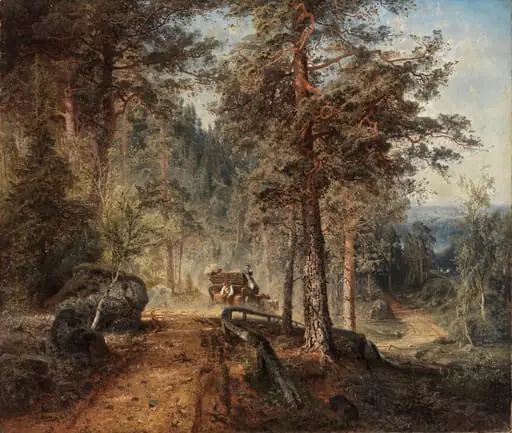
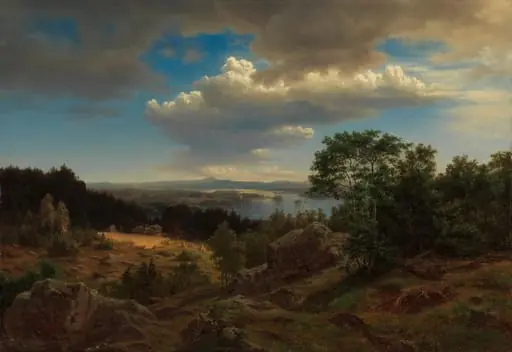
Painted around 1855 by Finnish artist Werner Holmberg, Kyröskoski depicts a rugged natural scene in central Finland. The composition centers on a powerful waterfall surging through a narrow gorge, flanked by dense forest and a modest wooden structure on the left bank. The atmosphere is somber and immersive, shaped by dramatic shifts in light and shadow that emphasize the raw energy of the landscape.
Subject & Meaning
The painting captures a remote industrial site near the Kyröskoski rapids, where water power supported local milling operations. The isolated building suggests human presence amid untamed nature, but it remains subordinate to the overwhelming force of the river. The scene conveys neither celebration nor critique—instead, it observes the quiet coexistence of industry and wilderness in a harsh, unyielding environment.
Technique & Style
Holmberg employs chiaroscuro to heighten emotional tension, contrasting the luminous cascade against deep, shadowed forests and overcast skies. Brushwork is deliberate yet unpolished, with thick pigment defining turbulent water and gnarled tree trunks. The palette is muted—grays, browns, and muted greens—reinforcing the painting’s somber mood and atmospheric depth without romantic embellishment.
History & Provenance
Created during Holmberg’s period of landscape study in Finland, Kyröskoski was likely painted en plein air, reflecting his engagement with local topography. The work remained in private Finnish collections until the mid-20th century, after which it entered a public institution. Its survival as a relatively unaltered example of mid-19th-century Finnish realism offers insight into regional artistic priorities of the time.
Context
In the 1850s, Finland was developing its cultural identity under Russian rule, with artists turning to native landscapes as subjects of national significance. Holmberg’s focus on unidealized, working landscapes distinguished him from European Romantic traditions. Kyröskoski reflects this shift—valuing authenticity over grandeur, and quiet observation over theatrical spectacle.
Legacy
Though not widely exhibited internationally, Kyröskoski is recognized in Finnish art history as a key example of early realist landscape painting. It influenced later generations of Finnish artists who sought to portray their environment with psychological gravity and technical restraint, helping to establish a distinct national visual language rooted in local terrain and climate.
Artist & collection