Artwork
A Shell in the Trenches before Richmond [recto]
![A Shell in the Trenches before Richmond [recto], by Winslow Homer, charcoal, 1862](https://artifactworldgallery.com/img/winslow-homer--a-shell-in-the-trenches-before-richmond-recto--a1cef89257922648-w1024.webp)
A Shell in the Trenches before Richmond [recto] is a charcoal drawing by the Impressionist artist Winslow Homer. It dates from 1862 and is held in the collection of the National Gallery of Art.
About this work
Overview
Created in 1862, this drawing by Winslow Homer captures a single artillery shell resting in a trench near Richmond, Virginia.
Created in 1862, this drawing by Winslow Homer captures a single artillery shell resting in a trench near Richmond, Virginia. Executed in charcoal, graphite, and watercolor on wove paper, it belongs to a series of field sketches Homer made while embedded with Union troops during the American Civil War. The work reflects his direct observation of war’s quiet, mundane moments rather than its battles.
Subject & Meaning
The shell, isolated and inert, lies abandoned in the earth, suggesting the pause between explosions. Its placement in the trench—neither heroic nor dramatic—invites contemplation of war’s physical presence and human exhaustion. The absence of figures emphasizes the weight of absence itself: soldiers gone, violence deferred, and the landscape holding its breath.
Technique & Style
Homer used charcoal for bold, smudged contours and graphite for fine detail, layered with diluted watercolor to suggest damp earth and shadow. The medium’s immediacy aligns with the sketch’s spontaneity. No embellishment softens the scene; the composition is sparse, focused, and unadorned, mirroring the starkness of the wartime environment.
History & Provenance
Homer produced this work during his assignment for Harper’s Weekly, documenting the Peninsula Campaign. The drawing remained in his personal collection until his death, later entering the collection of the Metropolitan Museum of Art. Its survival as a private sketch, rather than a published illustration, underscores its role as a personal record rather than public propaganda.
Context
In 1862, the Civil War had entered its second year, with trench warfare becoming more common in Virginia. Homer’s sketches from this period broke from traditional war imagery by focusing on daily life and material remnants rather than combat. His approach reflected a shift toward realism and psychological observation in American art.
Legacy
This drawing exemplifies Homer’s early transition from illustrator to serious observer of war’s human dimension. It influenced later artists who sought to depict conflict through quiet, unembellished detail. As one of the few surviving field studies from this phase of his career, it remains a key document in understanding the evolution of American visual journalism.
Artist & collection
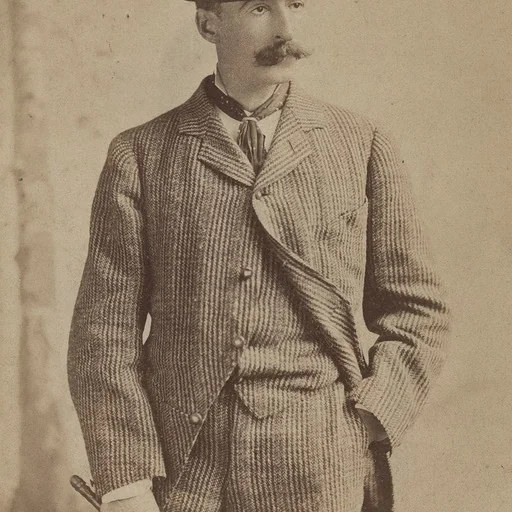
Artist
Winslow Homer (February 24, 1836 – September 29, 1910) was an American landscape painter and illustrator, best known for his marine subjects.

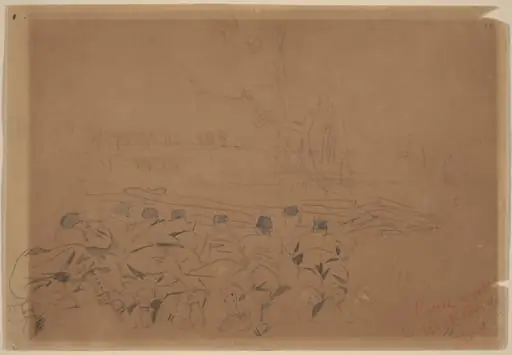 Rebel Works at Yorktown
![From Alexandria to Ship Point [recto], by Winslow Homer](https://artifactworldgallery.com/img/winslow-homer--from-alexandria-to-ship-point-recto--b706e6db6edee2bc-w320.webp) From Alexandria to Ship Point [recto]
From Alexandria to Ship Point [recto]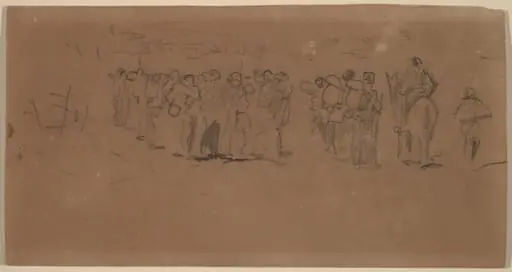 Preparing for the March
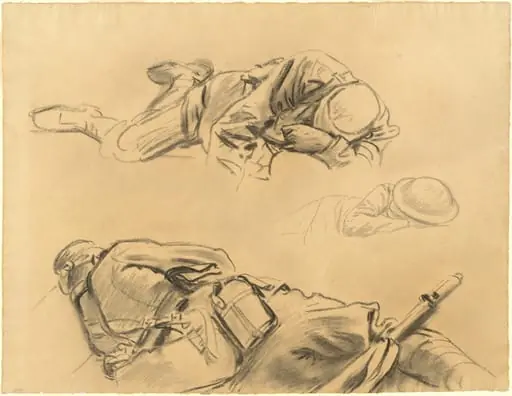 Studies for "Gassed"
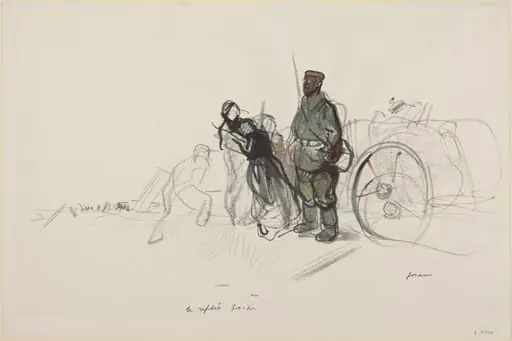 a) Le replis boche (recto); b) Sketch for the Figure of the German (verso)
![Skirmish Involving a Wagon Train [verso], by Winslow Homer](https://artifactworldgallery.com/img/winslow-homer--skirmish-involving-a-wagon-train-verso--6ee57b18fcbda7d4-w320.webp) Skirmish Involving a Wagon Train [verso]
Skirmish Involving a Wagon Train [verso]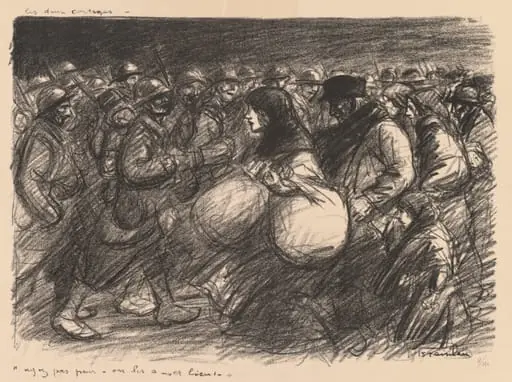 War Sketches: The Two Processions (Croquis de guerre: Les deux cortèges – “Ayez pas peur - on les a - et bien!”)
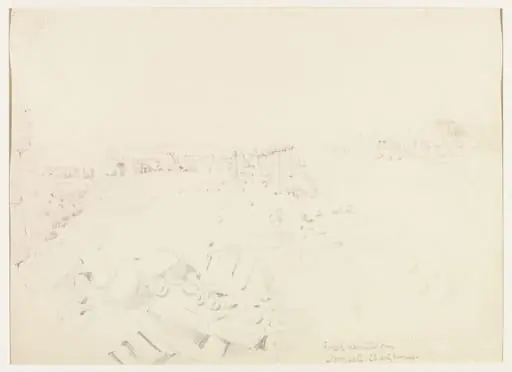 Gerash from N Gate
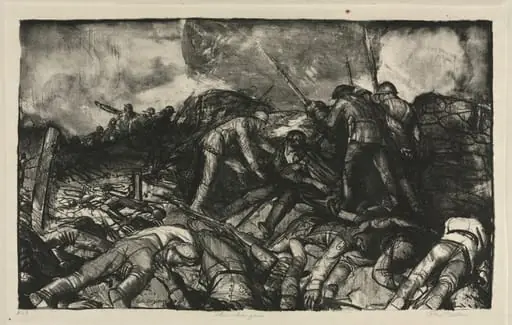 War Series: The Charge