Artwork
Saved
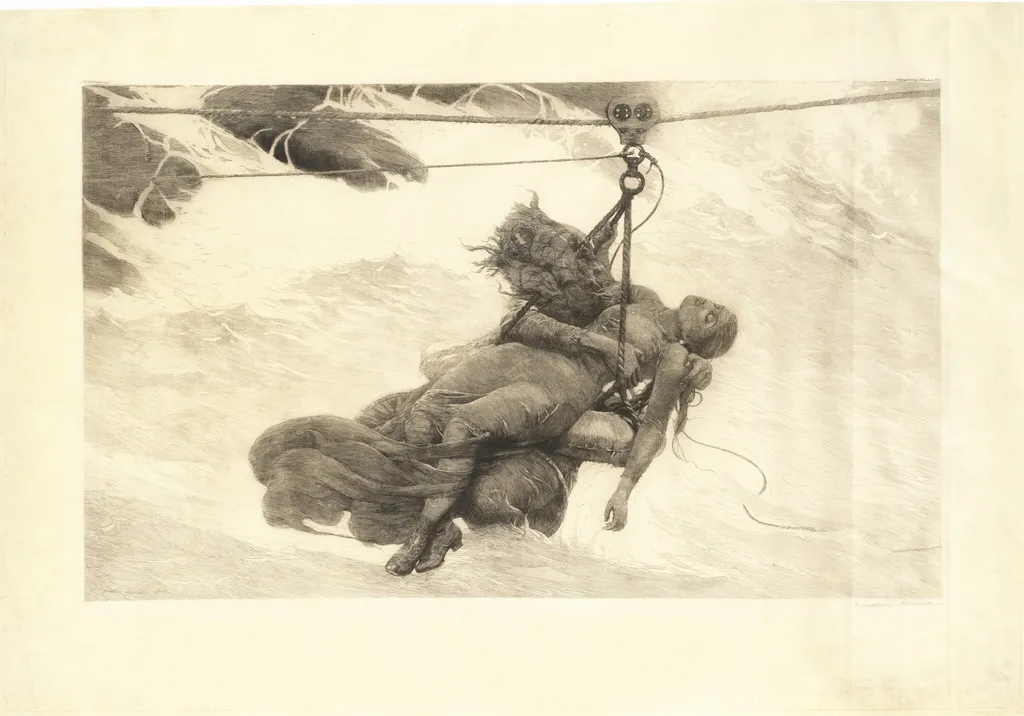
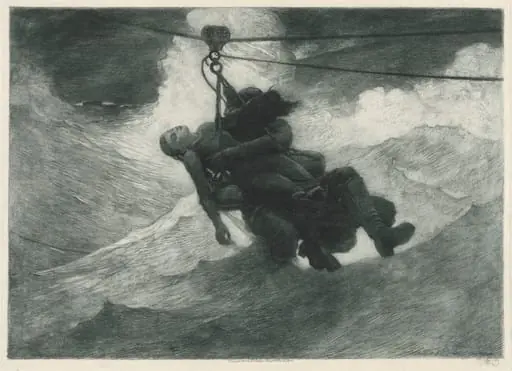
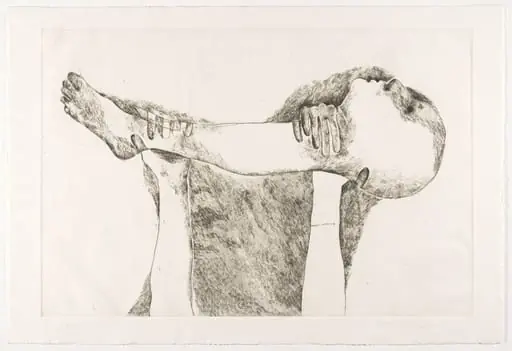
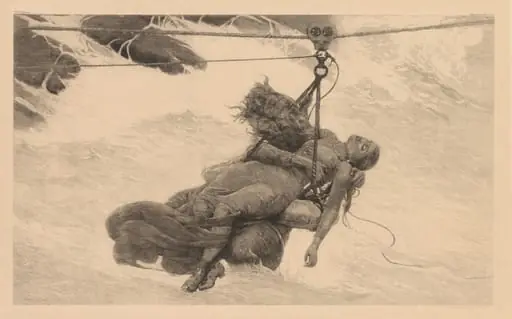
Saved is an ink print by the Impressionist artist Winslow Homer. It dates from 1889 and is held in the collection of the National Gallery of Art.
About this work
Overview
The print captures a moment of intense physical tension: a rider clings desperately to a horse mid-fall, its limbs entangled.
Created in 1889, Saved is an etching by Winslow Homer on imitation parchment. The print captures a moment of intense physical tension: a rider clings desperately to a horse mid-fall, its limbs entangled. Above, a taut rope extends horizontally, suggesting a mechanical device—perhaps part of a training rig. The composition strips away extraneous detail, focusing entirely on the struggle between human and animal.
Subject & Meaning
The scene depicts a moment of peril and dependency, where the rider’s survival hinges on grip and instinct. The horse, seemingly out of control, becomes both threat and lifeline. The rope overhead implies a system of control—possibly a training apparatus—raising questions about human intervention in nature. The image evokes vulnerability, effort, and the fragile boundary between mastery and chaos.
Technique & Style
Homer employed fine, incised lines to model form and motion, using dense hatching to suggest muscle strain and falling weight. The etching’s contrast between dark, textured figures and the pale, unmarked parchment heightens the sense of urgency. The absence of a detailed background isolates the action, directing attention to the interplay of limbs and tension in the rope, showcasing the medium’s capacity for emotional precision.
History & Provenance
Saved was produced during Homer’s later period, when he increasingly turned to printmaking to explore themes of human endurance. It was likely made for private circulation rather than mass reproduction, consistent with his interest in the intimate scale of etching. The work remained in private collections until entering institutional holdings in the 20th century, where it is now studied for its psychological depth and technical refinement.
Context
In the late 19th century, American artists were turning to everyday and rural scenes with renewed seriousness. Homer, long known for war and maritime subjects, now focused on the quiet dramas of labor and animal husbandry. Saved reflects this shift, aligning with broader cultural interests in the physicality of work and the complex relationships between humans and animals in a changing landscape.
Legacy
Saved stands as a quiet but powerful example of Homer’s mastery of etching as a narrative tool. Its restrained composition and emotional gravity influenced later printmakers seeking to convey tension without melodrama. The work continues to be referenced in studies of American realism, particularly for its unflinching portrayal of vulnerability and the physical costs of control.
Artist & collection
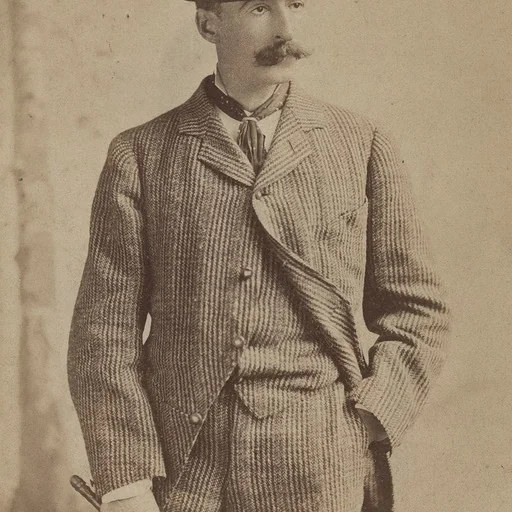
Artist
Winslow Homer (February 24, 1836 – September 29, 1910) was an American landscape painter and illustrator, best known for his marine subjects.