Artwork
"They Are Burning Everything - They must be about to Retreat"
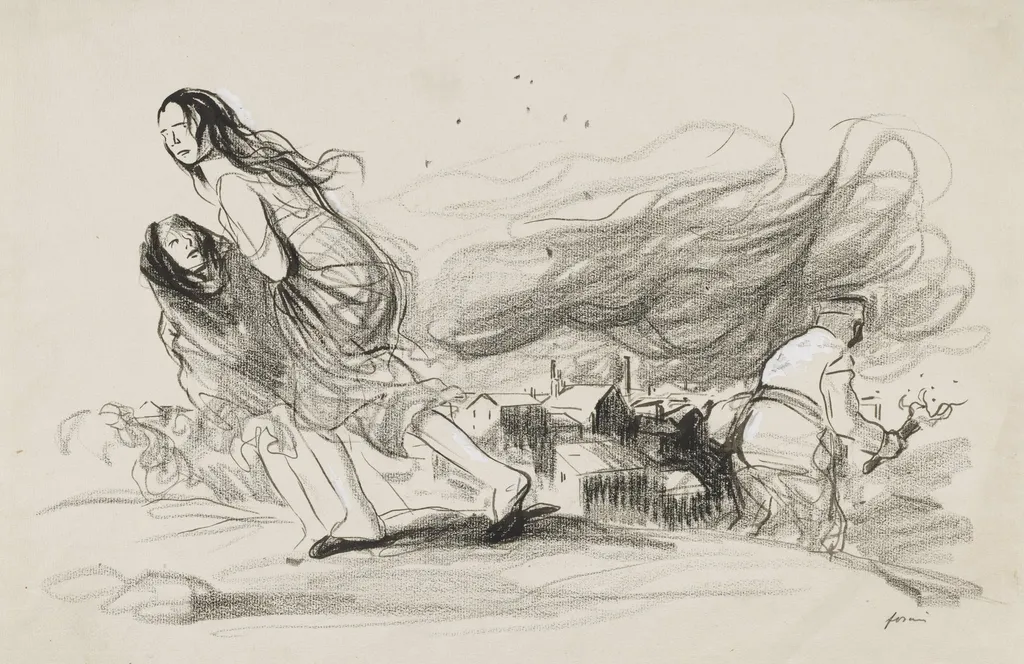
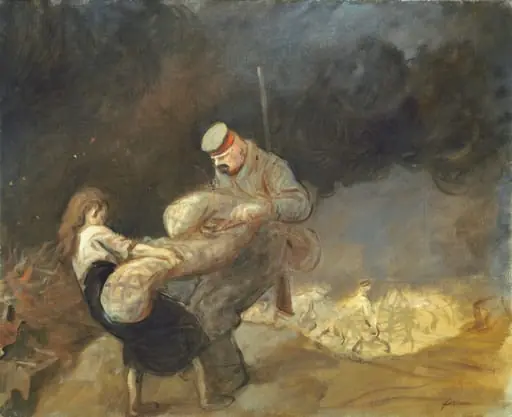
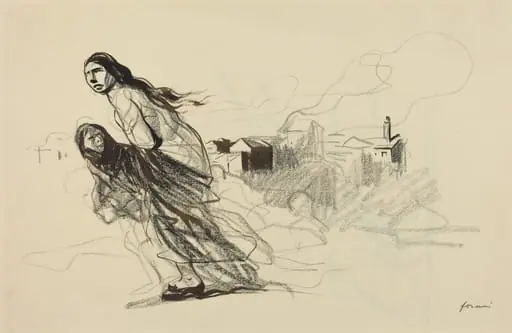
"They Are Burning Everything - They must be about to Retreat" is a drawing by Jean-Louis Forain. It dates from 1919 and is held in the collection of the Cleveland Museum of Art.
About this work
The title hints this might be about war or chaos, but the drawing itself feels more like a frantic sketch than a polished work.
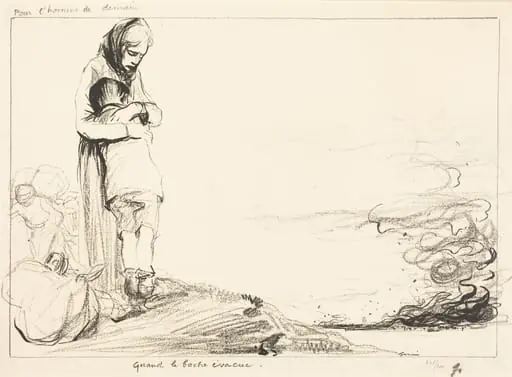
This sketch shows a woman running, clutching a small child in her arms. Behind them, a village burns—houses and smoke fill the background. The lines are loose and quick, like hurried strokes.
The title hints this might be about war or chaos, but the drawing itself feels more like a frantic sketch than a polished work. The artist left lots of blank space, focusing on movement over detail.
Next, check out Jean Louis Forain (French, 1852–1931) to see more of his expressive, sketchy style.
Overview
Created around 1919 by French artist Jean-Louis Forain, this ink drawing captures a moment of sudden displacement. Executed with rapid, unrefined lines, it conveys urgency rather than finish. The work is part of the collection at The Cleveland Museum of Art, where it stands as an example of Forain’s preference for spontaneous expression over polished composition. Its raw quality suggests it was made in response to immediate emotional or historical stimuli.
Subject & Meaning
The scene depicts a woman fleeing with a child, her posture tense and urgent, while behind them, a village is engulfed in flames. The title implies a military context—perhaps the retreat of an occupying force—but the image avoids clear identifiers of time or place. The focus on personal flight, rather than battle, shifts attention to civilian trauma, making the violence felt through absence and motion rather than direct depiction.
Technique & Style
Forain employed loose, gestural ink strokes that prioritize energy over precision. The figures are suggested with minimal detail, while the burning village is rendered through smudged, angular marks that imply smoke and collapse. Large areas of untouched paper heighten the sense of chaos and isolation. This approach reflects Forain’s affinity for sketch-like immediacy, aligning with his broader practice of capturing fleeting moments with expressive economy.
History & Provenance
The drawing was made shortly after the end of the First World War, a period when Forain, like many artists, responded to the war’s devastation. It entered the Cleveland Museum of Art’s collection through established channels, likely acquired in the mid-20th century as part of a broader interest in modern European drawings. Its provenance remains unremarkable, consistent with the modest, personal nature of the work.
Context
Forain, known for his satirical and observational works, turned toward more somber themes during and after the war. This drawing aligns with a wave of postwar art that emphasized human suffering over heroism. Though not part of a formal series, it resonates with contemporary reports and imagery of civilian flight from destroyed villages, reflecting a broader cultural reckoning with the cost of conflict.
Legacy
The drawing endures as a quiet testament to the civilian experience of war, distinguished by its emotional restraint and formal simplicity. While not widely exhibited, it contributes to scholarly understanding of Forain’s later work and the role of sketching in processing trauma. Its unpolished nature invites viewers to confront the rawness of displacement, preserving a moment that might otherwise have been lost to historical abstraction.
Artist & collection

Artist
Jean-Louis Forain (French pronunciation: ; 23 October 1852 – 11 July 1931) was a French Impressionist painter and printmaker, working in media including oils, watercolour, pastel, etching and lithograph.

 a) After Douai (recto); b) Untitled (verso)
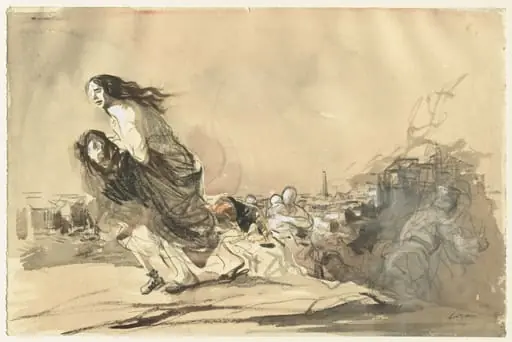 "The German troups received the formal order to spare private property"
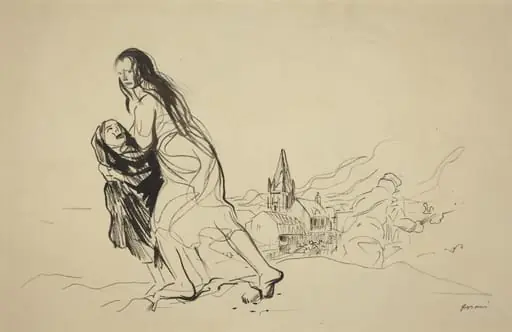 After Douai
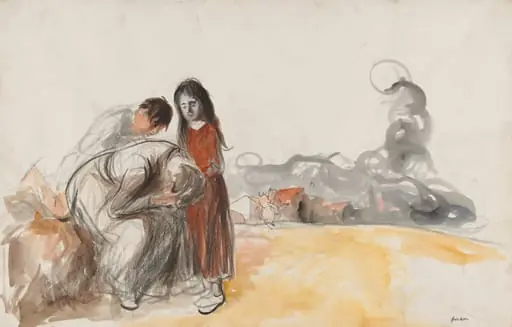 The Germans Have Gone Away
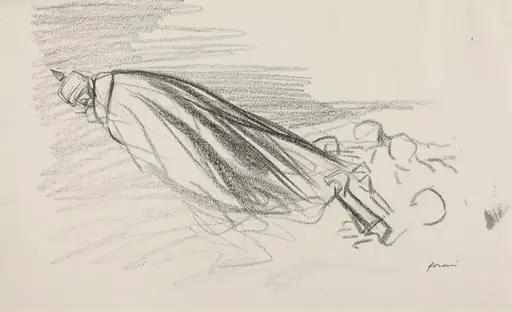 Ceux de la priemiere heure. "Sire! ou en somme-nous de la guerre fraiche et joyeuse!"
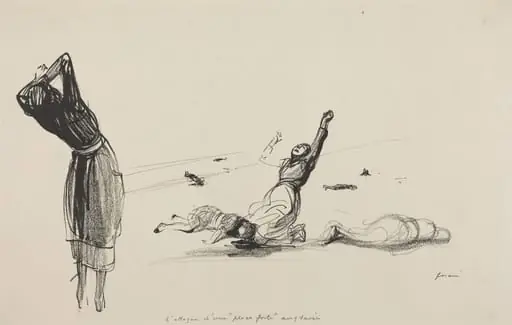 L'attaque d'une "place forte" anglaise
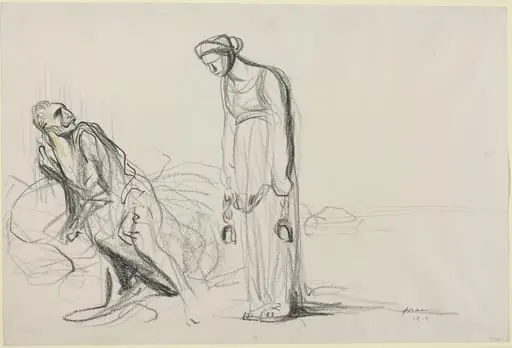 a) Fetters (recto); b) Sketch for Fetters (verso)
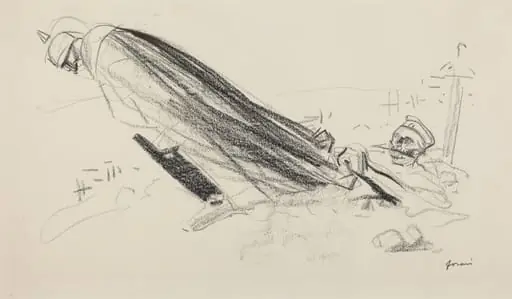 Ceux de la priemiere heure. "Sire! ou en somme-nous de "la guerre fraiche et joyeuse"?..."
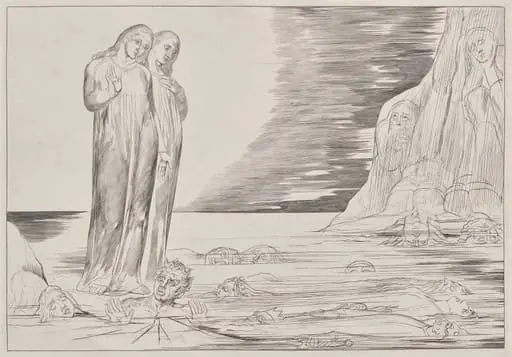 The Circle of the Traitors: Dante's Foot Strriking Bocca degli Abbate, from Dante's Inferno, Canto XXXII Illustration to Dante's The Divine Comedy
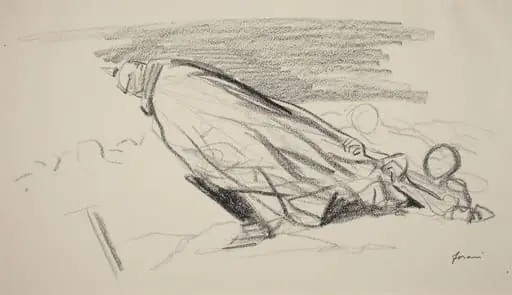 Ceux de la premiere heure. "Sire! ou en somme-nous de "la guerre fraiche et joyeuse"? ..."
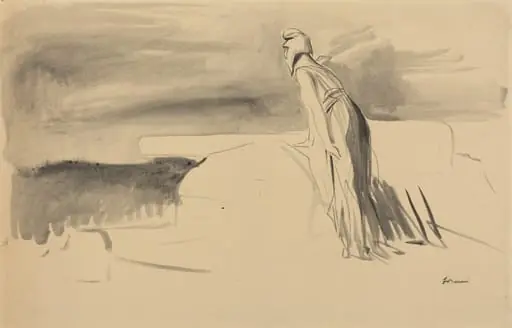 France Watching
 Pour l'homme de demain