Artwork
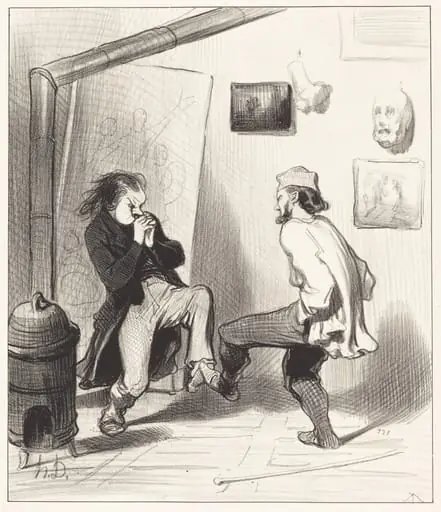
Souvenir of the Prison ot Ste. Pélagie
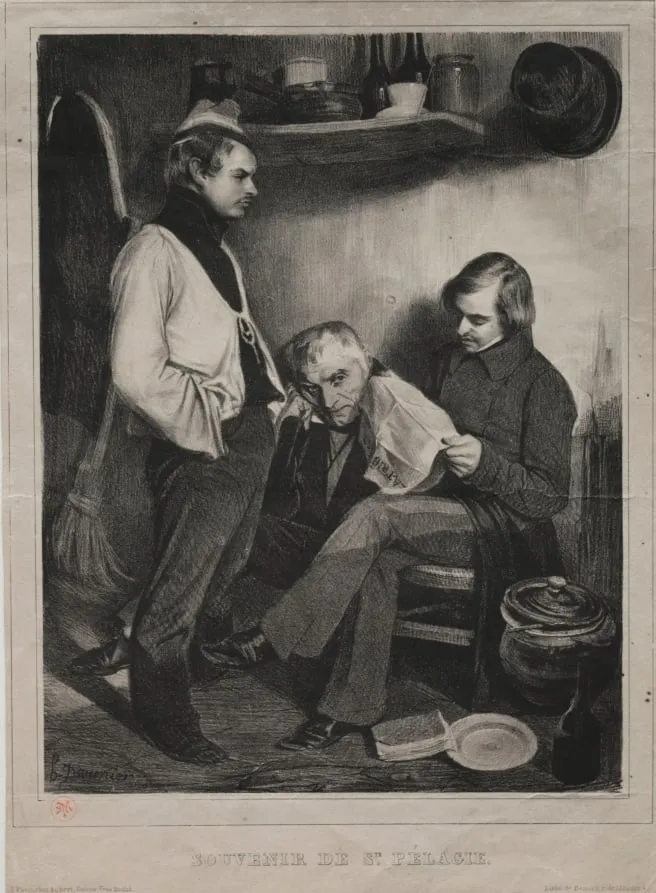
Souvenir of the Prison ot Ste. Pélagie is a print by the Romanticist artist Honoré Daumier. It dates from 1834 and is held in the collection of the Cleveland Museum of Art.
About this work
Overview
Honoré Daumier’s black‑and‑white print, Souvenir of the Prison of Ste. Pélagie, dates from 1834 and is part of the collection of the Cleveland Museum of Art. The work depicts a cramped interior populated by three male figures, rendered in a stark, monochrome palette that emphasizes the atmosphere of confinement.
Subject & Meaning
The scene presents an older man seated at a table, clutching a newspaper with a weary expression, while a younger man in a long coat and hat stands nearby. A boy leans forward, also engaged with the paper. The surrounding objects—pots, pans, a hat—suggest a makeshift, overcrowded cell, hinting at daily life within the prison of Ste. Pélagie.
Technique & Style
Daumier employs chiaroscuro, using strong contrasts of light and shadow to model the figures and give depth to the cramped space. The ink drawing relies on varied hatching and cross‑hatching to convey texture, from the roughness of the floor to the folds of clothing, creating a vivid sense of three‑dimensionality on a flat surface.
History & Provenance
Created in 1834, the print entered the Cleveland Museum of Art’s holdings through acquisition in the early 20th century, though the precise details of its purchase remain undocumented in public records. It has been exhibited in several surveys of Daumier’s graphic work, illustrating his interest in social subjects.
Context
The work reflects Daumier’s early engagement with the conditions of the French penal system, a theme he explored in both drawings and caricatures. The prison of Ste. Pélagie, located in the Île‑de‑France region, was known for its overcrowding, and Daumier’s depiction aligns with contemporary concerns about reform and the human cost of incarceration.
Artist & collection

Artist
Honoré-Victorin Daumier was a French painter, sculptor, and printmaker, whose many works offer commentary on the social and political life in France, from the Revolution of 1830 to the fall of the Second French Empire in 1870.









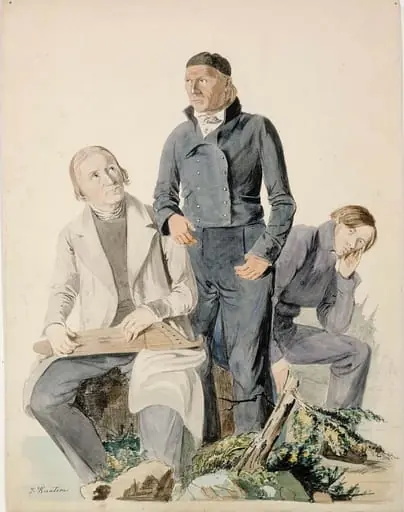 Kansanrunoilijat Olli Kymäläinen, Pietari Makkonen ja Antti Puhakka ; Kuvitusta R.Tengströmin teokseen, Finsk antologi.
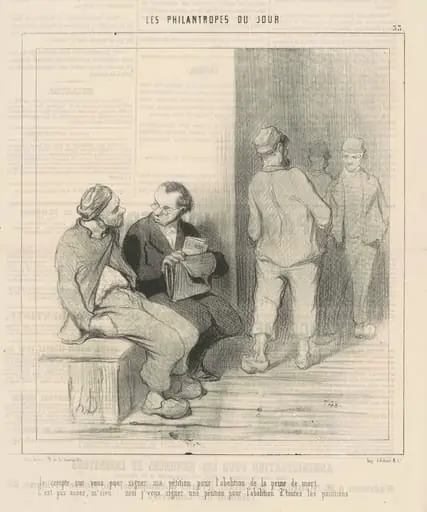 Je compte sur vous pour signer
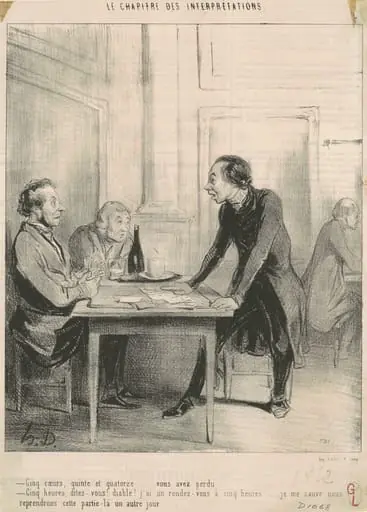 Cinq coeurs, quinte et quatorze ...
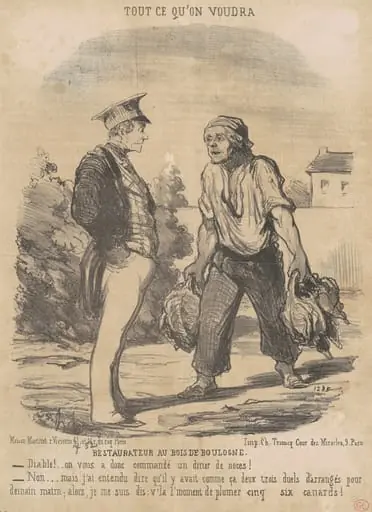 Restaurateur au Bois de Boulogne
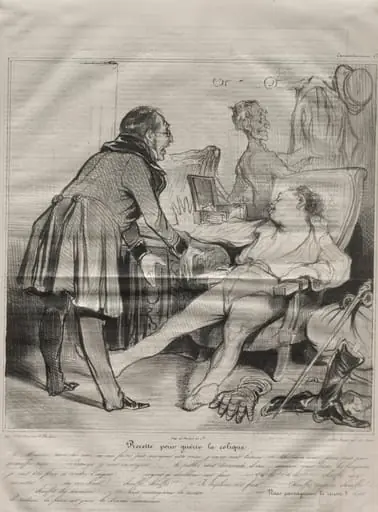 Recipe to Cure Colic
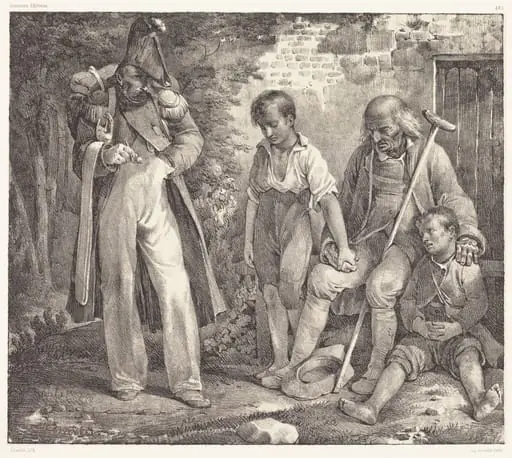 L'Aumône
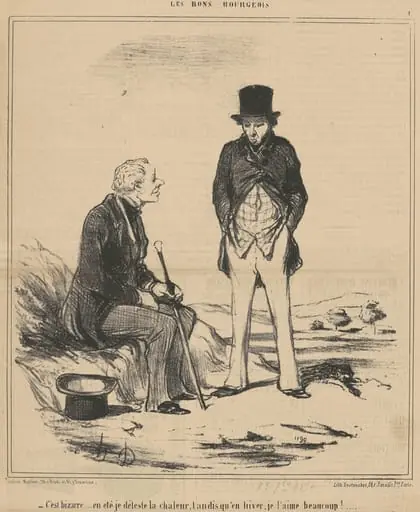 C'est bizarre ... été
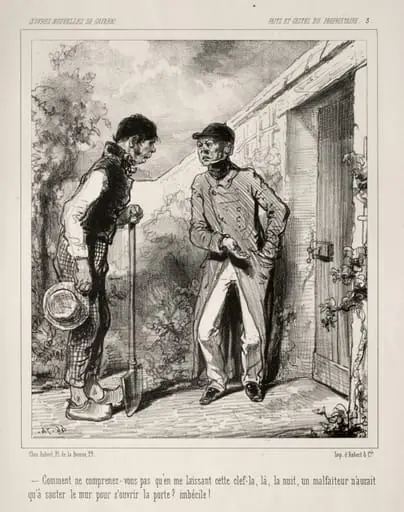 Faite et Gestes du Propriétaire
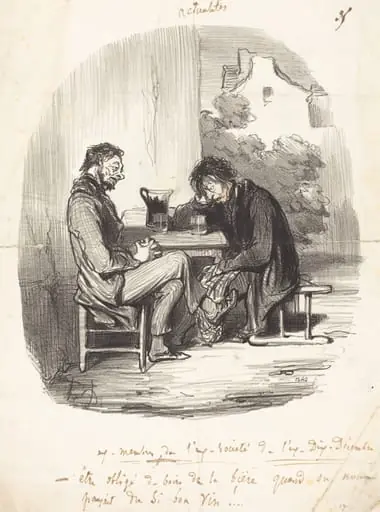 Ex-membres de l'ex-société de l'ex-Dix-décembre
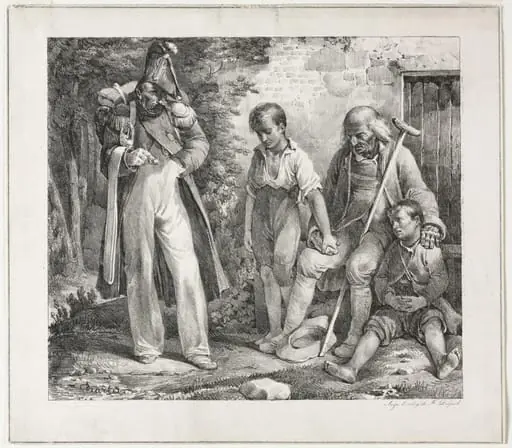 Begging for Alms
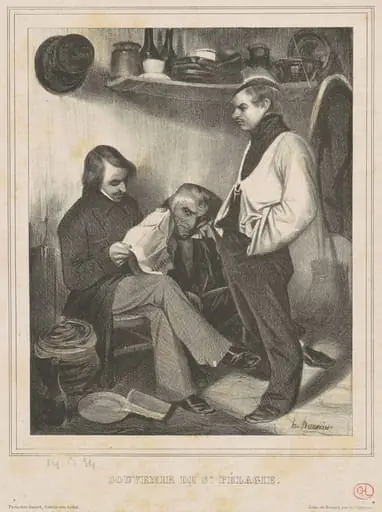 Souvenir de Ste. Pélagie
 Quand on a brulé son dernier chevalet!