Artwork
Restaurateur au Bois de Boulogne
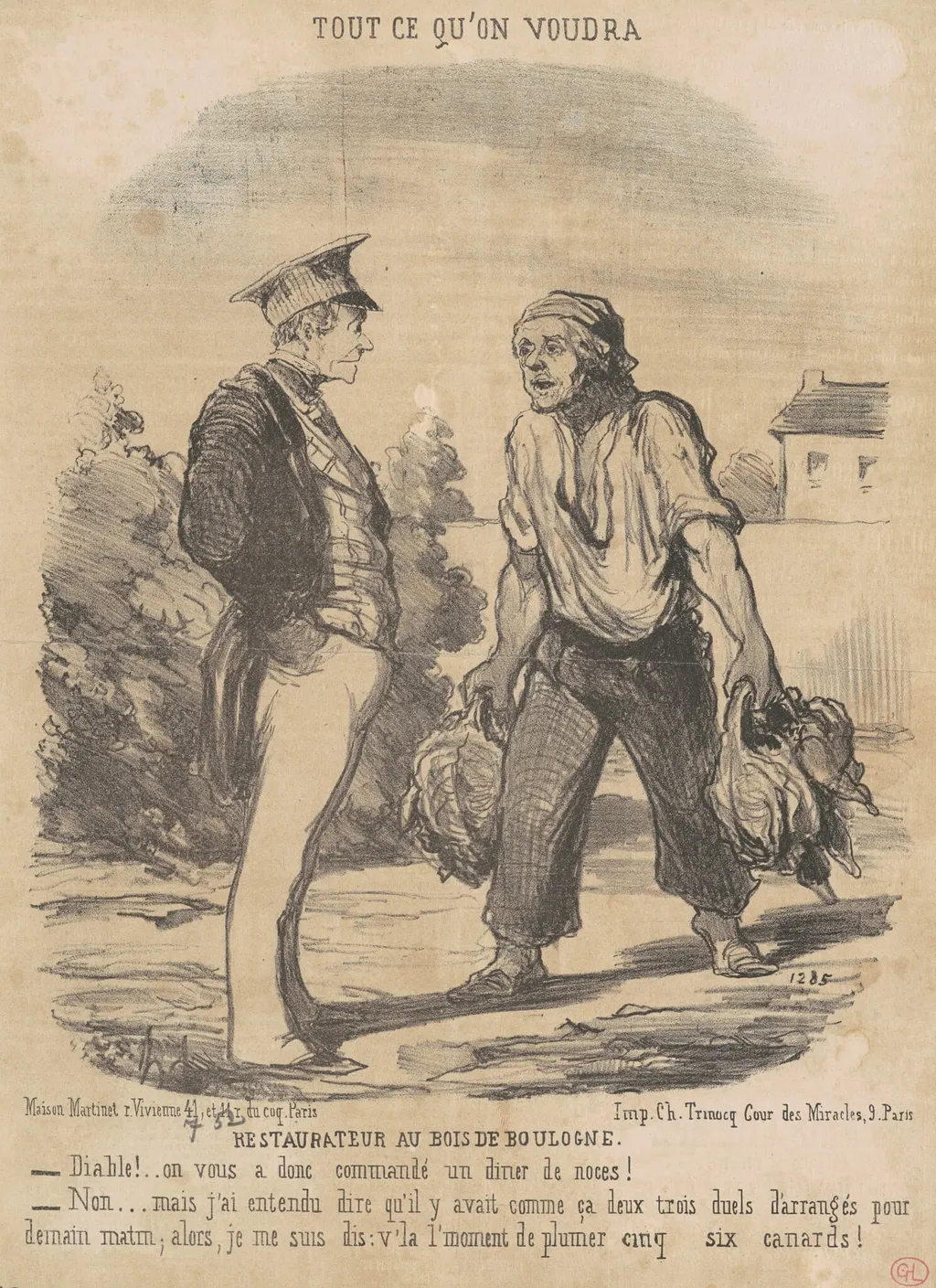
Restaurateur au Bois de Boulogne is an ink print by the Impressionist artist Honoré Daumier. It dates from 1852 and is held in the collection of the National Gallery of Art.
About this work
Overview
Honoré Daumier’s lithograph Restaurateur au Bois de Boulogne, executed in 1852, depicts a brief encounter in a Parisian park. The composition brings together a formally dressed gentleman and a seated bird‑seller, highlighting the everyday mingling of disparate social groups in mid‑nineteenth‑century France.
Subject & Meaning
The work contrasts the polished appearance of the standing gentleman—evident in his polished boots and upright posture—with the bird‑seller’s worn clothing, slumped shoulders, and a cage he holds. This visual opposition underscores the stark social divide between the affluent and the working class, a recurring theme in Daumier’s commentary on urban life.
Technique & Style
Created by lithography, Daumier drew directly on a limestone surface with greasy ink, a process that captures the grainy texture of the stone in the final print. The method allowed rapid production of multiple copies, facilitating the spread of his satirical observations across the public sphere of 19th‑century France.
History & Provenance
First issued in 1852, the print circulated among the burgeoning market for affordable visual commentary. Its reproducibility ensured wide distribution, contributing to Daumier’s reputation as a chronicler of Parisian society. The work remains in several public collections, reflecting its continued relevance as a social document.
Artist & collection

Artist
Honoré-Victorin Daumier was a French painter, sculptor, and printmaker, whose many works offer commentary on the social and political life in France, from the Revolution of 1830 to the fall of the Second French Empire in 1870.









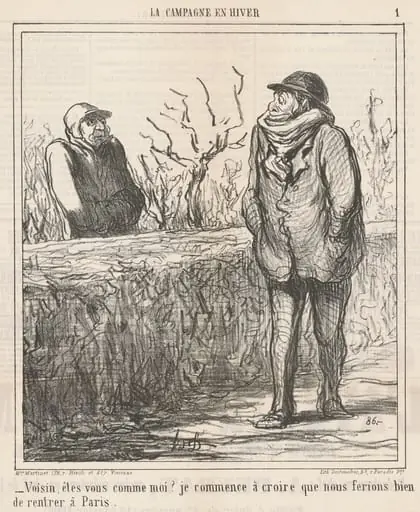 Voisin, êtes-vous comme moi? ...
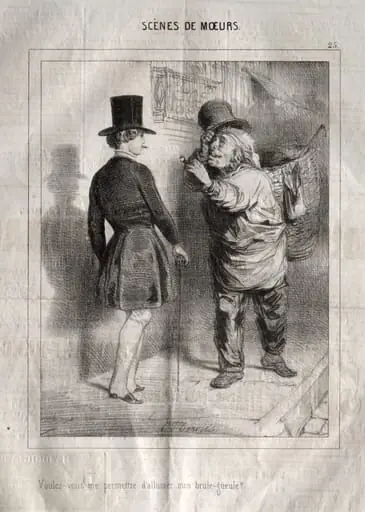 Scènes de Moeurs: Voulez-vous me permettre d'allumer mon brule-gueule?
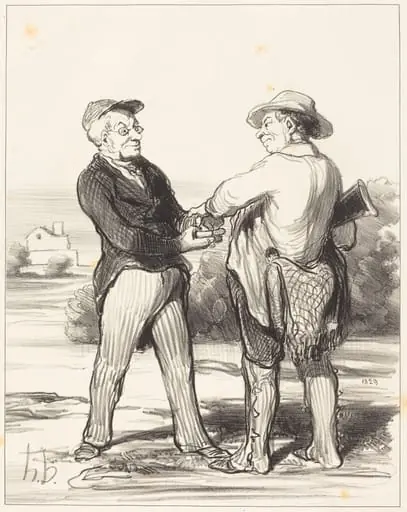 Dites donc, président, impossible d'attraper un lièvre...
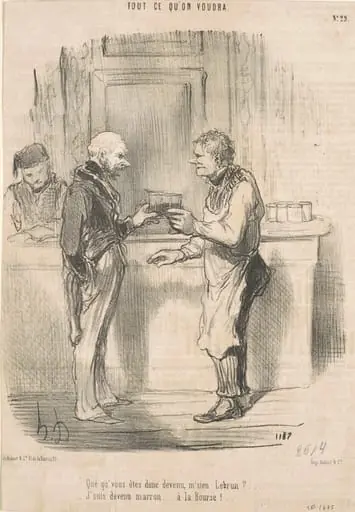 Qué qu'vous êtes ... devenu, m'sieu Lebrun? ...
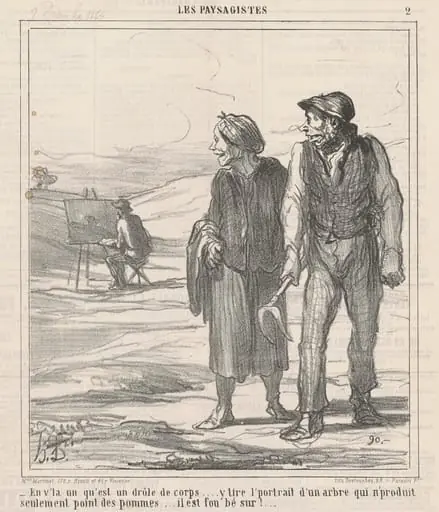 En v'la un qu'est un drole de corps ...
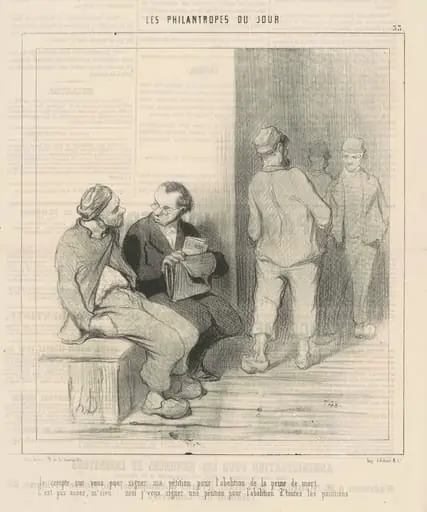 Je compte sur vous pour signer
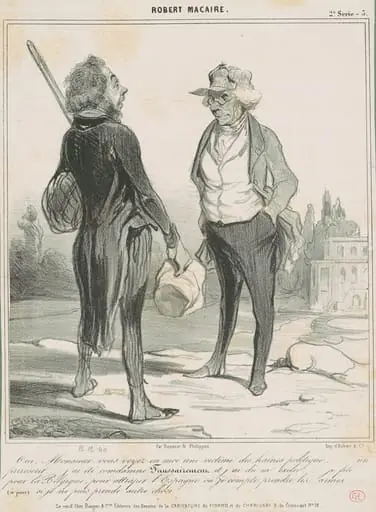 Oui, monsieur, vous voyez en moi une victime
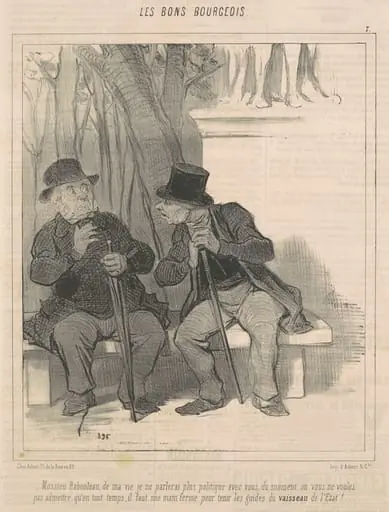 Mossieu Rabourdeau ... je ne parlerai plus politique avec vous ..
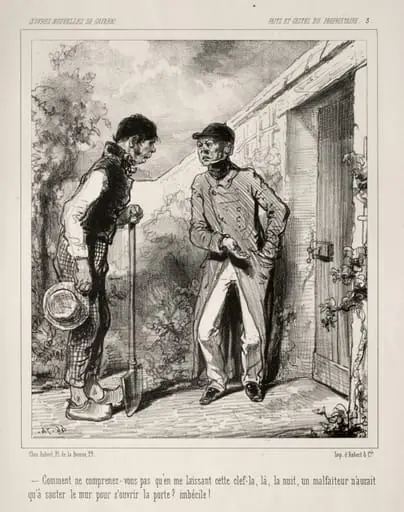 Faite et Gestes du Propriétaire
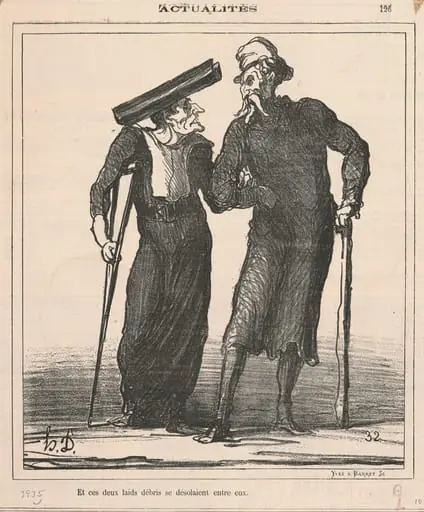 Et ces deux laids débris se désolaient entre eux