Artwork
Two Lawyers
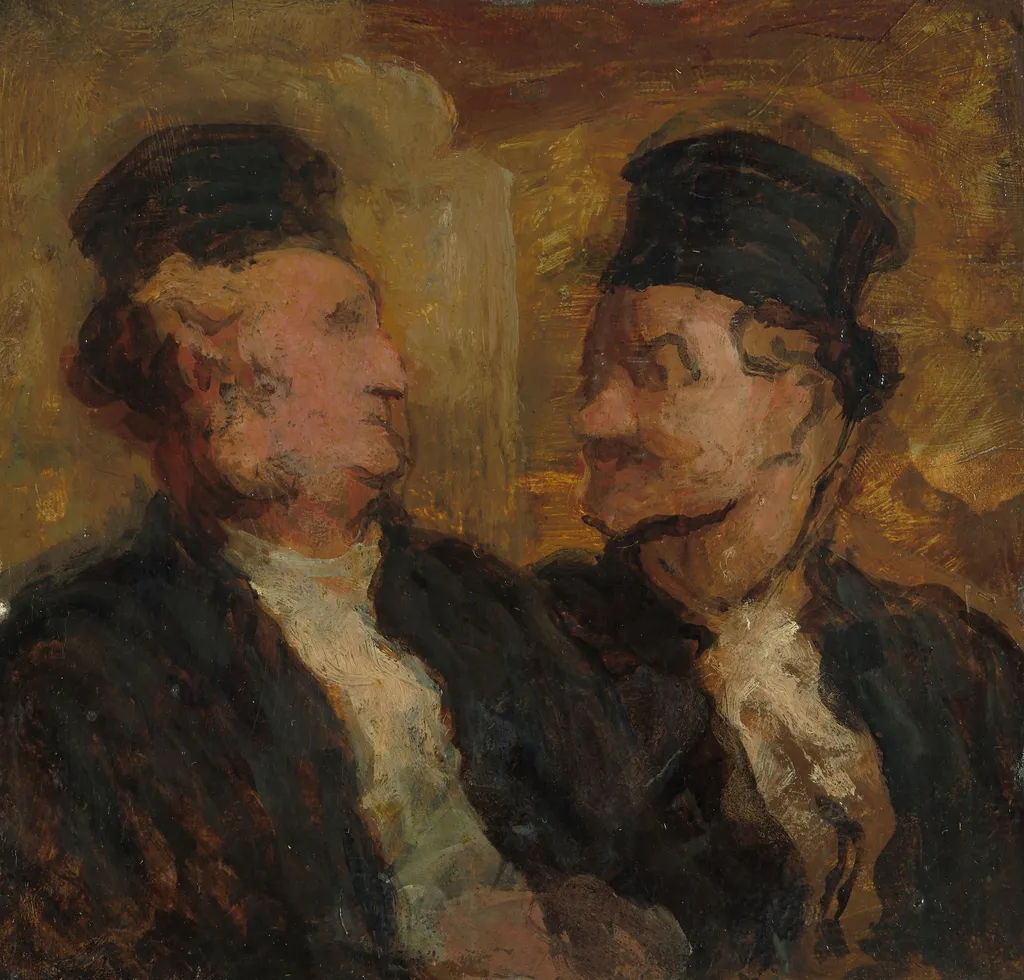
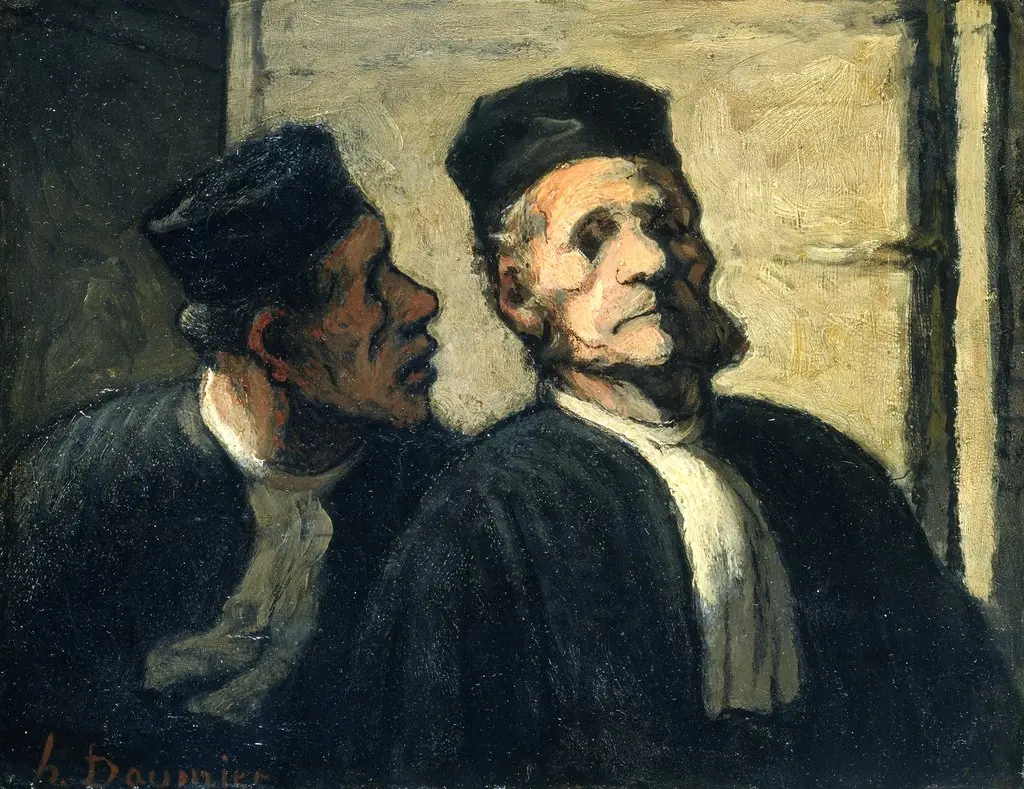
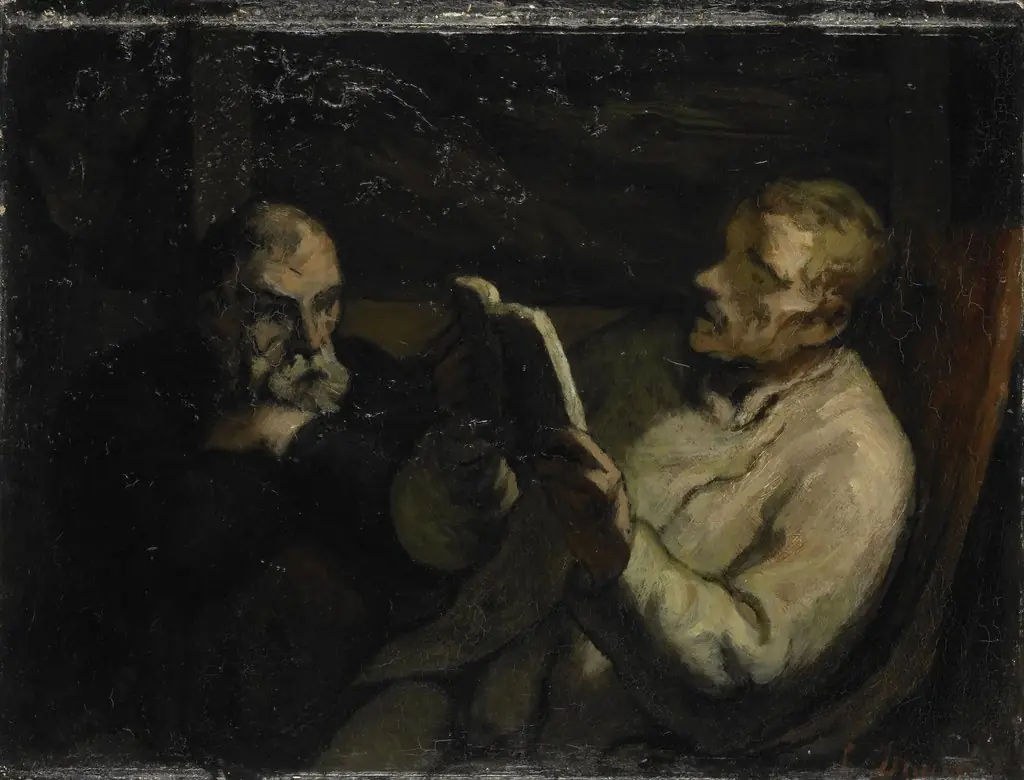
Two Lawyers is an unspecified painting by the Realist artist Honoré Daumier. It dates from 1860 and is held in the collection of the Art Institute of Chicago.
About this work
Overview
The composition is tightly focused, with the figures occupying most of the canvas against a muted, earth-toned background.
Painted in 1860 by Honoré Daumier, Two Lawyers presents a quiet, intense encounter between two men in formal attire. The composition is tightly focused, with the figures occupying most of the canvas against a muted, earth-toned background. Daumier’s brushwork is energetic yet controlled, emphasizing texture and form over detail. The painting’s somber tone and direct gaze between the subjects convey a sense of unspoken tension, characteristic of Daumier’s interest in social types and human psychology.
Subject & Meaning
The two figures are interpreted as legal professionals, their matching dark clothing and serious expressions suggesting professional gravity. Their profile orientation and locked gaze imply a moment of negotiation or confrontation, possibly reflecting the weight of legal discourse in 19th-century France. Daumier, known for satirical depictions of the judiciary, here avoids mockery, instead portraying the men with psychological depth, hinting at the moral burdens carried by those in positions of authority.
Technique & Style
Daumier employs bold, visible brushstrokes to model the figures, creating a sense of immediacy and physical presence. Chiaroscuro is used subtly to define the contours of their faces and garments, enhancing volume without theatrical lighting. The warm background contrasts with the cool tones of their clothing, drawing attention to their expressions. Paint is applied thickly in places, particularly around the brows and lips, reinforcing the emotional intensity of their silent exchange.
History & Provenance
Created during Daumier’s mature period, the painting was likely made for private collectors rather than public exhibition. It entered the Art Institute of Chicago’s collection in the early 20th century, acquired as part of a broader interest in French Realist works. Its provenance before that remains largely undocumented, though it aligns with Daumier’s practice of producing small-scale oil studies based on his earlier lithographic subjects.
Context
In mid-19th century France, the legal profession was undergoing public scrutiny, with growing awareness of its role in social inequality. Daumier, a longtime critic of institutional power through his caricatures, turned to painting to explore these themes with greater nuance. Two Lawyers reflects his shift from satire to psychological portraiture, capturing the quiet tension within professional spaces rather than overt comedy or condemnation.
Legacy
Though less widely known than Daumier’s lithographs, Two Lawyers exemplifies his ability to convey complex human dynamics with minimal detail. It influenced later realist painters interested in emotional restraint and the dignity of ordinary professional life. The work remains a quiet testament to his capacity to transform the mundane into a moment of profound stillness, bridging social commentary with intimate observation.
Own this work as a print
Artist & collection
Artist
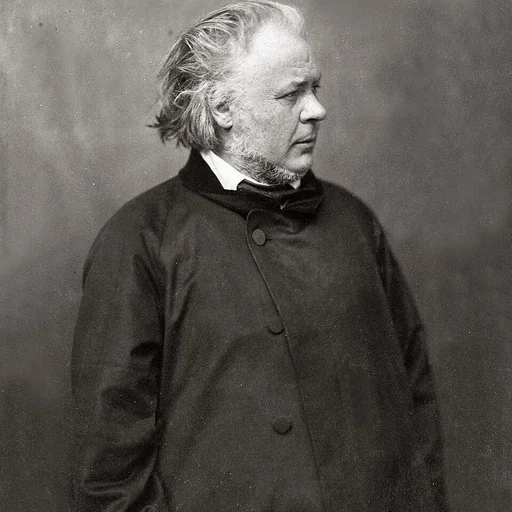
Honoré-Victorin Daumier was a French painter, sculptor, and printmaker, whose many works offer commentary on the social and political life in France, from the Revolution of 1830 to the fall of the Second French Empire in 1870.