Artwork
Deux Acteurs (Scène de comédie)
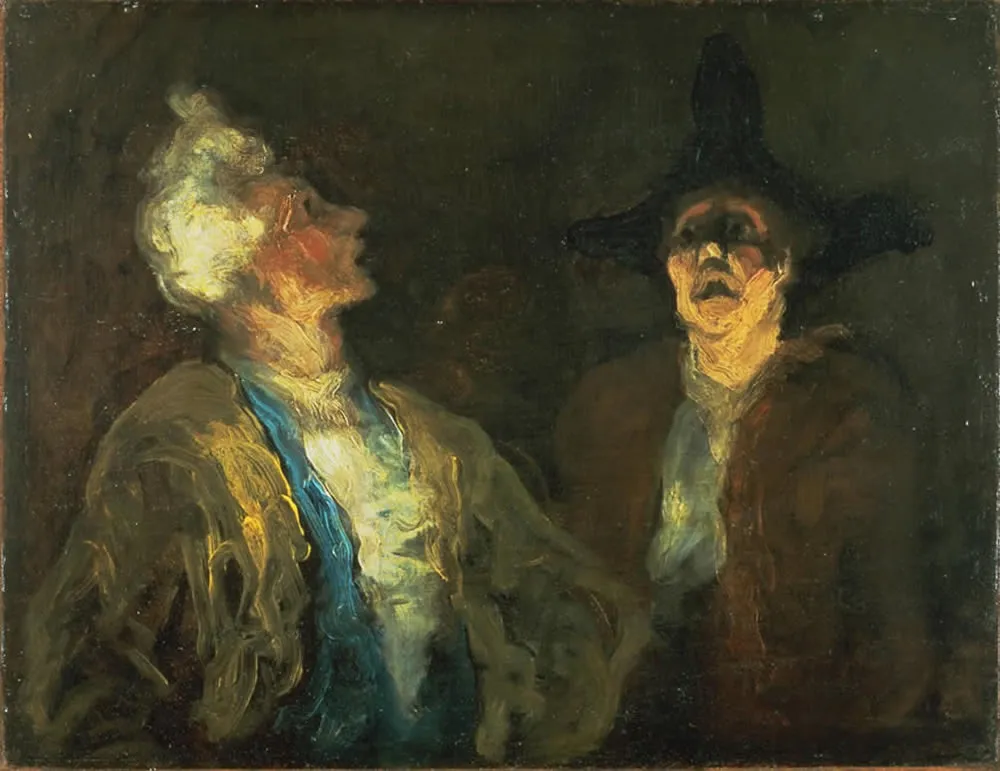
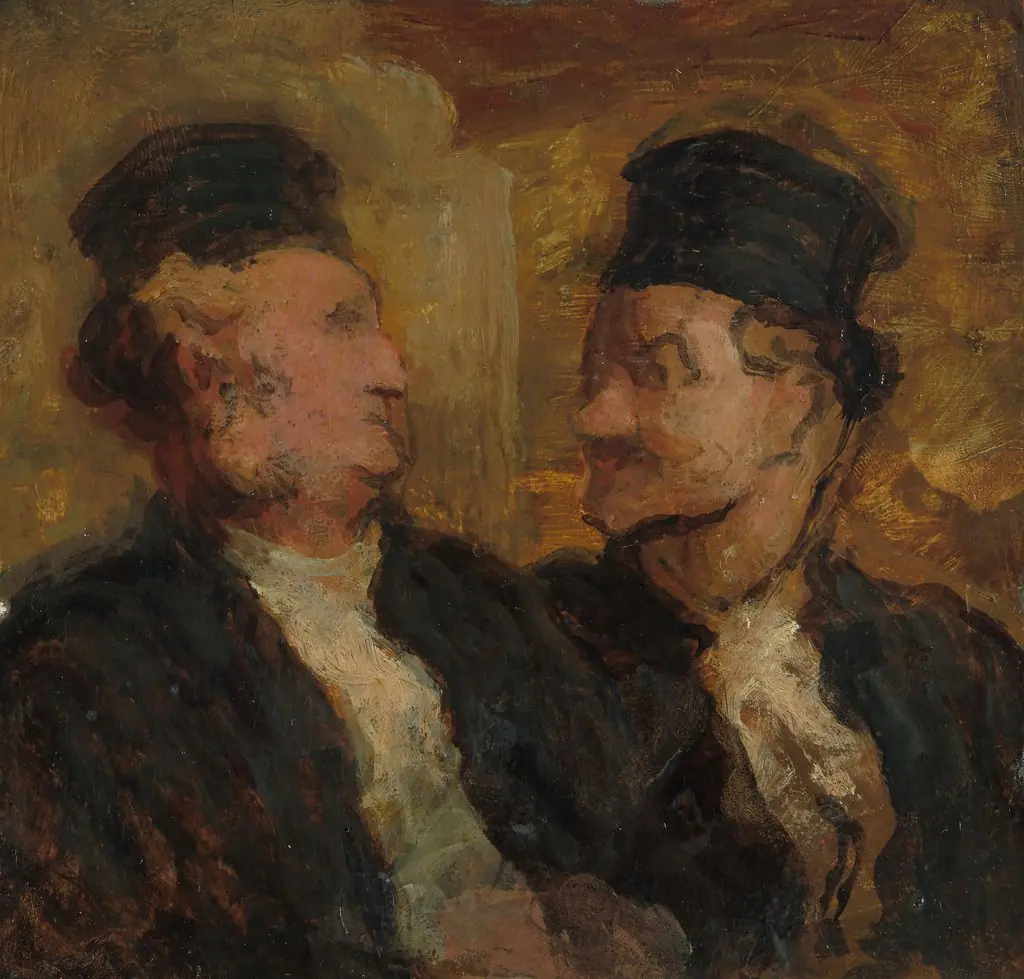
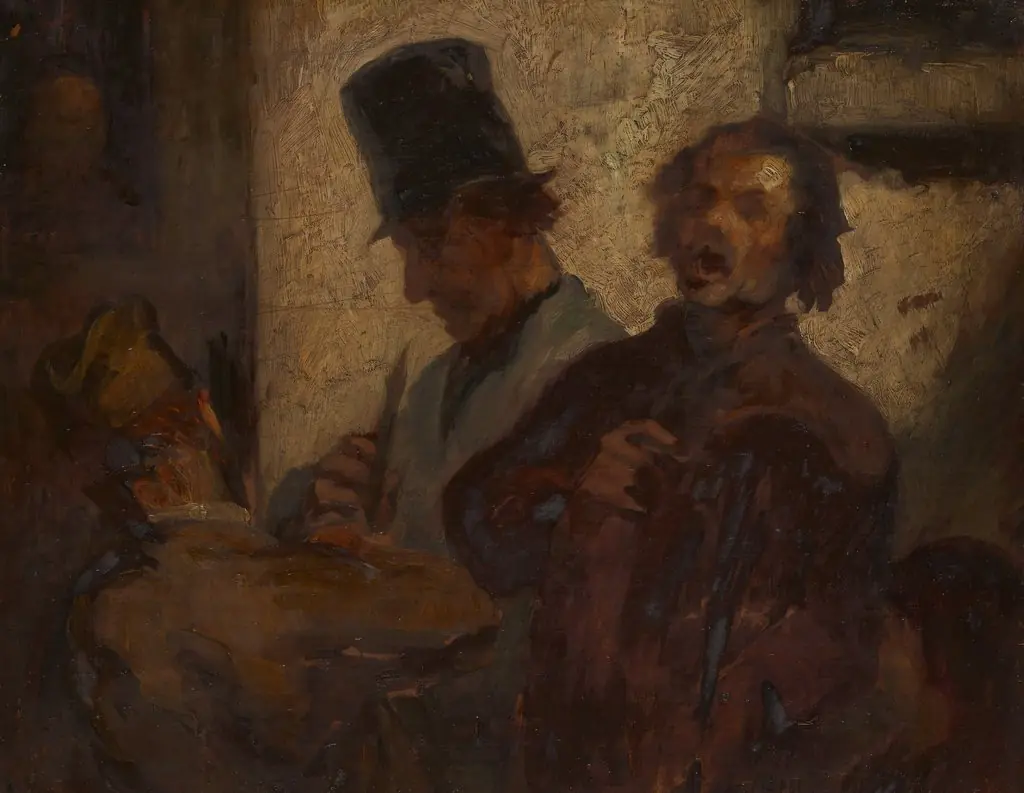
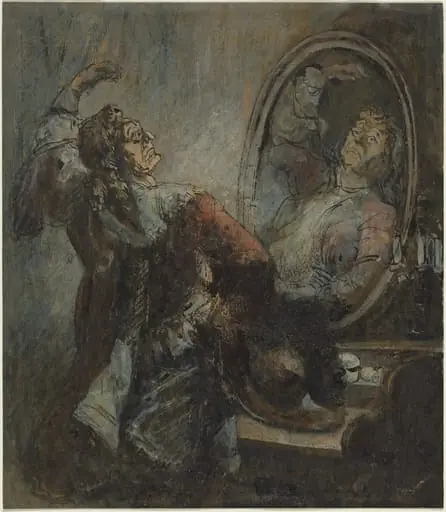
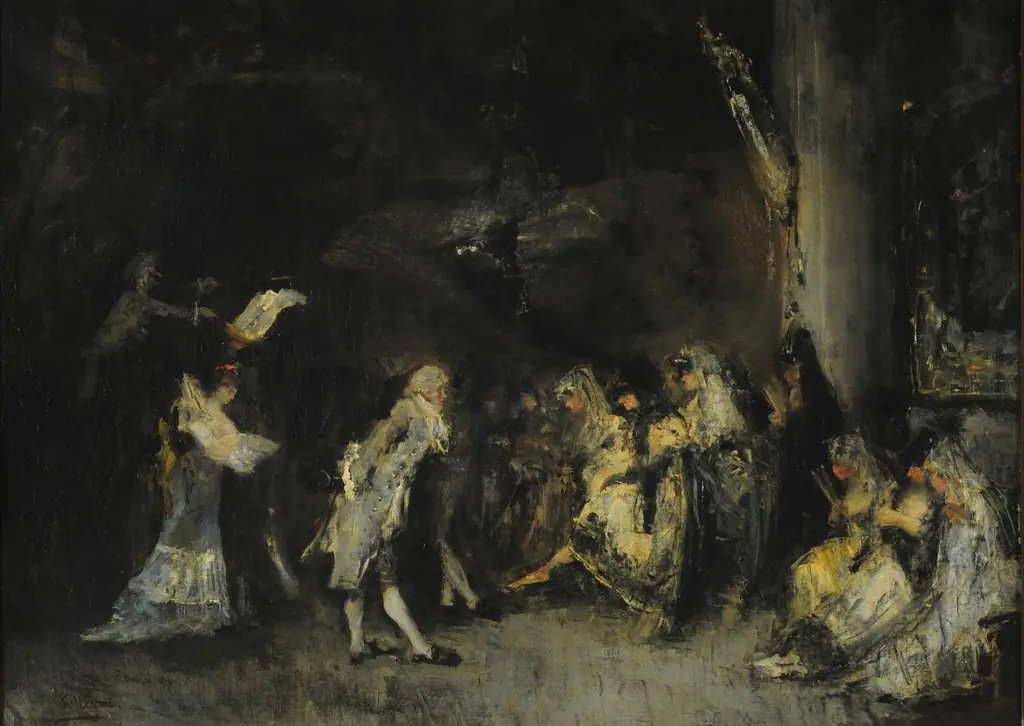
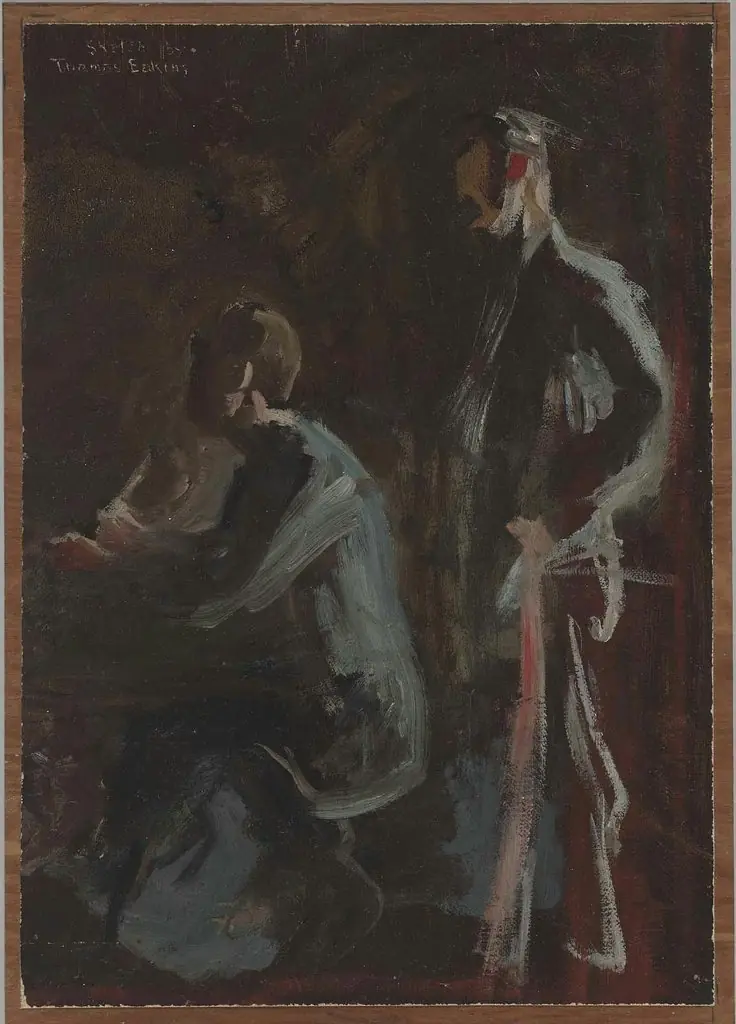
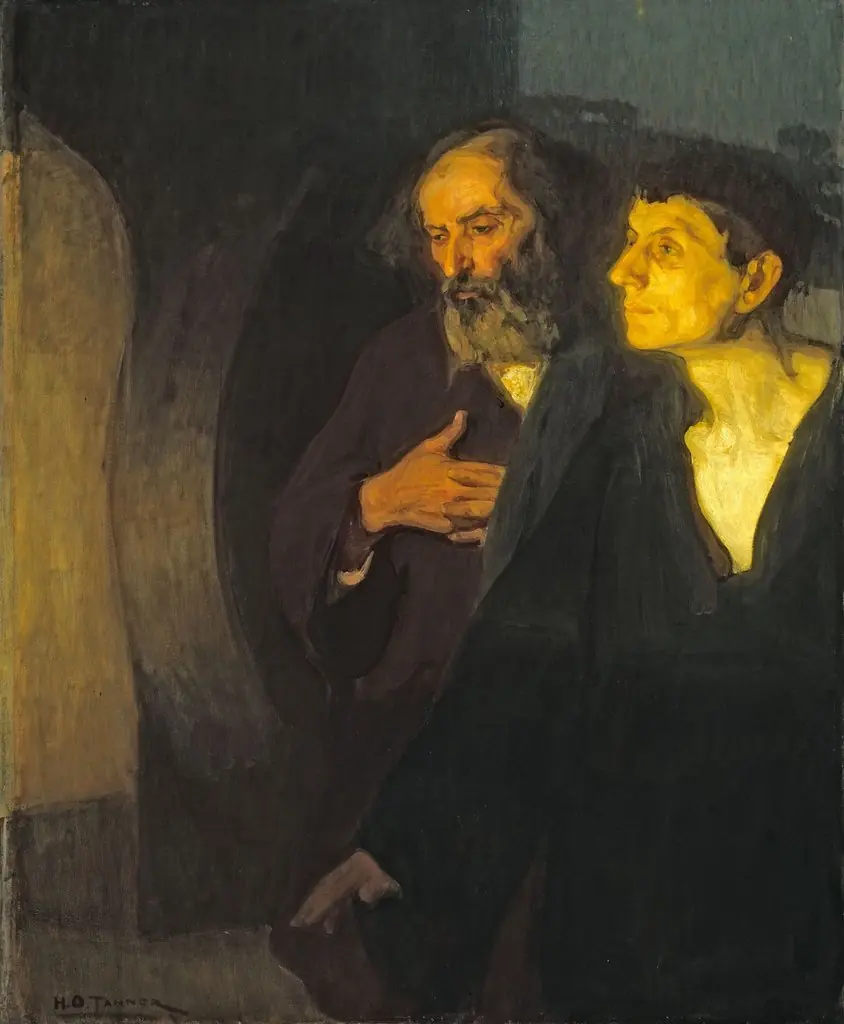
Deux Acteurs (Scène de comédie) is an oil painting by the Impressionist artist Honoré Daumier. It dates from 1872 and is held in the collection of the Hammer Museum.
About this work
Overview
It captures a moment of theatrical performance with two male figures positioned prominently against a dark, undefined background.
Painted in 1872 by Honoré Daumier, Deux Acteurs (Scène de comédie) is an oil-on-canvas work currently held at the Hammer Museum. It captures a moment of theatrical performance with two male figures positioned prominently against a dark, undefined background. The composition emphasizes human expression over narrative detail, reflecting Daumier’s interest in the emotional lives of performers and the theater as a mirror of society.
Subject & Meaning
The two figures, likely actors in costume, are rendered with distinct physicality and demeanor—one in a blue vest and brown jacket, the other with white hair and a black hat. Their postures suggest a pause between lines or a moment of silent exchange, evoking the transient nature of performance. Daumier, long fascinated by theater, uses this scene to explore the duality of public persona and private vulnerability in actors.
Technique & Style
Daumier employs loose, visible brushwork to convey movement and texture, avoiding polished finish in favor of emotional immediacy. Dark, muted tones dominate the background, while the figures are subtly illuminated, creating a chiaroscuro effect that enhances their three-dimensionality. Color is restrained but deliberate—contrasts in fabric and skin tone draw attention to gesture and expression rather than decorative detail.
History & Provenance
Created in the final decade of Daumier’s life, the painting reflects his mature style, shaped by decades of caricature and social observation. It entered the Hammer Museum’s collection through the museum’s founding bequest, having remained in private hands after its completion. Its provenance is not extensively documented, but its stylistic consistency with Daumier’s late works supports its attribution and dating.
Context
In 1870s France, theater was a vibrant public sphere, and Daumier had long depicted its performers in lithographs and paintings. Though political satire defined his earlier career, his late works turned inward, focusing on the quiet humanity of actors, musicians, and laborers. This painting belongs to a series where he abandoned overt commentary for introspective portraiture within theatrical settings.
Legacy
Deux Acteurs exemplifies Daumier’s shift from caricature to psychological realism in his later years. While less known than his political prints, this work influenced early modern painters interested in expressive brushwork and the dignity of ordinary subjects. Its unembellished portrayal of performers helped pave the way for more intimate, emotionally resonant depictions of theater in 20th-century art.
Artist & collection

Artist
Honoré-Victorin Daumier was a French painter, sculptor, and printmaker, whose many works offer commentary on the social and political life in France, from the Revolution of 1830 to the fall of the Second French Empire in 1870.