Artwork
Ascending Ornament
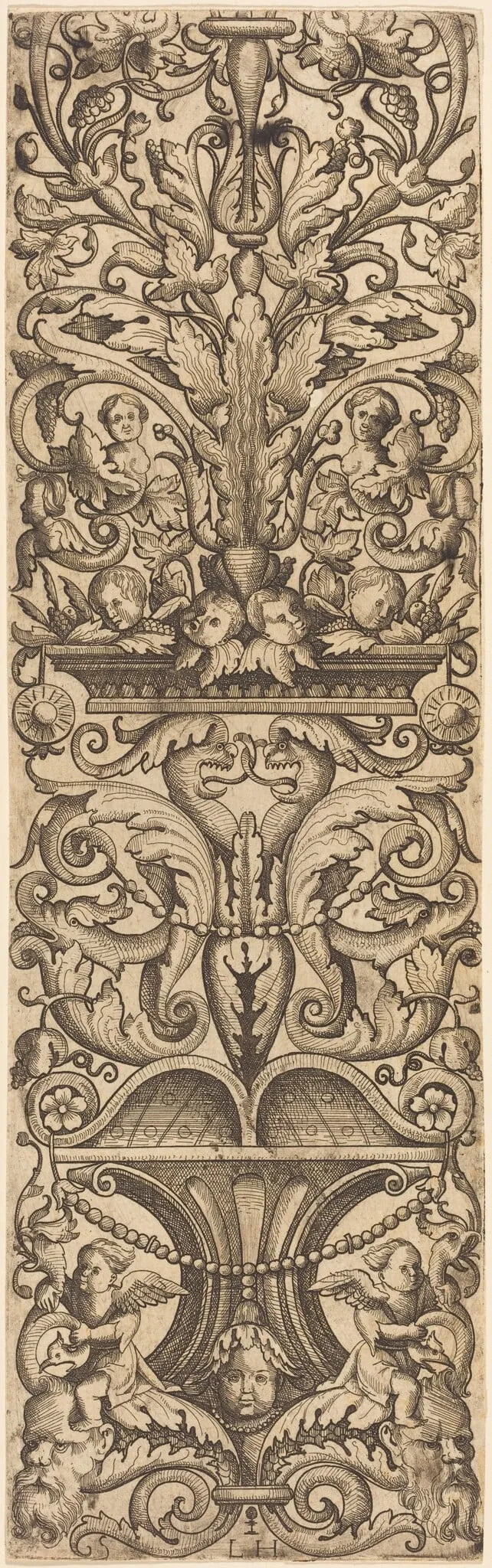
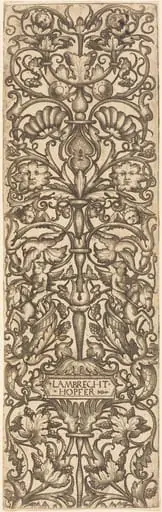
Ascending Ornament is an ink print by the Renaissance artist Lambert Hopfer. It dates from 1535 and is held in the collection of the National Gallery of Art.
About this work
Overview
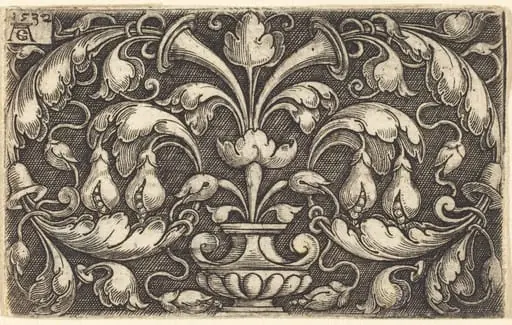
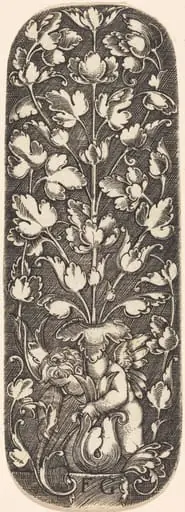
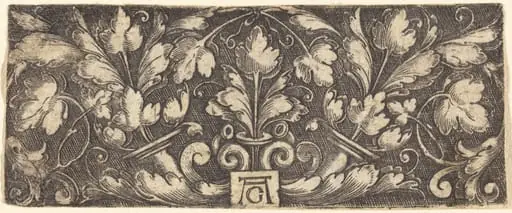
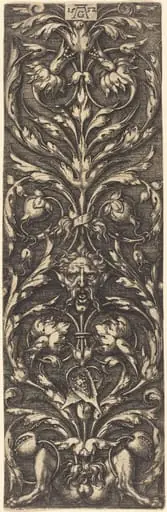
Ascending Ornament is a black-and-white etching executed by Lambert Hopfer in 1535. The print consists of an intricate network of swirling lines and foliage, with diminutive faces emerging from the tangled vines. Though the composition suggests a bifurcated tree with two prominent branches, the forms are abstracted into interlaced shapes that fill the light background.
Subject & Meaning
The imagery centers on vegetal motifs rendered as twisting stems and leaves, punctuated by tiny, almost hidden human faces. The juxtaposition of natural growth with concealed figures invites contemplation of the relationship between humanity and the vegetal world, a theme common in early Renaissance decorative prints.
Technique & Style
Hopfer employed the traditional etching process, incising the design into a metal plate with a sharp needle before applying acid to bite the lines. This method yields the crisp, fine lines evident throughout the work. The overall style is ornamental, favoring dense, rhythmic patterning over representational detail.
History & Provenance
Although the etching was printed in 1535, it was produced from a drawing completed earlier, indicating a delayed execution of the plate. The work remains attributed to Hopfer, a German printmaker active in the first half of the sixteenth century, and survives in several museum collections as an example of early Northern European printmaking.
Artist & collection