Artwork
Ascending Ornament
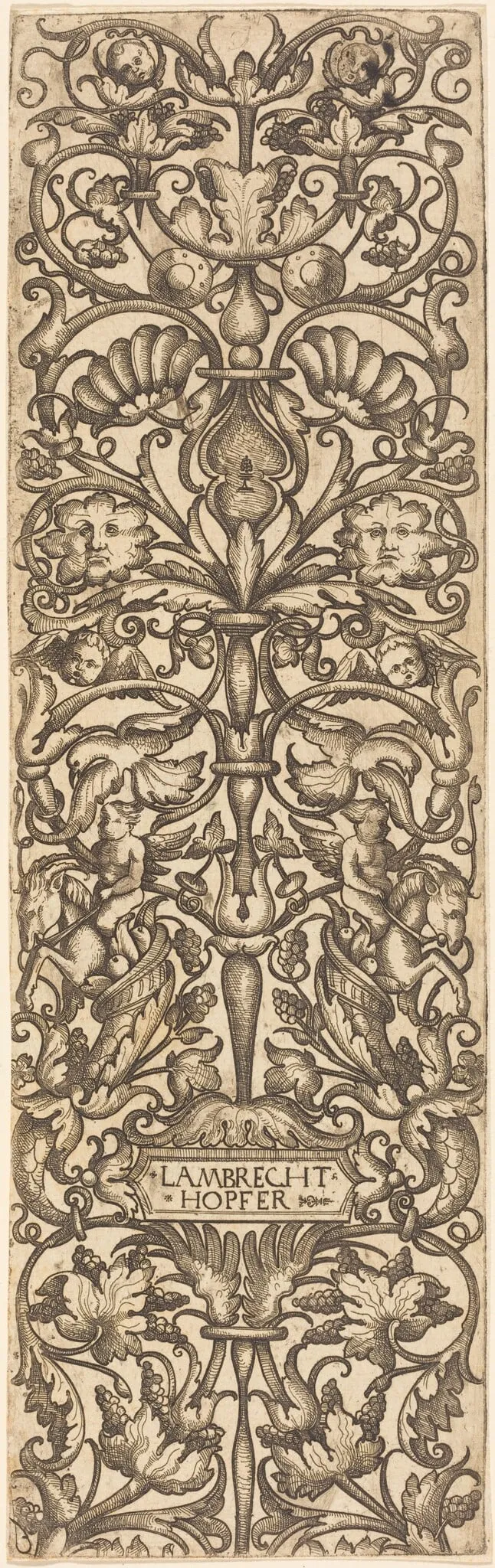
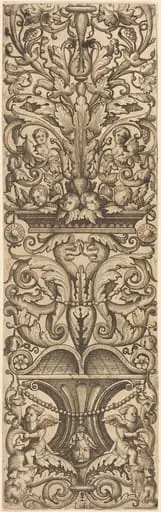
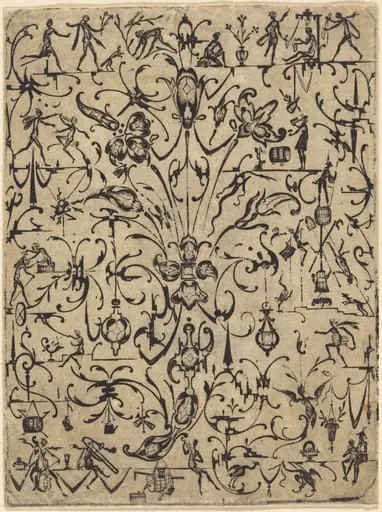
Ascending Ornament is an ink print by the Renaissance artist Lambert Hopfer. It dates from 1535 and is held in the collection of the National Gallery of Art.
About this work
Overview
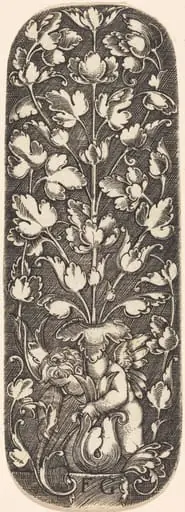
Ascending Ornament is an early Renaissance etching executed by Lambert Hopfer in 1535. The print presents a vertically elongated composition densely filled with intertwining vines, leaves and numerous diminutive faces concealed among the foliage. At its core a cross‑shaped motif bears a small inscription naming the artist, anchoring the decorative foliage within a structured framework.
Subject & Meaning
The work juxtaposes natural motifs—twisting branches, blossoms, and hidden human visages—with a central cruciform element, suggesting a synthesis of organic growth and symbolic order. The concealed faces may reflect the period’s fascination with hidden iconography, inviting viewers to search for subtle narrative layers within an ornamental setting.
Technique & Style
Created through copperplate etching, the image relies on fine, sharply rendered lines to delineate the intricate network of vines and foliage. Hopfer’s handling of line weight produces a sense of depth and texture, while the repetitive pattern of leaves and faces demonstrates a meticulous, decorative approach characteristic of Northern Renaissance printmaking.
History & Provenance
Lambert Hopfer, an active printmaker of the early sixteenth century, signed the piece with a small plaque reading “LAMBRECHT HOPFER,” confirming authorship. The etching is dated to 1535, placing it among his later works and reflecting the mature stage of his career in the Germanic regions of the Renaissance.
Context
During the Renaissance, printmakers often explored ornamental designs that combined naturalistic detail with allegorical content. Ascending Ornament aligns with this trend, employing intricate botanical patterns and concealed figures, a practice that resonated with contemporary collectors seeking both aesthetic appeal and intellectual intrigue in printed media.
Artist & collection