Artwork
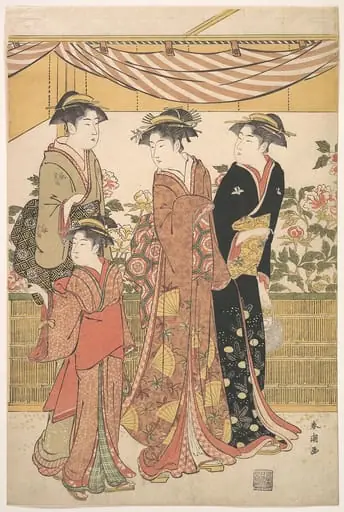
細田栄之画 正月準備|Preparing New Year Decorations
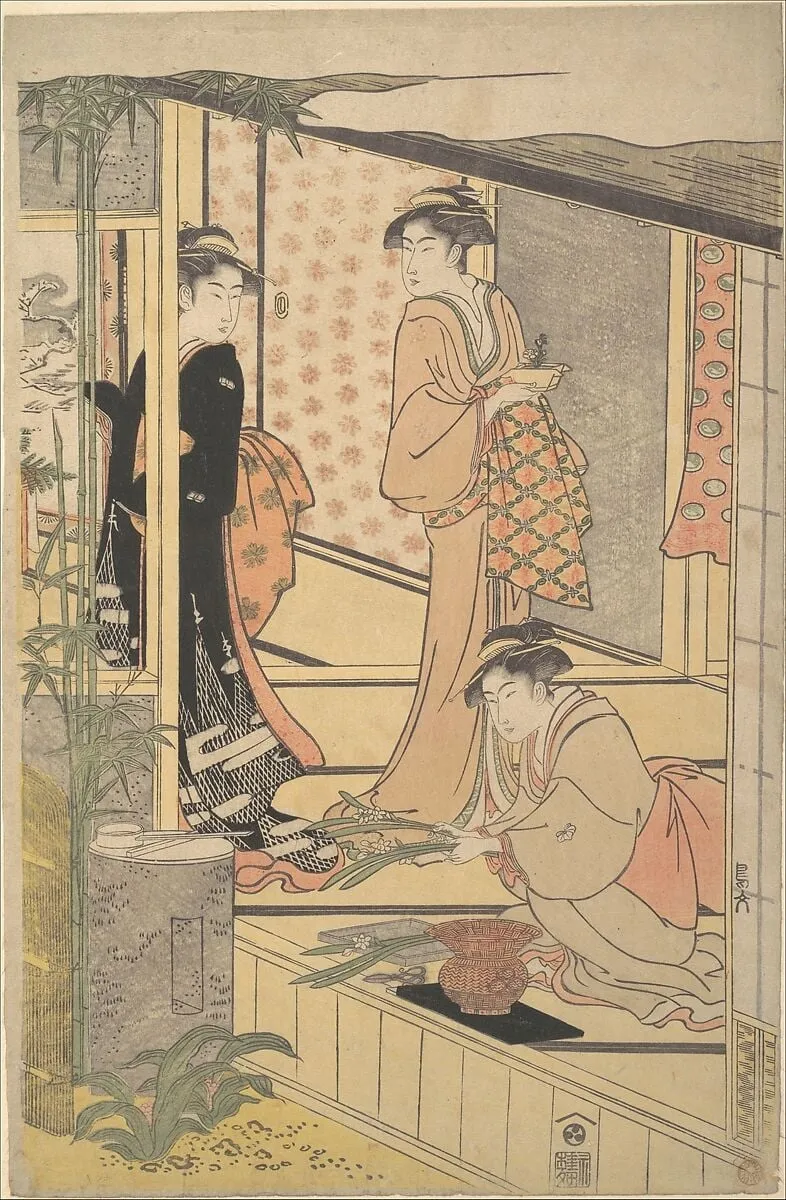
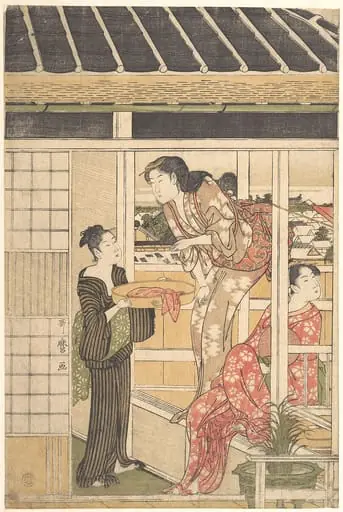
細田栄之画 正月準備|Preparing New Year Decorations is an ink print by the Romanticist artist Chôbunsai Eishi. It dates from 1788 and is held in the collection of the Metropolitan Museum of Art.
About this work
Overview
This woodblock print, created around 1788 by Hosoda Eishi, is the right panel of a triptych depicting preparations for the Japanese New Year. Executed in ink and color on paper, it captures a quiet domestic moment with refined detail. The work is part of the collection at The Metropolitan Museum of Art, where it represents the ukiyo-e tradition’s focus on everyday life during the Edo period.
Subject & Meaning
The central figure, dressed in a patterned kimono, appears to oversee the activity, while the woman on the right kneels, arranging seasonal elements.
The scene portrays three women engaged in the ritual preparation of New Year decorations, a practice symbolizing renewal and auspicious beginnings. The central figure, dressed in a patterned kimono, appears to oversee the activity, while the woman on the right kneels, arranging seasonal elements. The quiet concentration of the figures reflects the cultural importance of ritual precision and familial harmony during the holiday season.
Technique & Style
Eishi employs delicate linework and subtle color gradations to render the textures of kimonos and interior surfaces. The patterns on the garments and wall hanging are rendered with precision, suggesting the influence of courtly aesthetics. The composition is restrained, with figures arranged to guide the eye across the space without dramatic movement, characteristic of Eishi’s mature style and his focus on interiority.
History & Provenance
Created during the late 18th century, this print was likely produced for a private market interested in refined depictions of urban life. It survived as part of a triptych, a format favored for narrative continuity. The Metropolitan Museum of Art acquired it as part of its broader collection of Japanese prints, preserving its original format and condition for scholarly and public study.
Context
Hosoda Eishi worked during a period when ukiyo-e artists increasingly turned to scenes of aristocratic and domestic life, moving beyond traditional kabuki and courtesan subjects. This print reflects the growing interest in the private world of women, particularly in the context of seasonal rituals. The inclusion of decorative plants and textiles aligns with contemporary ideals of refined taste and seasonal awareness in Edo-period culture.
Legacy
Eishi’s work contributed to the evolution of ukiyo-e by emphasizing psychological nuance and quiet observation over spectacle. This print, like others in his oeuvre, influenced later artists interested in intimate domestic scenes. Its preservation in major collections ensures continued study of how Edo-period artists transformed everyday rituals into enduring visual poetry.
Artist & collection

Artist
Chōbunsai Eishi (鳥文斎 栄之; 1756–1829) was a Japanese ukiyo-e artist. His last name was Hosoda (細田). His first name was Tokitomi (時富). His common name was Taminosuke (民之丞) and later Yasaburo (弥三郎). Pupil of Kano Eisen'in…

 Three Gods of Good Fortune Visit the Yoshiwara; or “Scenes of Pleasure at the Height of Spring”
 蜀山人(大田 南畝)賛 雪・月・花図 |Snow, Moon, and Cherry Blossoms (Yoshiwara in Three Seasons)
 Untitled
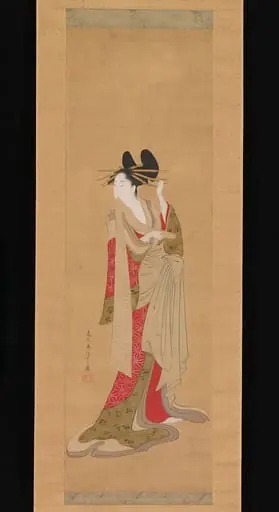 Untitled
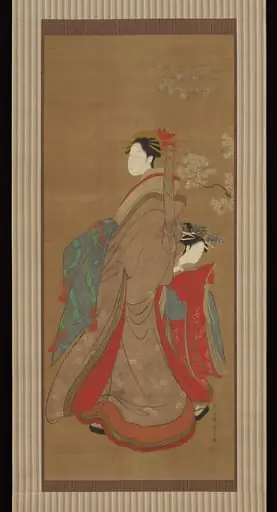 Untitled
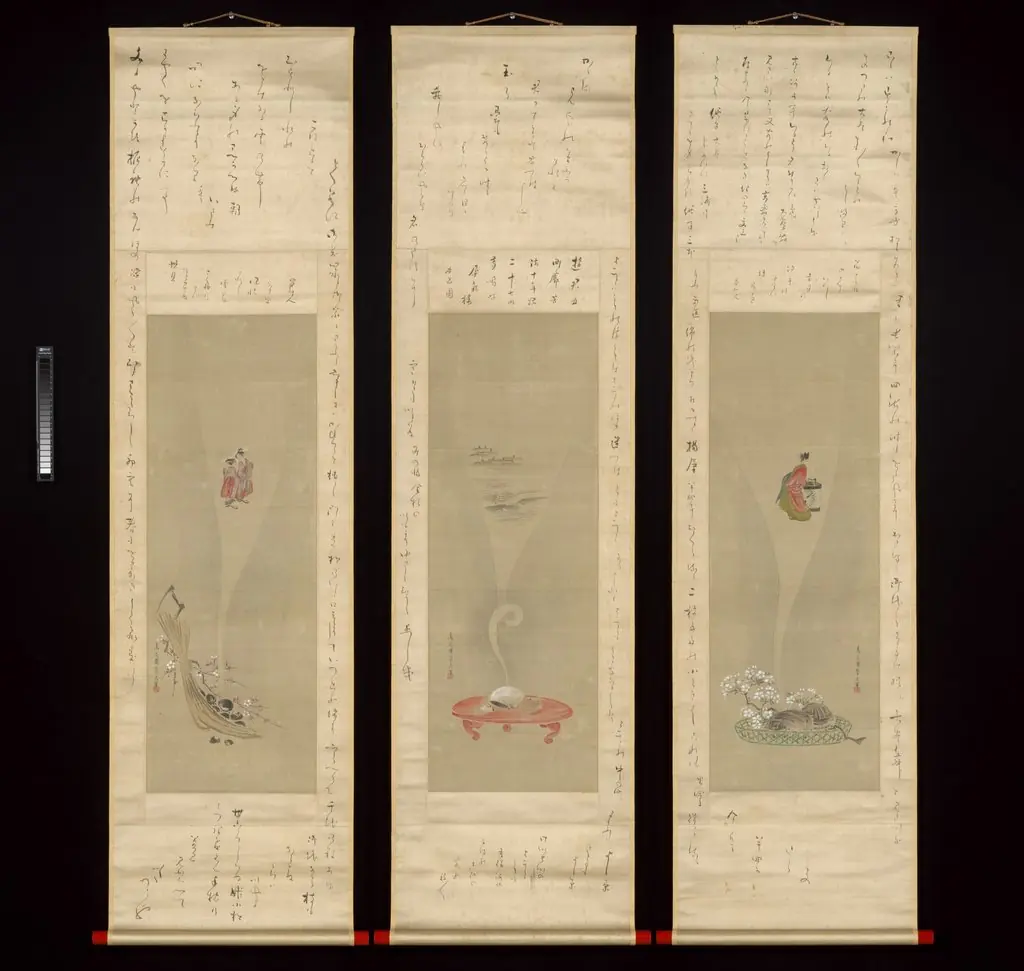 Shellfish and Apparitions of the Yoshiwara Pleasure Quarter
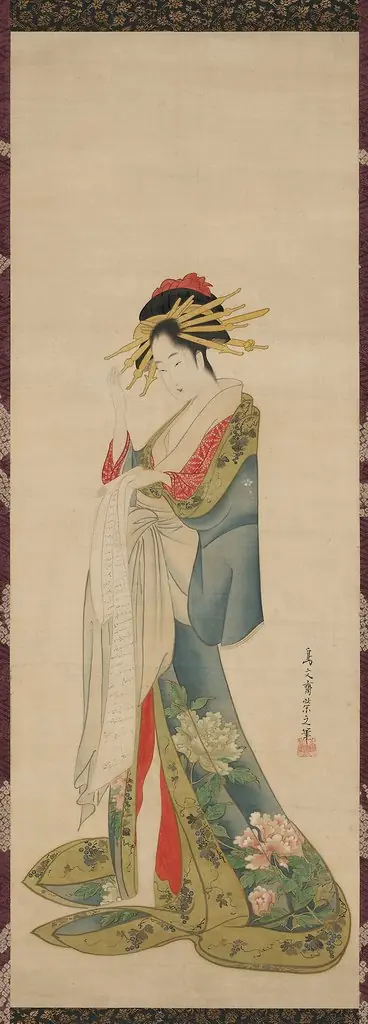 A Courtesan Reading a Letter
 Beauty Replacing Her Hairpin
 Untitled
 Chushingura: Act VI of The Storehouse of Loyalty
 鳥文斎栄之画 「風流やつし源氏 須磨」|Genji in Exile at Suma, from the series Genji in Fashionable Modern Guise (Fūryū yatsushi Genji: Suma)
 Untitled
 Courtesans at Leisure from the series The Six Immortal Poets
 Untitled
 Morning Glory (from the series The Tale of Genji in Elegant Modern Dress)
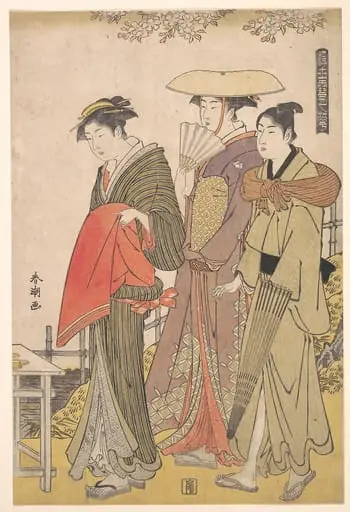 Ukiyoe Ga|The Beauty of the Floating World
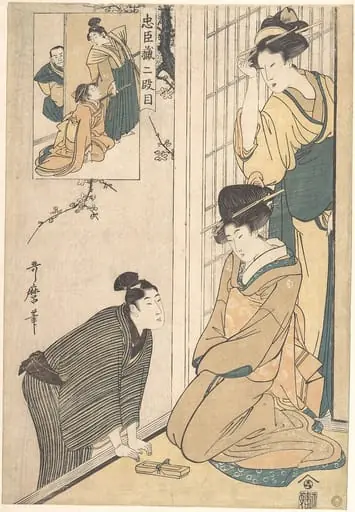 忠臣蔵二段目|A Young Man at the Side of a House
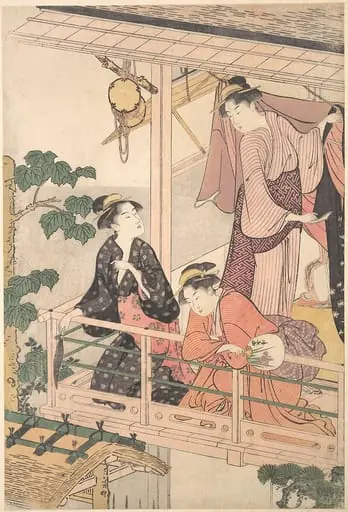 二階座敷に三人の女|Three Women on a Balcony