Artwork
忠臣蔵二段目|A Young Man at the Side of a House
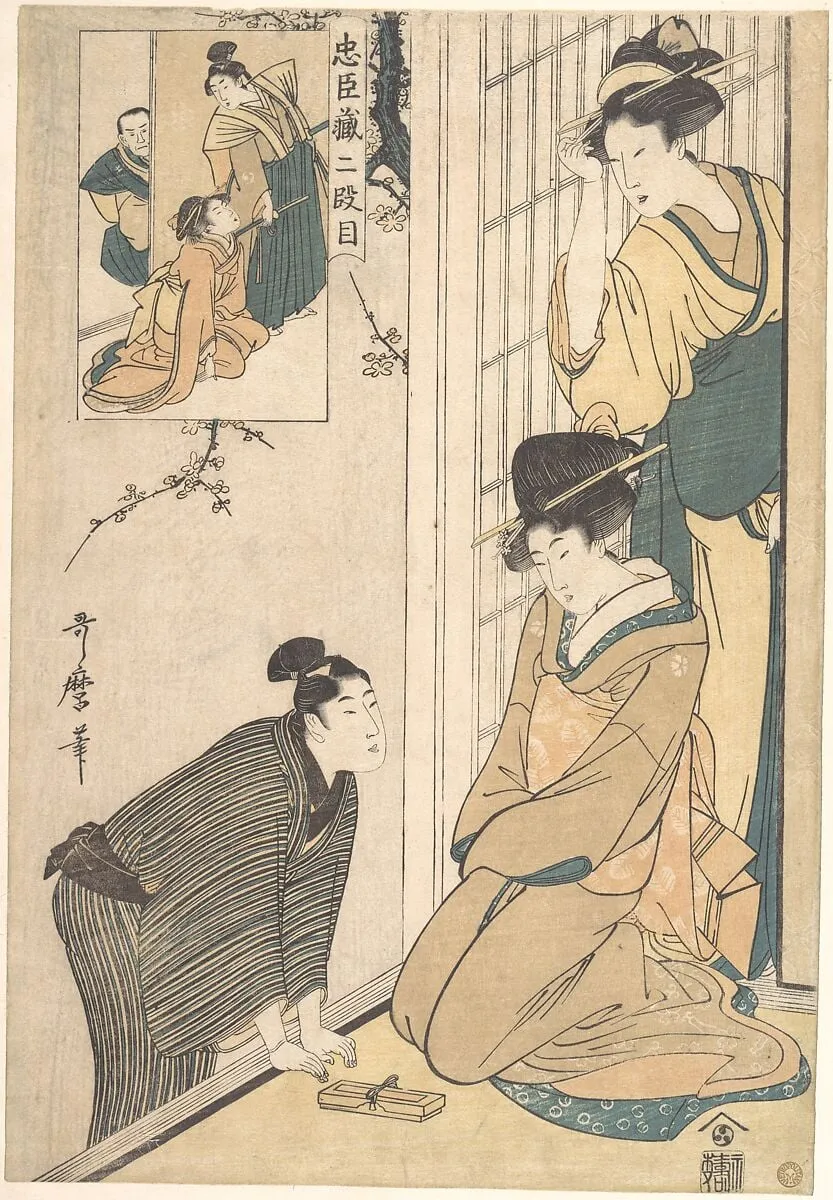
忠臣蔵二段目|A Young Man at the Side of a House is an ink print by the Romanticist artist Kitagawa Utamaro. It dates from 1780 and is held in the collection of the Metropolitan Museum of Art.
About this work
Overview
Created in 1780 by the Edo‑period printmaker Kitagawa Utamō, this woodblock work—titled 忠臣蔵二段目 (A Young Man at the Side of a House)—is part of the Metropolitan Museum of Art’s collection. Executed with ink and color on paper, the piece presents a quiet genre scene that captures ordinary life in late‑18th‑century Japan.
Subject & Meaning
In the central panel, two women—one seated, one standing—assist each other with hair and garment adjustments, a customary act of intimacy and mutual care.
The composition divides into three vignettes. On the left, a man in striped kimono kneels while holding a small box, suggesting a moment of service or offering. In the central panel, two women—one seated, one standing—assist each other with hair and garment adjustments, a customary act of intimacy and mutual care. A modest interior with sliding doors and a thin branch frames the figures, emphasizing domestic routine.
Technique & Style
Utamō employs strong, clean outlines that define each figure, while the color fields remain flat, a hallmark of ukiyo‑e printing. Careful rendering of fabric folds conveys texture without resorting to shading, and the limited background detail focuses attention on the gestures and expressions of the characters, creating a snapshot‑like immediacy.
History & Provenance
The print was produced during Utamō’s mature period, when he was celebrated for his nuanced portrayals of everyday people. It entered the Metropolitan Museum of Art’s holdings as part of a larger acquisition of Japanese prints, where it remains on display as an example of late‑Edo genre imagery.
Artist & collection


 Untitled
 Untitled
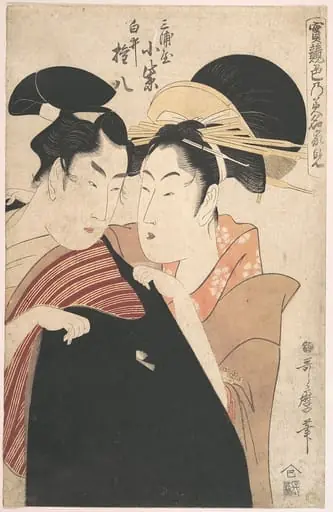 実競色乃美名家見 三浦屋小紫 白井権八|The Lovers Miura-ya Komurasaki and Shirai Gonpachi.
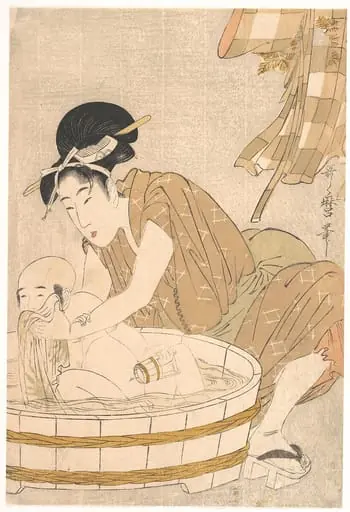 行水|Bathtime (Gyōzui)
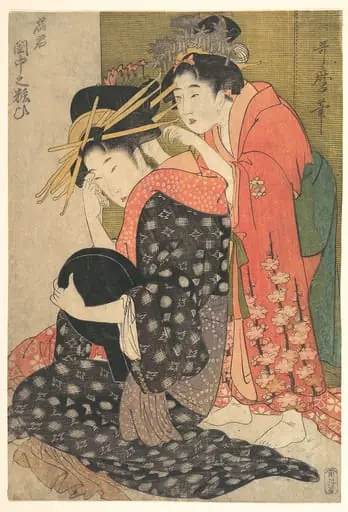 名君 閨中の粧ひ|The Oiran Yoso-oi Seated at Her Toilet
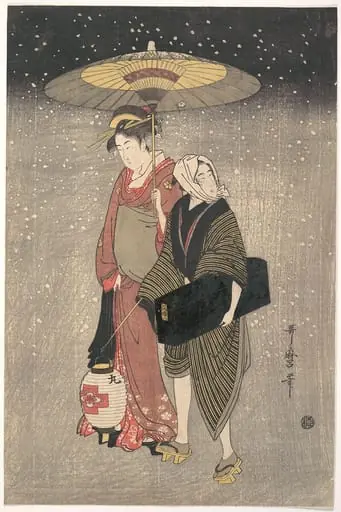 Untitled
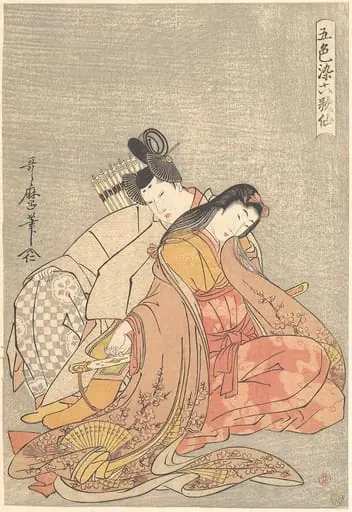 『五色染六歌仙』 在原業平と小野小町|“The Poet Ariwara no Narihira (825–880) and Ono no Komachi,” from the series Five Colors of Love for the Six Poetic Immortals (Goshiki-zome rokkasen)
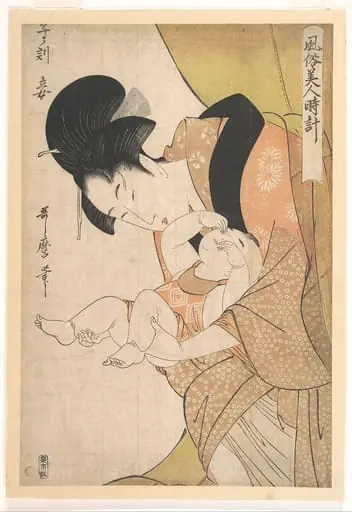 風俗美人時計 子ノ刻 妾|Midnight: Mother and Sleepy Child
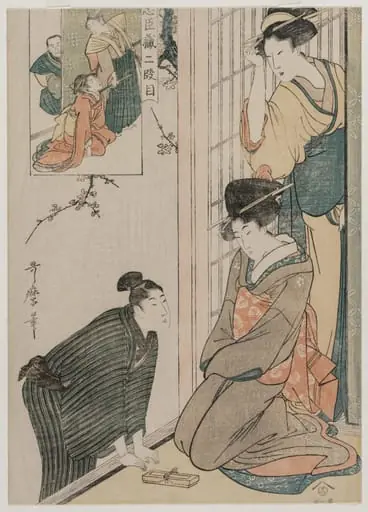 Chushingura: Act II of The Storehouse of Loyalty
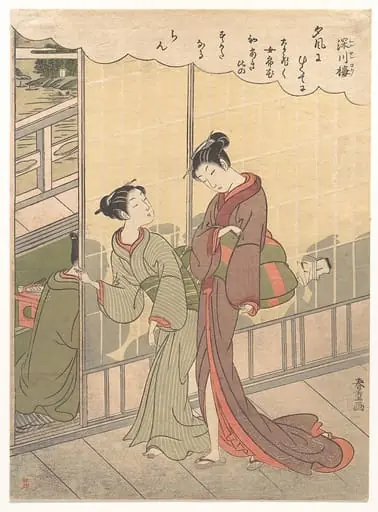 Untitled
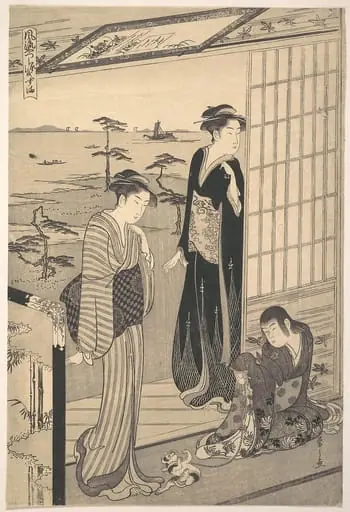 鳥文斎栄之画 「風流やつし源氏 須磨」|Genji in Exile at Suma, from the series Genji in Fashionable Modern Guise (Fūryū yatsushi Genji: Suma)
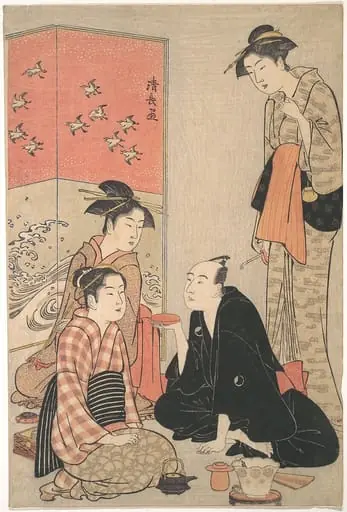 三代目沢村宗十郎と遊女|The Kabuki Actor Sawamura Sōjūrō III and Courtesans
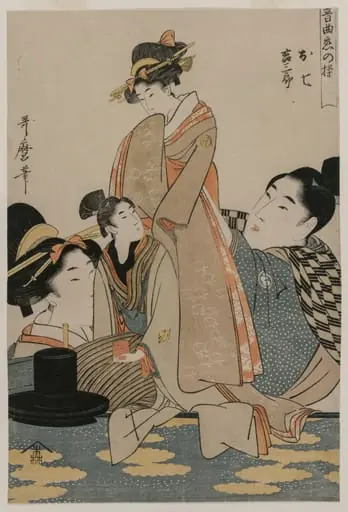 Oshichi and Kichisaburo (from the series Music on the Theme of Constancy in Love)
 Untitled
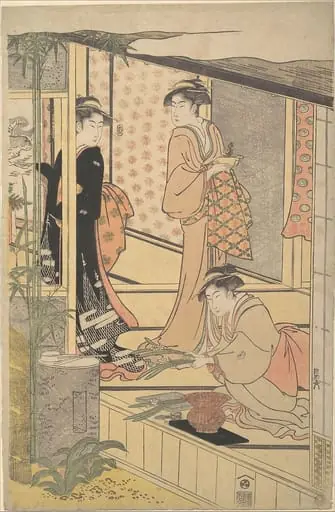 細田栄之画 正月準備|Preparing New Year Decorations
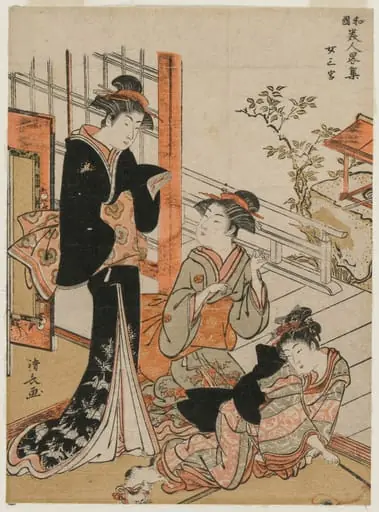 Three Women (from the series A Brief Collection of Japanese Beauties)
 Untitled
 Untitled
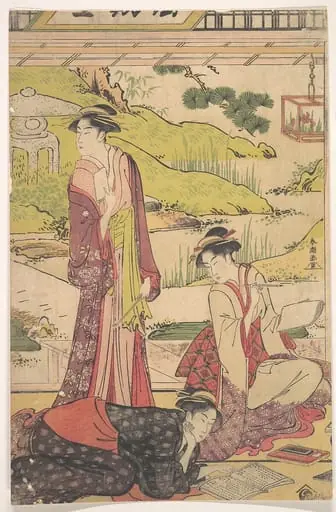 あやめ燈籠図|Three Women Enjoying Literary Pursuits
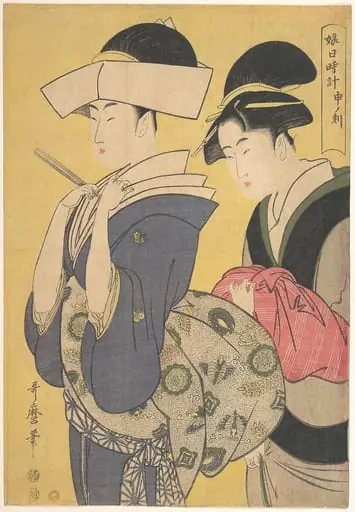 娘日時計 申ノ刻|Seru no Koku