Artwork
Cules de floarea-soarelui
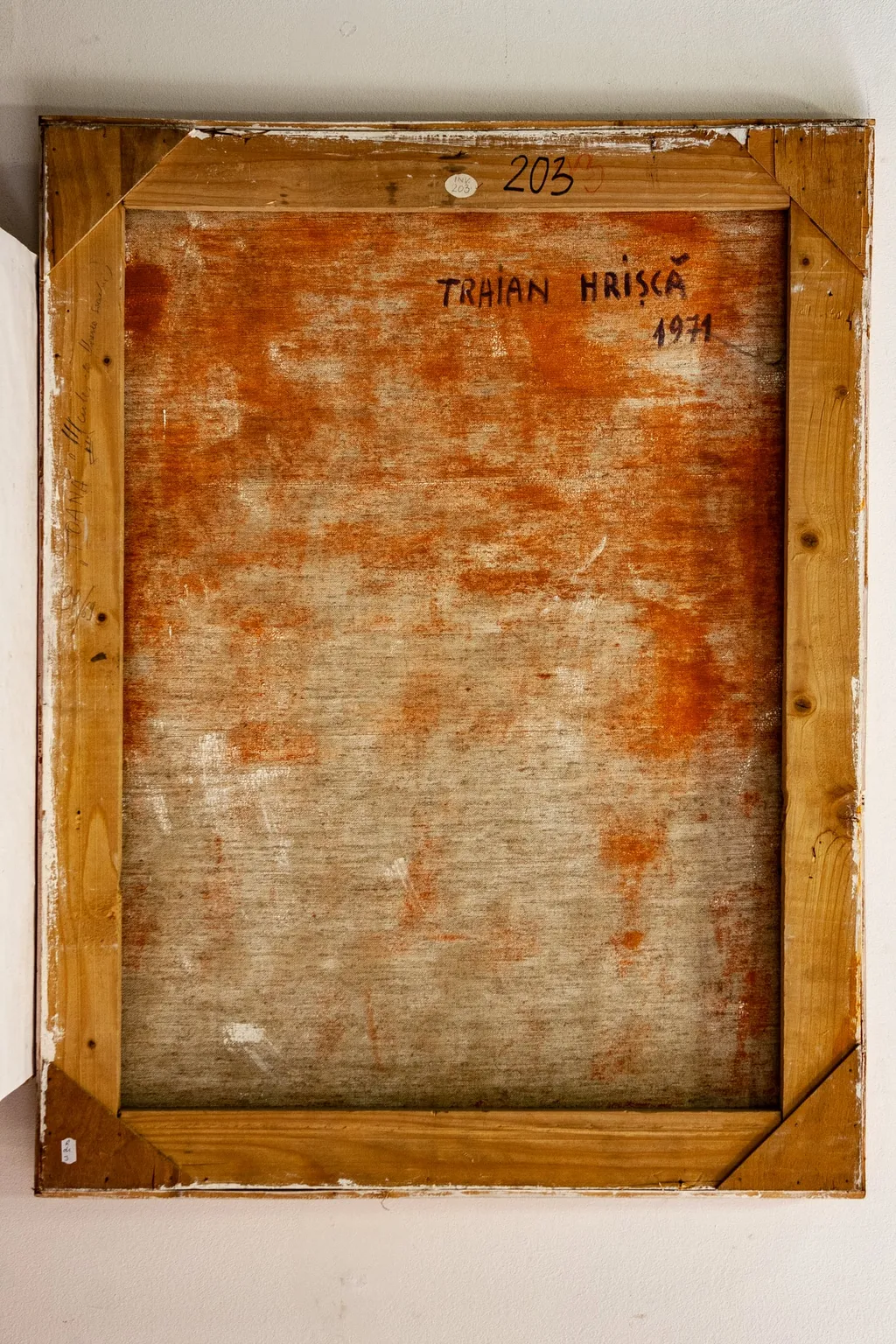
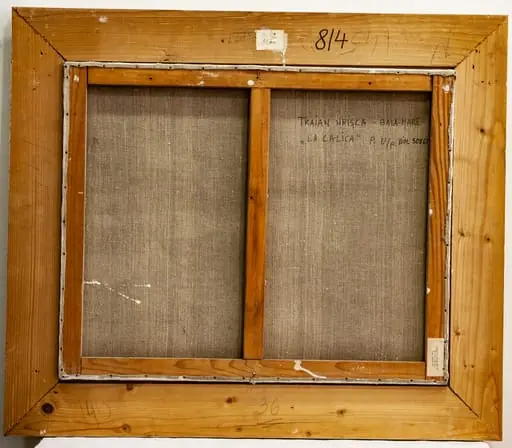
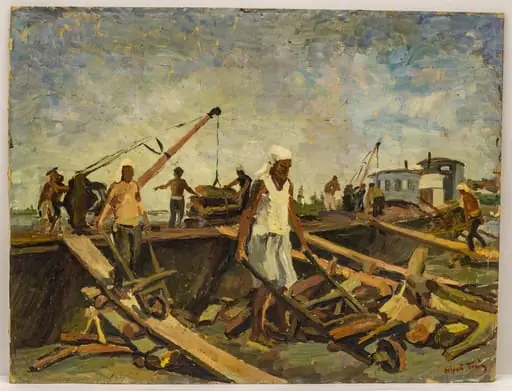
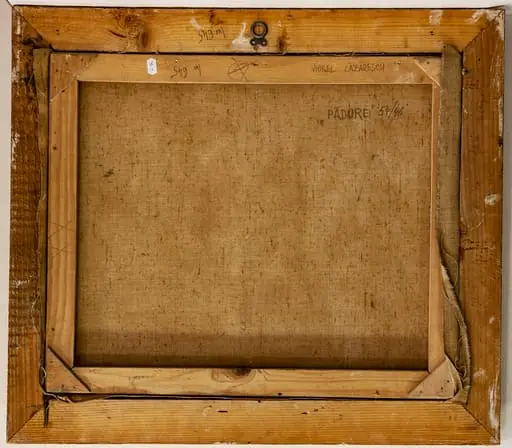
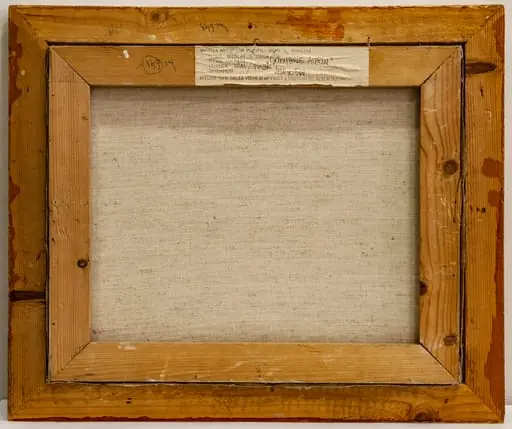
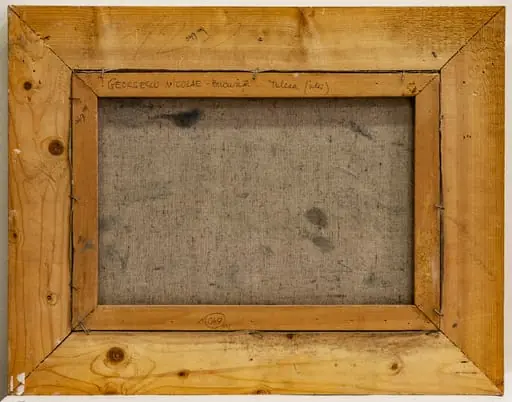
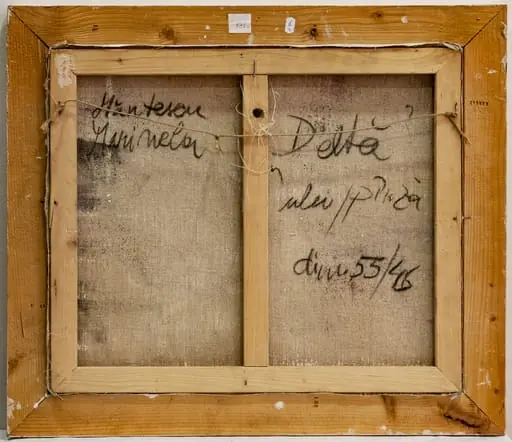
Cules de floarea-soarelui is a print by Traian Hrișcă. It is held in the collection of the Gavrila Simion Eco-Museum Research Institute Tulcea. This work consists of a wooden frame holding a deteriorated canvas with minimal, faded pigment.
About this work
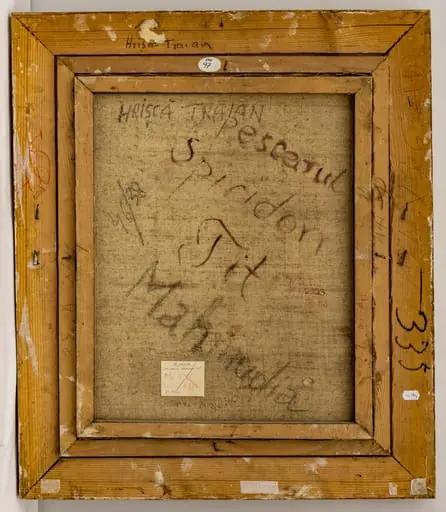
The frame has a simple, slightly uneven edge, and a small label on the back reads "Traian Hrișcă 1971" in handwritten letters.
This is an empty wooden frame with a faded, worn canvas inside. The paint looks old and scratched, mostly in earthy browns and muted reds. The frame has a simple, slightly uneven edge, and a small label on the back reads "Traian Hrișcă 1971" in handwritten letters.
The canvas is mostly blank, with no clear image or scene—just faded brushstrokes and patches of color. The frame’s label hints at the artist’s name and a possible year, but the painting itself feels unfinished or lost over time.
Next, check out the Museum of Ethnography to see more works like this one.
Overview
This work consists of a wooden frame holding a deteriorated canvas with minimal, faded pigment. The surface bears traces of brushwork in muted earth tones, but no discernible image remains. A handwritten label on the reverse identifies the artist as Traian Hrișcă and the year 1971. The object presents as incomplete or weathered, suggesting either an abandoned effort or the passage of time eroding its original form.
Subject & Meaning
The title, 'Cules de floarea-soarelui' (Sunflower Harvest), implies a thematic link to rural labor or natural cycles, yet the canvas holds no visual representation of such a scene. The absence of imagery may reflect intentional abstraction, material decay, or the artist’s departure from conventional representation. The disconnect between title and surface invites contemplation of memory, loss, or the impermanence of artistic intent.
Technique & Style
The canvas shows uneven, worn brushstrokes in brown and reddish hues, suggesting a limited palette and possibly hurried or experimental application. The frame is unadorned, with a rough, hand-finished edge, indicating a modest, utilitarian approach. No evidence of refined technique or detailed rendering survives; the work’s physical state dominates its aesthetic, emphasizing materiality over composition.
History & Provenance
The handwritten label on the reverse confirms Traian Hrișcă as the maker and 1971 as the likely date of creation. No documentation exists regarding its exhibition, ownership, or intended display. Its current condition—faded, scratched, and stripped of legible imagery—suggests prolonged exposure, neglect, or deliberate reduction. Its survival as an artifact, rather than a finished painting, raises questions about its preservation history.
Context
In early 1970s Romania, artistic expression was often constrained by state ideology, prompting some creators to explore minimalism or abstraction as subtle forms of resistance. Hrișcă’s work may reflect this climate—using absence or decay to evade direct political interpretation. The reference to the Museum of Ethnography hints at a possible connection to folk traditions or rural themes, though the work itself resists clear categorization.
Legacy
This object endures not as a completed painting but as a fragment—its meaning shaped by erosion and silence. It stands as a quiet testament to the vulnerability of artistic records and the ambiguity of intent. Its preservation invites viewers to consider what remains when form dissolves, and how absence can carry historical weight as powerfully as presence.
Artist & collection
Artist
Printmaker Traian Hrișcă made small, sharp scenes of everyday life in early 20th-century Romania.
Museum
Gavrila Simion Eco-Museum Research Institute Tulcea
Continue through works from the same source collection.