Artwork
Socrate în închisoare; pandant: Sfântul Petru tămăduind un bolnav
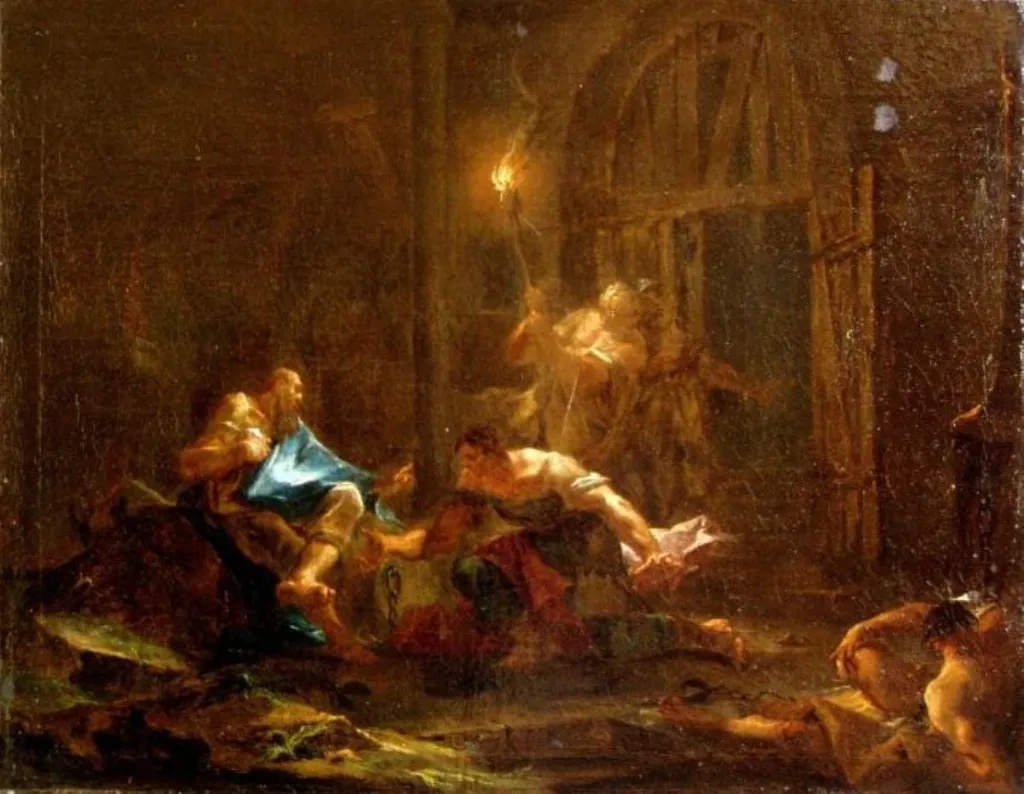
Socrate în închisoare; pandant: Sfântul Petru tămăduind un bolnav is an unspecified painting by the Baroque artist Paul Troger. It is held in the collection of the Brukenthal National Museum. This painting depicts a somber interior scene with figures gathered around a wounded man.
About this work
Overview
This painting depicts a somber interior scene with figures gathered around a wounded man. The composition centers on a seated figure in blue, observing a recumbent figure clutching a document. Torchlight and warm hues cut through deep shadows, creating a dramatic, intimate atmosphere. The setting suggests a moment of moral or spiritual gravity, though the specific narrative remains ambiguous.
Subject & Meaning
The seated figure may represent Socrates, engaged in final discourse, while the injured man could symbolize a disciple or martyr. The document in the injured man’s hand hints at a legal or philosophical testament. The presence of torchbearers and onlookers implies a communal witness to suffering, possibly evoking themes of sacrifice, truth, or divine intervention.
Technique & Style
The artist employs chiaroscuro to heighten emotional tension, with rich, earthy tones contrasting against areas of near-black shadow. Brushwork is controlled yet expressive, emphasizing texture in fabric and stone. Light sources are localized, casting elongated silhouettes and drawing focus to the central figures without revealing full context.
History & Provenance
The painting’s origins are undocumented in public records. No known artist attribution or exhibition history exists. Its title and subject appear to be modern interpretations, possibly assigned post-creation. The work may derive from a 19th-century regional studio or be a lesser-known academic exercise.
Context
The scene aligns with 18th- and 19th-century European tendencies to dramatize philosophical or biblical moments in domestic interiors. Similar compositions appear in works by artists like Troger, who blended religious narrative with theatrical lighting. This piece reflects a broader trend of using historical or mythic figures to explore human vulnerability.
Legacy
Though not widely studied or reproduced, the painting contributes to a quiet tradition of moral allegory in regional art. Its emotional restraint and focus on quiet dignity distinguish it from more overtly dramatic religious scenes. It remains a modest example of how narrative painting preserved philosophical ideals in intimate settings.
Artist & collection
Artist
Paul Troger painted large religious scenes in 18th-century Central Europe, blending dramatic light with human emotion.

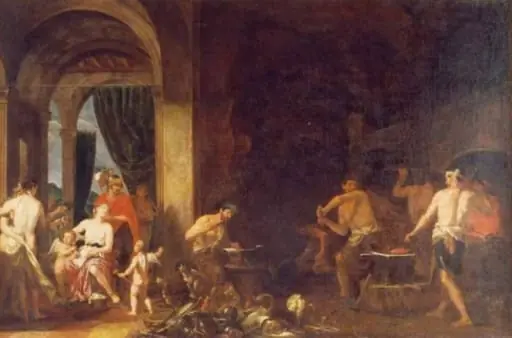 Atelierul lui Vulcan
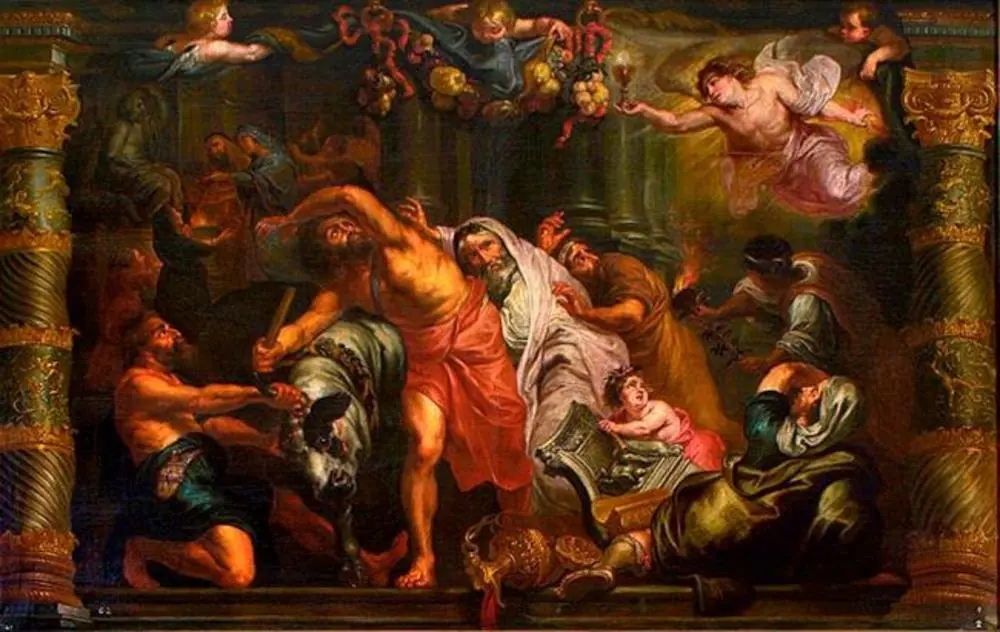 The Eucharist overcoming pagan sacrifices
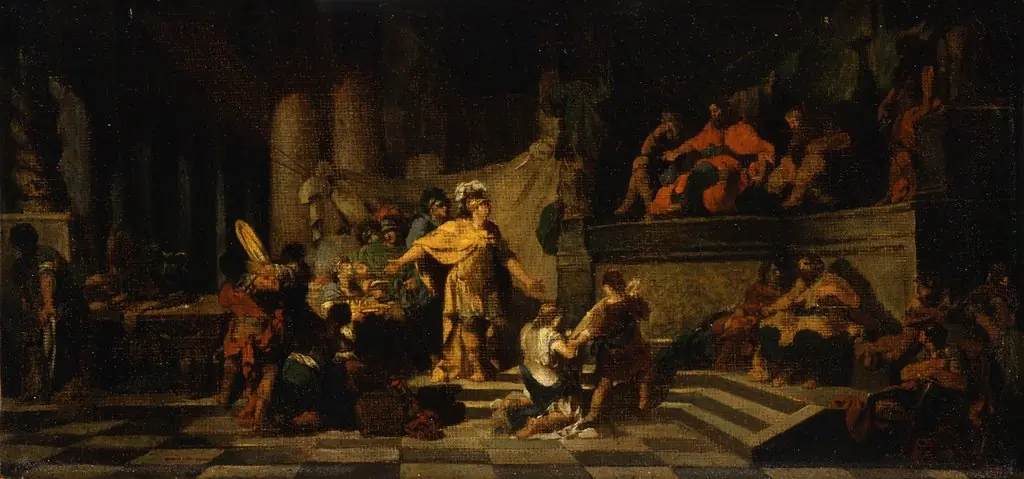 Aeneas Offering Presents to King Latinus and Asking Him for the Hand of His Daughter
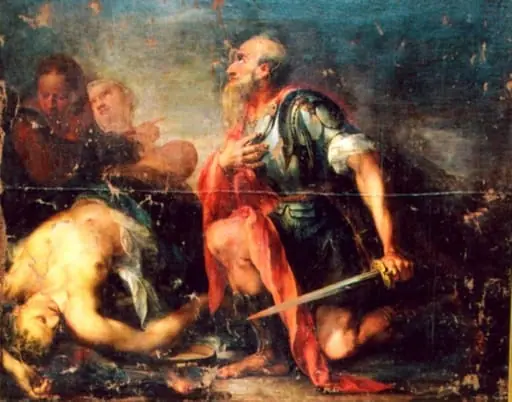 Jertfa lui Jeptha
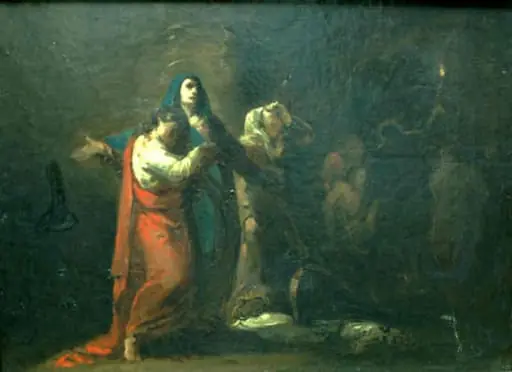 Scenă biblică
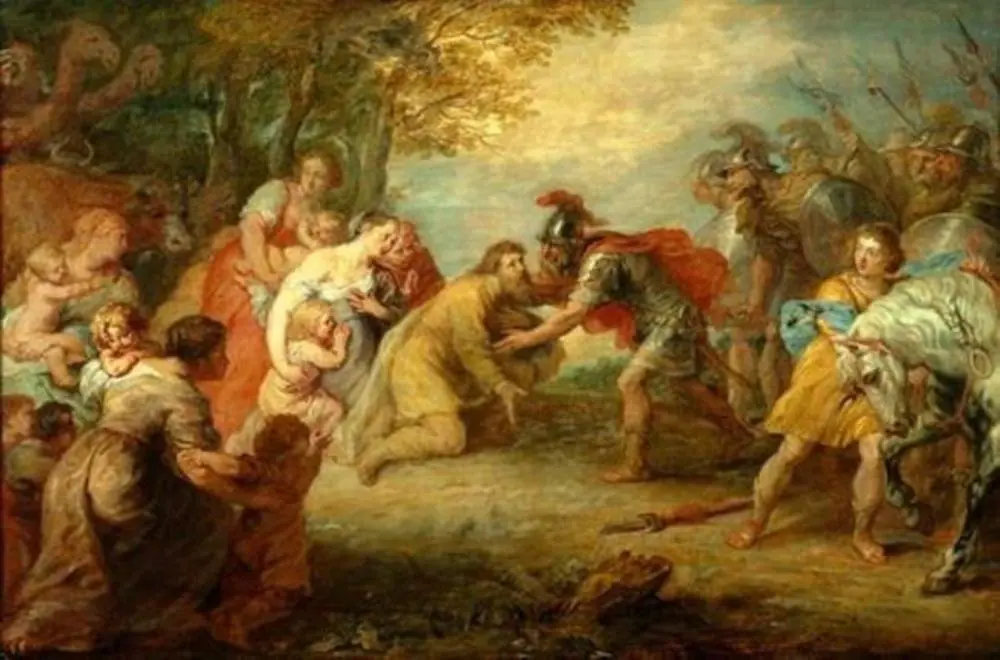 The reconciliation of Jacob and Esau: Esau runs to meet Jacob and kisses him (Genesis 33:3-4)
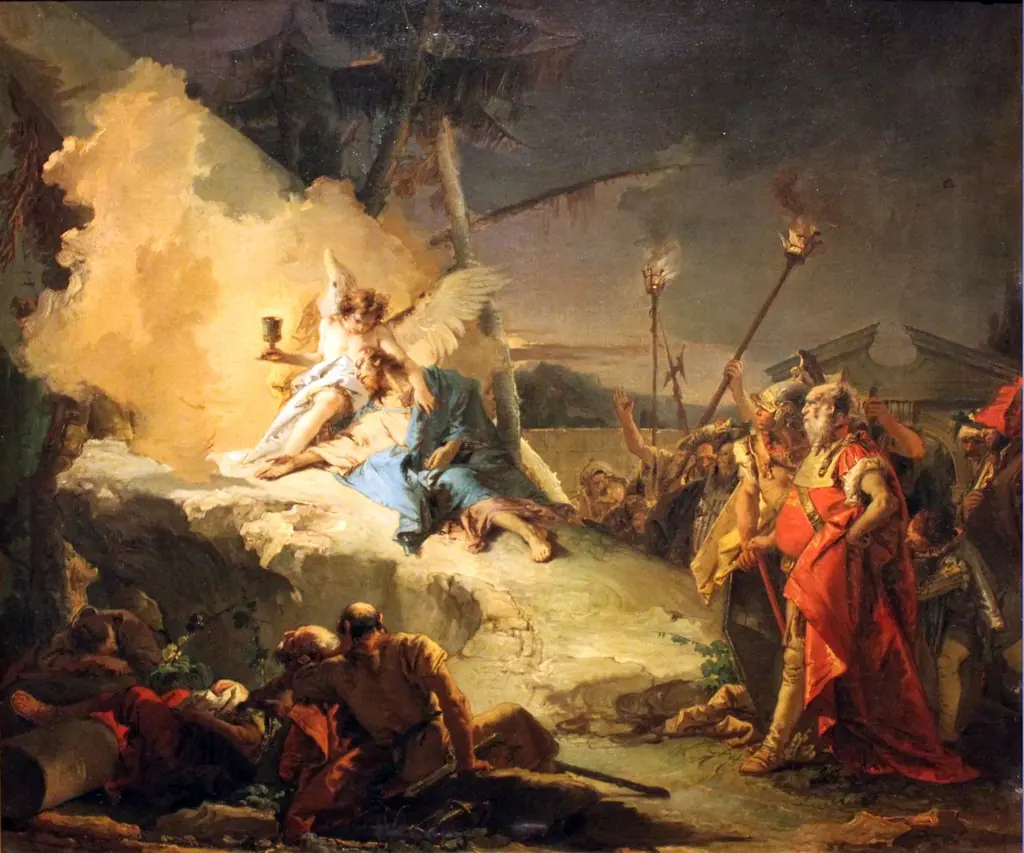 Christ in the Garden of Gethsemane
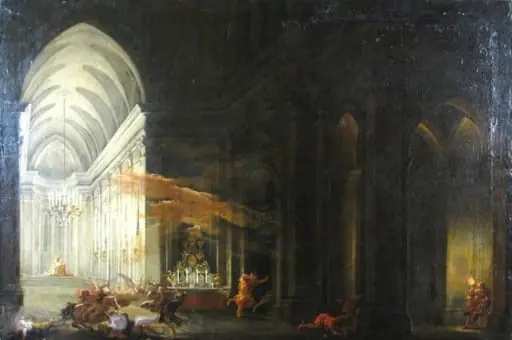 Heliodor biruit de înger
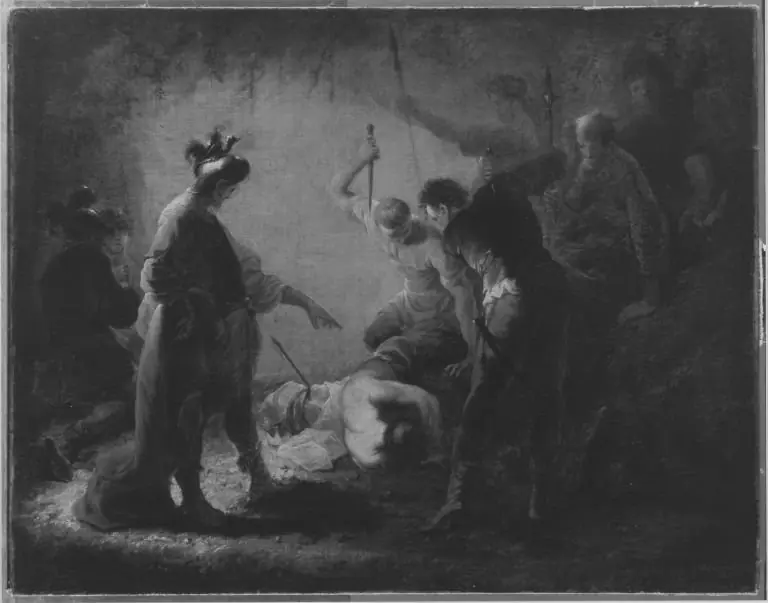 Die Ermordung des hl. Severus
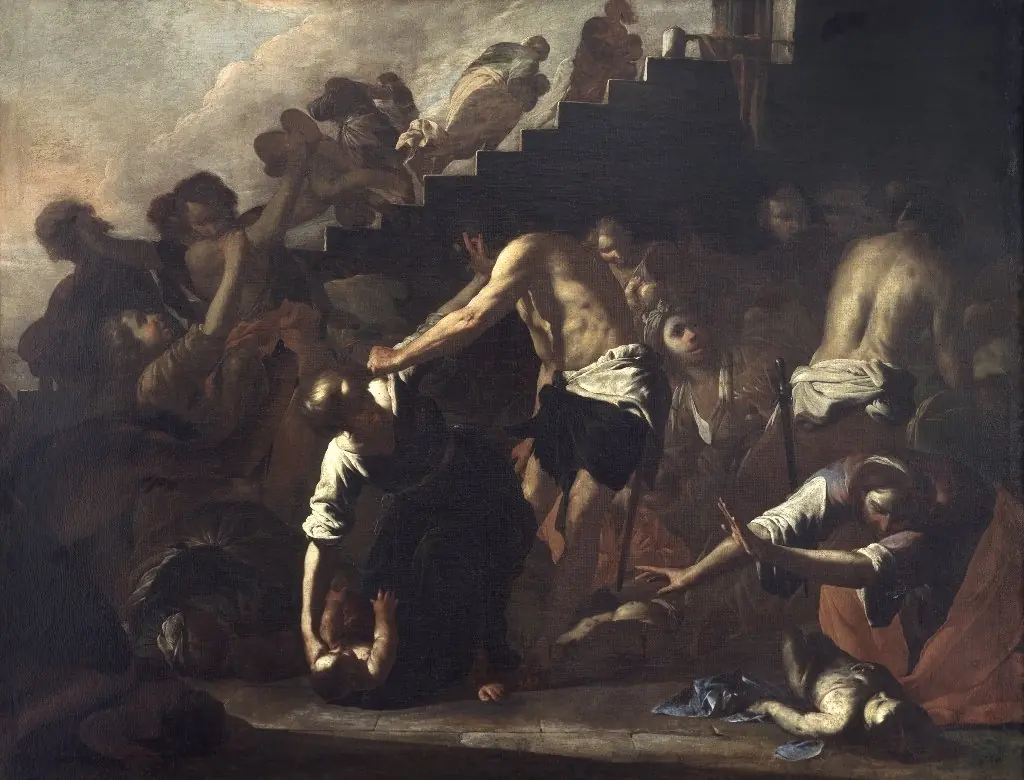 Massacre of the Innocents
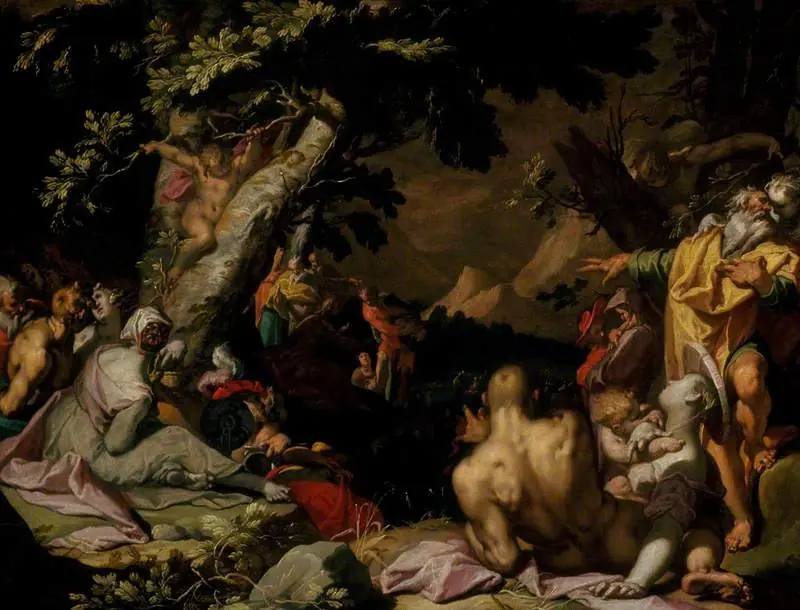 Miracle of the loaves (Jesus feeds the five thousand)
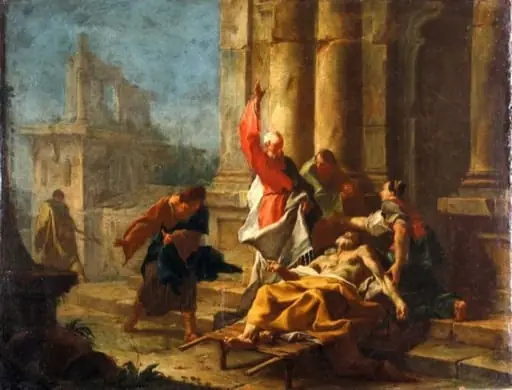 Sântul Petru tămăduind un bolnav; pandant: Socrate în închisoare