Artwork
Merlette
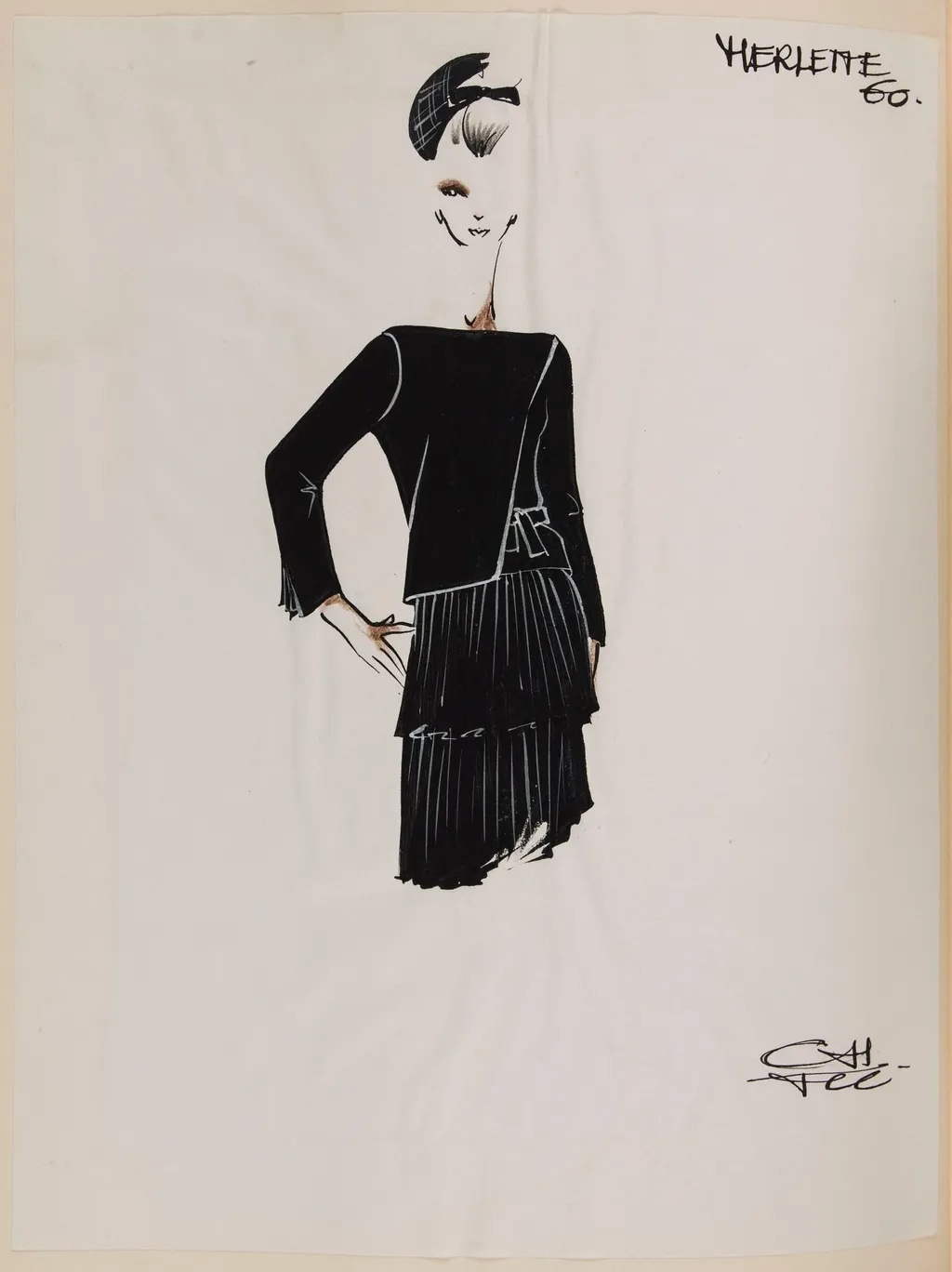
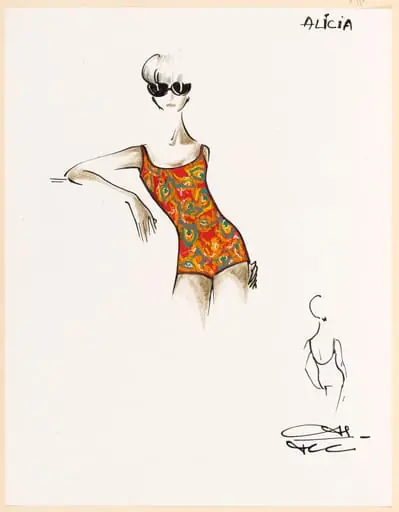
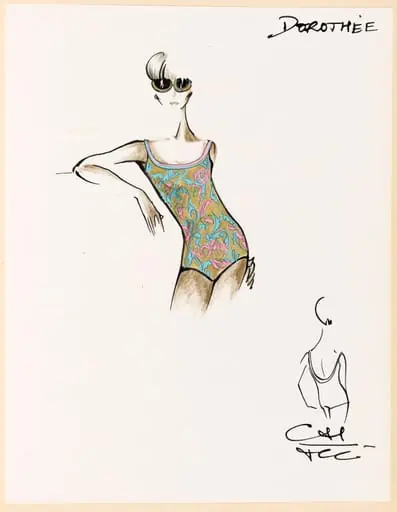
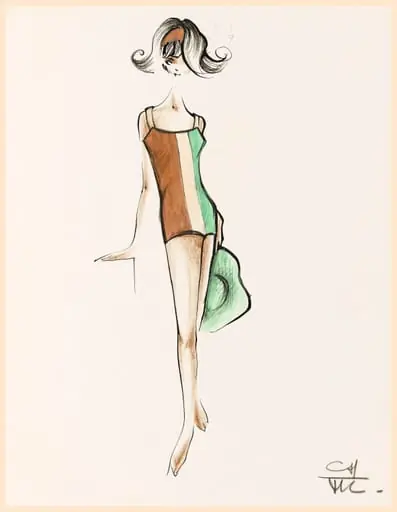
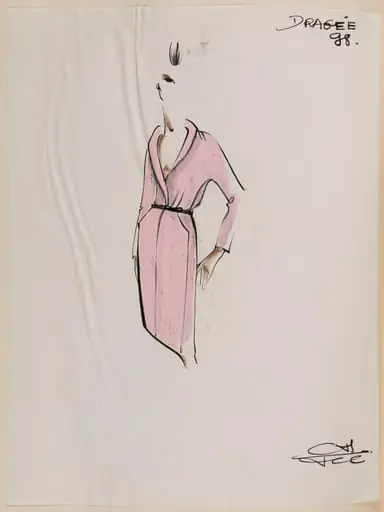
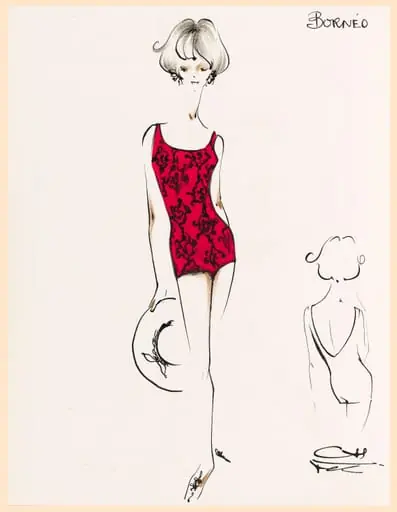
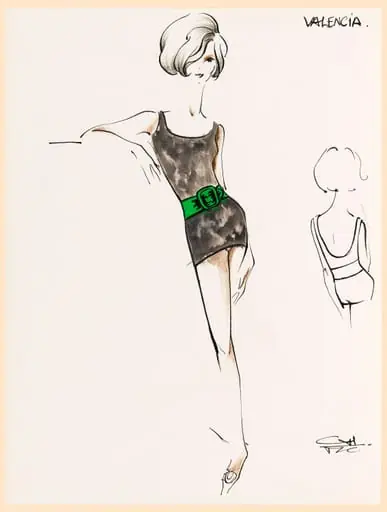
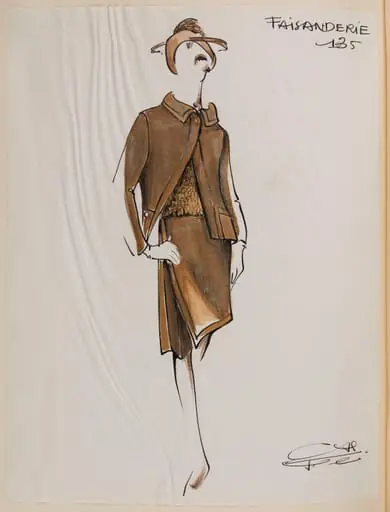
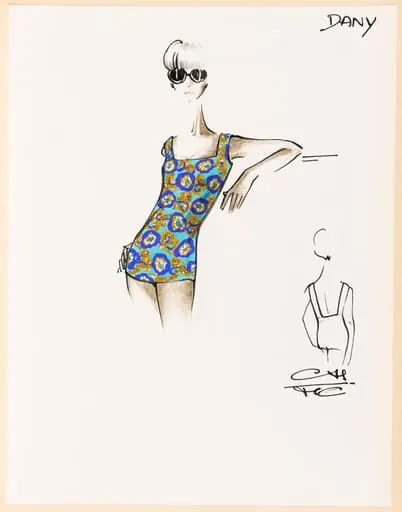
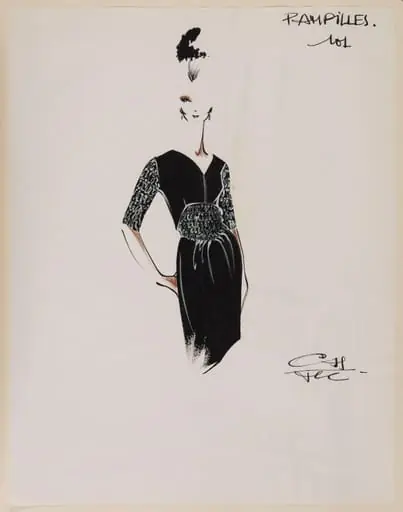
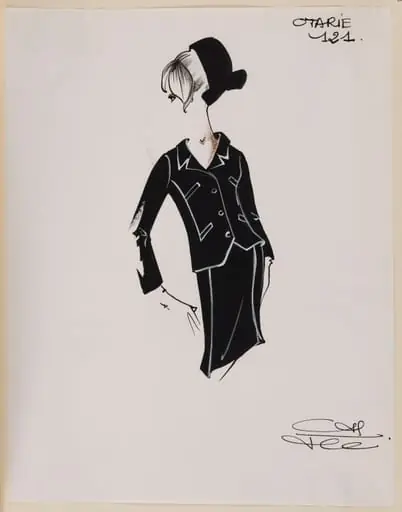
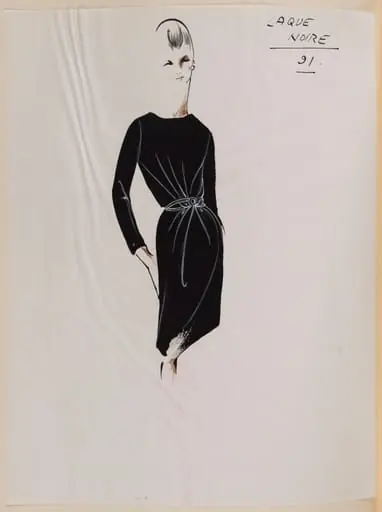
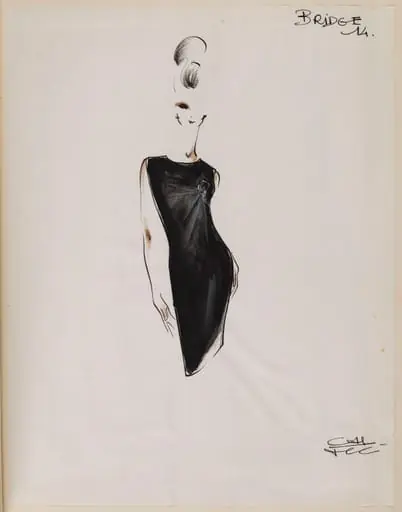
Merlette is a drawing by Count of St. Germain. It dates from 1963 and is held in the collection of the Palais Galliera - Musée de la Mode de la Ville de Paris.
About this work
Overview
The work presents a solitary female figure rendered in swift, expressive lines.
Merlette is a pencil drawing attributed to the Count of St. Germain, dated around 1963. It is part of the collection at the Museum of Ethnography. The work presents a solitary female figure rendered in swift, expressive lines. The artist’s signature appears as a subtle mark in one corner, and the title 'Merlette' is inscribed above the image, suggesting it may be a personal or identifying label rather than a formal title.
Subject & Meaning
The figure depicted is a woman dressed in a plain black dress with a short, flared skirt and long sleeves. Her posture—hand on hip—conveys a quiet composure. The absence of facial detail and the minimal context invite interpretation, though no narrative or symbolic meaning is explicitly documented. The name 'Merlette' may reference a person known to the artist, possibly a model or acquaintance, but its origin remains unverified.
Technique & Style
The drawing employs bold, fluid pencil strokes that suggest immediacy and confidence. Shading is achieved through loose, overlapping lines rather than dense cross-hatching, giving the form a light, sketch-like quality. The absence of fine detail emphasizes gesture over realism. The artist’s hand is evident in the rhythm of the lines, which define volume and movement with economy and precision.
History & Provenance
The work entered the Museum of Ethnography’s collection in the late 20th century, though its prior ownership is undocumented. No exhibition history or correspondence linking the drawing to the Count of St. Germain’s known activities has been publicly verified. Its attribution rests on stylistic comparison and archival notes, with no definitive documentation confirming its creation date or origin.
Context
Created in the early 1960s, Merlette reflects a period when many artists explored figural studies outside formal academic traditions. The drawing’s informal style aligns with contemporaneous sketchbook practices, where personal observation took precedence over public display. Its presence in an ethnographic museum suggests an interest in everyday human forms, though its cultural or regional ties remain unclear.
Legacy
Merlette has not been widely reproduced or studied in scholarly literature. It remains a quiet, unassuming work within the museum’s holdings, valued more for its directness than its historical prominence. Its survival and preservation reflect an institutional interest in lesser-known artistic gestures, offering insight into the private drawing habits of its creator.
Artist & collection
Artist
Museum
Palais Galliera - Musée de la Mode de la Ville de Paris
Continue through works from the same source collection.