Artwork
Cu furca în brâu
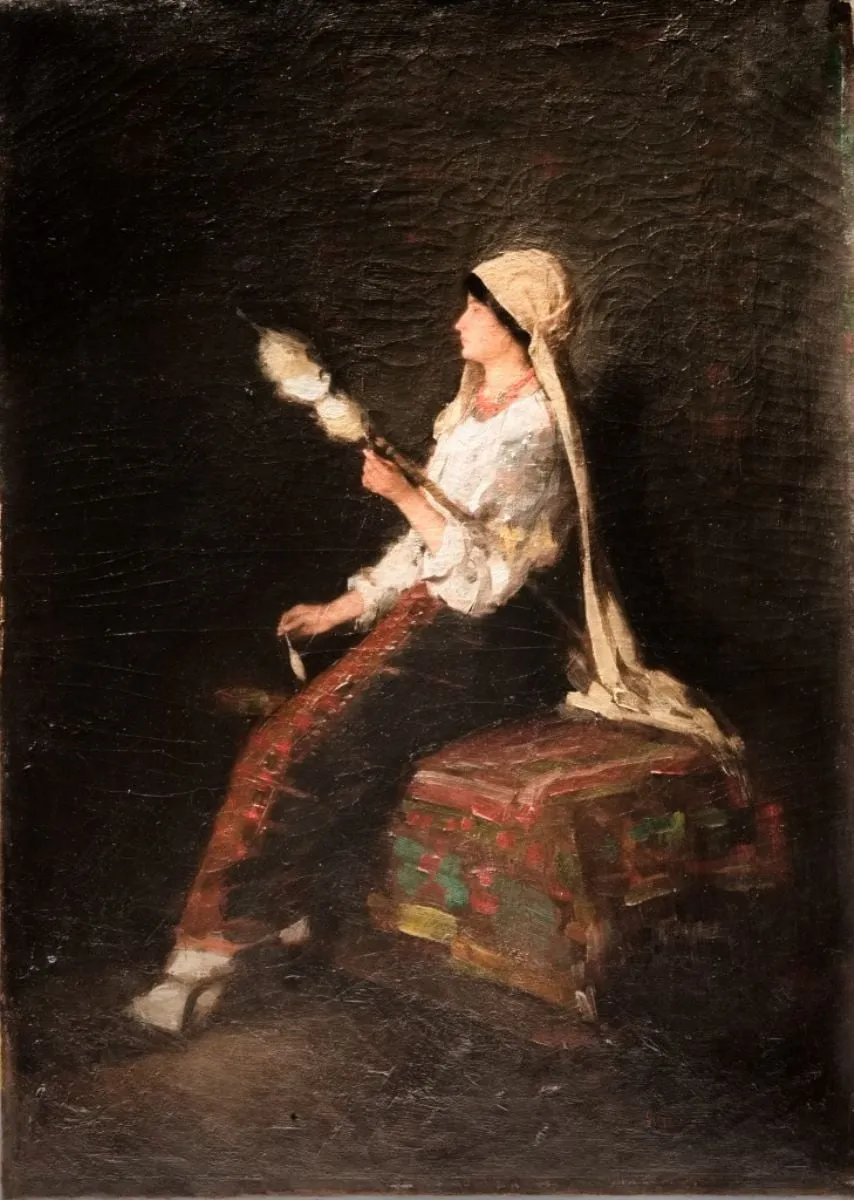
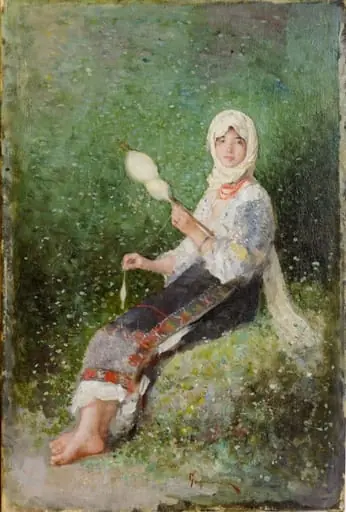
Cu furca în brâu is an unspecified painting by Nicolae Grigorescu. It dates from 1850 and is held in the collection of the National Museum of Art of Romania.
About this work
Overview
The painting reflects Grigorescu’s early interest in everyday life, rendered with a restrained palette and careful attention to texture and form.
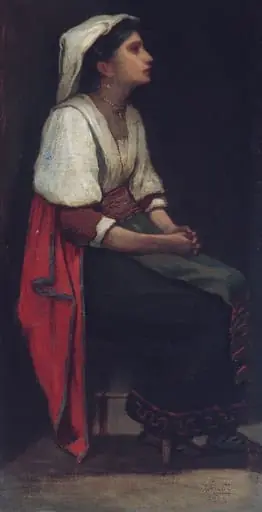
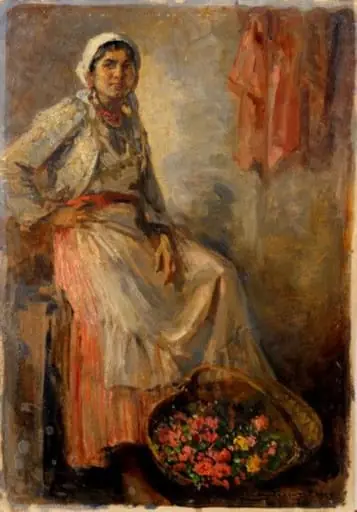
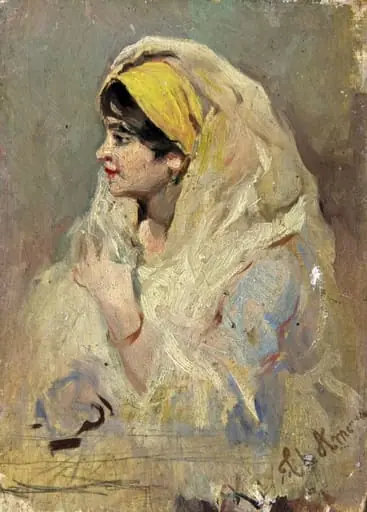
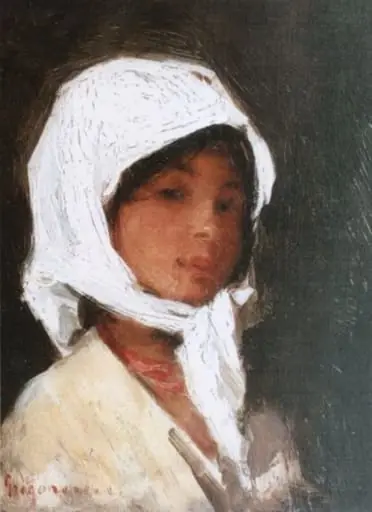
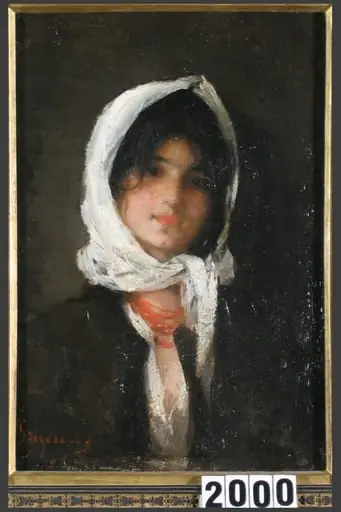
Cu furca în brâu, dated around 1850, is an early work by Romanian painter Nicolae Grigorescu. It portrays a rural woman seated on a simple stool, engaged in a quiet domestic act. The composition centers her figure against a dark, undefined background, emphasizing her presence through focused lighting. The painting reflects Grigorescu’s early interest in everyday life, rendered with a restrained palette and careful attention to texture and form.
Subject & Meaning
The woman, dressed in traditional regional attire—a white blouse, red skirt, beige headscarf, and white shoes—holds a feather duster, suggesting a moment of routine labor. The red necklace adds a subtle accent of personal adornment. Her posture and expression convey quiet dignity, avoiding theatricality. The title, referencing a belt with a fork, hints at folk symbolism, though the object itself is absent; the focus remains on the figure’s grounded, unidealized presence.
Technique & Style
Grigorescu employs chiaroscuro to model the figure with soft transitions between light and shadow, giving volume without harsh outlines. The background’s near-black void isolates the subject, heightening tactile details: the weave of the stool’s fabric, the sheen of the skirt, the texture of the duster. Brushwork is controlled yet expressive, avoiding academic polish in favor of observational truth. The limited color range reinforces the painting’s intimate, contemplative tone.
History & Provenance
Created during Grigorescu’s formative years, likely before his formal training in Paris, this work belongs to his early Romanian period. It reflects his immersion in local customs and his shift from religious and historical themes toward peasant life. The painting’s survival suggests it was retained within private or institutional collections in Romania, though its early ownership remains undocumented. It stands as a rare surviving example of his pre-academic output.
Context
In mid-19th century Romania, depictions of rural life were emerging as a distinct artistic current, countering imported academic styles. Grigorescu, influenced by French Realism and local traditions, sought to portray ordinary people with sincerity. Cu furca în brâu aligns with this movement, capturing a moment of quiet labor without romanticization. It predates his later, more celebrated works but reveals the foundations of his enduring focus on authenticity.
Legacy
Though less known than his later landscapes and peasant scenes, Cu furca în brâu illustrates Grigorescu’s early commitment to depicting rural subjects with psychological depth. Its restrained composition and attention to detail influenced subsequent generations of Romanian artists seeking to ground their work in local reality. The painting remains a quiet but significant marker in the transition from academic convention to national realism in Romanian art.
Artist & collection
Artist
Romanian painter Nicolae Grigorescu made quiet, honest scenes of everyday life and country roads around 1900.