Artwork
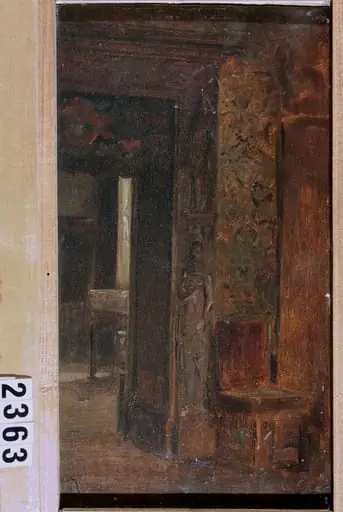
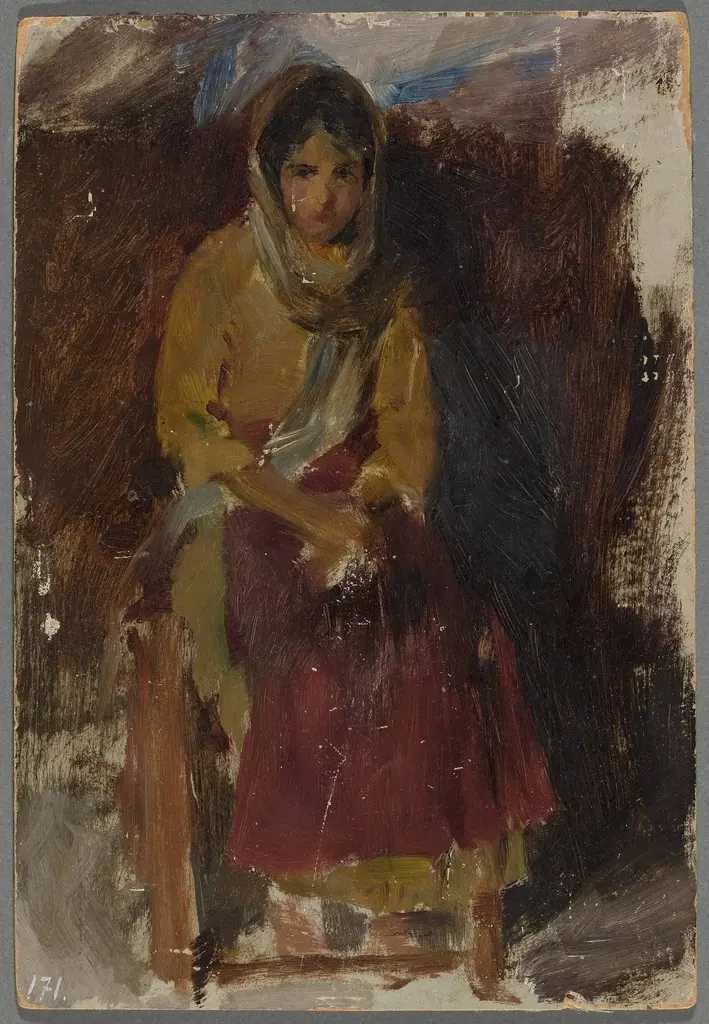
Femeie cu maramă; Verso: Scaun stil Ludovic al XIII-lea, eboșă
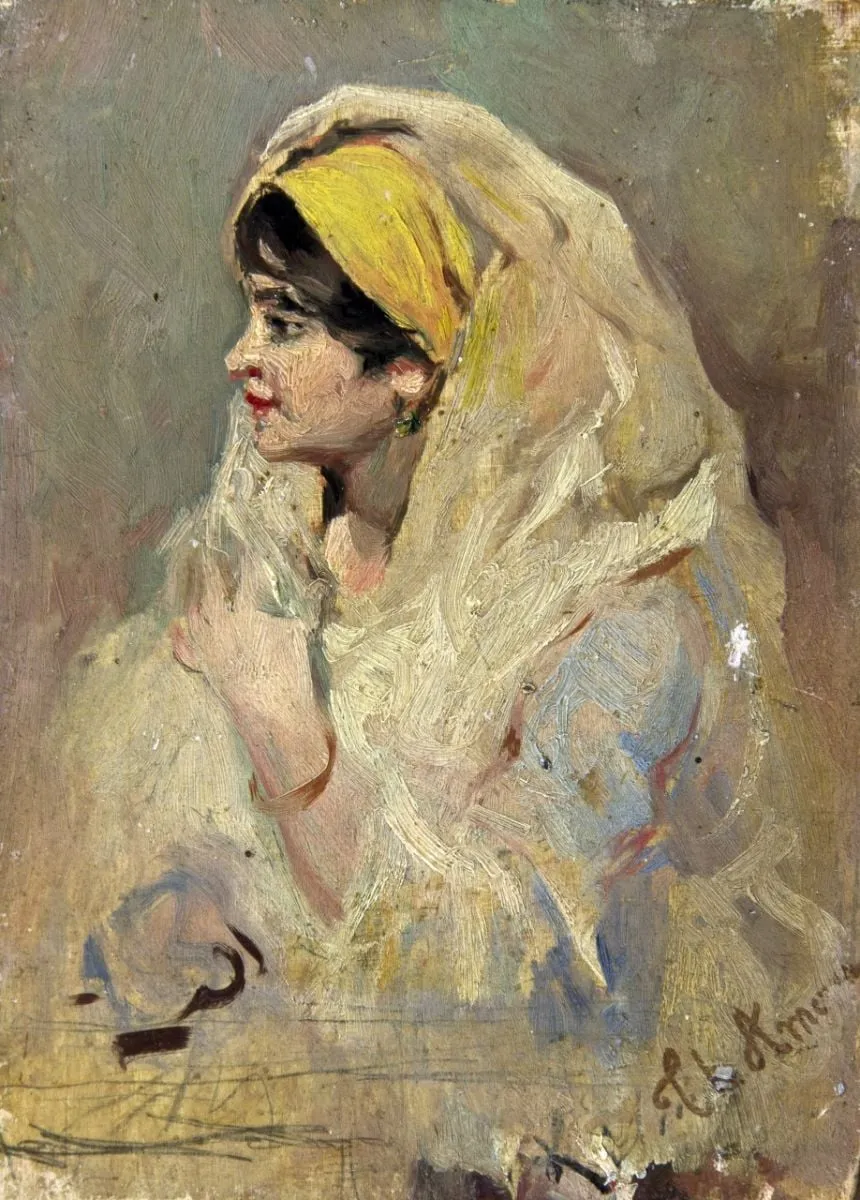
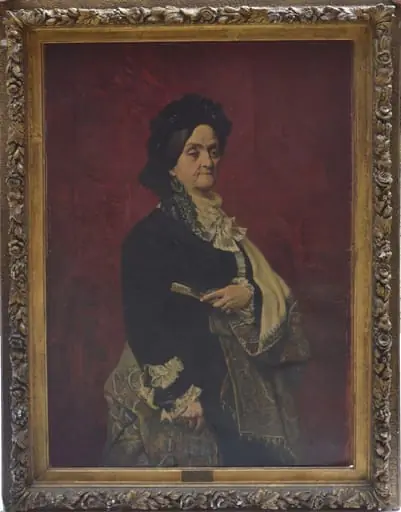
Femeie cu maramă; Verso: Scaun stil Ludovic al XIII-lea, eboșă is an unspecified painting by Theodor Aman. It dates from 1850 and is held in the collection of the National Museum of Art of Romania.
About this work
Overview
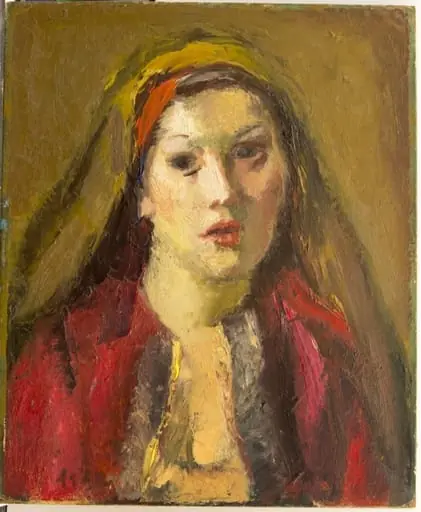
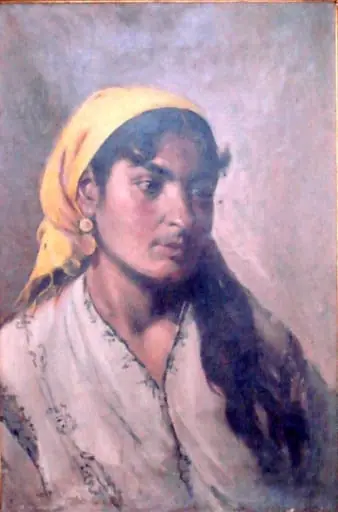
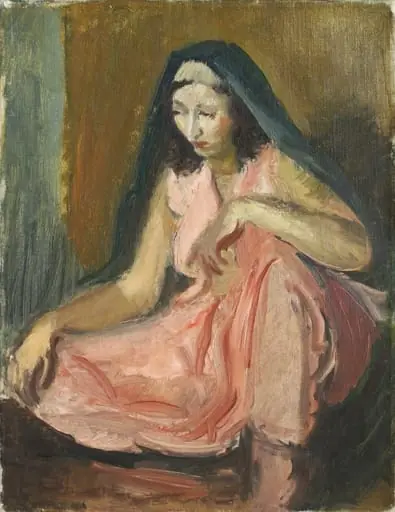
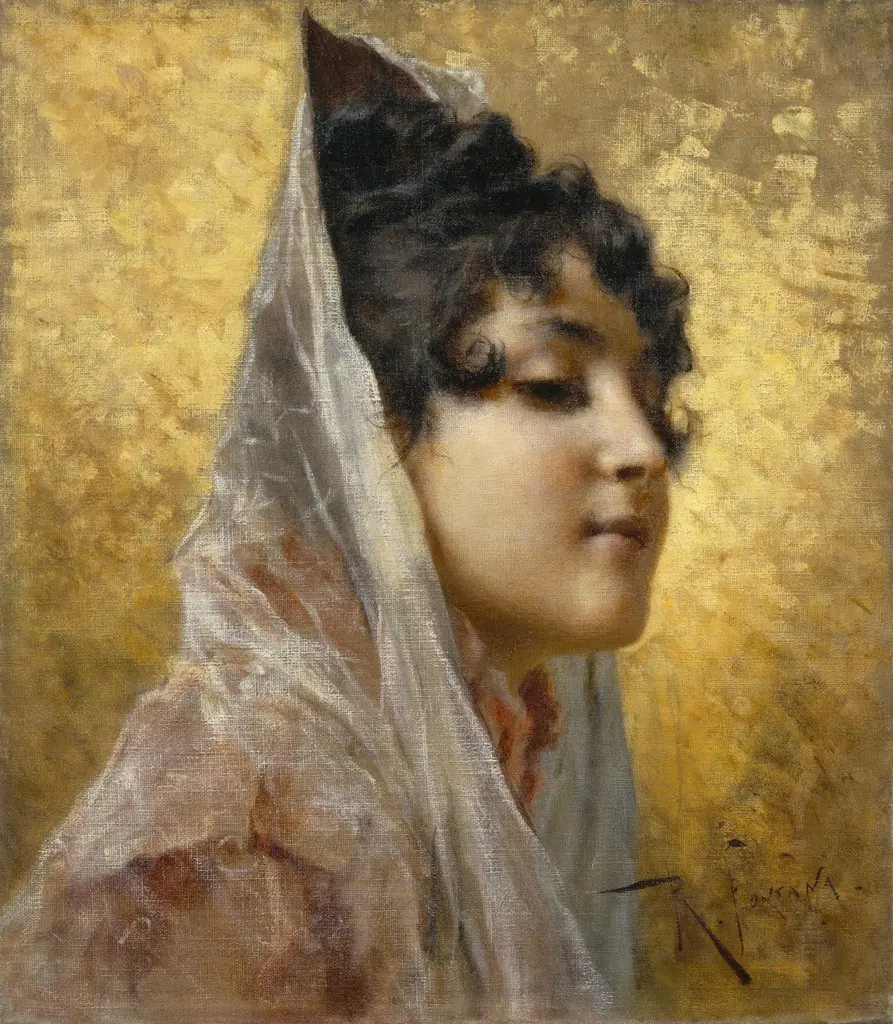
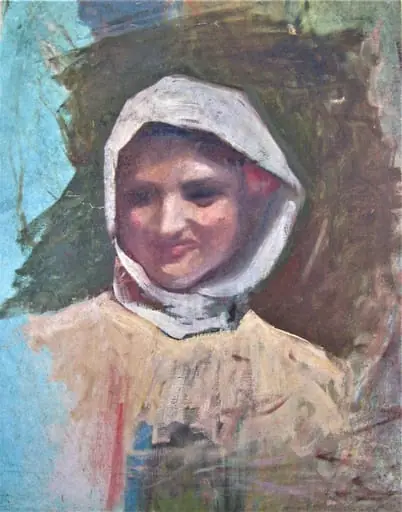
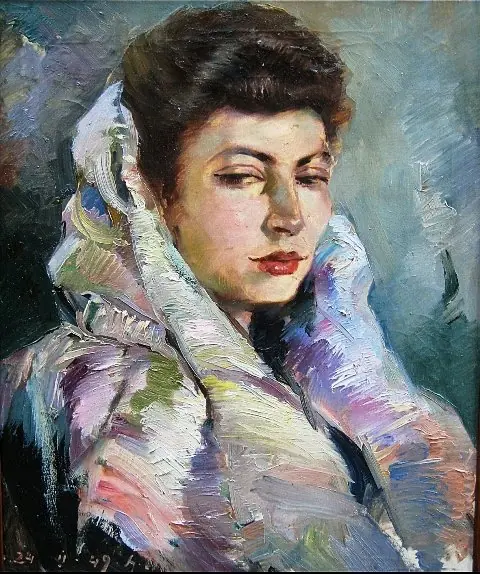
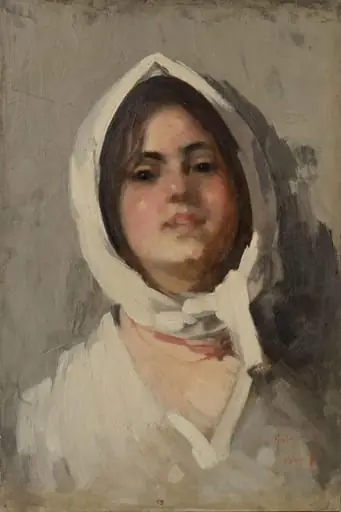
Painted around 1850 by Theodor Aman, this work features a woman in quiet repose, her face turned downward with serene composure.
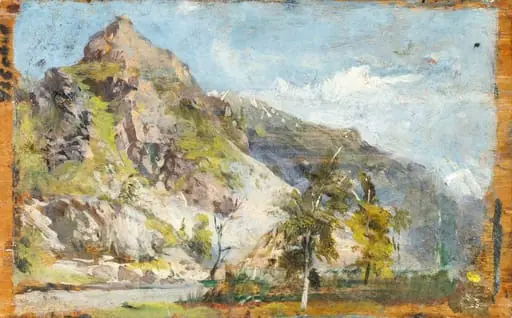
Painted around 1850 by Theodor Aman, this work features a woman in quiet repose, her face turned downward with serene composure. The reverse side bears a detailed rendering of a Louis XIII-style chair in ebony, suggesting the piece may have served dual purposes—both as a portrait and a decorative object. The composition emphasizes stillness and intimacy, with no overt narrative, inviting contemplation rather than storytelling.
Subject & Meaning
The subject is a woman adorned with a vivid yellow headscarf, her posture restrained and introspective. Her hand supports her chin, eyes lowered, conveying a sense of private reflection. The simplicity of her attire—pale blue sleeve, unadorned fabric—hints at modest means, yet the careful rendering of texture and light suggests dignity in ordinary life. The absence of context or symbolism leaves interpretation open, focusing attention on presence rather than identity.
Technique & Style
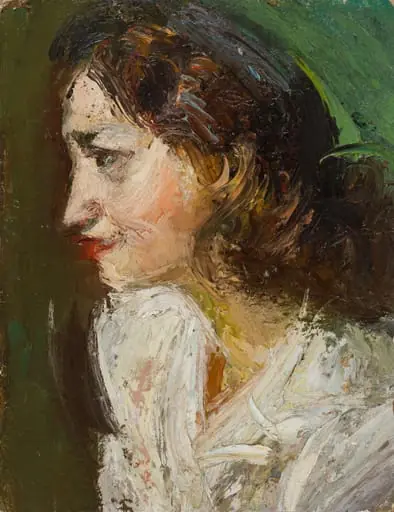
Aman employed thick, deliberate brushstrokes, applying paint with a tactile quality that emphasizes surface and volume. The impasto technique gives form to the scarf’s folds and the fabric’s weight, while the background remains muted in earthy ochres and browns. This contrast heightens the figure’s presence. The brushwork is neither polished nor hurried, reflecting a deliberate engagement with materiality over idealized finish.
History & Provenance
Created during Aman’s early career, the painting likely originated in his Bucharest studio, where he often explored domestic and folk themes. The verso’s carved chair suggests it may have been painted on a panel originally intended for furniture, a practice not uncommon among artists seeking economical supports. Its survival with both sides intact is rare, offering insight into 19th-century Romanian artistic habits and material reuse.
Context
In mid-19th century Romania, artists like Aman were beginning to turn from academic traditions toward local subjects and informal realism. This work aligns with a broader shift toward depicting everyday life with emotional nuance rather than grandeur. The choice of a rural or lower-class woman as subject, rendered without romanticization, reflects emerging national interests in cultural authenticity and vernacular identity.
Legacy
Though not widely exhibited, the painting exemplifies Aman’s early commitment to intimate, unidealized portraiture. Its dual-sided nature and material simplicity distinguish it from contemporaneous academic works, offering a quiet counterpoint to monumental historical painting. It remains a subtle testament to the artist’s sensitivity to quiet moments and the expressive potential of humble subjects.
Artist & collection
Artist