Artwork
Fermă la Barbizon
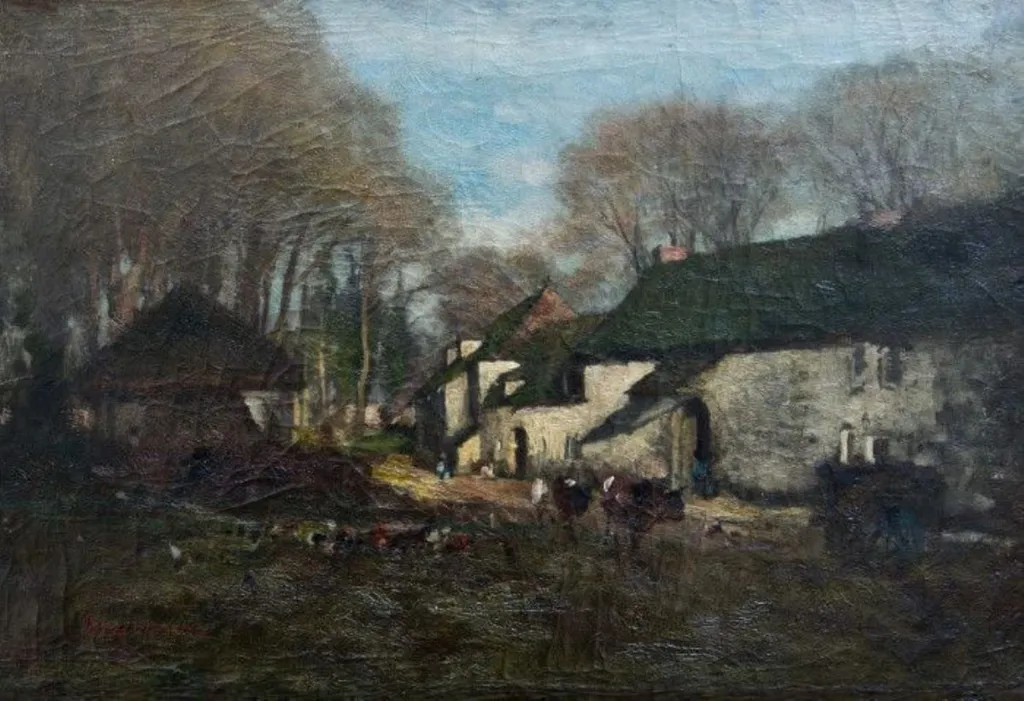
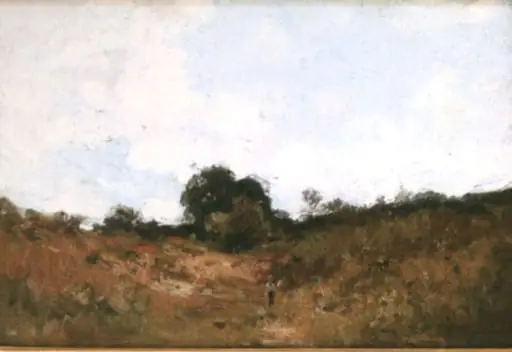
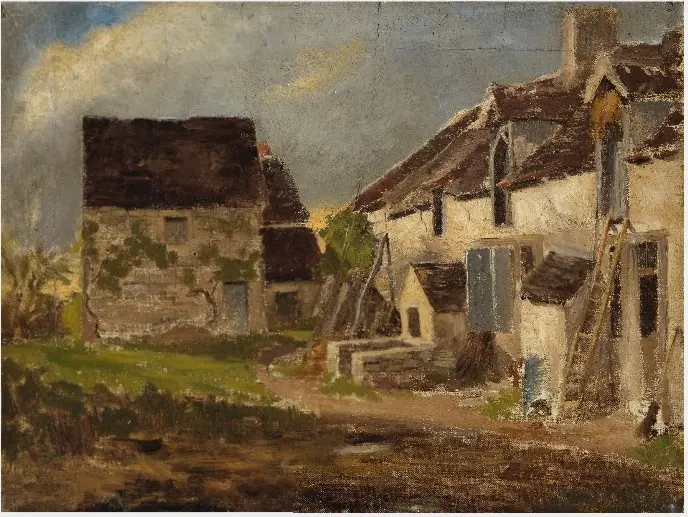
Fermă la Barbizon is an unspecified painting by Nicolae Grigorescu. It dates from 1850 and is held in the collection of the National Museum of Art of Romania.
About this work
Overview
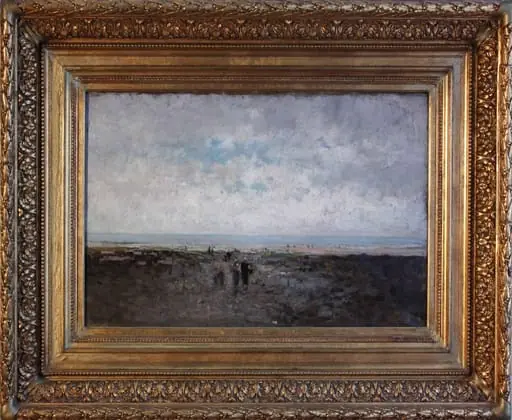
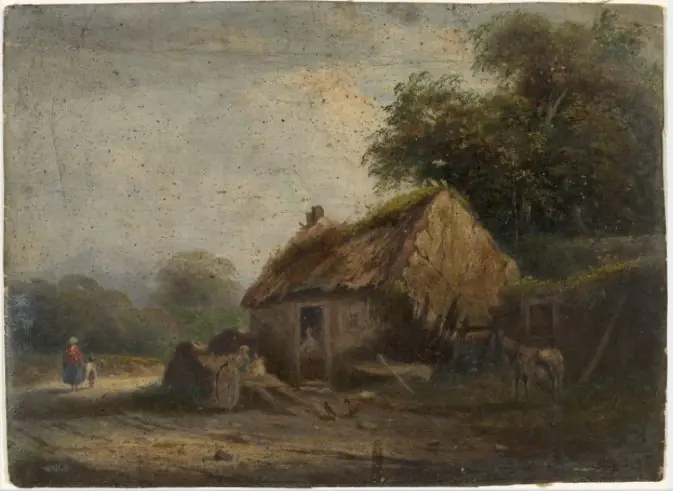
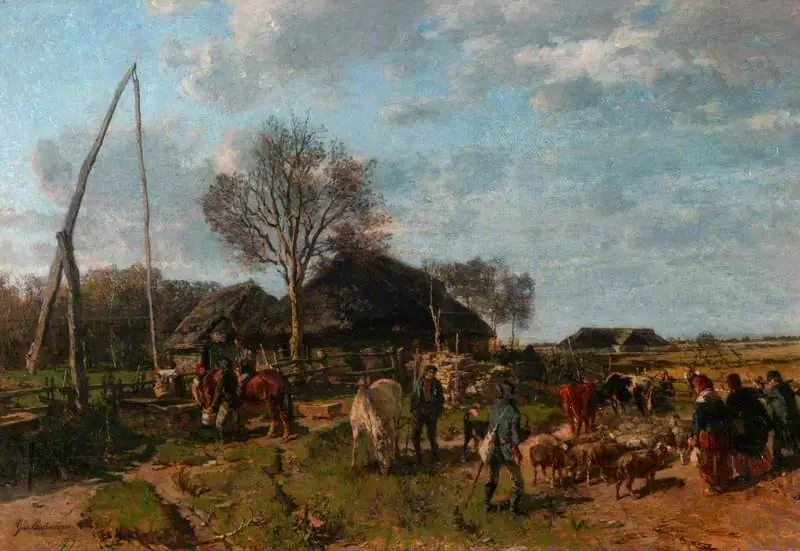
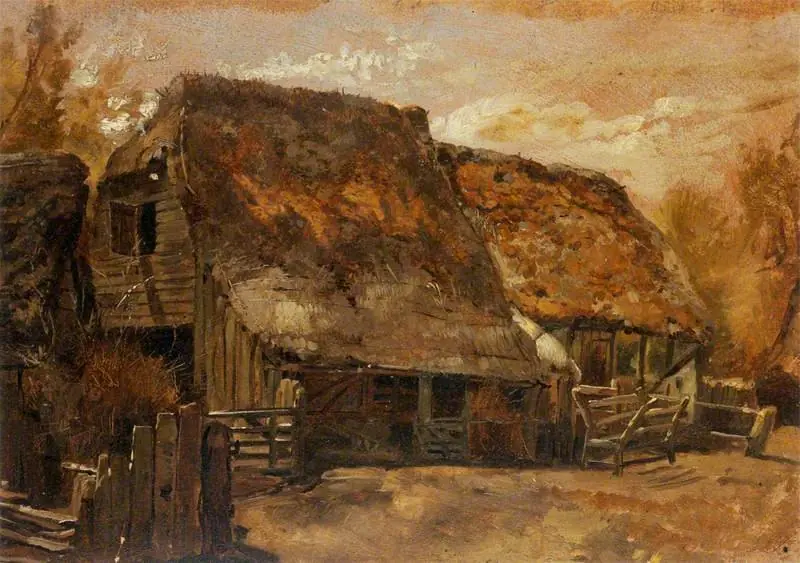
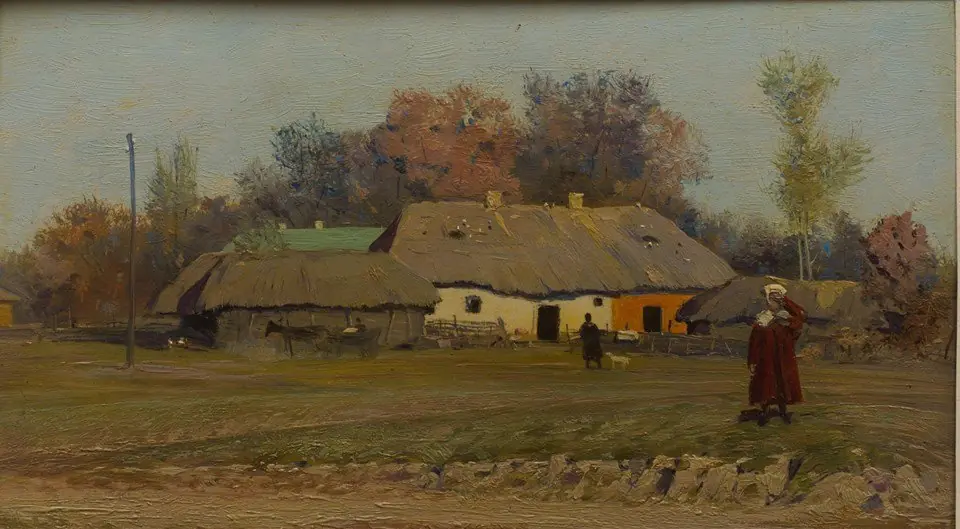
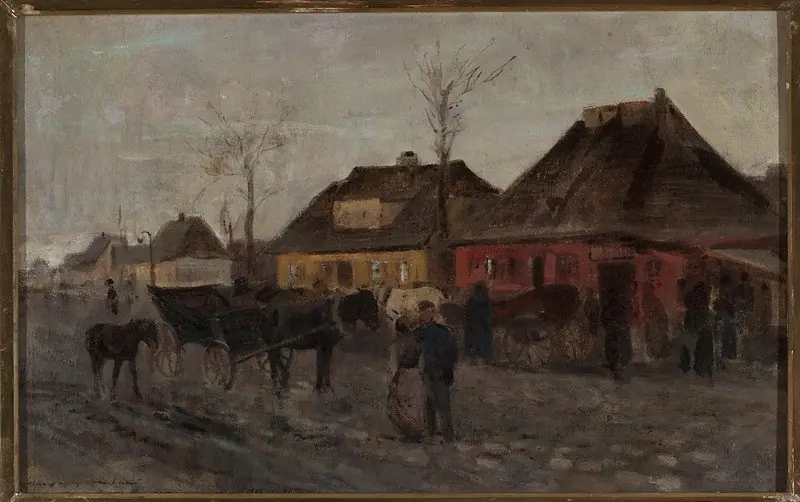
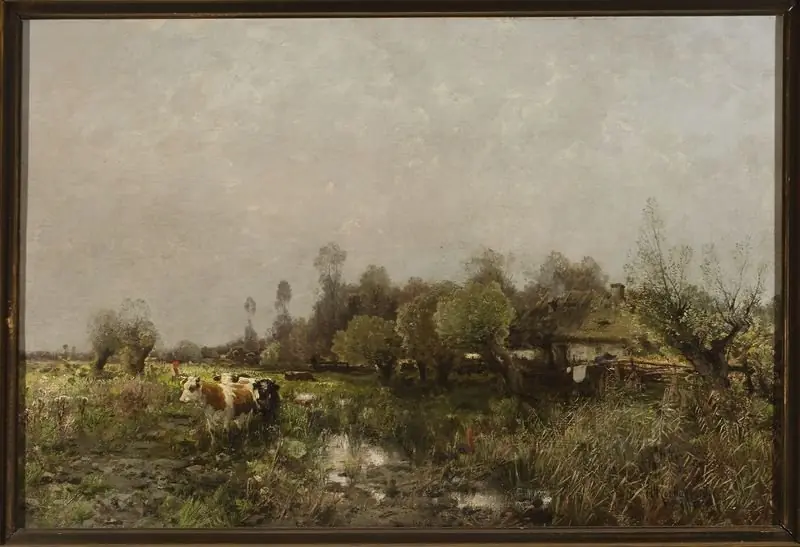
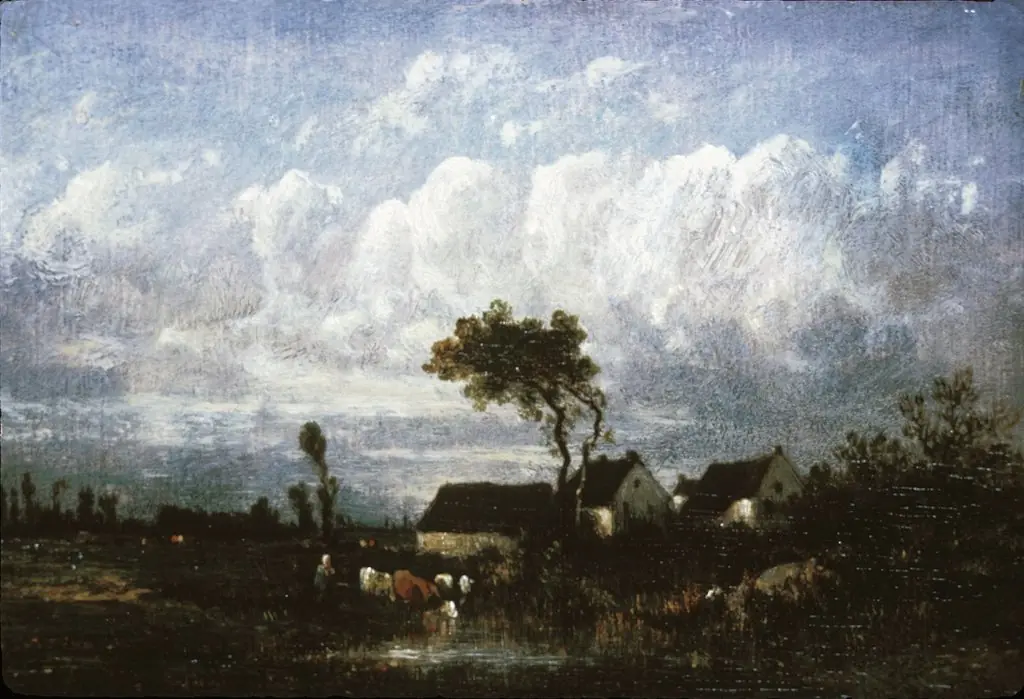
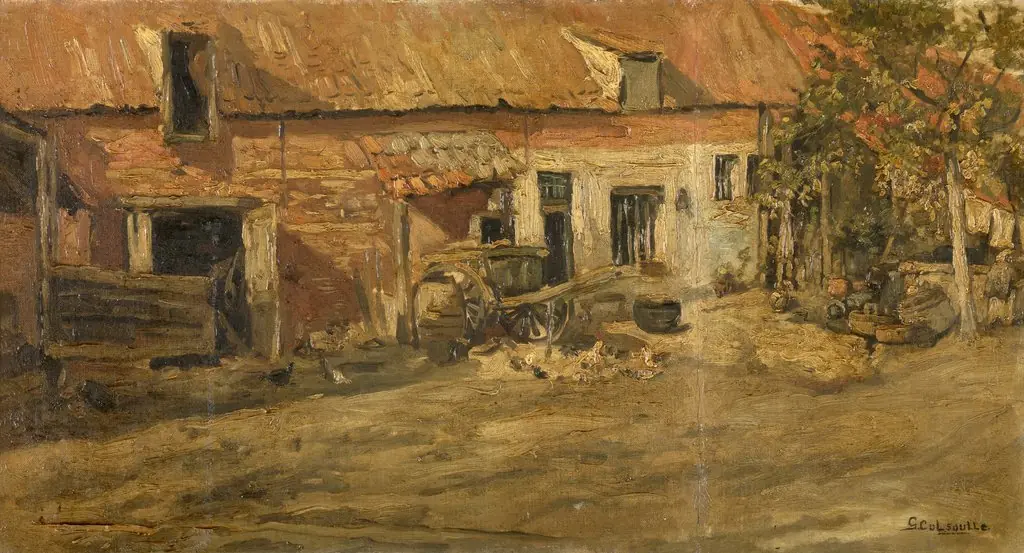
The composition centers on a modest farmstead surrounded by trees and outbuildings, with figures and livestock engaged in ordinary tasks.
Fermă la Barbizon, dated around 1850, is an early work by Romanian artist Nicolae Grigorescu. It depicts a quiet rural scene in the Barbizon region of France, where Grigorescu was studying. The composition centers on a modest farmstead surrounded by trees and outbuildings, with figures and livestock engaged in ordinary tasks. The palette is restrained, dominated by earth tones that reflect the natural light and atmosphere of the countryside.
Subject & Meaning
The painting captures the rhythm of daily agricultural life without idealization. Figures—likely peasants or laborers—are shown performing routine activities near a farmhouse, their presence integrated into the landscape rather than dominating it. The absence of dramatic narrative emphasizes the dignity of ordinary existence. This focus on unembellished rural labor aligns with emerging realist sensibilities of the mid-19th century.
Technique & Style
Grigorescu employs a textured brushwork to convey the tactile qualities of soil, wood, and foliage. Layers of muted browns and grays build depth without relying on sharp contrasts. The handling of light suggests direct observation from nature, a hallmark of the Barbizon School’s influence. Forms are rendered with careful attention to volume and atmosphere, avoiding theatricality in favor of quiet, observed truth.
History & Provenance
Created during Grigorescu’s formative years in France, the work reflects his exposure to French realist painters working in Barbizon. It predates his return to Romania and the development of his mature national style. The painting remained in private hands for much of its history, with limited public exposure until later 20th-century retrospectives of Romanian art brought renewed scholarly attention to his early European period.
Context
Fermă la Barbizon emerged alongside the Barbizon School’s emphasis on painting outdoors and portraying rural life with sincerity. Grigorescu, though Romanian, participated in this broader European movement, absorbing its principles before applying them to Romanian subjects. The work situates him within an international trend that rejected academic idealism in favor of direct engagement with the natural world and its inhabitants.
Legacy
This early piece illustrates the foundation of Grigorescu’s artistic identity—his commitment to observing and recording the everyday with honesty. Though less known than his later Romanian landscapes, Fermă la Barbizon reveals the origins of his visual language. It stands as a testament to cross-cultural artistic exchange in 19th-century Europe and the quiet influence of French realism on Eastern European painters.
Artist & collection
Artist
Romanian painter Nicolae Grigorescu made quiet, honest scenes of everyday life and country roads around 1900.