Artwork
Prizonieri
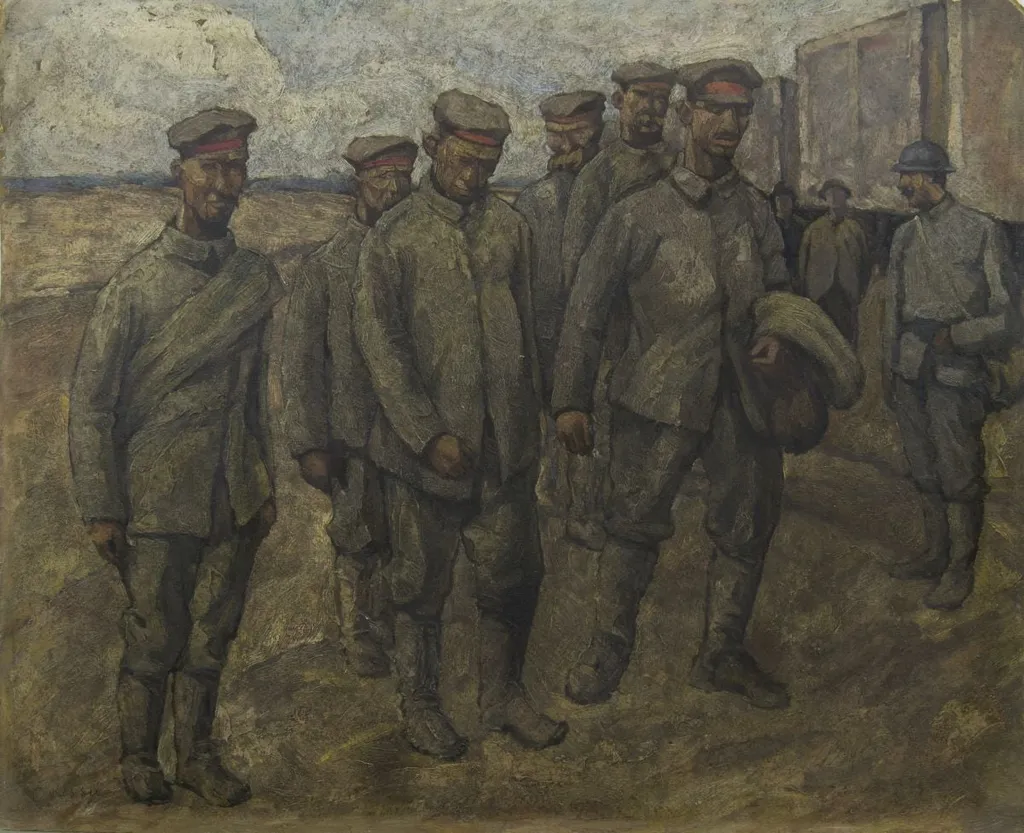
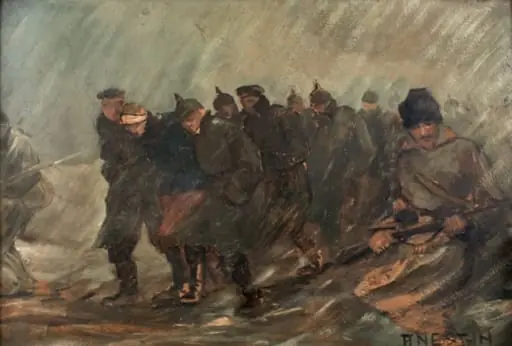
Prizonieri is an unspecified painting by Camil Ressu. It dates from 1918 and is held in the collection of the National Museum of Art of Romania.
About this work
Overview
Camil Ressu’s 1918 canvas Prizonieri portrays a compact group of soldiers arrayed in antiquated uniforms. The composition is dominated by muted greys and earthy browns, punctuated only by the vivid red of caps. The figures stand before a stark, rocky backdrop that suggests an open, desolate terrain, creating a somber, collective presence.
Subject & Meaning
The work captures a moment of military stillness, emphasizing the gravity of duty through the soldiers’ solemn expressions. Their close arrangement and the austere landscape convey a sense of shared endurance and the weight of conflict, inviting contemplation of the human cost embedded in wartime narratives.
Technique & Style
Ressu employs a heavy impasto technique, laying thick layers of paint that give the figures a sculptural quality. Broad, forceful brushstrokes define the forms, while uneven illumination casts half‑shadows across faces, enhancing the three‑dimensional effect and reinforcing the painting’s tactile, almost carved appearance.
History & Provenance
Created in the final year of World War I, Prizonieri reflects the artist’s response to contemporary events. The painting entered public collections in the early twentieth century, though specific acquisition details remain limited, indicating it likely passed through private hands before being recognized by institutions focusing on Romanian modernism.
Context
Ressu’s work belongs to a broader trend among early twentieth‑century Eastern European painters who documented the social and political upheavals of their time. By depicting soldiers in traditional dress, the artist links historical military imagery with the immediacy of the recent war, situating the piece within both national and European artistic dialogues.
Artist & collection
Artist
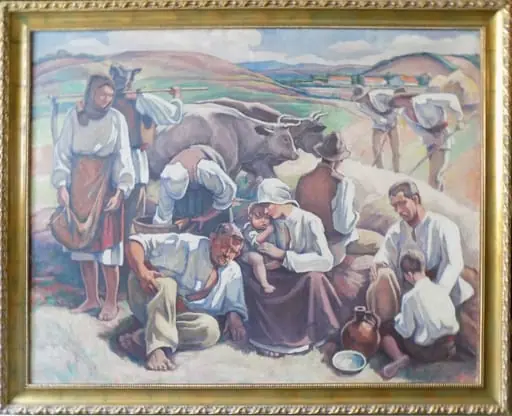
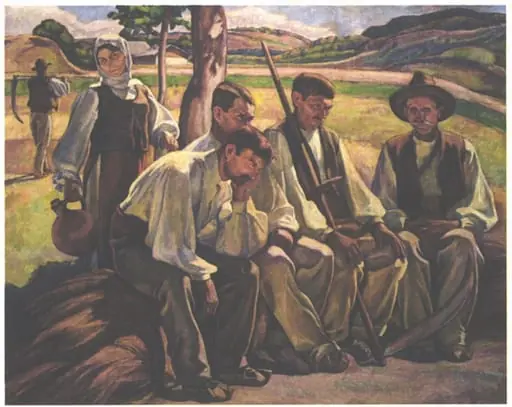
Romanian painter who captured rural life in the early 20th century. His 1925 scene "Cosași odihnindu-se" shows haymakers taking a break, their tools leaning against a wagon under a cloudy sky. A decade later, his 1946…

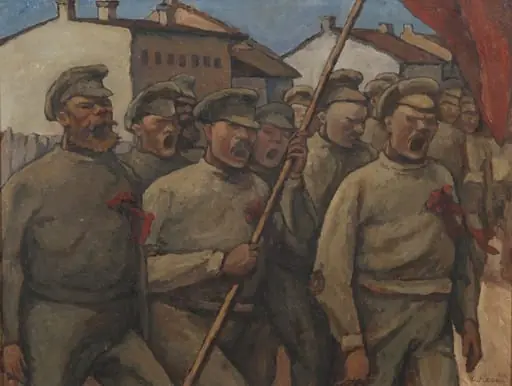 Începuturile revoluției ruse la Iași, 1917
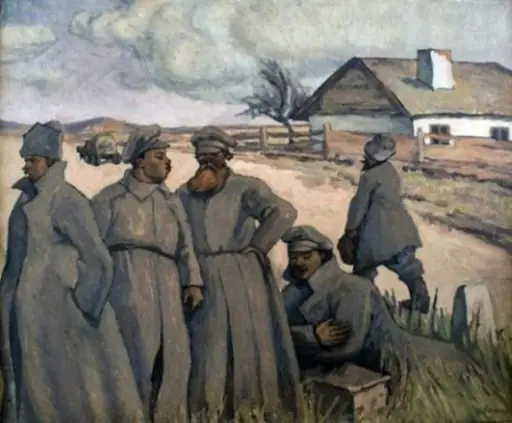 Soldați ruși în repaus (1917)
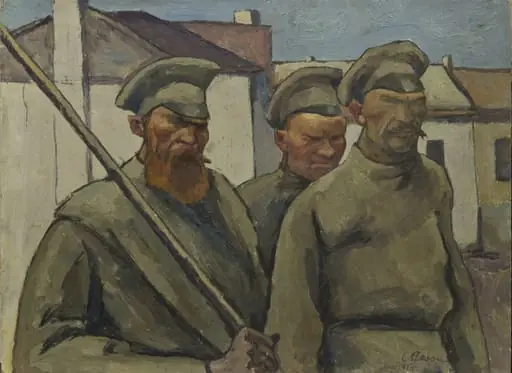 Soldați din timpul revoluției rusești la Iași, 1917
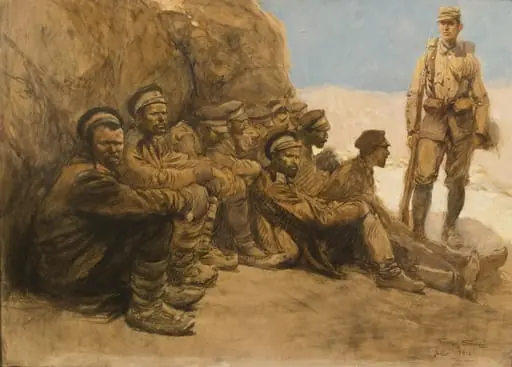 Υδατογραφία Βούλγαρων στρατιωτών, αιχμάλωτων του ελληνικού στρατού στην Κρέσνα
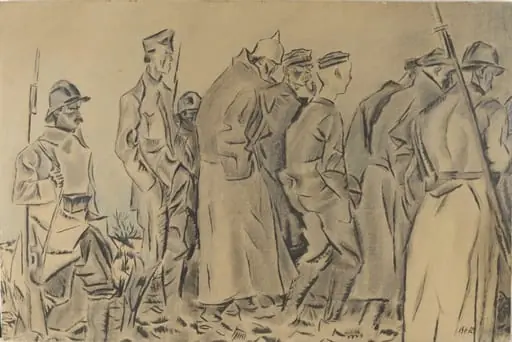 Prizonieri germani
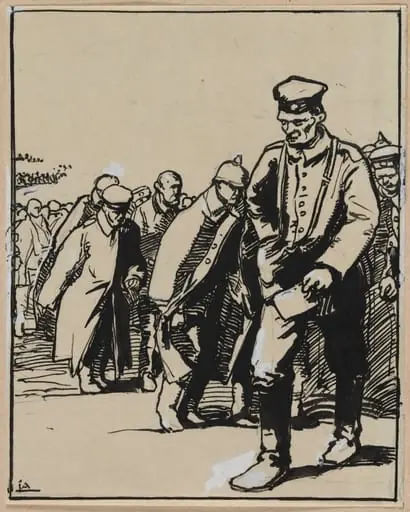 Marche d'un groupe de prisonniers allemands
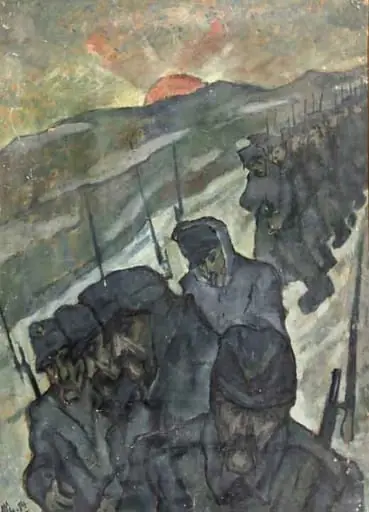 Retragerea trupelor austro-ungare
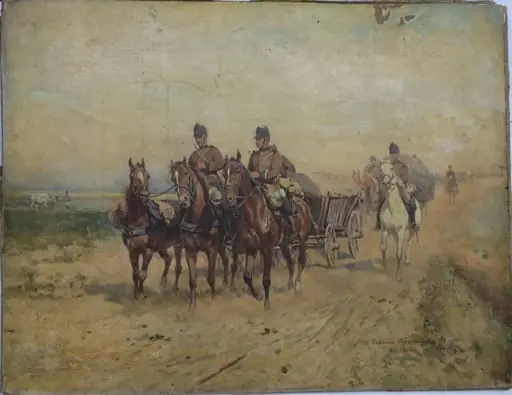 Coloana regimentară (tren regimentar de artilerie)
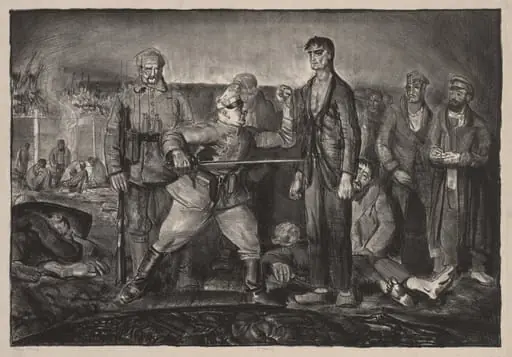 The Case of Sergeant Delaney
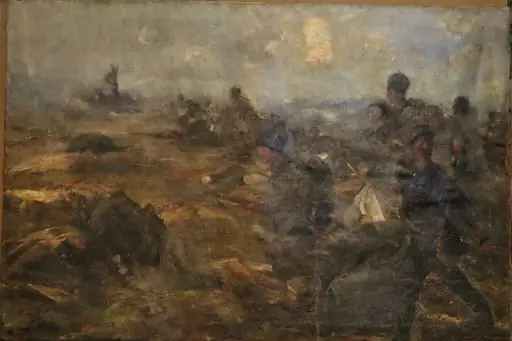 Dorobanț la asalt 1877
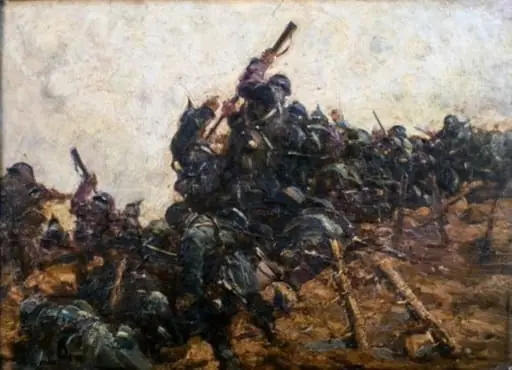 Lupta de la Mărășești
 Convoi de prizonieri