Artwork
Prizonieri germani
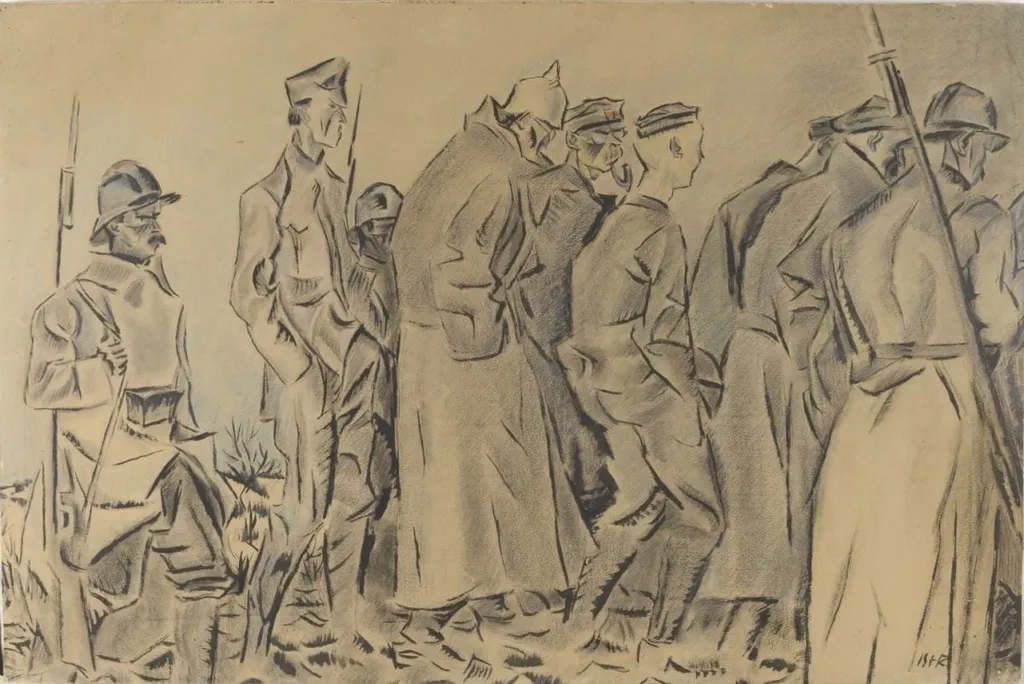
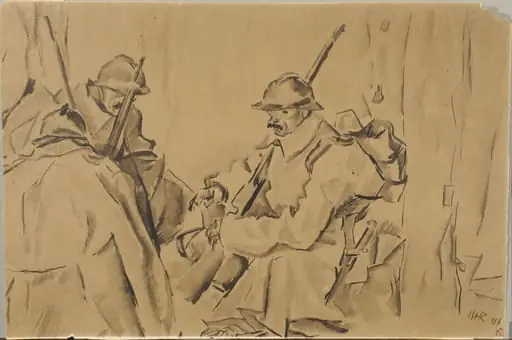
Prizonieri germani is a drawing by Iosif Iser. It dates from 1918 and is held in the collection of the National Museum of Art of Romania.
About this work
Overview
Prizonieri germani is a 1918 drawing by Romanian artist Iosif Iser, depicting two German prisoners of war. Rendered in ink and pencil, the work captures a quiet, somber moment between two figures confined by their circumstances. The composition is spare, focusing on posture and texture rather than detail, reflecting the artist’s interest in human condition over narrative drama.
Subject & Meaning
Iser avoids overt symbolism, instead conveying the psychological weight of captivity through subtle gestures and closed body language.
The two figures, dressed in worn military uniforms, stand motionless against a wall, their expressions weary and withdrawn. Their posture suggests exhaustion, not defiance. Iser avoids overt symbolism, instead conveying the psychological weight of captivity through subtle gestures and closed body language. The title, meaning 'German Prisoners,' anchors the scene in the historical reality of World War I’s aftermath in Romania.
Technique & Style
Iser employs dense cross-hatching to model form and deepen shadow, creating a sense of enclosure and emotional gravity. The lines are deliberate and angular, echoing the rigid geometry of prison architecture. His brushwork is controlled yet expressive, prioritizing tonal contrast over outline. The technique recalls the social realism of 19th-century French illustrators, particularly in its unembellished treatment of marginalized figures.
History & Provenance
Created in 1918, the drawing emerged during Romania’s involvement in World War I and the subsequent occupation of parts of the country by Central Powers forces. Iser, who documented civilian and military life during the conflict, likely encountered German prisoners in Romanian towns. The work remained in private Romanian collections until the mid-20th century, with no public exhibition record prior to the 1970s.
Context
Iser’s oeuvre centered on the lives of ordinary Romanians during wartime, including soldiers, refugees, and detainees. Prizonieri germani reflects a broader cultural shift in postwar art toward empathy for the defeated, rather than triumphalism. In Romania, where national identity was being redefined after territorial changes, such images quietly challenged nationalist narratives by humanizing the enemy.
Legacy
The drawing is now recognized as part of Iser’s contribution to Romanian modernist drawing, valued for its restraint and psychological insight. While not widely exhibited internationally, it is studied in Romanian art history for its early use of social realism. Its influence is seen in later generations of artists who turned to understated imagery to convey the toll of conflict.
Artist & collection


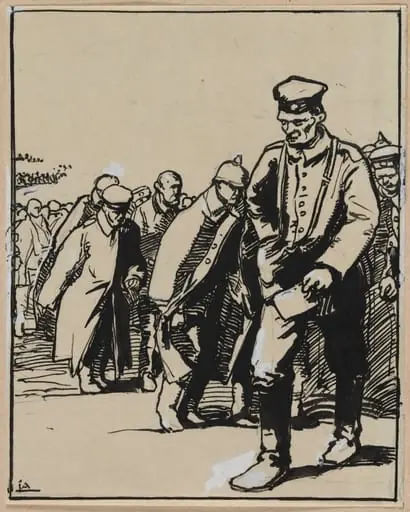 Marche d'un groupe de prisonniers allemands
 Walking Wounded on a Hospital Ship
 Natură moartă cu rodii
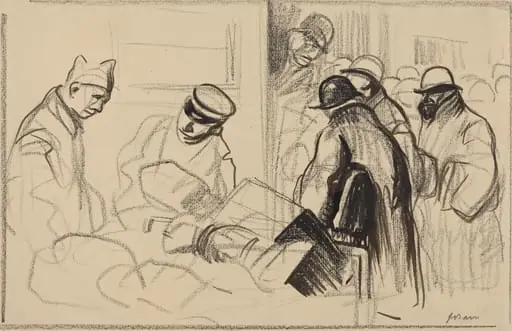 Le train de Berne (The Train for Berne)
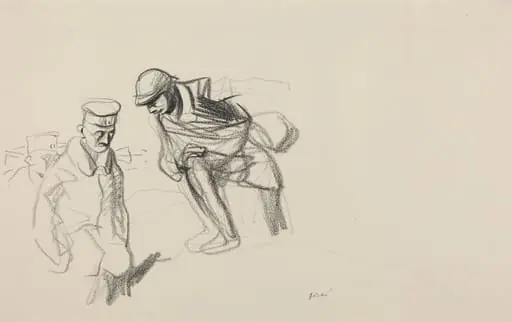 Lost Illusions
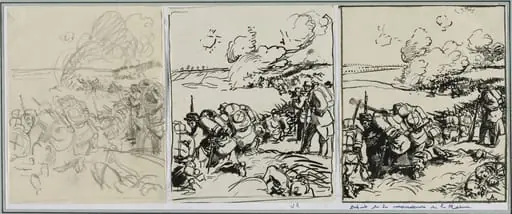 Dêbut de la manoeuvre de la Marne
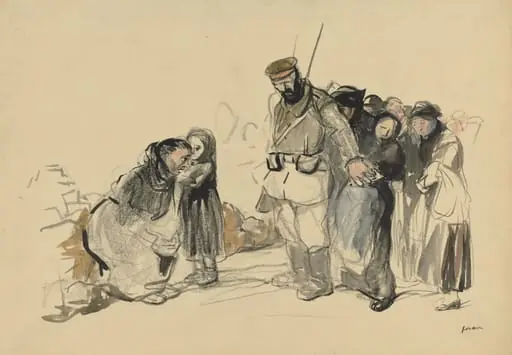 The Slavery in the North
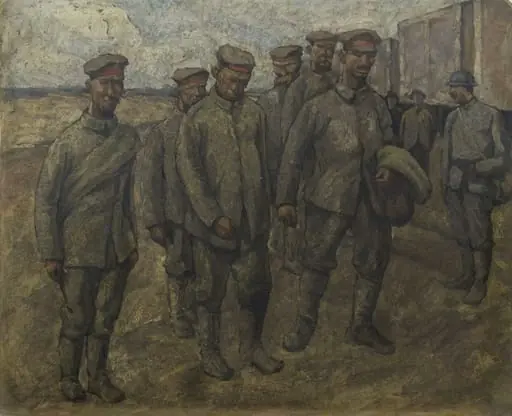 Prizonieri
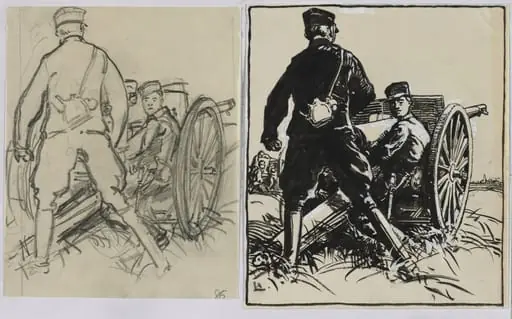 Artillelurs belges
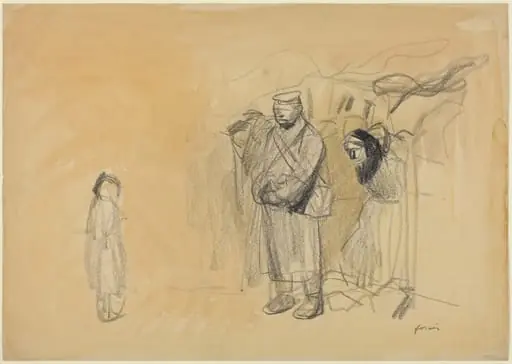 a) German Soldiers and French Child (recto); b) Woman and Child (verso)
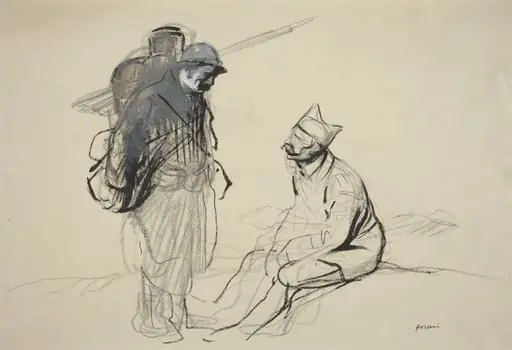 Poilu and Tommy Conversing
 Soldați în tranșee