Artwork
Flori la fereastră. Place Dauphine
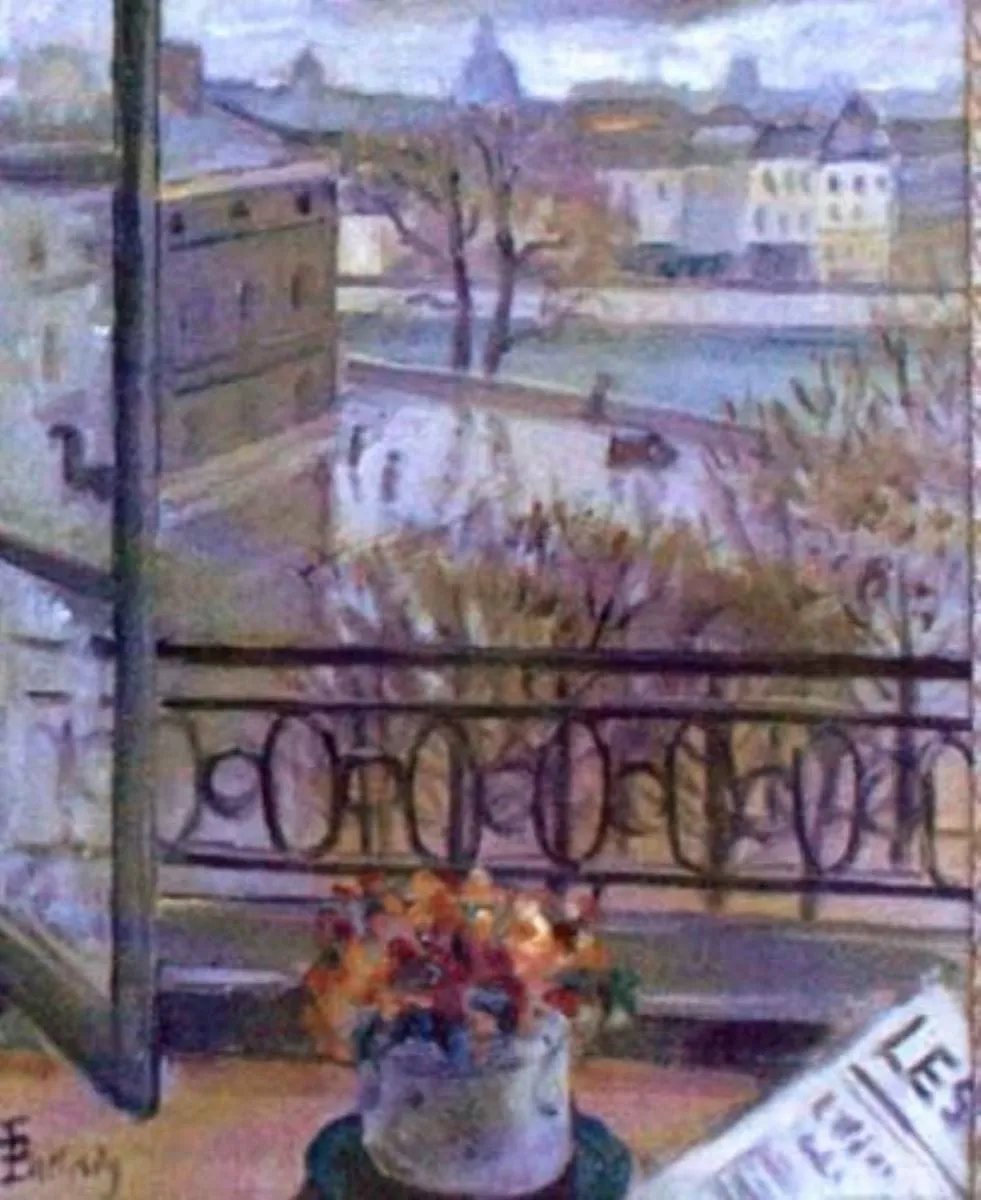
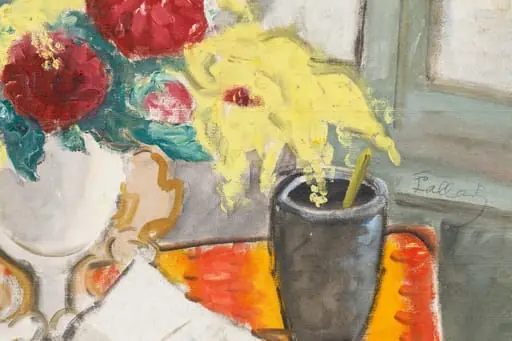
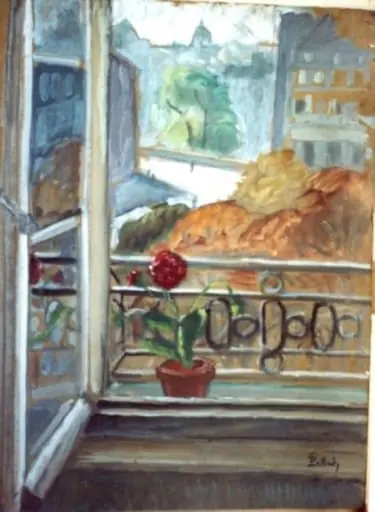
Flori la fereastră. Place Dauphine is an unspecified painting by Theodor Pallady. It dates from 1932 and is held in the collection of the National Museum of Art of Romania. Created around 1932, Theodor Palladi’s oil painting *Flori la fereastră.
About this work
Overview
Created around 1932, Theodor Palladi’s oil painting *Flori la fereastră. Place Dauphine* captures a quiet interior scene that opens onto an urban landscape. A woman stands by a window, holding a vase of fresh flowers, while beyond the glass a city with buildings, a bridge and distant trees unfolds under a muted sky.
Subject & Meaning
The composition juxtaposes the intimate act of arranging flowers with the broader view of the city, suggesting a dialogue between private domestic space and public life. The window bars frame the scene like a subtle barrier, emphasizing the separation yet also the connection between the interior world of the figure and the bustling exterior.
Technique & Style
Palladi employs a restrained palette dominated by soft blues and purples, allowing the vivid hues of the flowers to emerge as focal points. The brushwork is delicate, rendering the glass and metal of the window bars with a quiet precision, while the distant architecture is suggested through looser, atmospheric strokes that convey depth without detail.
History & Provenance
The work belongs to Palladi’s late period, a time when he frequently explored everyday subjects set against urban backdrops. Though specific ownership records are sparse, the painting has been documented in several catalogues of Romanian modern art and is recognized as part of the artist’s oeuvre from the early 1930s.
Artist & collection
Artist
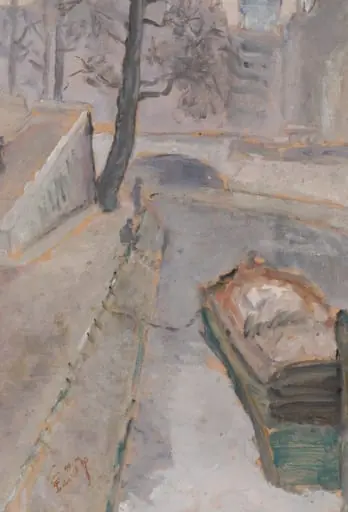
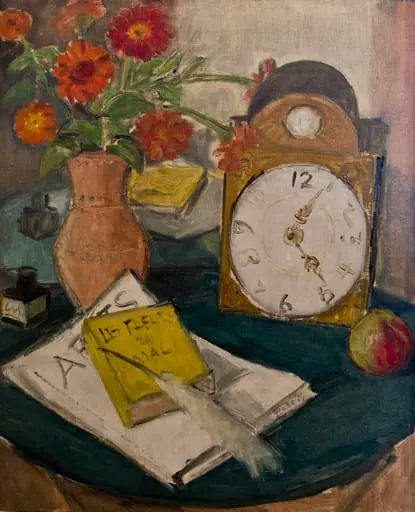
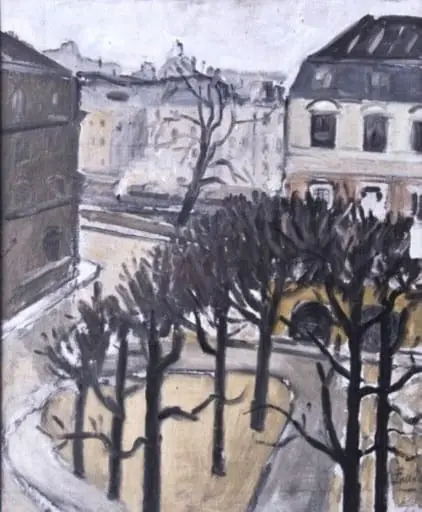
Theodor Pallady made still lifes and interiors in early 20th-century Bucharest. His Place Dauphine shows a quiet Parisian square, while Natură moartă (Ulcică cu flori și chibrituri) piles everyday objects on a table.…