Artwork
Peisaj cu personaj (Bucium)
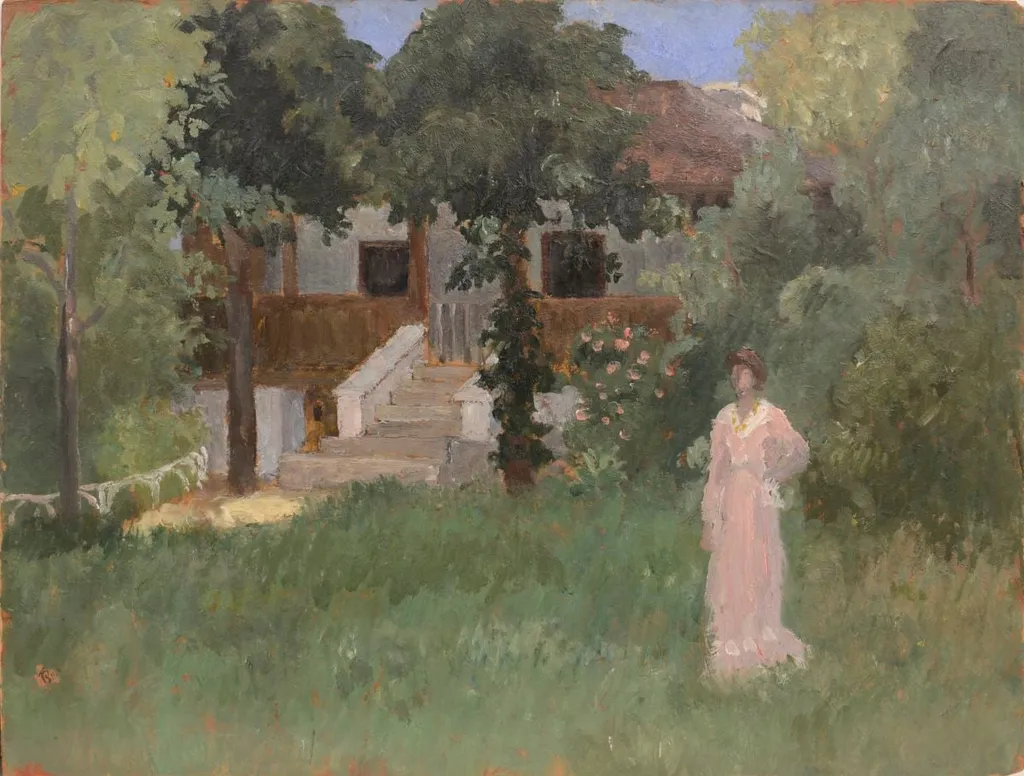
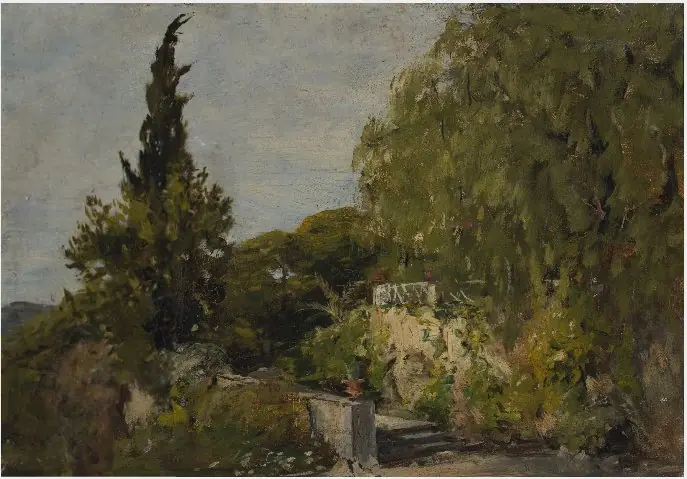
Peisaj cu personaj (Bucium) is an unspecified painting by Theodor Pallady. It is held in the collection of the National Museum of Art of Romania. This painting depicts a solitary woman standing in a rural landscape, her back turned to the viewer.
About this work
Overview
The surface of the painting features thick, tactile brushwork, suggesting a deliberate emphasis on material texture over smooth finish.
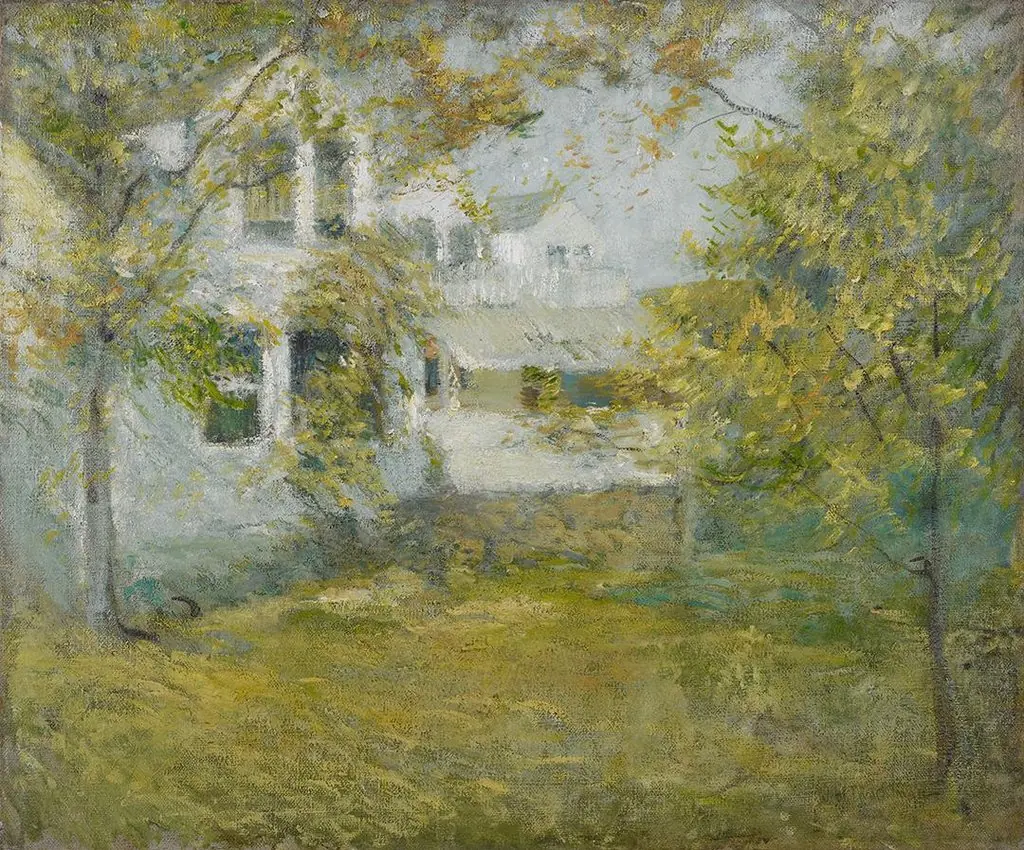
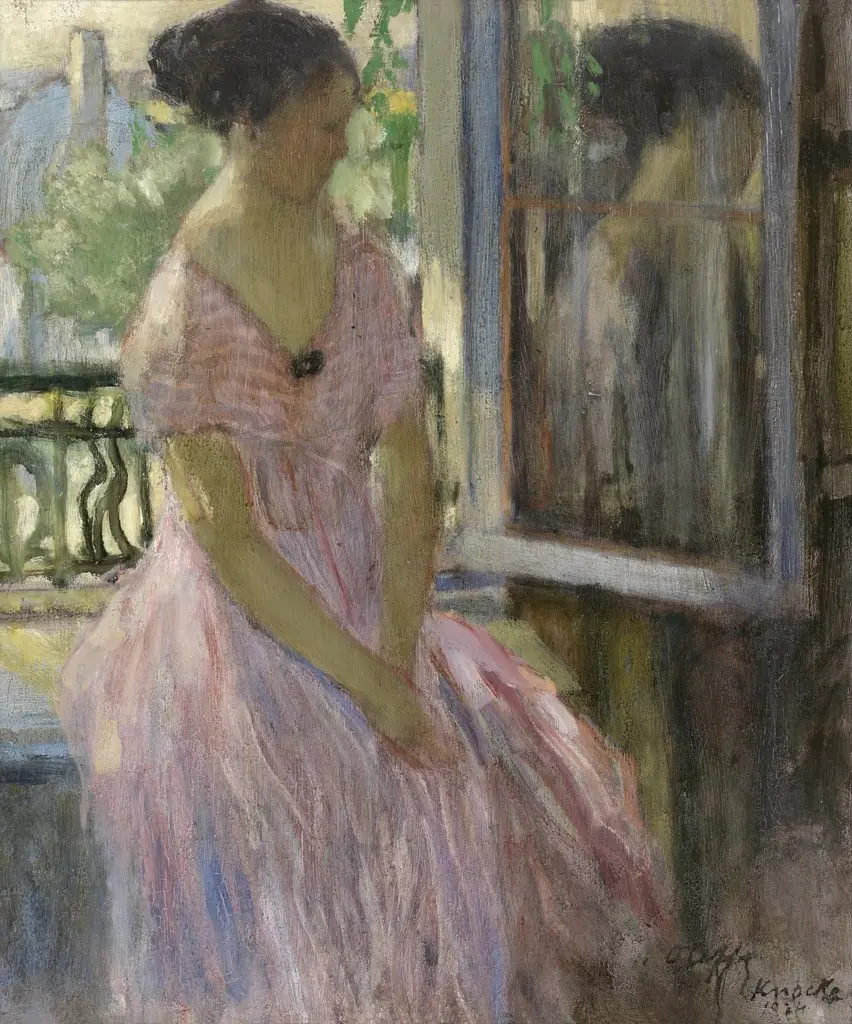
This painting depicts a solitary woman standing in a rural landscape, her back turned to the viewer. She wears a light pink dress that contrasts subtly with the muted greens and browns of the surrounding field and vegetation. A modest wooden house with a set of steps sits behind her, nestled among trees and shrubs. The surface of the painting features thick, tactile brushwork, suggesting a deliberate emphasis on material texture over smooth finish.
Subject & Meaning
The figure’s isolation and turned posture invite quiet contemplation rather than narrative clarity. The woman, unadorned and anonymous, merges with the landscape rather than dominating it. The simple house, weathered and unembellished, suggests a life of quiet routine. Together, they evoke a sense of stillness and solitude, rooted in the rhythms of rural existence without overt symbolism or drama.
Technique & Style
The artist employs impasto techniques, applying paint thickly in places to create physical texture across the canvas. This method gives depth to the grass, foliage, and walls of the house, emphasizing their material presence. Color is restrained, with the woman’s dress as the only notable chromatic accent. The brushwork is direct and unrefined, favoring tactile expression over polished detail.
History & Provenance
The work is titled 'Peisaj cu personaj (Bucium)', referencing a village in Romania, suggesting a local, possibly personal connection to the scene. While specific dates and ownership history are not documented here, the subject matter and technique align with early 20th-century Romanian rural realism, where artists sought to capture everyday life with sincerity rather than idealization.
Context
Created during a period when Romanian painters increasingly turned to native landscapes and peasant life, this work reflects a broader cultural interest in authenticity and regional identity. Unlike urban or historical themes, it focuses on the ordinary — a woman, a house, a field — affirming value in the overlooked details of rural existence, a trend common among artists resisting academic conventions.
Legacy
The painting contributes to a body of work that redefined Romanian art through intimate, unembellished scenes of country life. Its use of texture and restrained palette influenced later generations interested in materiality and emotional restraint. Though not widely exhibited, it remains a quiet example of how local observation could yield enduring artistic resonance.
Artist & collection
Artist
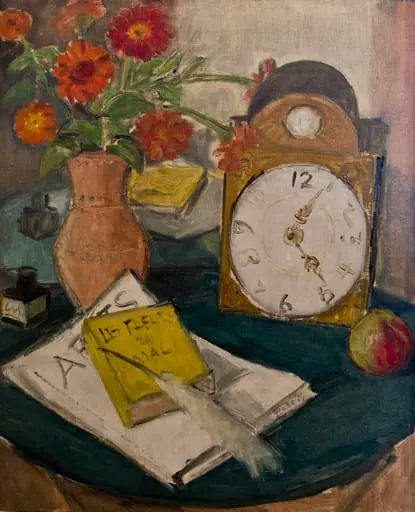
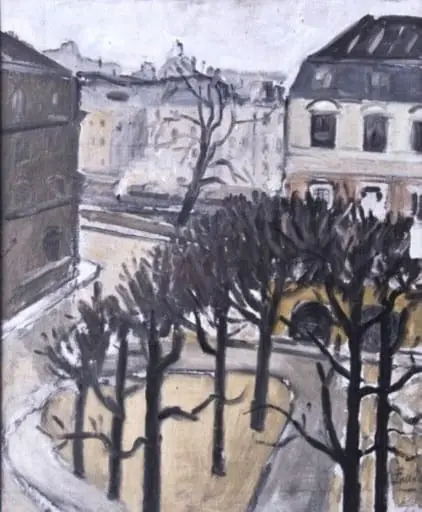
Theodor Pallady made still lifes and interiors in early 20th-century Bucharest. His Place Dauphine shows a quiet Parisian square, while Natură moartă (Ulcică cu flori și chibrituri) piles everyday objects on a table.…