Artwork
Plopi
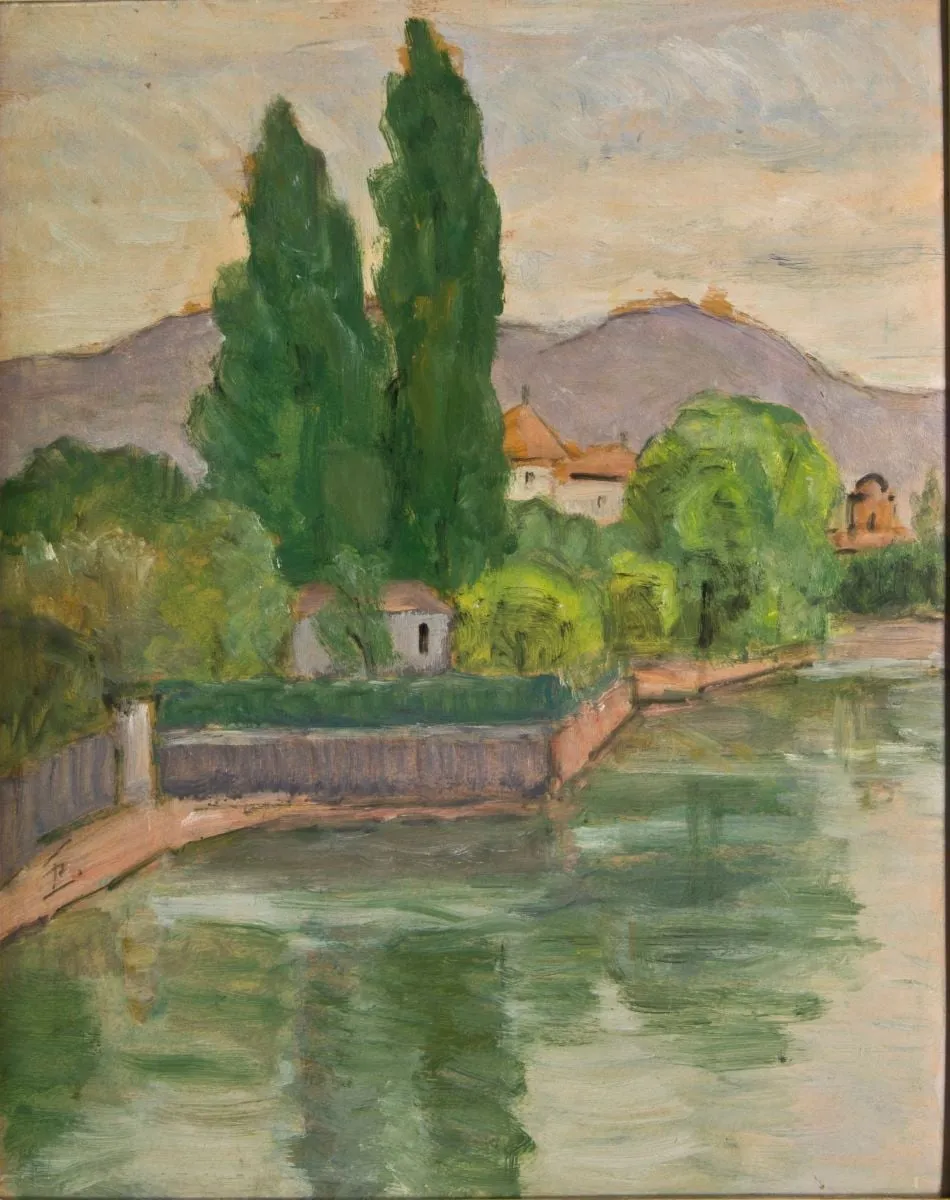
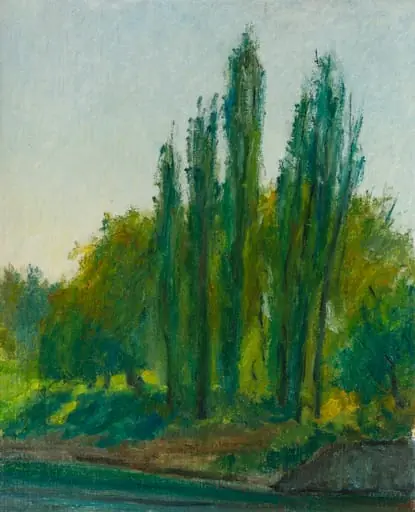
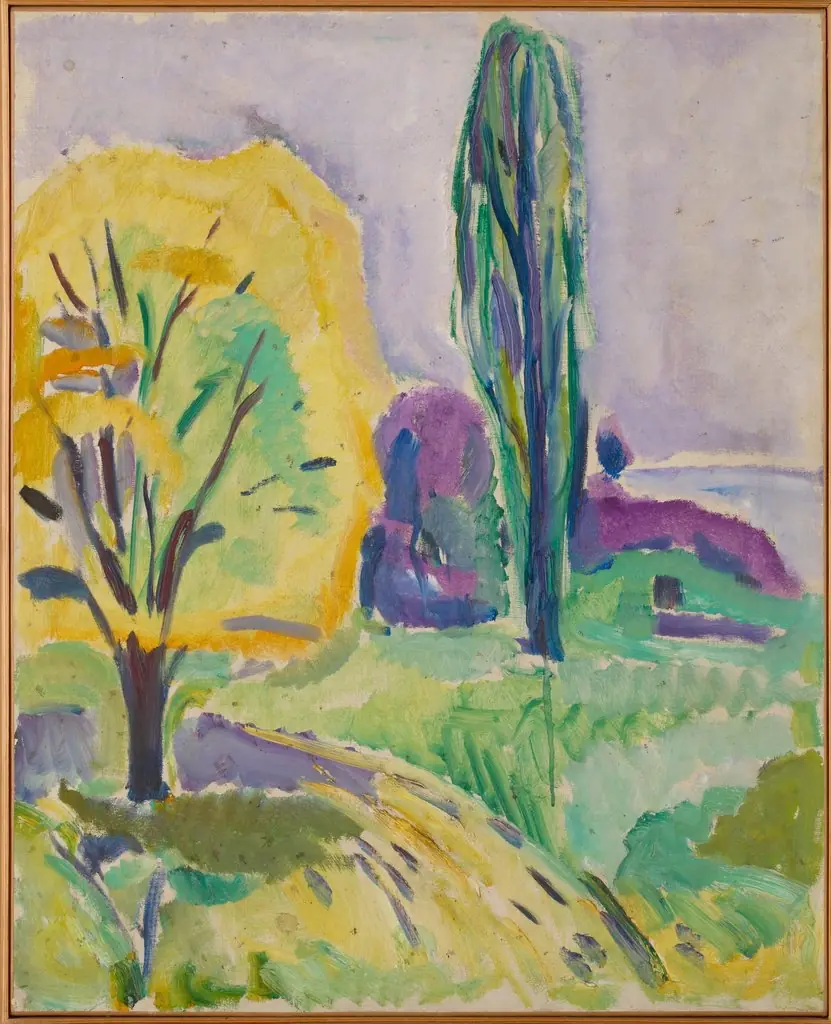
Plopi is an unspecified painting by Theodor Pallady. It is held in the collection of the National Museum of Art of Romania.
About this work
Overview
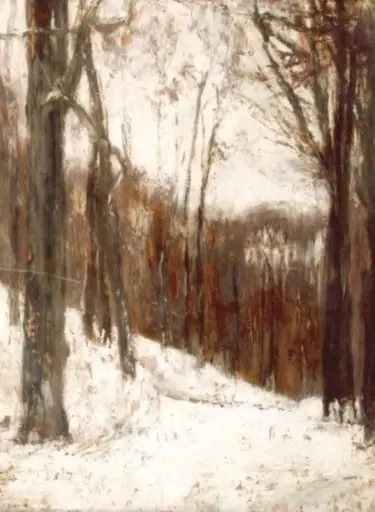
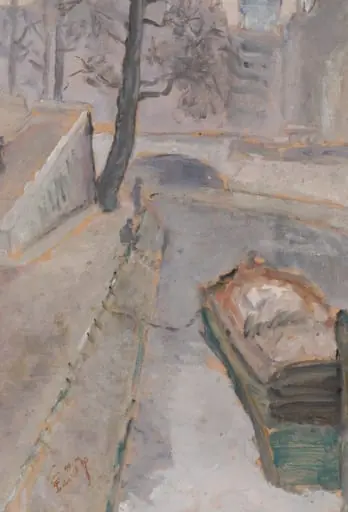
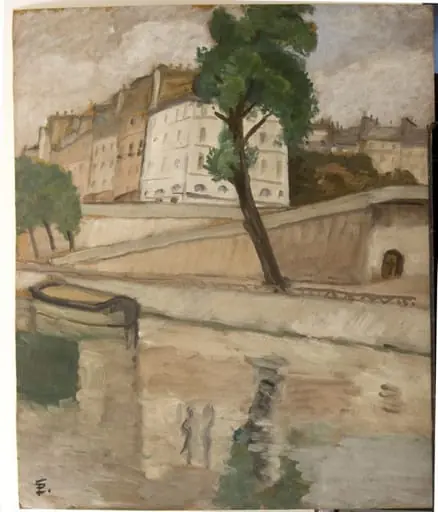
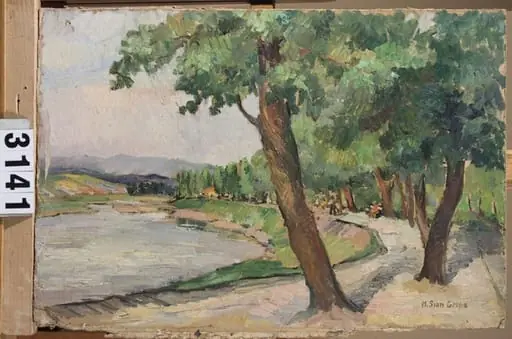
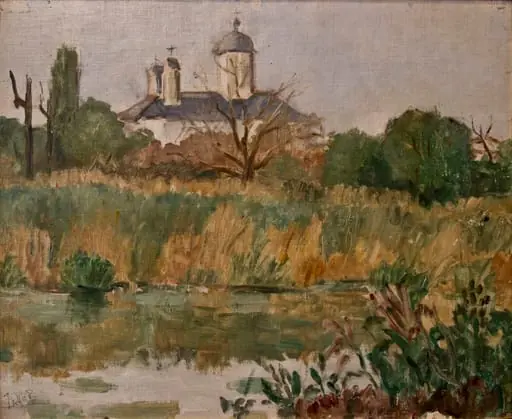
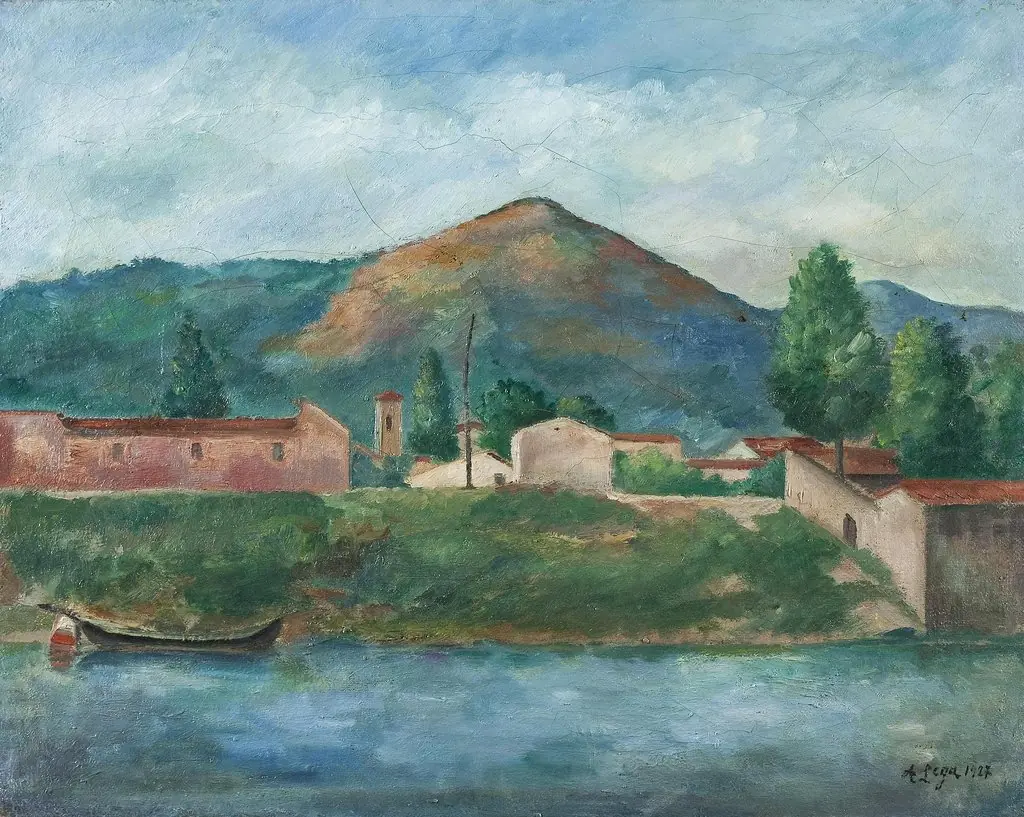
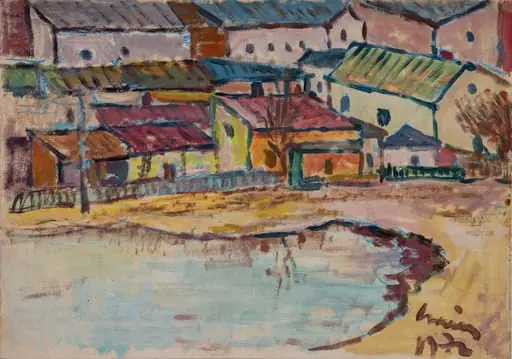
Plopi depicts a serene riverside scene, characterized by a calm water reflection, two prominent dark green trees, a small white building, and a softly rendered background of hills and structures.
Subject & Meaning
The subject is a tranquil, natural landscape with adjacent human settlement, conveying a sense of peaceful coexistence between nature and architecture. The meaning may lie in the contemplative atmosphere and the simple, uncluttered depiction of a rural or suburban setting.
Technique & Style
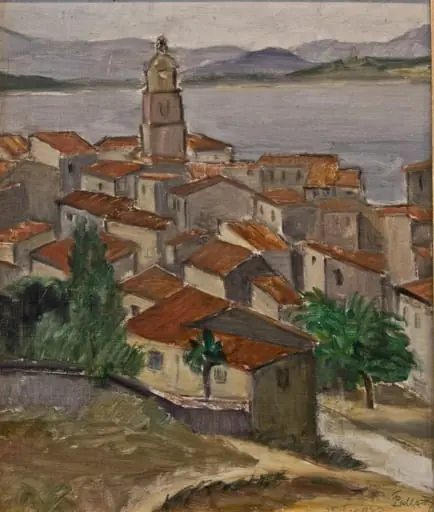
Executed with loose, quick brushstrokes, the painting adopts a fresh, sketchy approach. The color palette is restrained, focusing on greens, blues, and earth tones, with minimal detail, contributing to an overall impression of simplicity and immediacy.
Context
While specific contextual details are not provided, the style and subject matter suggest the work may align with late 19th or early 20th-century movements emphasizing outdoor, everyday scenes, possibly influenced by Impressionist or Post-Impressionist practices.
Legacy
No specific information is given regarding the artwork's impact, exhibition history, or influence on subsequent artists, indicating its legacy or recognition within the broader art historical canon is either limited or not detailed in the provided information.
Artist & collection
Artist
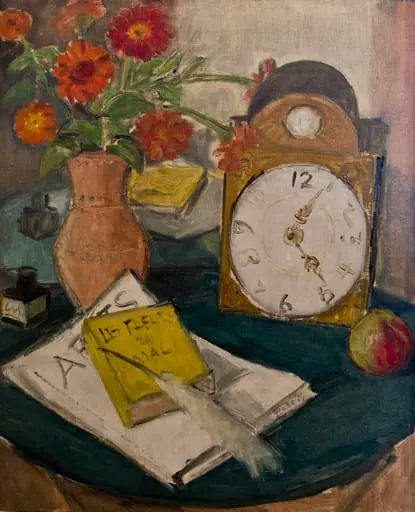
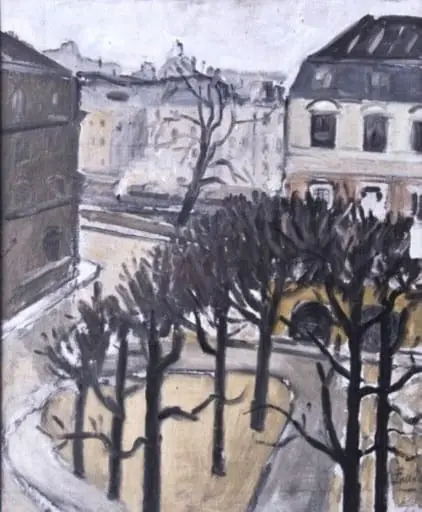
Theodor Pallady made still lifes and interiors in early 20th-century Bucharest. His Place Dauphine shows a quiet Parisian square, while Natură moartă (Ulcică cu flori și chibrituri) piles everyday objects on a table.…