Artwork
Vedere din Paris
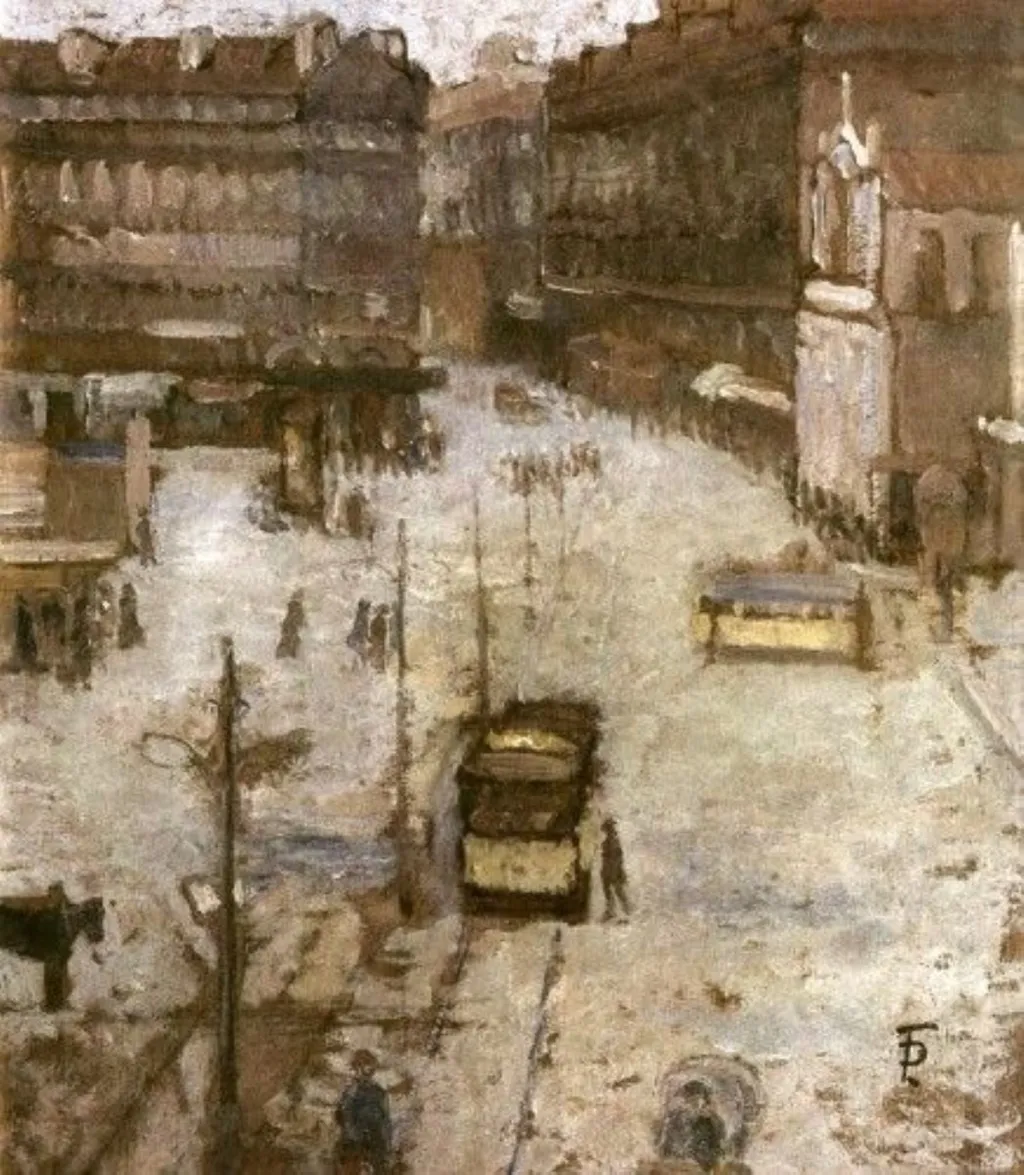
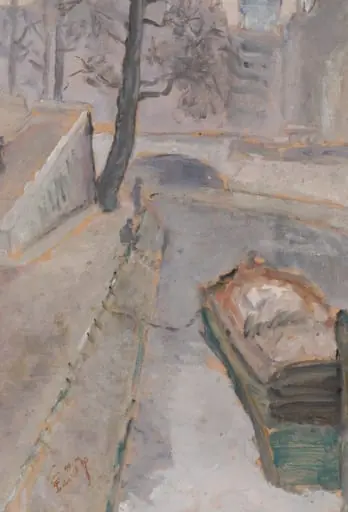
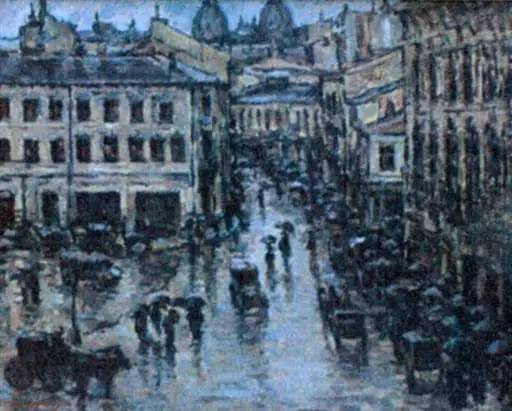
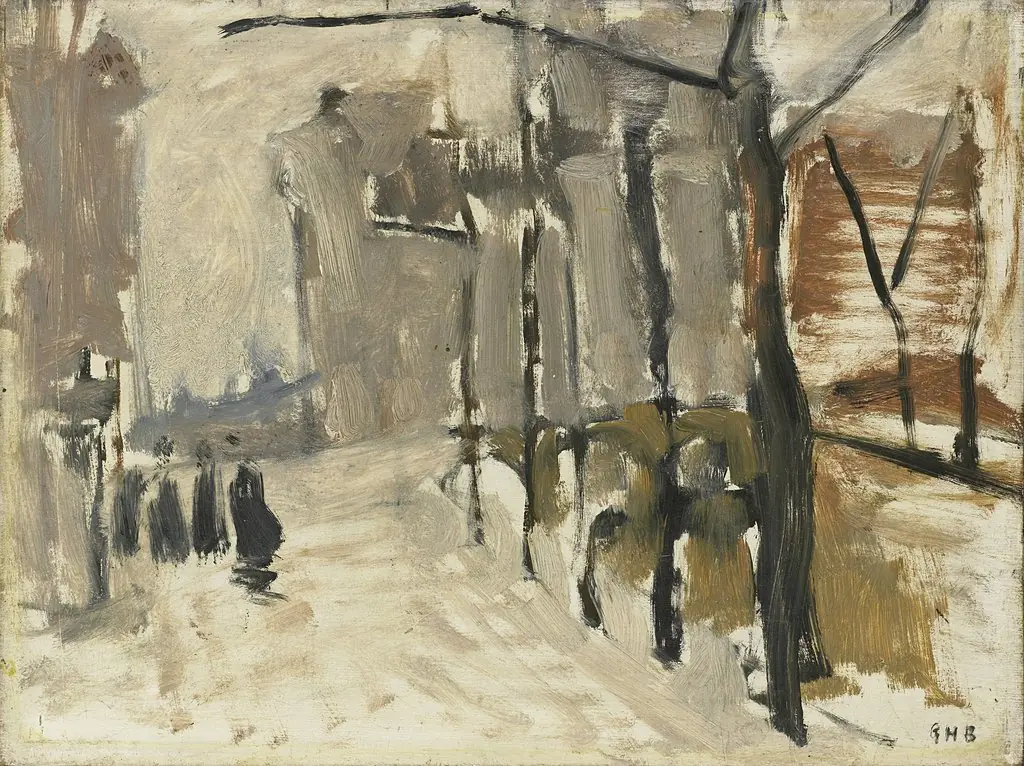
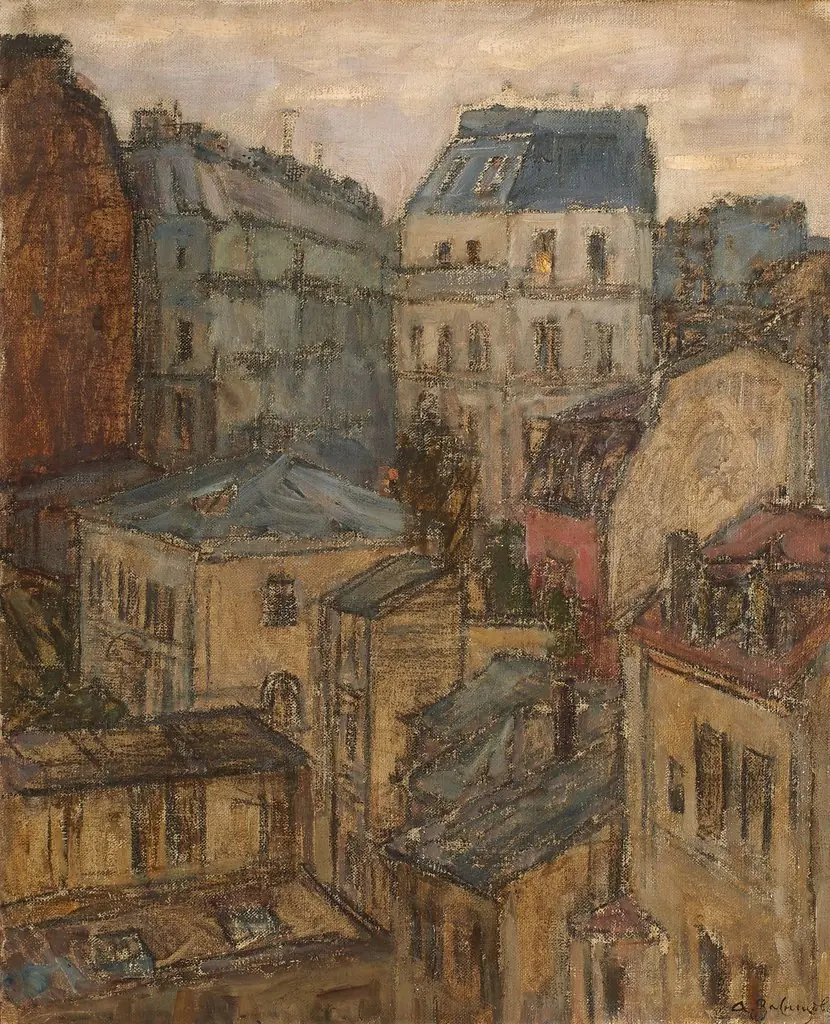
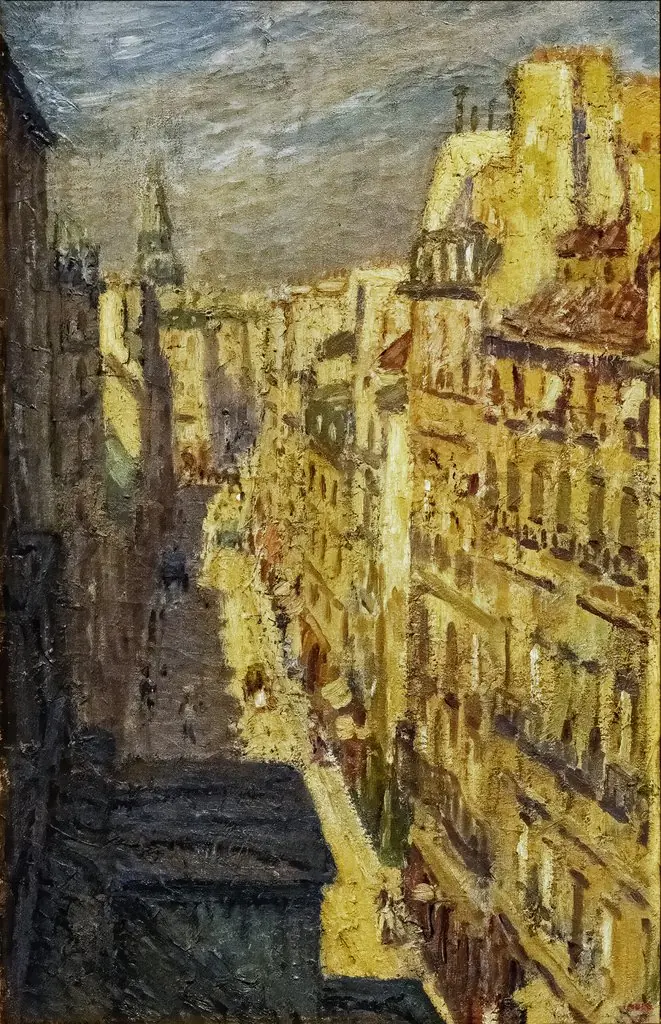
Vedere din Paris is an unspecified painting by Theodor Pallady. It is held in the collection of the National Museum of Art of Romania. This painting depicts a modest urban alley in Paris, rendered with a focus on everyday grit rather than grandeur.
About this work
Overview
This painting depicts a modest urban alley in Paris, rendered with a focus on everyday grit rather than grandeur. The narrow passage, lined with weathered buildings, is rendered in muted grays and browns, emphasizing the damp, uneven ground and the dim, patchy light filtering through the space. The scene avoids idealization, instead presenting a quiet, unvarnished moment of city life.
Subject & Meaning
The scene captures ordinary pedestrians and a modest cart, suggesting routine labor and movement through a neglected urban environment. The absence of clear narrative or symbolic figures shifts focus to the atmosphere itself—decay, endurance, and the quiet persistence of daily life. The painting invites contemplation of the unseen margins of the city, where utility outweighs ornament.
Technique & Style
Thick, textured brushwork applies paint in a tactile, impasto manner, enhancing the roughness of walls and the slickness of wet pavement. The uneven lighting, with pockets of dim glow amid deep shadows, reinforces the sense of a real, unlit street. Color is restrained, avoiding bright hues to preserve the somber, atmospheric tone, while the brushstrokes preserve the immediacy of observation.
History & Provenance
The work originates from a period when artists increasingly turned to urban realism, documenting the overlooked corners of rapidly changing cities. Though specific ownership details are not recorded, its style aligns with late 19th-century French painters who favored unidealized subjects. Its survival suggests it was valued for its honest portrayal rather than commercial appeal.
Context
Created during a time of industrial expansion and urban renewal in Paris, the painting contrasts with official depictions of the city’s grand boulevards. It reflects a growing interest among artists in the lives of working-class neighborhoods, where modernization had not yet reached. This work stands as a quiet counterpoint to the polished visions of urban progress.
Legacy
The painting contributes to a broader shift in art toward authenticity over idealism, influencing later realist and early modernist approaches to urban scenes. Its emphasis on texture, light, and unembellished subject matter resonates with movements that valued the visible hand of the artist and the dignity of ordinary environments, even if it remained outside mainstream recognition.
Artist & collection
Artist
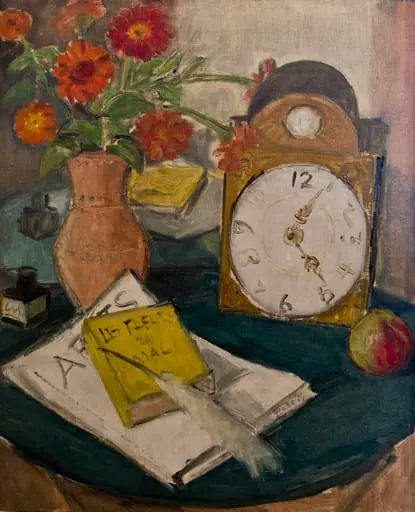
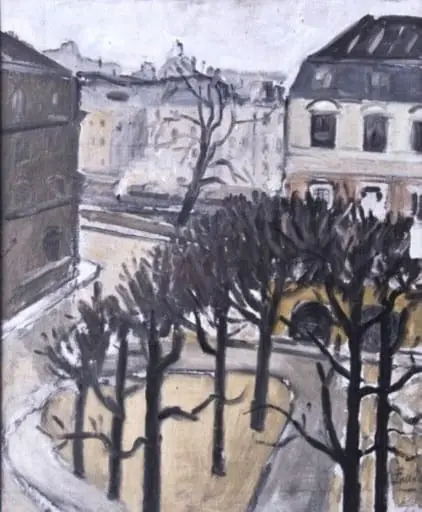
Theodor Pallady made still lifes and interiors in early 20th-century Bucharest. His Place Dauphine shows a quiet Parisian square, while Natură moartă (Ulcică cu flori și chibrituri) piles everyday objects on a table.…