Artwork
Peisaj cu case
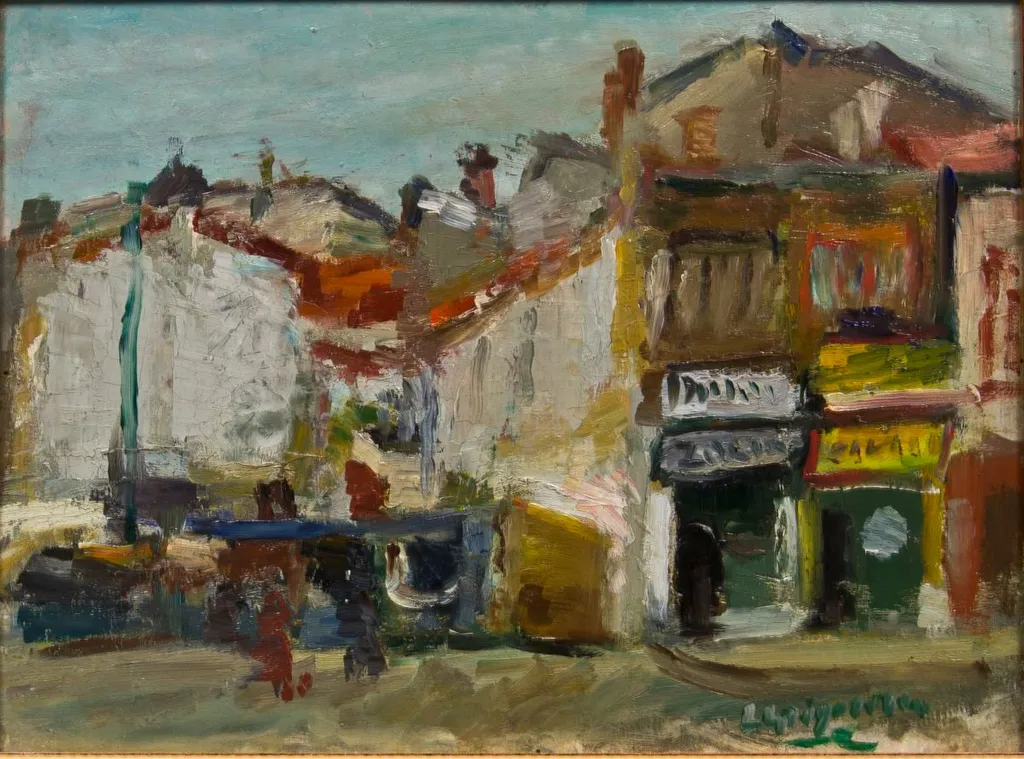
Peisaj cu case is an unspecified painting by Lucian Grigorescu. It is held in the collection of the National Museum of Art of Romania.
About this work
Overview
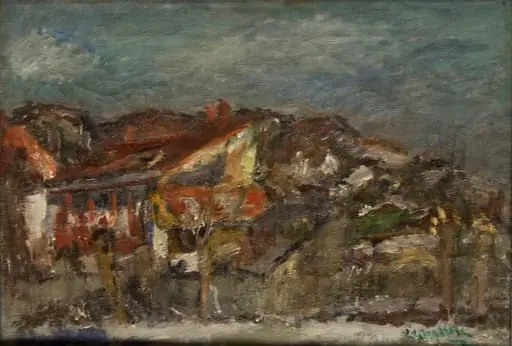
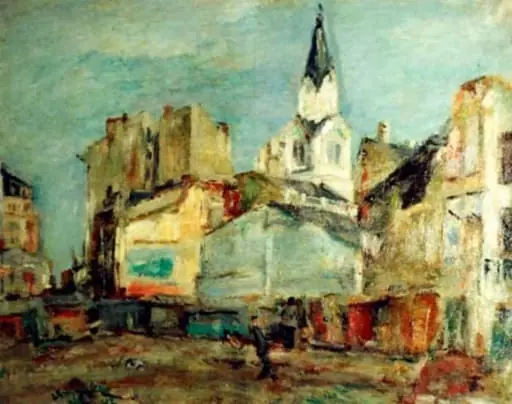
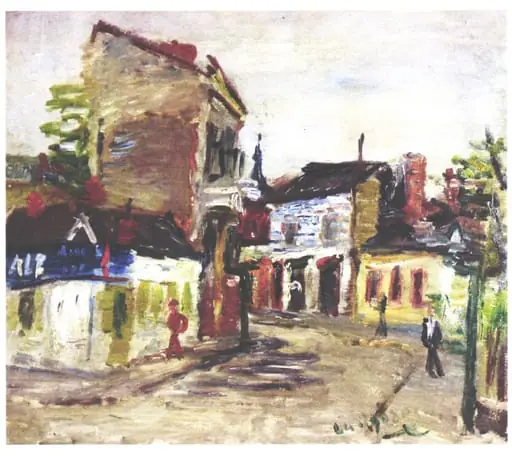
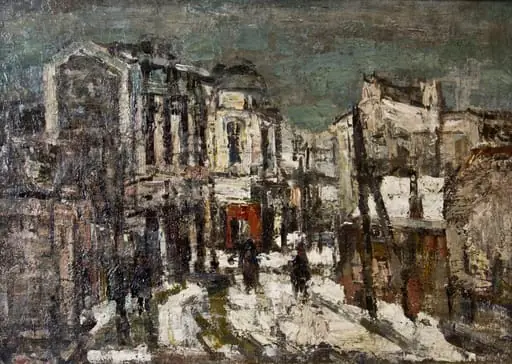
The work titled *Peisaj cu case* presents an urban street scene rendered in a vivid, fragmented manner. Buildings of varying hues—predominantly white, red, and yellow—rise in uneven stacks, while a protruding sign bearing letters adds a focal point. Above, a pale blue sky is mottled with darker smudges, suggesting a fleeting, bustling atmosphere captured in a single glance.
Technique & Style
The artist employs a pronounced impasto technique, applying paint in thick, textured layers that convey a tactile, almost sculptural surface.
The artist employs a pronounced impasto technique, applying paint in thick, textured layers that convey a tactile, almost sculptural surface. Rough, hurried brushstrokes give the composition a sense of immediacy, as if the image were painted quickly and directly onto the canvas. This handling of paint emphasizes the materiality of the medium and reinforces the chaotic energy of the depicted street.
Subject & Meaning
The painting depicts a densely built cityscape, its irregular architecture and clashing colors evoking the disorder and vitality of urban life. The prominent sign, rendered with bold lettering, may allude to commercial signage or public notices, anchoring the viewer within a specific, lived environment. The overall composition suggests a snapshot of daily activity rather than an idealized view.
Context
While specific details about the artist’s background or the work’s date are absent, the use of impasto and vivid, non‑harmonious color schemes aligns the piece with mid‑20th‑century movements that emphasized expressive surface and spontaneous execution. The title, rendered in Romanian, indicates a possible Eastern European origin, situating the work within that regional artistic discourse.
Artist & collection
Artist
Lucian Grigorescu painted quiet scenes of cities and coasts, mostly in oil on canvas.