Artwork
Bazar
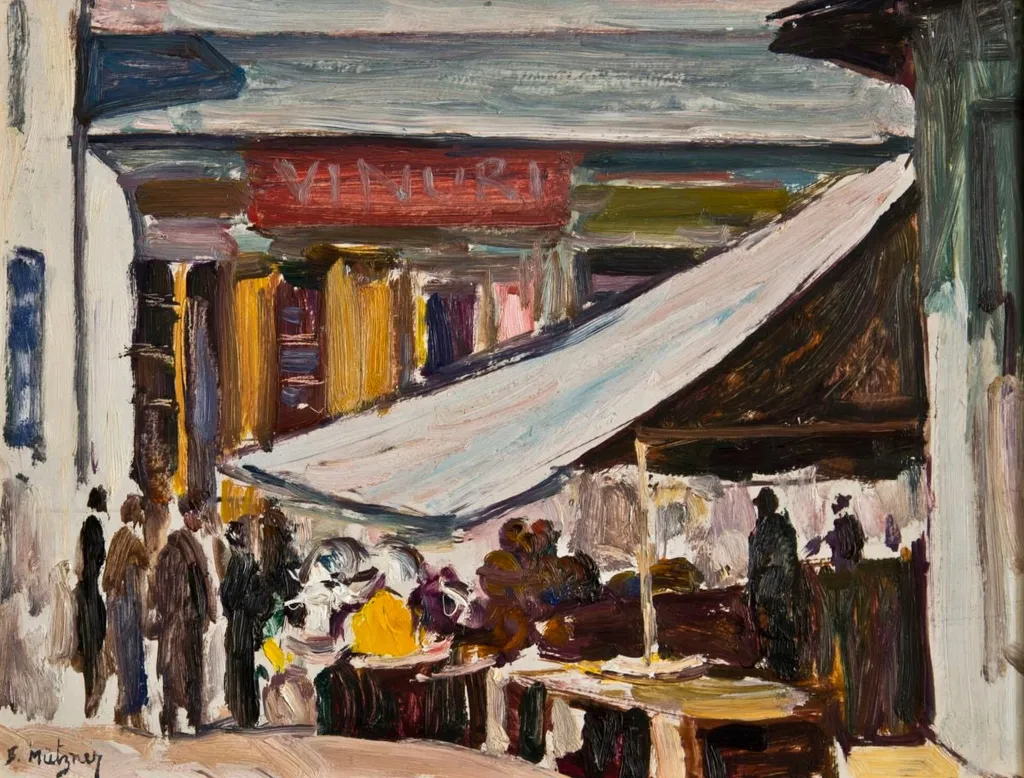
Bazar is a print by Samuel Mützner. It dates from 1931 and is held in the collection of the National Museum of Art of Romania.
About this work
Overview
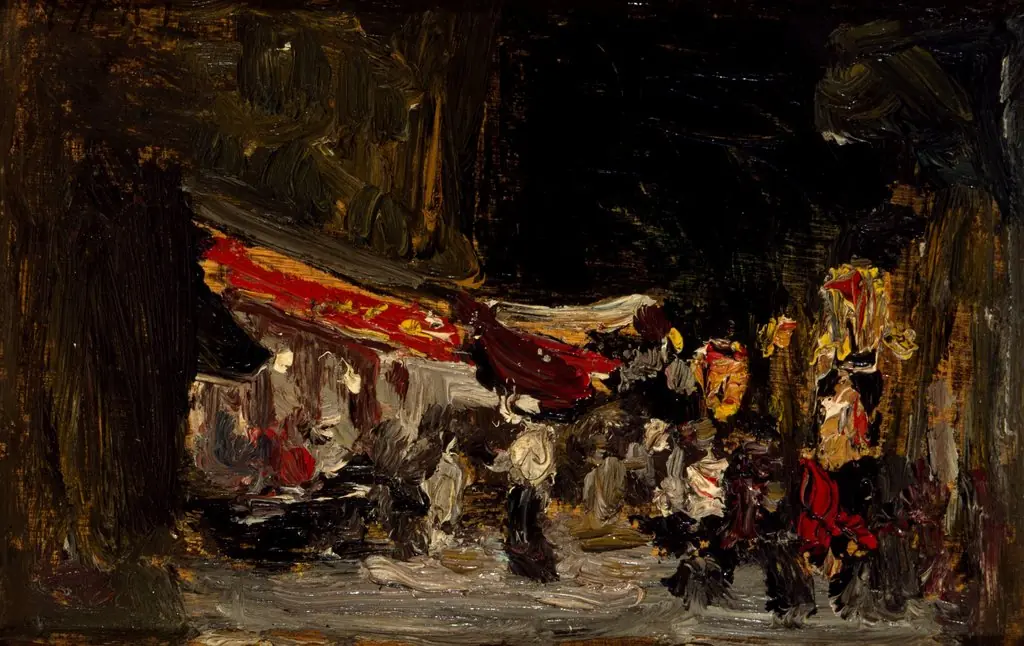
The overall impression is one of kinetic energy, conveyed through rapid, unrefined brushwork that prioritizes movement over detail.
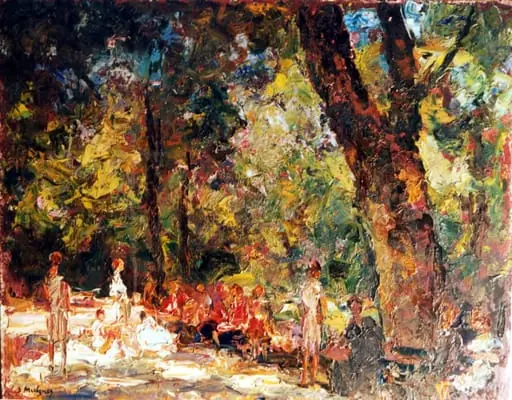
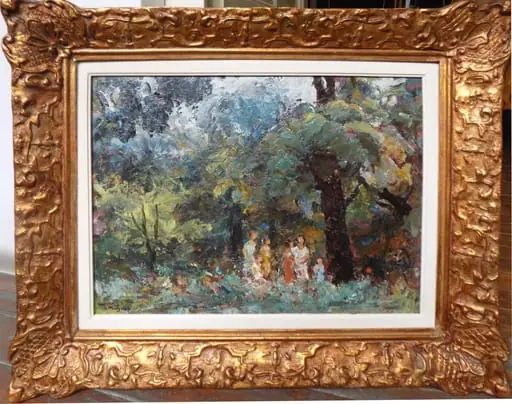
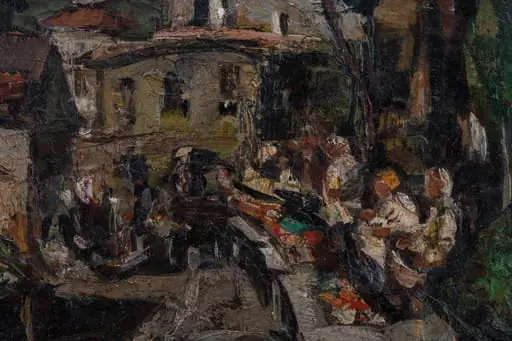
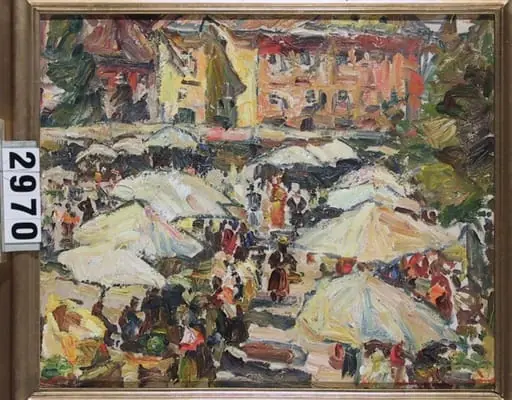
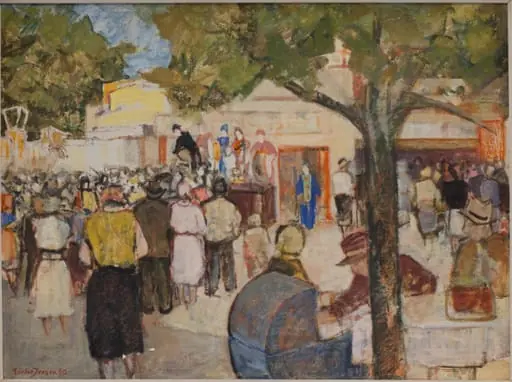
Bazar, painted around 1931 by Samuel Mützner, depicts a bustling outdoor marketplace under a sloping canopy. The composition is dense with figures and goods, arranged without clear hierarchy, suggesting spontaneous activity. The palette emphasizes saturated reds, yellows, and blues, contrasted against a muted sky. The overall impression is one of kinetic energy, conveyed through rapid, unrefined brushwork that prioritizes movement over detail.
Subject & Meaning
The scene captures everyday commerce in a vernacular setting, likely a local bazaar. Figures cluster around stalls laden with goods, some engaged in trade, others observing. The absence of narrative focus or idealized figures shifts attention to the rhythm of daily life. The painting avoids sentimentality, instead presenting the market as a dynamic, unvarnished social space where commerce and human interaction unfold organically.
Technique & Style
Mützner employs thick, gestural brushstrokes that build texture rather than define form. Paint is applied with urgency, creating a rough surface that enhances the sense of motion. Colors are applied boldly, often without blending, allowing adjacent hues to vibrate against each other. The sky’s pale wash contrasts with the vivid foreground, drawing the eye into the crowded scene while suggesting atmospheric distance.
History & Provenance
Created in the early 1930s, Bazar emerged during a period when European artists were re-engaging with realist subjects amid rising modernist abstraction. Mützner’s work reflects regional influences, possibly tied to Central European market culture. The painting’s early 20th-century origins place it within broader interwar artistic currents, though its specific exhibition history and ownership prior to its current location remain undocumented.
Context
In the early 1930s, many artists turned to scenes of ordinary life as a counterpoint to industrialization and political upheaval. Mützner’s focus on a local market aligns with this trend, echoing contemporaneous works by painters in Germany and Eastern Europe who valued immediacy and social observation. The painting’s informal style distinguishes it from academic traditions, favoring directness over polish.
Legacy
Bazar remains a modest but distinct example of interwar figurative painting that prioritizes sensory immediacy over narrative clarity. While not widely exhibited, it contributes to understanding how regional artists responded to modernity through intimate, unidealized depictions of daily life. Its technique anticipates later expressions of expressive realism, though Mützner’s broader influence on 20th-century art remains limited and understudied.
Artist & collection