Artwork
Peisaj din Argeș
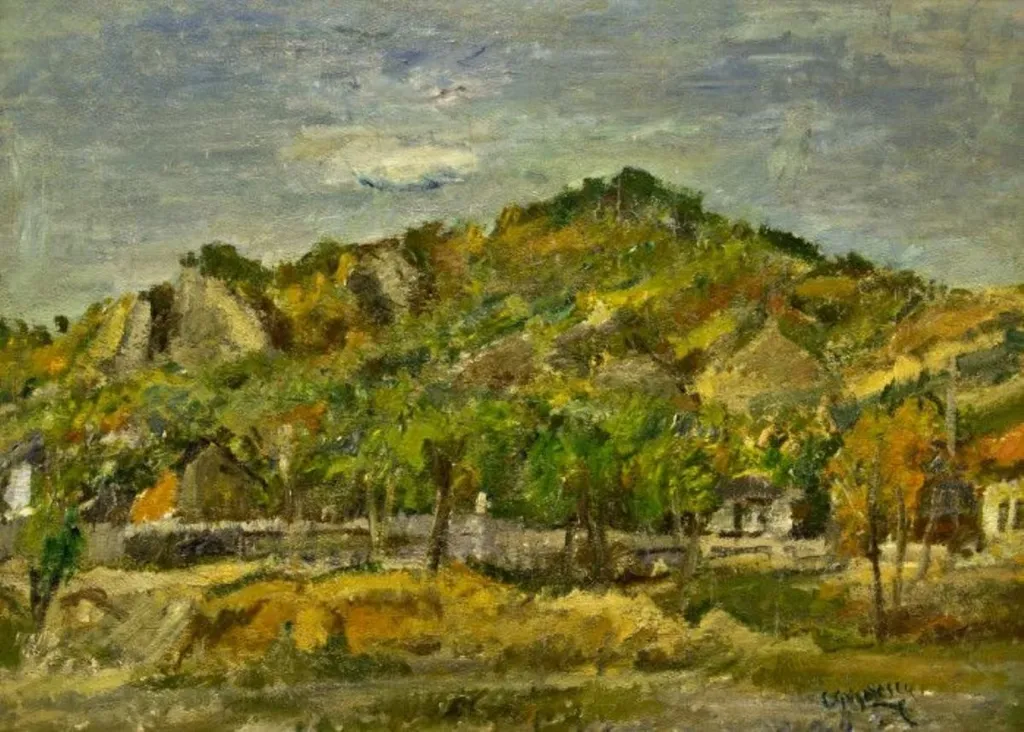
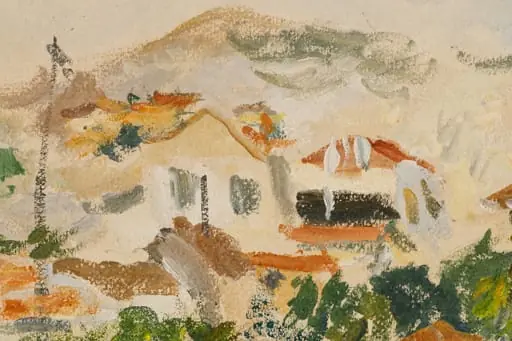
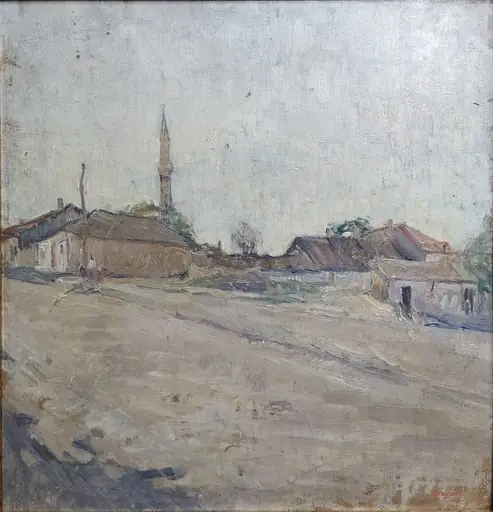
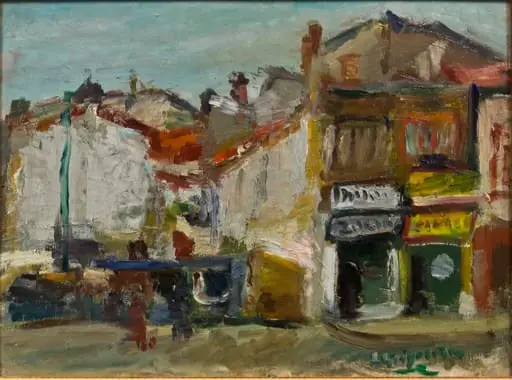
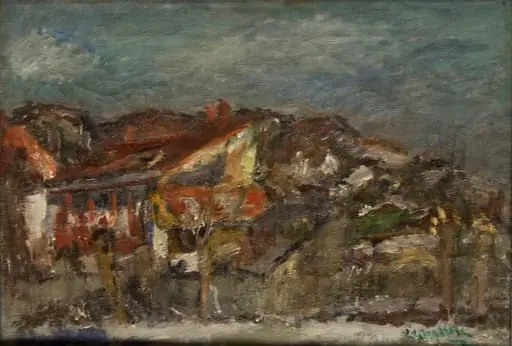
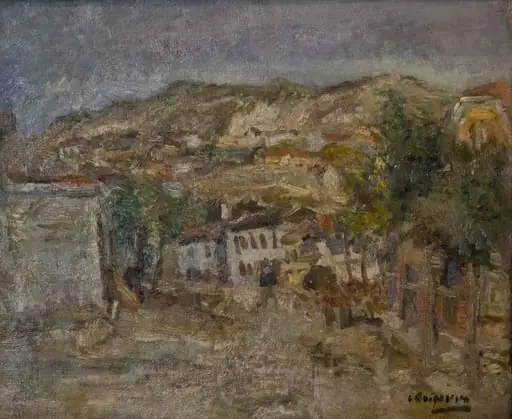
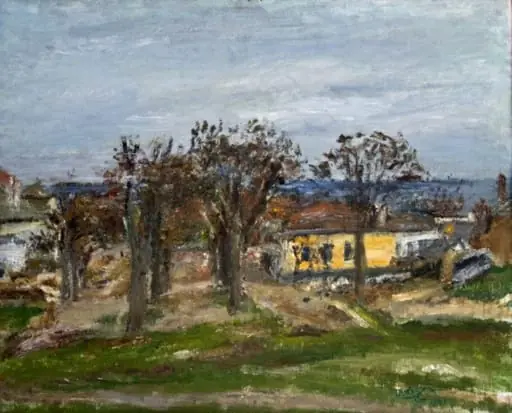
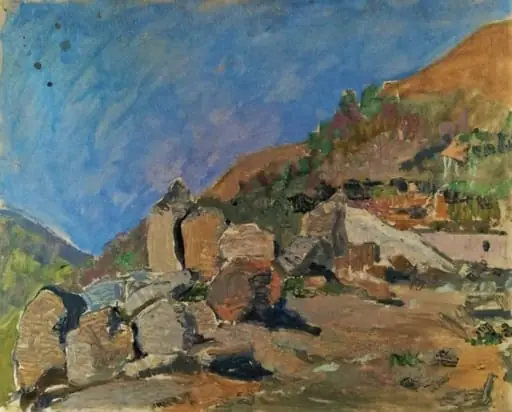
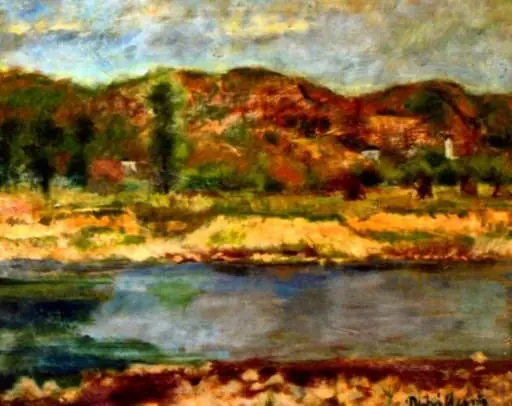
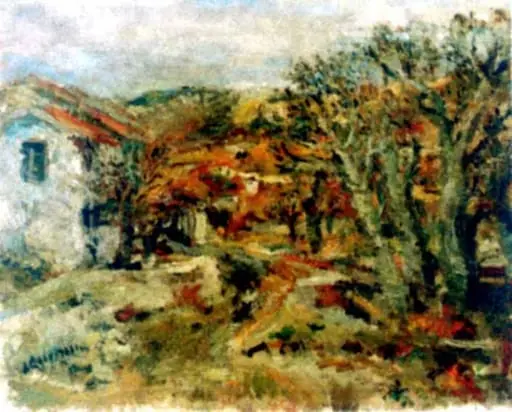
Peisaj din Argeș is an unspecified painting by Lucian Grigorescu. It is held in the collection of the National Museum of Art of Romania. This landscape depicts a rural scene in the Argeș region, capturing a quiet valley with a village nestled among rolling hills.
About this work
Overview
Visible impasto strokes give the surface a tactile quality, suggesting the artist worked quickly to record the scene directly from nature.
This landscape depicts a rural scene in the Argeș region, capturing a quiet valley with a village nestled among rolling hills. Executed with rapid, textured brushwork, the painting conveys a sense of immediacy. The palette relies on muted earth tones—olive greens, ochres, and cool grays—reflecting natural daylight. Visible impasto strokes give the surface a tactile quality, suggesting the artist worked quickly to record the scene directly from nature.
Subject & Meaning
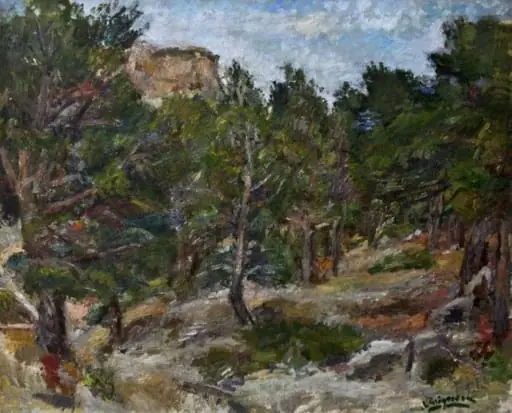
The composition centers on a modest church or structure surrounded by dense vegetation and rocky outcrops, anchoring the viewer’s gaze within the quiet hum of rural life. No human figures are present, yet the presence of dwellings and pathways implies inhabited land. The scene avoids idealization, offering an unembellished view of the Romanian countryside, emphasizing harmony between architecture and terrain rather than narrative or symbolism.
Technique & Style
Thick, directional brushstrokes build form through texture rather than fine detail. Pigment is applied generously, creating ridges and peaks that catch light unevenly, enhancing the sense of movement and atmosphere. The loose handling suggests plein air execution, with colors blended on the canvas rather than pre-mixed. This approach prioritizes sensory impression over precision, aligning with a direct, observational mode of painting common in late 19th-century landscape traditions.
History & Provenance
The work originates from the Argeș region of Romania, likely painted in the late 1800s or early 1900s. It belongs to a body of work by Romanian artists who turned to local landscapes as subjects during a period of national cultural consolidation. While specific ownership history is undocumented, its style and subject place it within regional artistic circles that valued authentic depictions of rural life over academic conventions.
Context
This painting emerged during a time when Romanian artists increasingly sought to define a national visual identity through depictions of everyday rural environments. Urbanization and foreign artistic influences were growing, yet many painters turned to the countryside as a source of authenticity. The work reflects a broader movement away from studio-based historicism toward direct observation, paralleling trends in European naturalism and early impressionism.
Legacy
Though not widely exhibited beyond regional collections, the painting exemplifies a quiet but persistent strand of Romanian landscape art that valued emotional resonance over formal polish. Its emphasis on materiality and spontaneity influenced later generations of artists interested in the physicality of paint and the expressive potential of unrefined technique. It remains a representative example of how local terrain shaped artistic practice in early modern Romania.
Artist & collection
Artist
Lucian Grigorescu painted quiet scenes of cities and coasts, mostly in oil on canvas.