Artwork
Casa Moruzzi
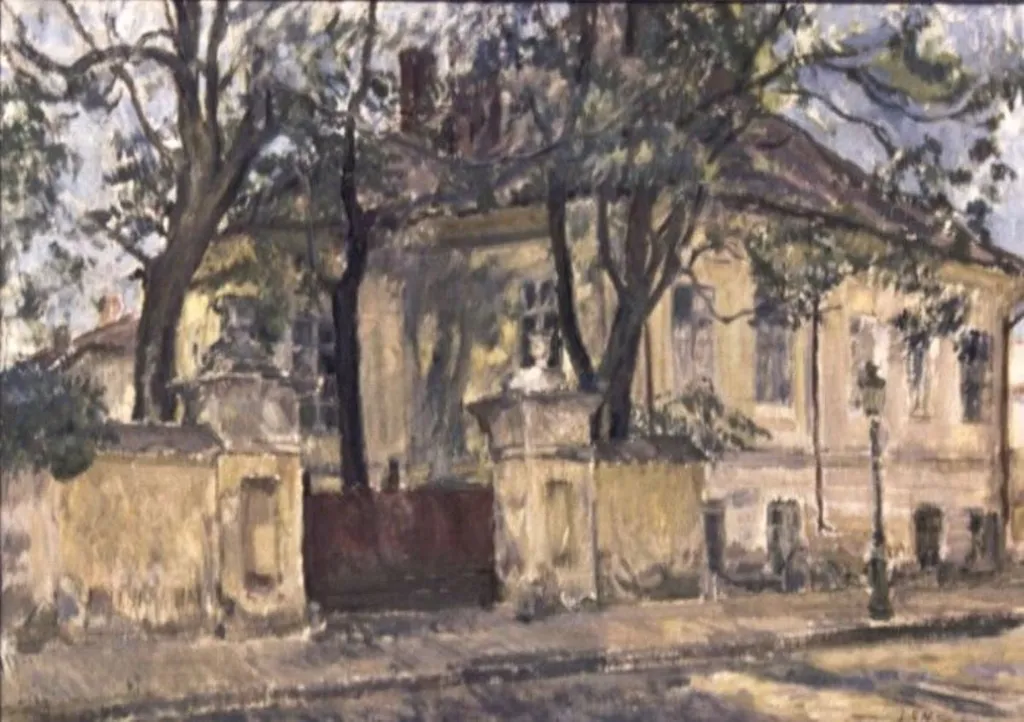
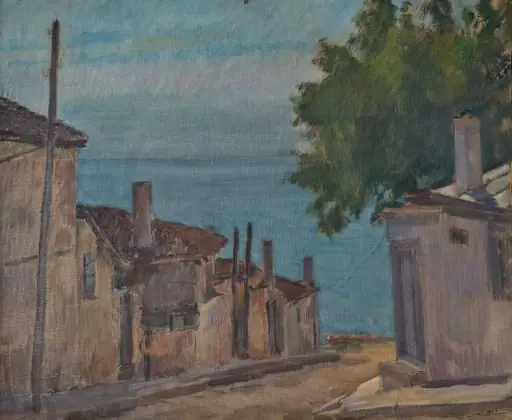
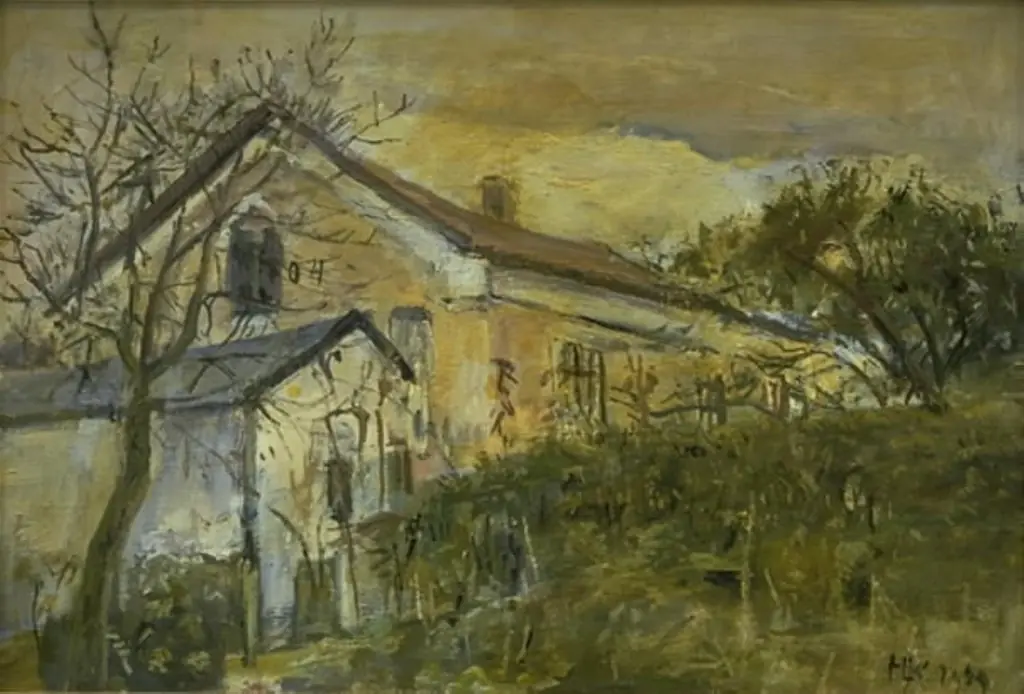
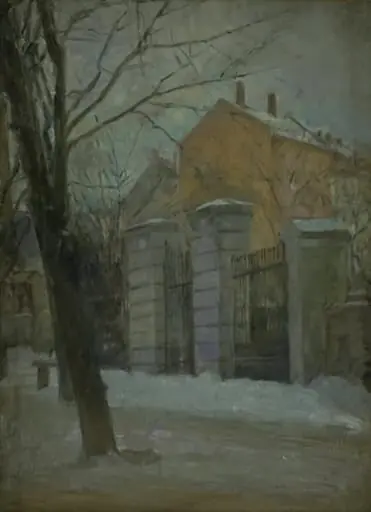
Casa Moruzzi is an unspecified painting by Jean Alexandru Steriadi. It dates from 1920 and is held in the collection of the National Museum of Art of Romania.
About this work
Overview
Jean Alexandru Steriadi’s 1920 canvas, titled Casa Moruzzi, depicts a modest dwelling set against a verdant backdrop. The composition centers on a yellow‑hued house framed by a low fence with an open gate, inviting a glimpse into the interior courtyard. A tall tree dominates the foreground, its spreading branches arching over the structure, rendered in muted greens and earthy browns.
Subject & Meaning
The work presents a quiet domestic scene, emphasizing the relationship between built environment and surrounding nature. The open gate suggests accessibility and a sense of everyday life, while the sheltering tree may allude to protection or continuity within a rural setting.
Technique & Style
Steriadi employs a restrained palette of soft yellows, greens, and browns, applying delicate brushwork that softens edges and creates a tranquil atmosphere. The handling of light and color conveys a gentle realism, characteristic of his early twentieth‑century Romanian landscape tradition.
History & Provenance
Created in 1920, Casa Moruzzi entered the collection of the Museum of Ethnography, where it remains on display. The museum’s acquisition reflects the institution’s interest in works that document regional architecture and everyday life.
Context
The painting belongs to a period when Romanian artists were increasingly documenting local scenes and vernacular architecture, aligning with broader European trends toward national identity in visual art. Steriadi’s focus on a simple house and surrounding foliage mirrors this cultural emphasis.
Artist & collection
Artist
Romanian painter Jean Alexandru Steriadi left scenes of everyday life and ports in the early 1900s.