Artwork
Forsamlingshuset i Slagslunde
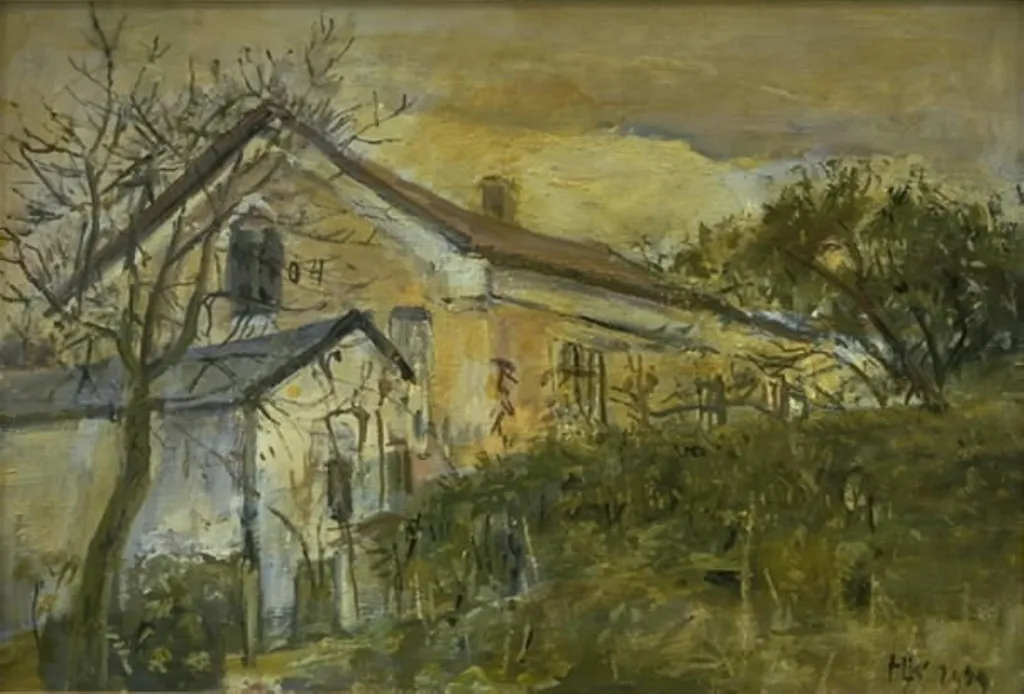
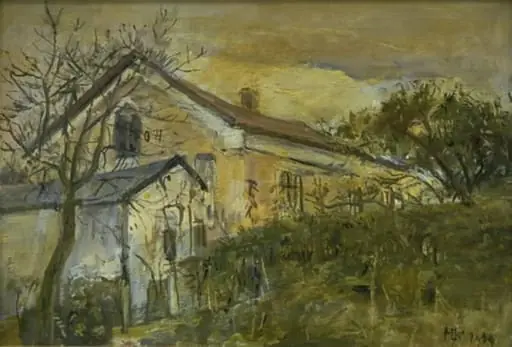
Forsamlingshuset i Slagslunde is an oil painting by Hans Knudsen. It dates from 1922 and is held in the collection of the Statens Museum for Kunst.
About this work
Overview
The composition centers on a weathered, thatched-roof building set against a muted, hazy sky, with a solitary leaf‑bare tree leaning over its eaves.
Hans Knudsen’s 1922 oil painting portrays the modest village hall of Slagslunde, a settlement in North Zealand. The composition centers on a weathered, thatched-roof building set against a muted, hazy sky, with a solitary leaf‑bare tree leaning over its eaves. The palette is dominated by earthy greens, browns and soft yellows, creating a quiet, atmospheric scene typical of the artist’s regional focus.
Subject & Meaning
The work captures a moment of everyday rural life, emphasizing the simplicity and communal function of the local assembly house. By isolating the structure within a sparse landscape, Knudsen highlights the building’s role as a gathering point while also reflecting the modest, enduring character of small‑town Denmark in the early twentieth century.
Technique & Style
Knudsen employs loose, textured brushwork that gives the surface a tactile quality, suggesting the weathered material of the hall and surrounding foliage. The handling of light is subtle, with a pale, diffused sky that softens shadows and reinforces the overall subdued tonal range, aligning the piece with his broader approach to depicting North Zealand’s countryside.
History & Provenance
Created in 1922, the painting entered the collection of Statens Museum for Kunst, Denmark’s national gallery, where it remains part of the institution’s holdings of early twentieth‑century Danish art. Its acquisition reflects the museum’s commitment to preserving works that document regional architecture and landscape.
Artist & collection
Artist
Hans Christian Martinus Kundsen (16 August 1865 – 6 January 1947) was a Danish artist. He is remembered principally for his landscape paintings mainly of the area of North Zealand which constituted his world of motifs.

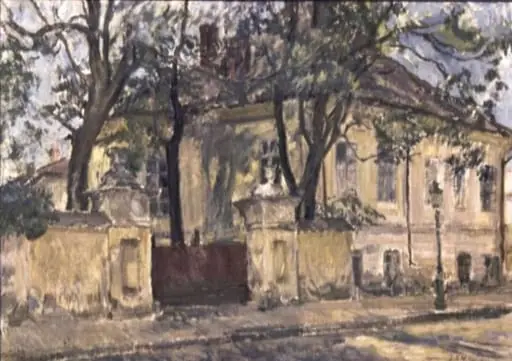 Casa Moruzzi
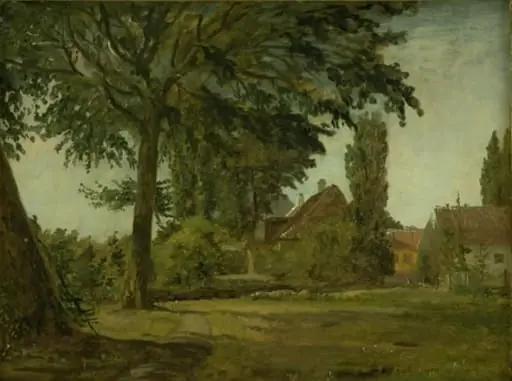 View of Falkonerallé outside Copenhagen
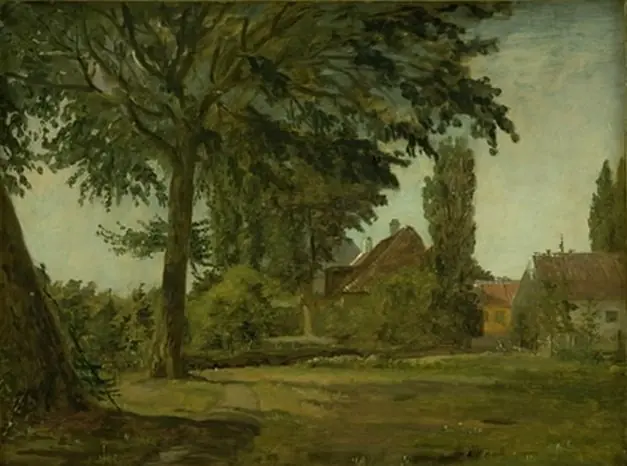 View of Falkonerallé outside Copenhagen
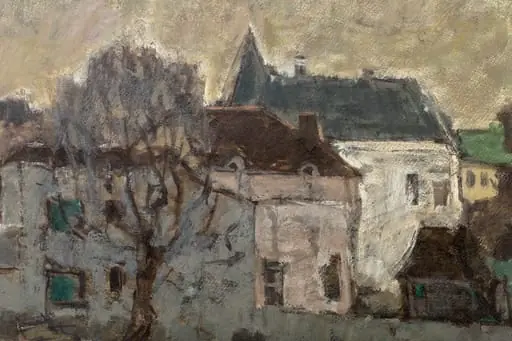 Peisaj în brunuri
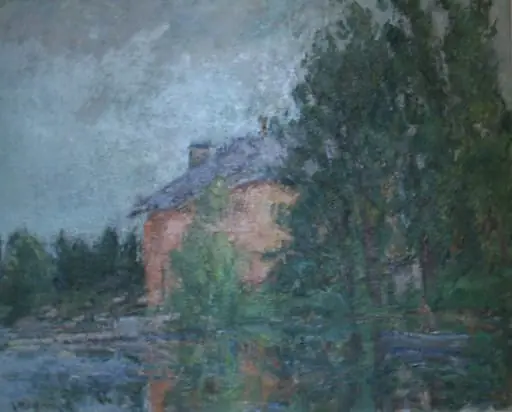 Palatul Mogoșoaia
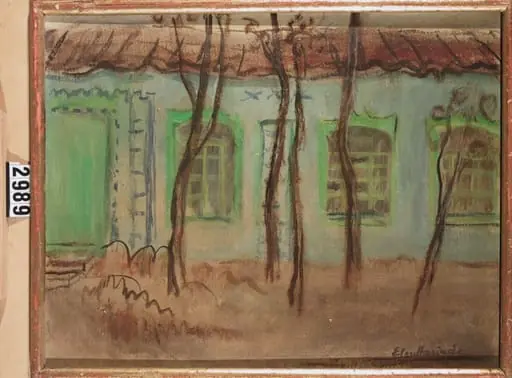 Fațadă la Samarcand
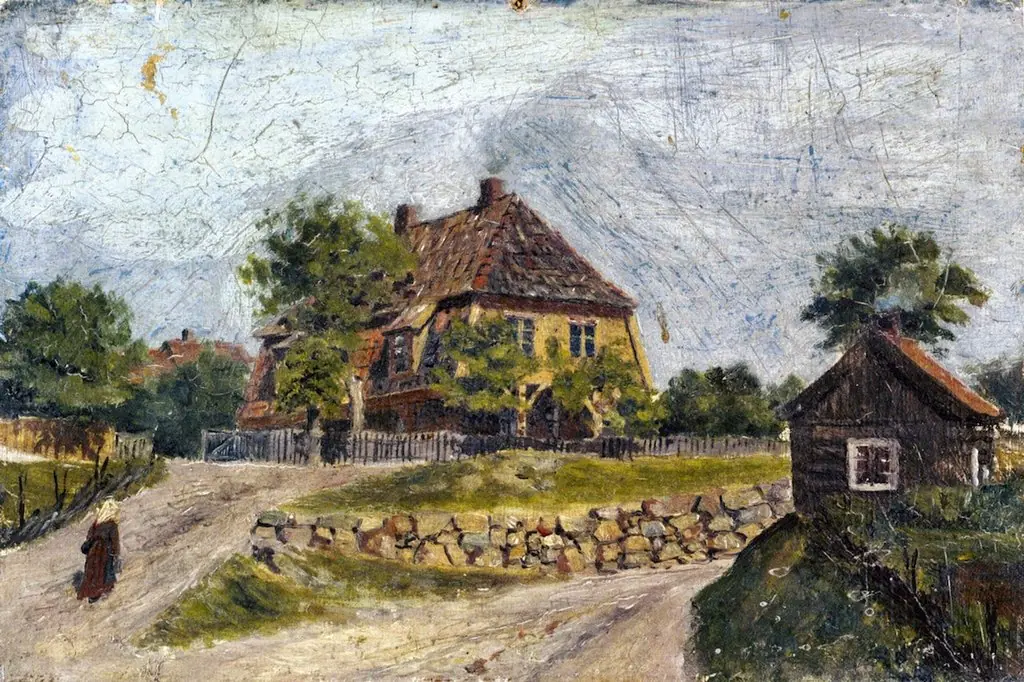 Øvre Foss
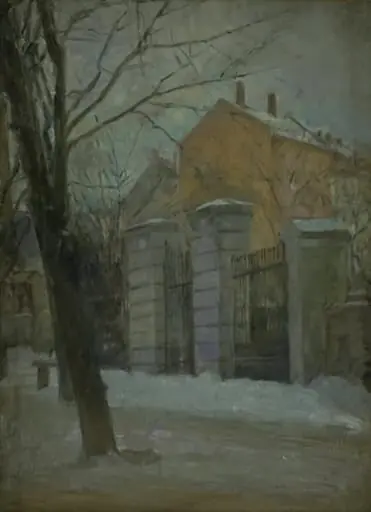 The Gate of Assistens Cemetry in Copenhagen. Winter
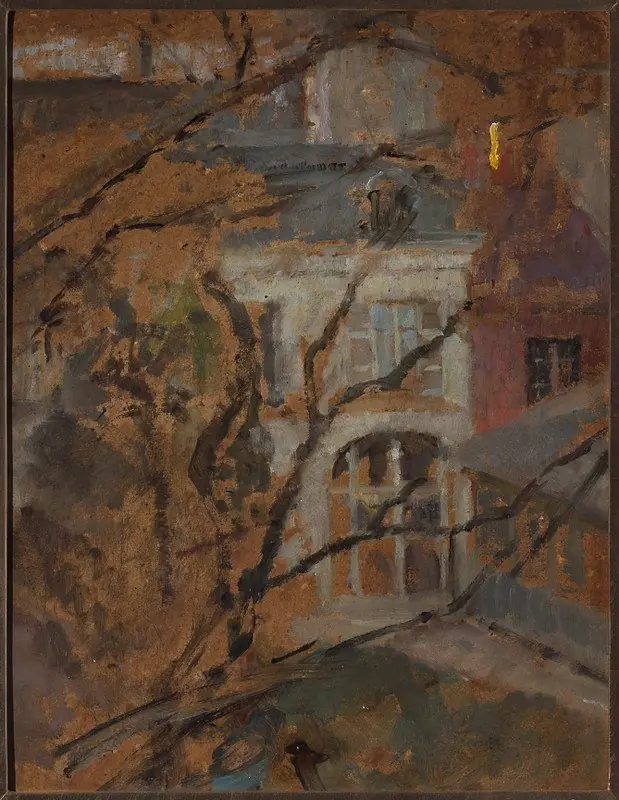 View from the window of the studio in Kraków
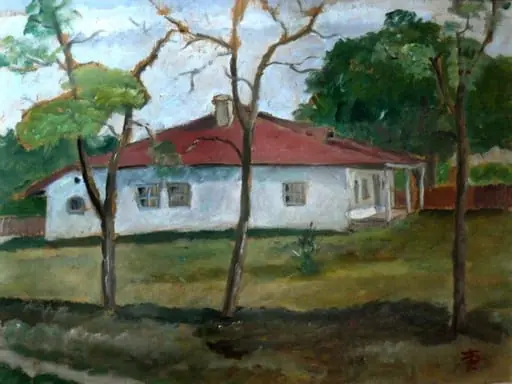 Casa din Bucium
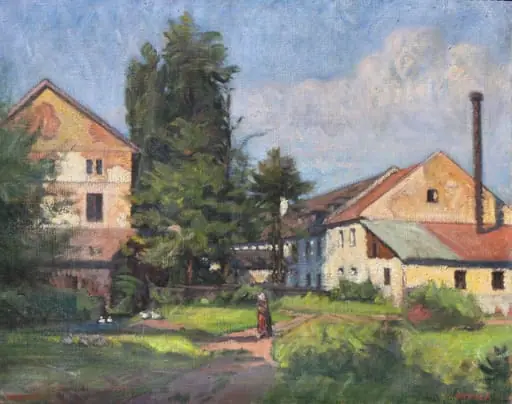 Moară la Baia Mare
 Forsamlingshuset i Slagslunde